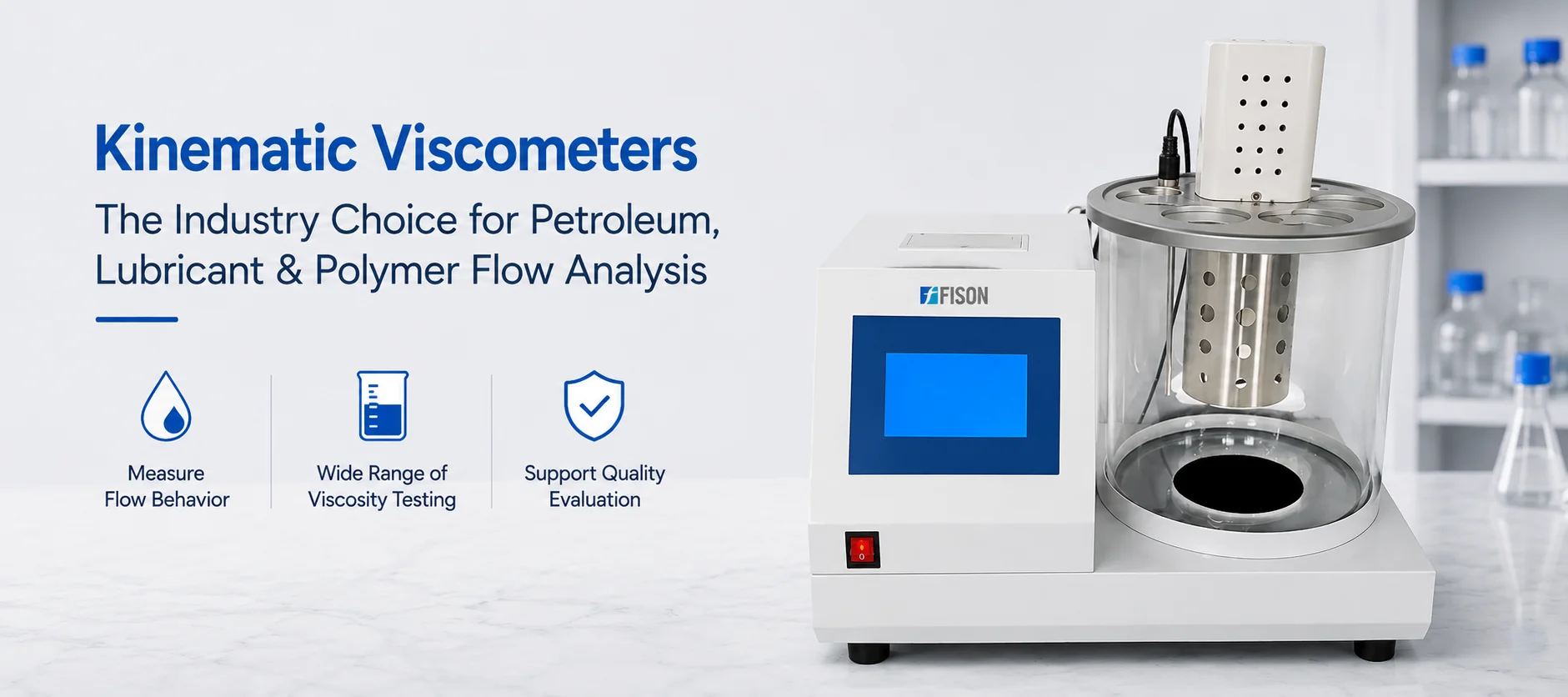
Laboratories, hospitals, research centres and advanced facilities testing fuels, lubricants and polymer melts rely on a Fison Kinematic viscometer to time how a sample flows under gravity through a calibrated capillary. This article looks at how these instruments work, where they fit into a wider fluid testing setup, and what to check before choosing one.
Why Flow Time Still Matters in Petroleum, Lubricant and Polymer Testing
Kinematic viscosity describes how a fluid resists flowing under its own weight, and that single property shapes how a fuel atomizes in an engine, how a lubricant coats a bearing surface, and how a polymer melt moves through processing equipment. Measuring it accurately depends on timing flow through a fixed geometry rather than estimating fluid behavior by feel.
A viscometer built around this timed-flow approach gives a repeatable, physically grounded reading rather than a subjective impression of how thick or thin a fluid feels. That distinction matters most in petroleum and lubricant testing, where flow behavior at a controlled temperature directly connects to how a product performs once it reaches actual working conditions.
How a Kinematic Viscometer Works: From Capillary Flow to Viscosity Result
The kinematic viscometer principle rests on gravity-driven flow through a glass capillary of known internal geometry. A measured sample volume is drawn into the capillary tube, the tube is suspended inside a temperature-controlled bath, and once the sample reaches the bath temperature, it is allowed to flow freely between two etched timing marks.
Sample Loading
Bath Temperature Control
Capillary Flow Timing
Viscosity Result
Multiplying the recorded flow time by the capillary's own calibration constant converts that timing directly into a kinematic viscosity value, expressed in units that describe how the fluid flows under gravity at that exact bath temperature.
Viscometer Bath Types: Matching Setup to Sample Range
A kinematic viscometer bath built around a single capillary position suits a lab running one sample type through a narrow viscosity range, keeping the setup simple and the bath footprint small. It works well for routine, low-volume testing where sample variety stays limited.
A multi-position kinematic viscometer bath instead holds several capillary tubes at once, letting a lab test multiple samples or replicate a single sample across different tubes in parallel. Facilities weighing single-position against multi-position formats can compare bath capacity and capillary tube ranges on the kinematic viscometer category page before settling on a configuration.
Where the Kinematic Viscometer Fits in the Wider Viscosity Measurement Equipment Category
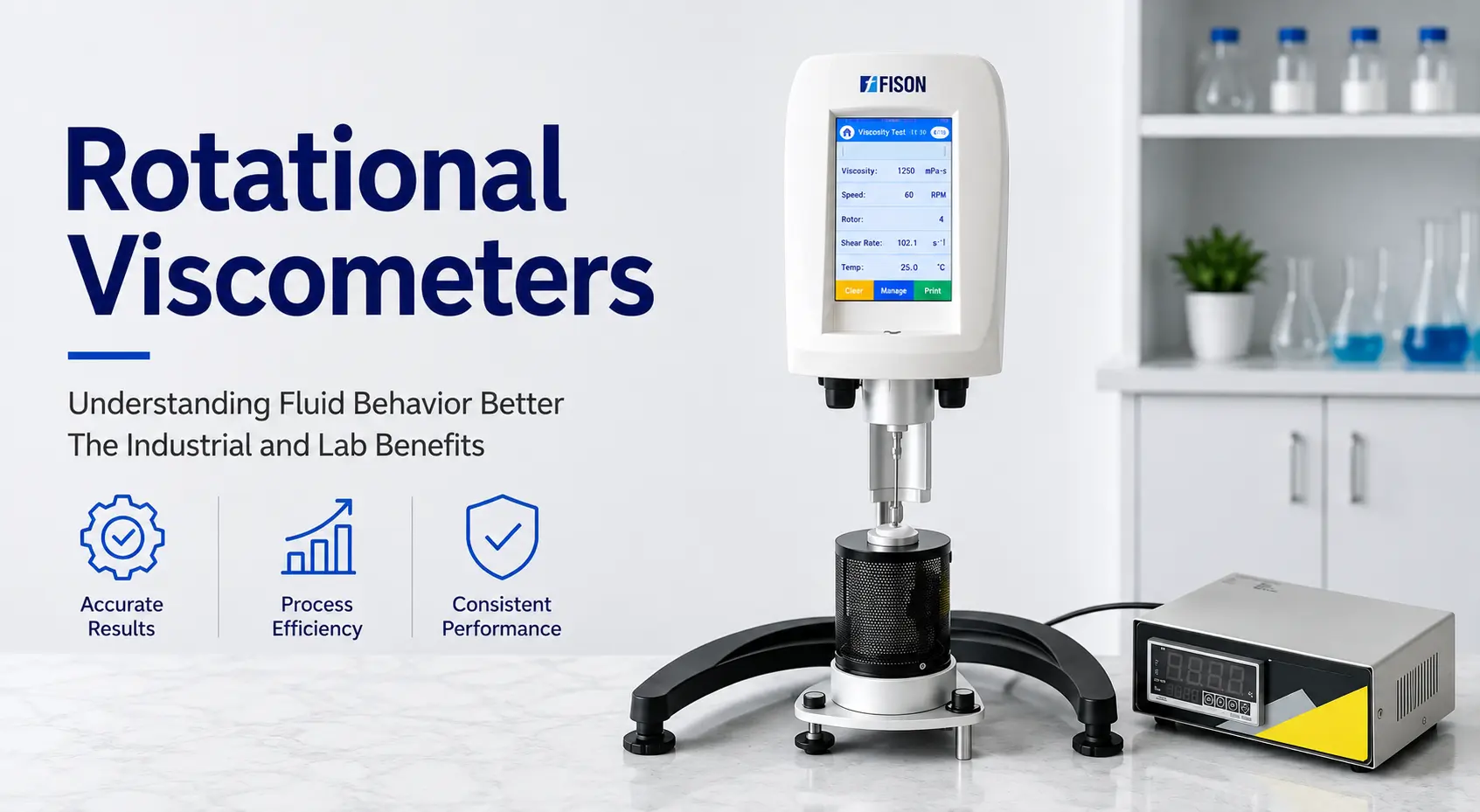
A kinematic viscometer belongs to a broader viscosity measurement equipment category that also includes rotational and falling-ball instruments used across petroleum, chemical and polymer testing. Within this category, labs typically compare capillary tube range and material, bath temperature range and uniformity, sample volume needed per test, and how easily a unit accommodates dark or opaque fluids that make manual timing difficult.
Reviewing the full viscometer range is a practical starting point for lining up these factors before narrowing a shortlist.
For facilities exploring fluid testing equipment beyond kinematic viscosity alone, the Fison home page lists the wider catalogue of laboratory and hospital equipment the brand carries.
Kinematic Viscometer Uses Across Petroleum, Lubricant and Polymer Testing
Kinematic viscometer uses in petroleum testing centre on grading fuels and base oils by how they flow at specified reference temperatures, a result that feeds directly into blending and quality decisions further down the process. Lubricant formulators run the same measurement across a temperature range to build a viscosity-temperature profile, which describes how well a lubricant keeps its film strength as operating temperature rises or falls.
Polymer researchers use a kinematic viscosity meter to track melt or dissolved-polymer flow behavior during formulation work, watching how small composition changes shift flow time. Research centres studying biodiesel and other alternative fuels apply the same capillary-flow method to compare candidate fuels against each other under matched conditions.
Selection Mistakes to Watch For When Choosing a Kinematic Viscosity Measurement Instrument
A handful of recurring missteps show up during evaluation, and most only become clear once the instrument is already in routine use:
- Choosing the wrong capillary size for the sample range. A capillary sized for light fuels will time much too fast for a viscous lubricant, pushing the result outside a usable timing window.
- Overlooking bath temperature stability. Small temperature drift during a flow timing run can shift the calculated viscosity meaningfully, since flow time is temperature-sensitive.
- Underestimating sample volume needs. Some capillary geometries call for more sample than a lab expects, which matters when working with limited or costly material.
- Ignoring cleaning requirements for dark or opaque samples. Residue left in a capillary after a viscous or dark sample can distort the timing of the next test if cleaning is rushed.
- Skipping periodic capillary calibration checks. A capillary's flow constant can drift slightly with wear, and skipping periodic checks lets that drift go unnoticed.
Ready to Compare Kinematic Viscometer Options?
Capillary range, bath capacity and timing method differ meaningfully between models, and reviewing them together helps match an instrument to actual fluid testing needs rather than a rough estimate.
View Kinematic Viscometer Options