Oil in produced water and industrial effluent affects treatment performance and equipment. This article explains how an Fison Oil In Water Analyzer works, where laboratories and environmental monitoring teams use an oil water analyzer, and which selection mistakes cause the most rework.
Why Laboratories Measure Oil in Water
Oil in water is a routine question in environmental monitoring. Laboratories, research centres and advanced labs measure it in produced water, industrial effluent and plant water circuits, and hospital laboratories that run boilers or cooling water systems ask the same question. An Oil In Water Analyzer reports the oil content of a water sample as a concentration in ppm, so a laboratory can compare streams and follow changes. For a laboratory, an oil in water analyzer is practical because a reading takes only 5 seconds.
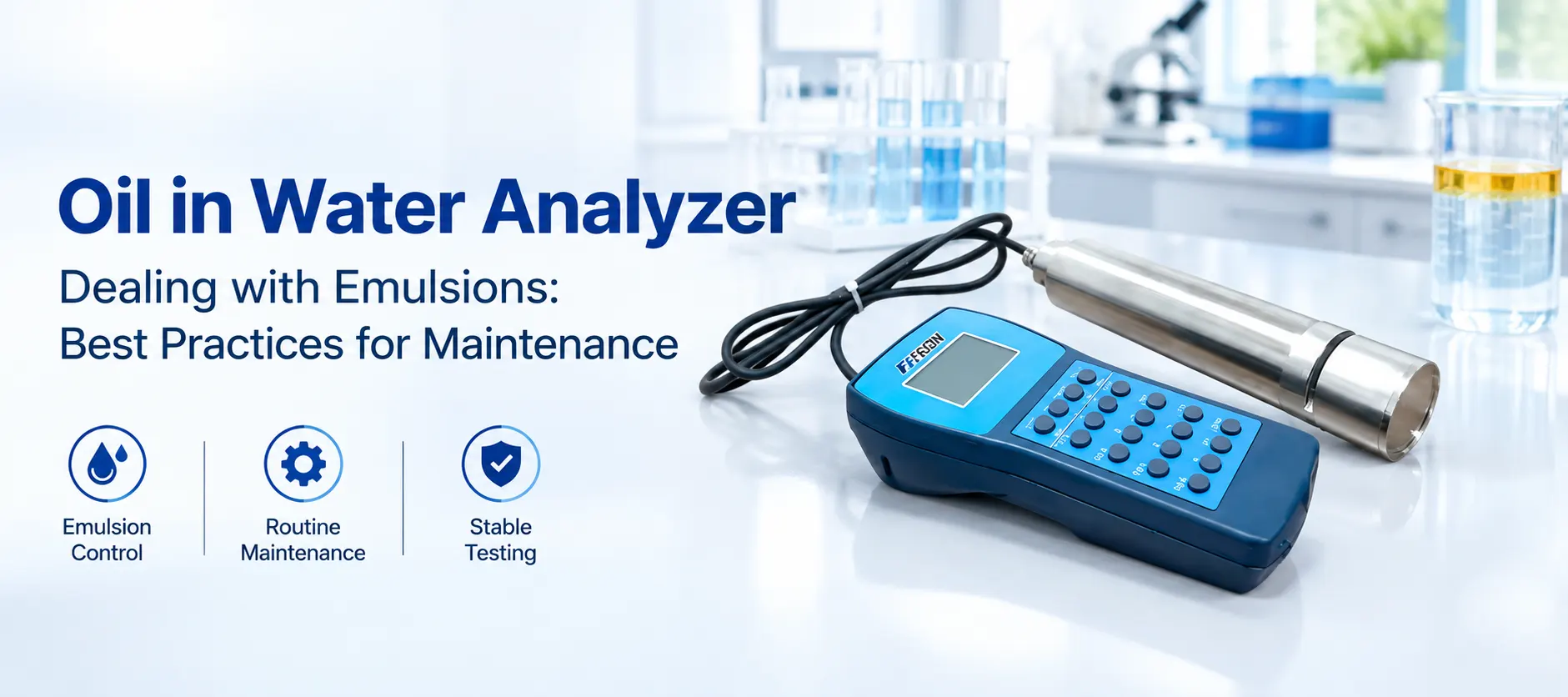
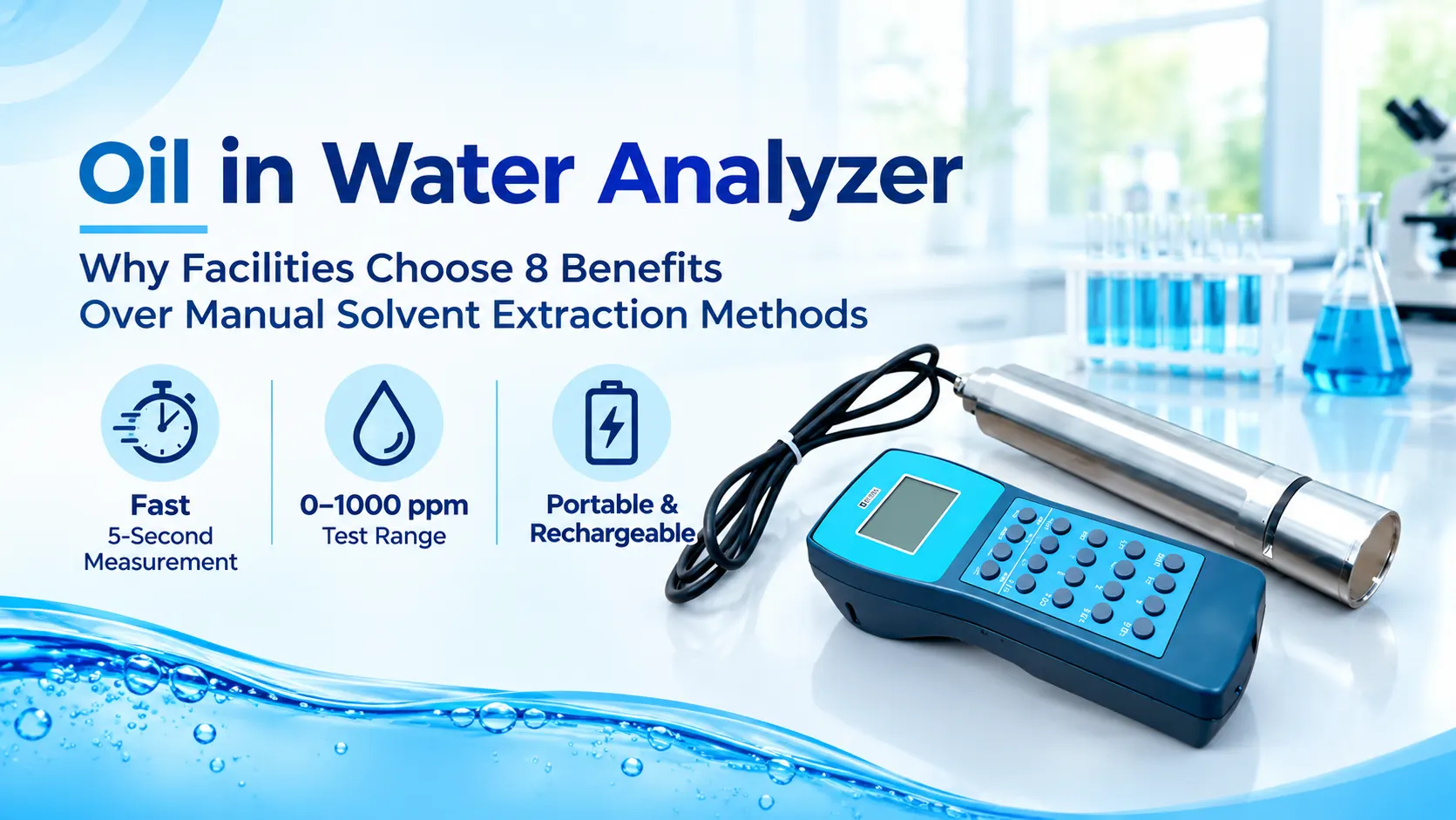
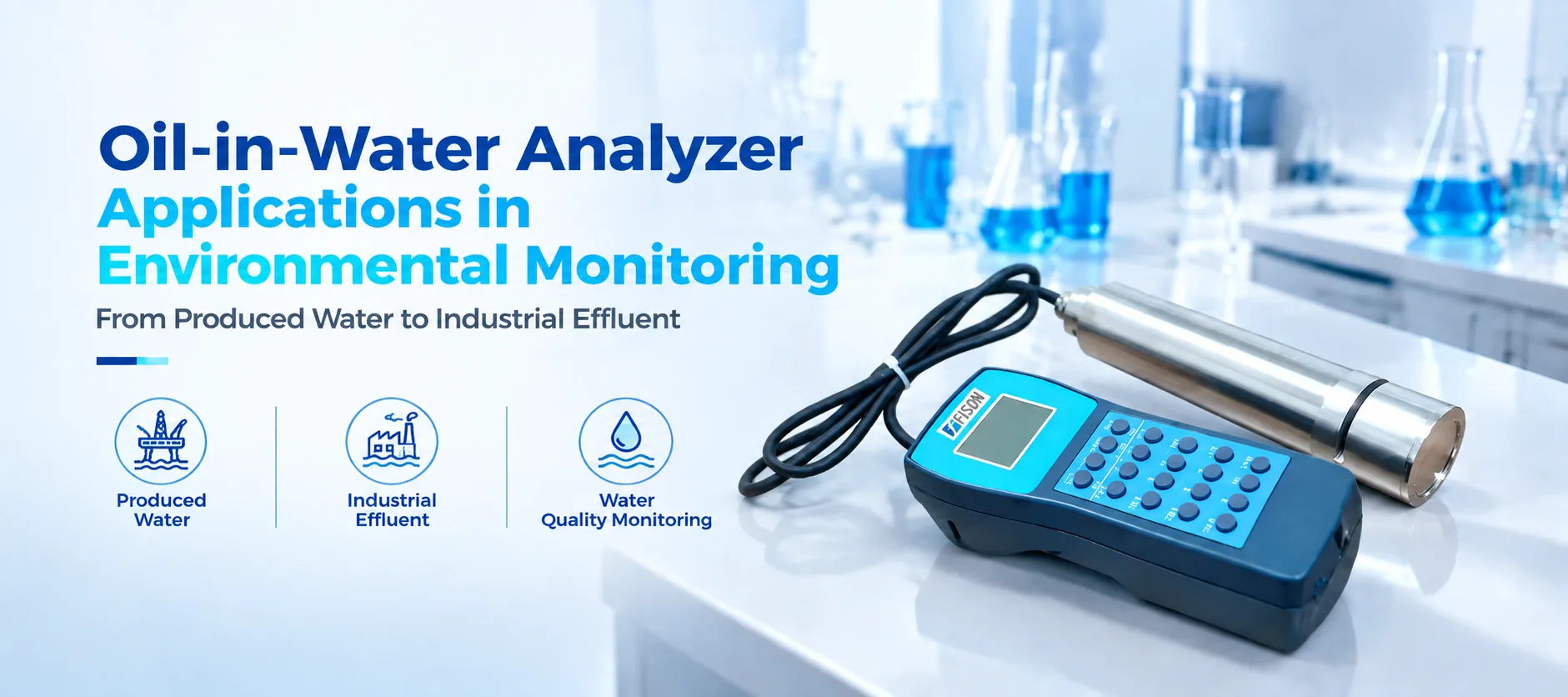
The Fison oil in water analyzer FM-OWA-A100 is a handheld lab analyzer for this work. It supports analysis and detection of oil leakage in oil pipelines and cooling water and shows the oil pollution concentration on a digital display, which makes this type of oil water analyzer useful wherever a quick reading is needed.
Oil in Water Analyzer Working Principle
The Oil In Water Analyzer working principle of the FM-OWA-A100 rests on a dual-channel photometer. The photometer measures light absorbance, and the analyzer calculates the oil content in water according to the Lambert-Beer law.
This Oil In Water Analyzer principle links absorbance to concentration. As the oil content of a sample changes, its absorbance changes with it, and the oil in water analyzer converts that change into a ppm reading. Understanding the Oil In Water Analyzer principle helps a laboratory judge what a reading represents and how to use it in a monitoring programme. Laboratories comparing instruments should note the photometer type and the calculation behind each oil in water analyzer working principle.
Handheld Oil in Water Analyzer Features
A handheld oil in water analyzer is chosen for the features it offers at the sampling point. The FM-OWA-A100 oil in water analyzer lists fast and accurate measurement, high sensitivity and stable performance, with a 5 second reaction time and precision of ±5% FS. Its test range of 0 to 1000 ppm can be adjusted according to user requirements.
Other listed features include a digital LCD, operation from -20 to 40°C, a universal charging adaptor and use after charging without plugging in. A handheld oil in water analyzer of this kind therefore works away from a mains socket, and a portable oil in water analyzer should list its range, reaction time and precision just as clearly.
| Parameter | FM-OWA-A100 |
|---|---|
| Test range | 0 to 1000 ppm, adjustable to user requirements |
| Reaction time | 5 seconds |
| Precision | ±5% FS |
| Operating temperature | -20 to 40°C |
| Humidity | 10 to 90% RH |
| Power consumption | Below 10 W |
| Dimensions and net weight | 450 × 350 × 200 mm, 5 kg |
Where an Oil Water Analyzer Is Used
An oil water analyzer supports several water streams, and a laboratory can review the Fison oil in water analyzer range against the streams it needs to cover. The applications listed for the FM-OWA-A100 span oilfield, petrochemical and plant water treatment work, and each one relies on the same oil in water analyzer reading.
Cooling Water Oil Leakage
An oil in water analyzer used for oil leakage monitoring in cooling water shows a leak as a rising oil reading.
Water Treatment Plants
A water treatment plant uses an oil in water analyzer to follow oil content and check that treatment is working.
Petrochemical Effluent
Petrochemical water treatment covers industrial effluent, where oil content is measured before the water moves on.
Boiler Water Oil Content
An oil in water analyzer handles boiler water oil content detection, and cooling water checks work the same way.
Oil Removal Equipment
An oil in water analyzer supports oil removal equipment by showing how much oil remains in the treated water.
Oilfield Produced Water
In oilfield water treatment, an oil in water analyzer reads the oil in produced water.
Portable Oil in Water Analyzer for Field Testing
A portable oil in water analyzer is useful when a sample cannot travel to the laboratory. The FM-OWA-A100 measures 450 × 350 × 200 mm and weighs 5 kg net, and its rechargeable operation lets a technician test produced water at an oilfield, industrial effluent at a petrochemical site or cooling water in a plant room.
Results appear in 5 seconds on the LCD, so an environmental monitoring team can act on an oil leakage reading immediately. A handheld oil in water analyzer that charges in advance avoids the need for a socket, and a portable oil in water analyzer of this size can be carried between sampling points. Laboratory teams often keep a handheld oil in water analyzer for field work and record the same oil in water analyzer reading in their reports.

Oil in Water Analyzer and Water in Oil Analyzer Compared
The two phrases sound alike but describe opposite measurements. An oil in water analyzer measures oil dispersed in water, which is the environmental monitoring question for cooling water, boiler water and effluent. A water in oil analyzer measures moisture inside an oil, so neither instrument can replace the other: an oil water analyzer of this type does not measure moisture in oil.
Moisture in oil is usually determined by titration, as in a Karl Fischer titrator, rather than by light absorbance. Matching the instrument to the correct question is the first step in choosing an oil in water analyzer.
Choosing Among Oil in Water Analyzer Manufacturers
Instrument choice is often decided from a brochure range rather than from the stream being monitored. These patterns cause the most rework once an oil in water analyzer is in use.
- Ignoring the required test range. The FM-OWA-A100 range can be adjusted to user requirements, so the concentration expected in produced water or industrial effluent should be confirmed first.
- Comparing oil in water analyzer manufacturers on range alone. Reaction time, precision and operating conditions shape daily results as much as the stated range.
- Overlooking the working environment. Temperature and humidity at the sampling point should sit inside the analyzer's listed operating ranges.
- Confusing the two measurements. A water in oil analyzer and an oil in water analyzer answer different questions.
- Forgetting power at the site. A handheld oil in water analyzer that runs on charge suits remote points, while a mains-only unit does not.
- Skipping the model details. Reviewing oil in water analyzer manufacturers means reading the specification of each oil water analyzer, including range, response time and power.
Exploring the Wider Water Analysis Category
Oil in water measurement belongs to a larger group of water and environmental testing instruments. Related Fison categories include water testing equipment, the turbidity meter, the pH meter and the TOC analyzers used for organic carbon.
Laboratories evaluating an oil in water analyzer alongside its neighbours, such as an oil water analyzer with a different range, generally compare measuring range, response time, working conditions and data display. Each oil in water analyzer model lists its own specifications, and the full range is available on the Fison oil in water analyzer category page, and the wider laboratory equipment portfolio can be reached through the Fison home page.