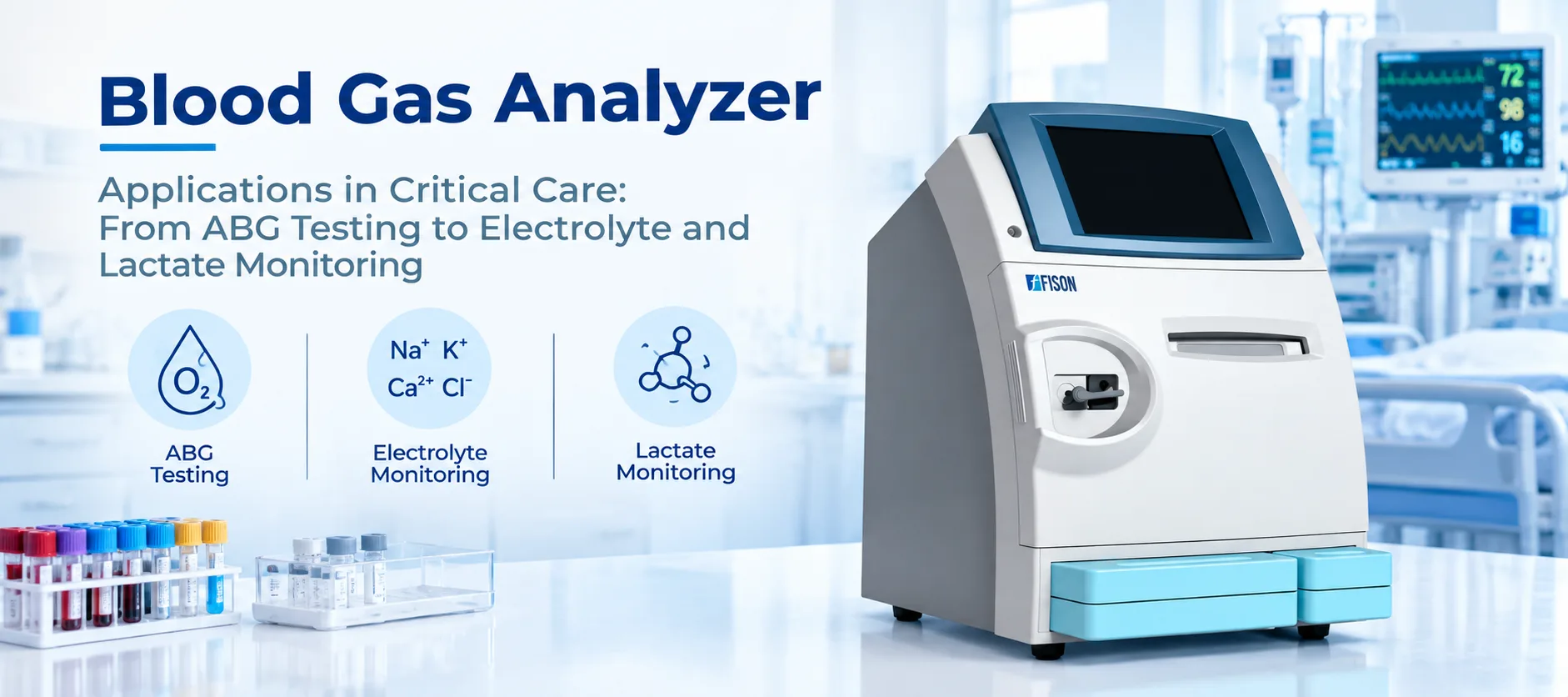
Laboratories, hospitals, research centres and advanced facilities running round-the-clock critical care testing depend on electrode readings that stay accurate from one shift to the next. A Fison Blood Gas Analyzer holds up well over years of continuous use when a handful of maintenance habits are followed consistently, and this article covers what actually protects electrode life.
Why Electrode Condition Determines Result Accuracy
A blood gas machine can pass a quality control check one day and drift the next without any obvious warning, since a membrane fouled by protein deposits or a partially clogged reference junction rarely announces itself before a control value falls outside its expected range. By the time a result looks visibly wrong, the underlying electrode condition has often been declining for days. A single blood gas analysis test result that looks slightly off can prompt a repeat draw, which adds delay exactly when a fast answer matters most.
Facilities running high sample volumes typically find that a short, scheduled maintenance routine, not a newer instrument, is what actually keeps electrodes performing consistently between service visits.
How a Blood Gas Analyzer Measures a Sample
The Blood Gas Analyzer principle relies on a small set of electrochemical sensors: a pH electrode, a carbon dioxide electrode and an oxygen electrode each generate a signal proportional to the concentration of what they detect once a sample reaches the measuring chamber. The stages below outline how a typical run moves from a loaded sample to a reported set of values.
Sample Aspiration
Electrode Measurement
Signal Conversion
Result Calculation
Once each electrode signal is converted, onboard software calculates derived values such as bicarbonate and base excess alongside the directly measured parameters. The Blood Gas Analyzer working principle depends on each electrode staying clean and properly calibrated, since a single fouled sensor can throw off a derived value even when the other electrodes are functioning normally. Reviewing the Blood Gas Analyzer working principle periodically with new staff helps explain why a single fouled electrode can affect more than one reported parameter. A technician who understands the Blood Gas Analyzer principle can often trace a drifting result back to a specific electrode faster than one following a fixed troubleshooting script.

Where the Blood Gas Analyzer Sits Within Fison's Diagnostic Instrument Range
A Portable Blood Gas Analyzer belongs to a broader category that also includes benchtop and central-laboratory systems, each suited to a different testing location and sample volume. Within this category, facilities typically compare parameter menu, sample volume requirements and turnaround time before settling on which automated Blood Gas Analyzer matches their daily testing pattern. An automated Blood Gas Analyzer that handles sample aspiration and rinse cycles without manual steps still depends on the same electrode care discussed throughout this checklist. Reviewing the full analyzer range alongside a facility's typical testing location is a practical way to confirm a good fit before committing to routine use. Blood Gas Analyzer portable models tend to see more temperature swings and handling stress than a fixed benchtop unit, which is part of why electrode maintenance matters even more at the point of care.
The Fison home page catalogues the wider set of laboratory and hospital equipment this diagnostic instrument range belongs to, alongside elemental analysis and moisture testing equipment built around the same accuracy expectations.
Maintenance Checklist: Protecting Electrode Life
Run quality control checks against calibration fluids on a fixed schedule, since a slow electrode drift usually shows up here before it reaches a patient result.
Inspect samples for clots or air bubbles before analysis, since either can damage an electrode membrane or produce a misleading reading.
Replace membranes and reagents on the interval most Blood Gas Analyzer manufacturers specify, since a membrane used past its expected life becomes more prone to fouling.
Run rinse cycles between samples as intended, since skipping a rinse step allows residue to build up gradually on the electrode surface.
Avoid letting electrodes sit dry during extended idle periods, since a dried-out membrane loses sensitivity and may not recover with rehydration alone.
Where Laboratories, Hospitals, Research Centres and Advanced Labs Put This Technology to Work
Blood Gas Analyzer uses span intensive care monitoring, emergency department triage, surgical anaesthesia management and neonatal respiratory assessment, each depending on a fast, accurate blood gas analysis test result. Reviewing the full analyzer category alongside a facility's typical testing volume is a practical way to confirm which parameter menu and sample handling actually apply.
Laboratories running critical care panels rely on a Blood Gas Analyzer device to return pH, oxygen and carbon dioxide values within minutes of sample collection.
Hospitals staffing emergency departments depend on a blood gas machine positioned near the point of care to support rapid treatment decisions.
Research centres studying respiratory and metabolic function use repeat measurements across a study timeline, which makes consistent electrode performance especially important to maintain.
Advanced labs supporting neonatal and surgical units rely on a small sample volume requirement to test patients where blood draw size is limited.
This spread of use cases reflects how differently laboratories, hospitals, research centres and advanced labs depend on the same underlying electrode-based detection process. Documenting Blood Gas Analyzer uses across departments also helps a facility plan maintenance windows around its busiest testing periods rather than a fixed generic calendar.
Selection Mistakes to Watch For When Choosing or Maintaining a Blood Gas Analyzer
A handful of recurring missteps show up around both selection and upkeep, and most only become clear once a result pattern looks inconsistent with a known sample:
- Choosing a blood gas analyzer machine without matching sample volume to testing needs. A model sized for a low-volume clinic struggles once daily test numbers grow beyond what it was configured for.
- Skipping quality control after a reagent or membrane change. A fresh component can behave differently until it has been verified against a known calibration fluid.
- Allowing air bubbles into a sample during collection. Even a small bubble can distort oxygen and carbon dioxide values enough to affect a clinical decision.
- Assuming factory calibration lasts indefinitely. Electrode drift can occur gradually with normal use, which is why a fixed recalibration schedule matters more than a one-time setup check.
- Choosing Blood gas analyzer portable models without checking parameter menu depth. A compact footprint sometimes means a narrower parameter set than a benchtop system offers.
Explore Fison's Blood Gas Analyzer
Electrode condition, sample handling discipline and calibration routine all affect how much its results can hold up across a busy testing schedule, and matching a maintenance routine to actual daily use matters more than following a generic calendar. Documenting each check alongside instrument logs makes electrode drift easier to catch before it affects a reported result.
Explore the Full Product Range