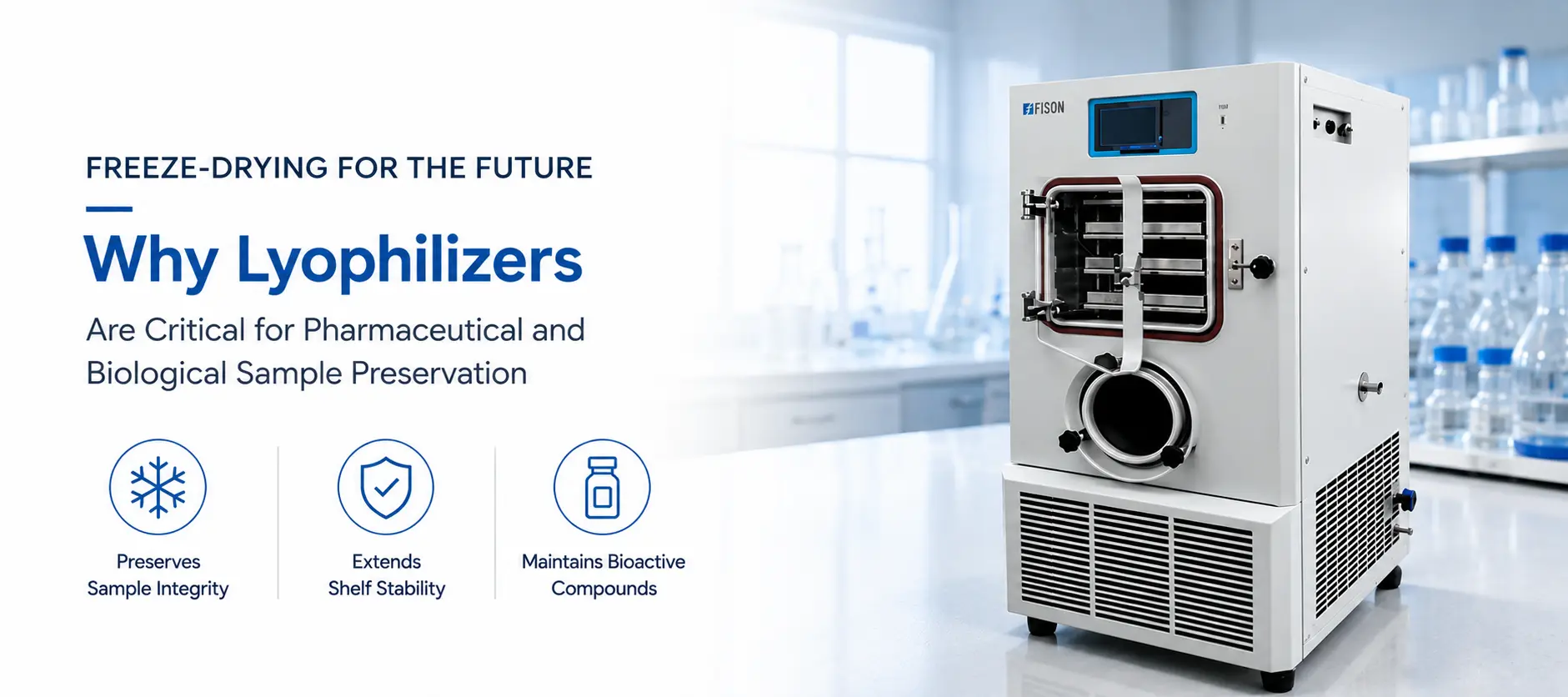
Freeze-Drying for the Future: Why Lyophilizers Are Critical for Pharmaceutical and Biological Sample Preservation
Preserving the structure and activity of sensitive biological and pharmaceutical materials over long storage periods depends heavily on how moisture is removed from the sample. A Fison Lyophilizer Freeze Dryer addresses this by drawing water out of a frozen sample without exposing it to the heat that would otherwise damage delicate proteins, vaccines, or diagnostic reagents. This article looks at how the technology works, where it is applied across laboratories and hospitals, and what research centres commonly overlook when choosing equipment for their preservation workflow.
How a Lyophilizer Freeze Dryer Works
The process behind freeze drying and Lyophilization relies on a scientific principle called sublimation, where frozen water moves directly from a solid state into vapor without passing through a liquid phase. A sample is first frozen solid, then placed under a controlled vacuum while shelf temperatures are gradually raised. This allows moisture to leave the material gently, protecting the physical and chemical structure of proteins, cell cultures, and other biological compounds.
Inside a typical Lyophilizer machine, three components work together: a refrigeration system that freezes the product chamber, a vacuum pump that lowers internal pressure, and a condenser that captures the vapor before it can re-enter the chamber. Shelf temperature programming allows technicians to control the pace of drying, which is particularly important for samples that are sensitive to temperature fluctuation during the primary and secondary drying phases.
Simplified view of the freezing, vacuum, and vapor-capture stages inside a Lyophilizer Freeze Dryer chamber.
Where Freeze Drying and Lyophilization Are Applied
Laboratories rely on freeze drying wherever long-term sample stability matters more than immediate use. In pharmaceutical settings, Lyophilizer equipment is used to stabilize vaccines, antibiotics, and injectable formulations that would otherwise lose potency in liquid form. Hospital laboratories apply the same process to plasma products, blood derivatives, and diagnostic reagents that need to remain viable across extended storage and transport periods.
Research centres and advanced labs working with cell cultures, enzymes, or genetic material also depend on Lyophilizer uses that go beyond pharmaceutical production. Freeze-dried samples can be rehydrated later for testing without the degradation that typically accompanies frozen or refrigerated storage, which makes the technique valuable for archiving reference specimens and biobank samples over many years.
Hospital laboratories
Pharmaceutical production
Research centres
Sample and biobank archiving
Common Mistakes When Selecting a Lyophilizer Machine
One of the most frequent errors when evaluating a commercial freeze dryer machine is focusing only on chamber size while overlooking condenser capacity. If the condenser cannot capture vapor at the same rate the shelves release it, drying cycles slow down and sample quality can suffer. Matching shelf area, condenser temperature range, and vacuum pump strength to actual sample volume is a more accurate way to judge whether a unit fits a laboratory's workflow.
Another common oversight is underestimating how much shelf temperature control matters for heat-sensitive biological material. Facilities working primarily with vaccines or protein-based compounds need finer temperature programming than a general-purpose lab freeze dryer might offer. It also helps to think about how automation features, such as programmable drying cycles and vacuum monitoring, will reduce manual oversight during long multi-day drying runs.
Finally, laboratories sometimes underestimate future needs, purchasing a Lyophilizer Freeze Dryer equipment sized only for present sample volumes. As research programs or diagnostic testing expand, chamber capacity that seemed sufficient at installation can quickly become a bottleneck, making it worthwhile to plan for some headroom in shelf area and batch size from the outset.
The Broader Category of Laboratory Preservation Equipment
A Lyophilizer Freeze Dryer sits within a wider category of laboratory preservation and sample-handling equipment, which also includes ultra-low temperature freezers, vacuum concentrators, and controlled-rate freezing systems. When comparing options within this category, laboratories typically look at chamber and shelf configuration, drying cycle programming, condenser temperature range, and how easily a unit integrates into existing sample-handling workflows. Anyone exploring the full range of preservation systems can review the available Lyophilizer Freeze Dryer category to compare configurations suited to different laboratory sizes.
This category sits alongside other equipment groups covered on the wider Fison instruments site, where laboratories can browse related sample preparation and analytical equipment used across pharmaceutical, hospital, and research settings.
Freeze Drying Compared With Other Preservation Methods
Refrigeration and conventional frozen storage keep samples cold but do not remove moisture, which means enzymatic activity and microbial growth can continue at a reduced pace over time. Chemical preservatives introduce compounds into the sample that may interfere with later testing or analysis. Freeze drying and lyophilization avoid both issues by removing water directly, leaving behind a stable, low-moisture product that can often be stored at room temperature and rehydrated when needed.
This difference is particularly relevant for laboratories shipping biological material across long distances, since freeze-dried samples are lighter and less vulnerable to temperature excursions during transport compared with frozen alternatives. Facilities weighing these trade-offs against their sample types and storage timelines can review configurations on the Lyophilizer Freeze Dryer product page to see how shelf area and condenser specifications align with their preservation needs.