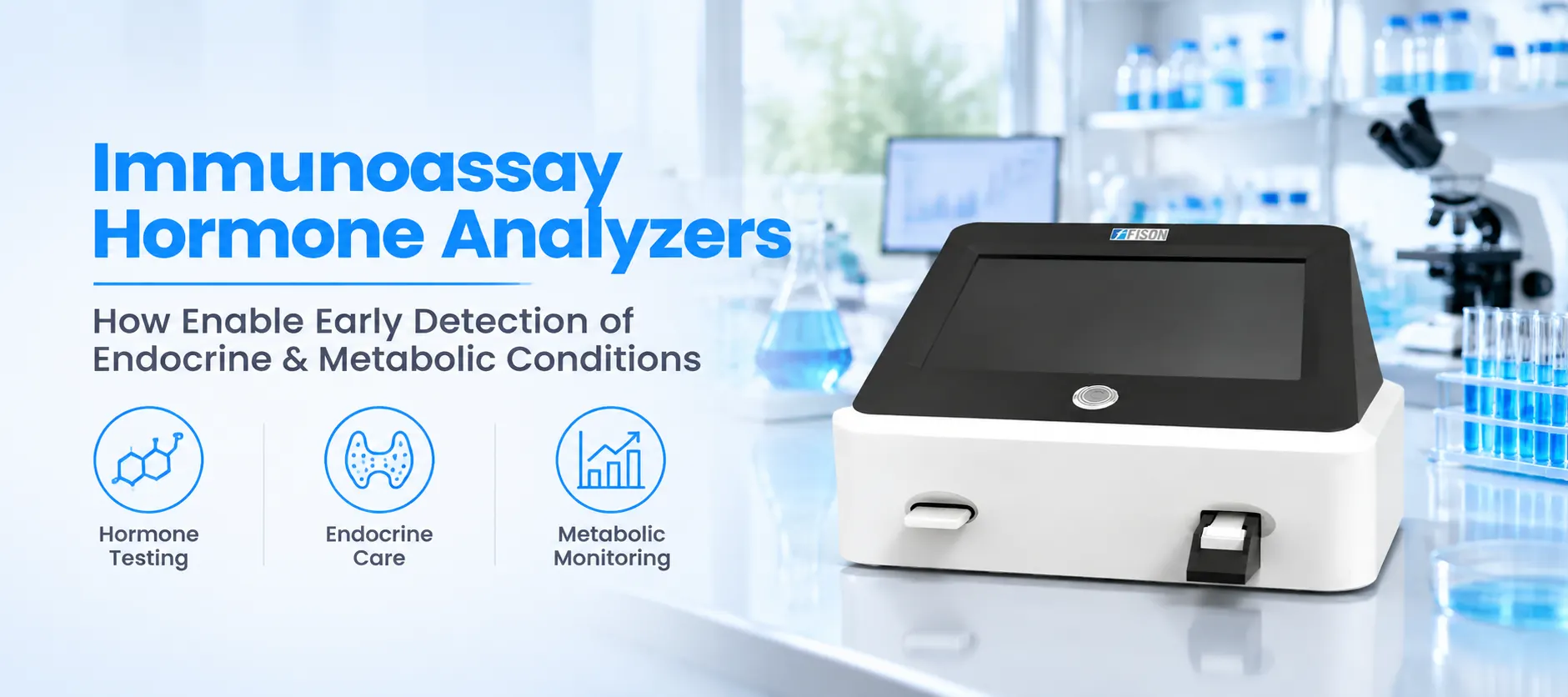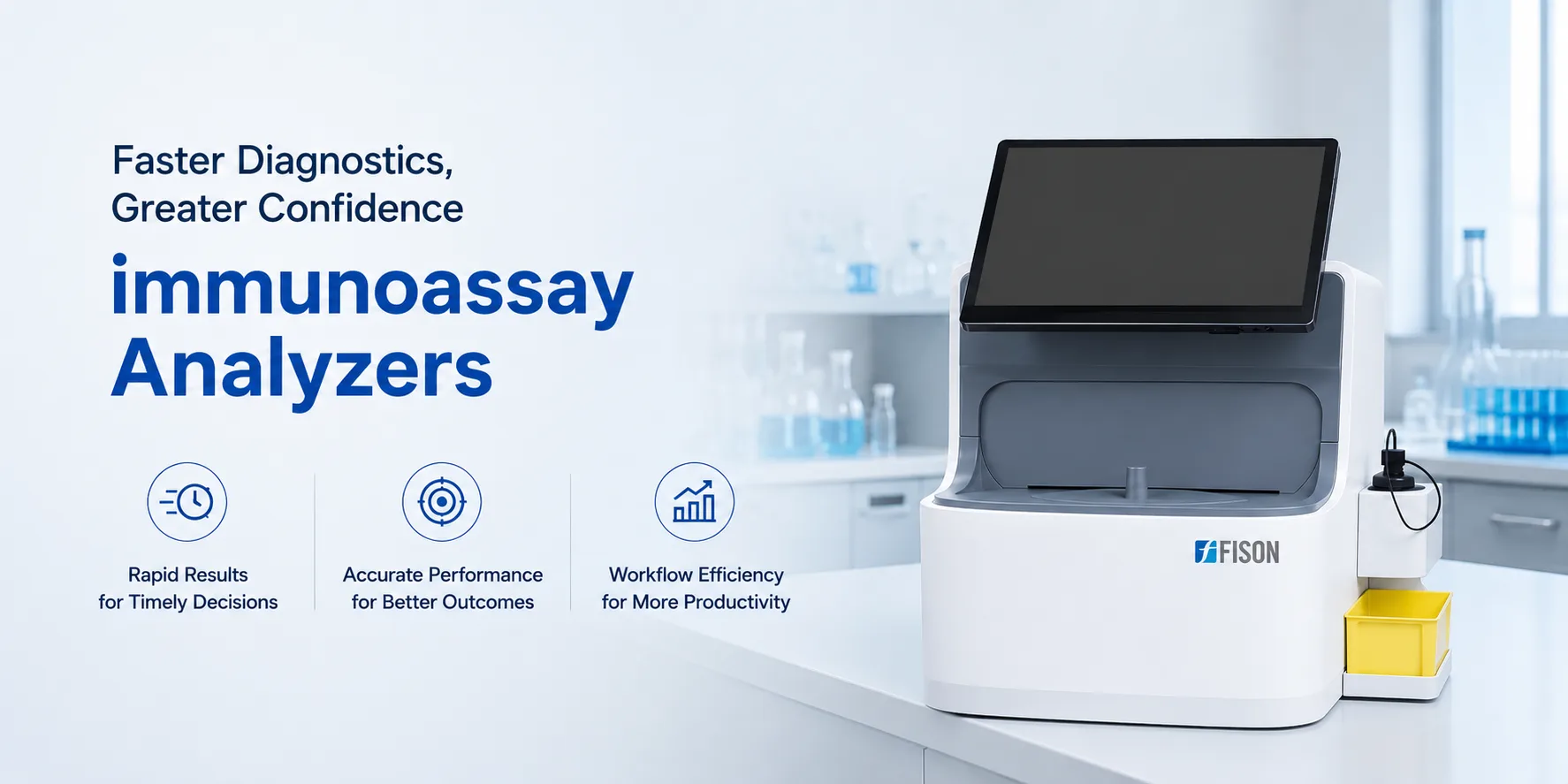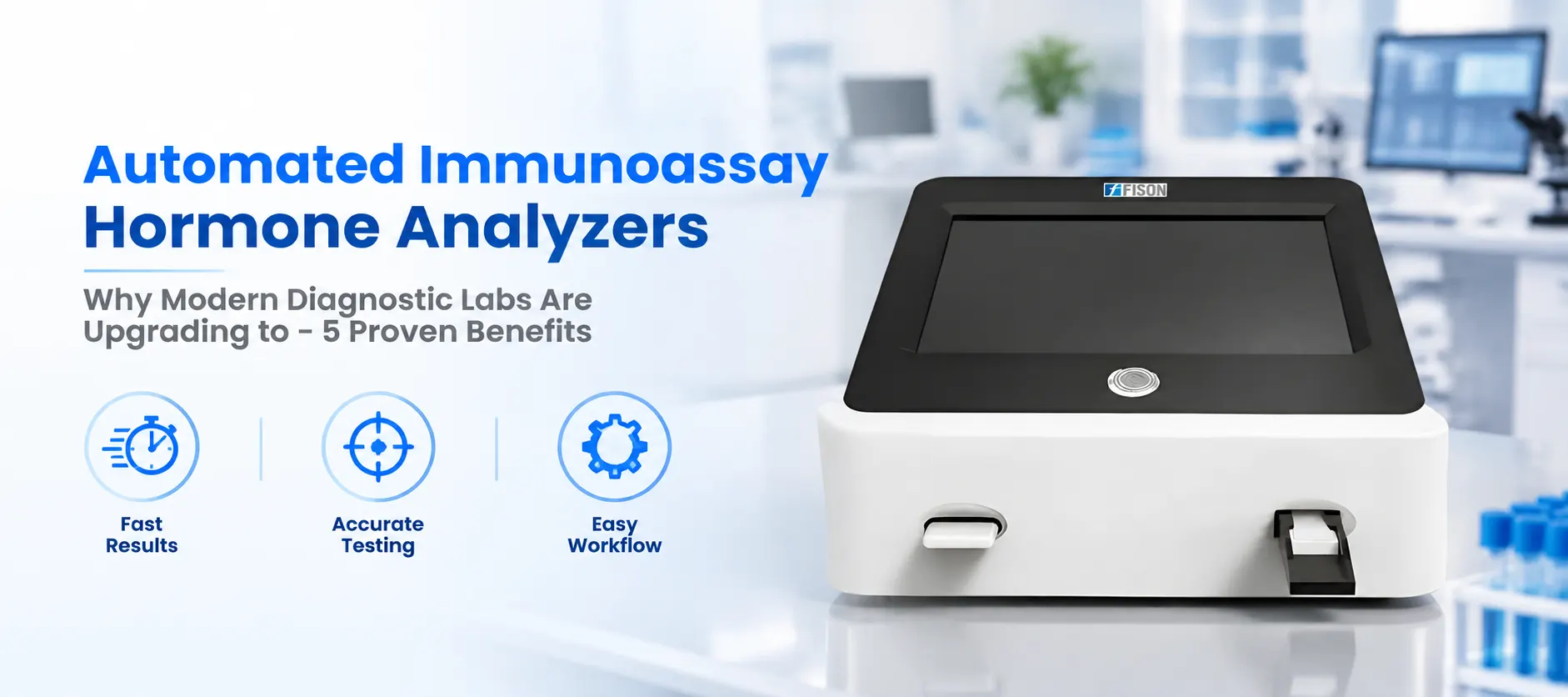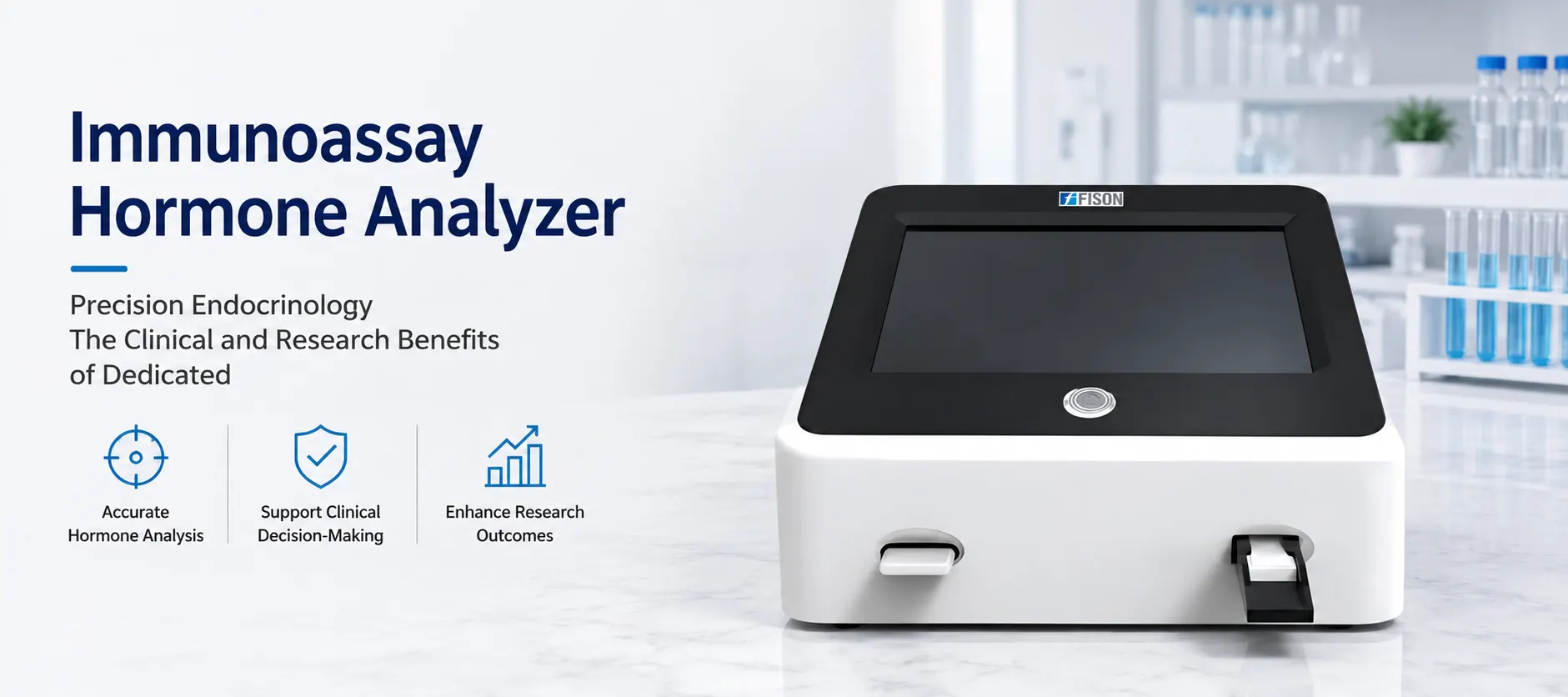
Hospitals, laboratories, research centres and advanced facilities running thyroid, fertility, adrenal and growth hormone panels depend on A Fison Hormone Analyzer built specifically for the very small concentrations these markers appear in. This article looks at how these instruments work, where they fit into a wider immunoassay setup, and what to check before choosing one.
Why Hormone Testing Needs a Dedicated Analytical Approach
Most circulating hormones sit in blood at concentrations measured in nanograms or picograms per millilitre, far below what a general clinical chemistry method can pick up with any confidence. Detecting a change at that scale calls for an Immunoassay Hormone approach, where a labeled antibody binds specifically to the target hormone and amplifies a signal that would otherwise be too faint to read reliably.
Running this kind of testing on a shared, general-purpose hormone machine designed for broader chemistry panels often means compromising on sensitivity for markers that need it most, such as thyroid-stimulating hormone at the low end of its reference range. A dedicated instrument keeps that sensitivity intact across the full menu of endocrine tests a lab runs.
How a Hormone Analyzer Works: Principle Behind Hormone-Specific Immunoassays
A Hormone Analyzer introduces a small sample into a reaction well alongside an antibody labeled to bind only the target hormone. Once binding occurs, unbound material is washed away, and the remaining signal - whether chemiluminescent, fluorescent or enzyme-based - is measured and converted into a concentration using a calibration curve built from known reference points.
Sample Loading
Antibody Binding
Signal Detection
Hormone Result
Cross-reactivity is the detail that separates a well-matched assay from a poorly matched one: an antibody that binds too closely to a structurally similar hormone can inflate a result, which is why assay specificity matters as much as raw sensitivity.
Fully Automated and Semi-Automated Analyzers: Matching Automation to Test Volume
A semi-automated setup still needs an operator to load reagents or trigger certain steps between samples, which works for a lab running a modest number of hormone panels each day. A fully automated Immunoassay Analyzer, by contrast, sequences sample loading, reagent handling, incubation and detection with far less operator input, freeing staff to handle other work while a batch runs.
An automatic Immunoassay Hormone Analyzer suits hospital and reference laboratories processing a high daily volume of thyroid, fertility and adrenal panels, where consistent turnaround time matters as much as accuracy. Labs weighing automation level against daily volume can compare throughput, reagent capacity and assay menu on the Immunoassay Hormone Analyzer category page before settling on a configuration.
Where the Immunoassay Hormone Analyzer Fits in the Wider Immunoassay Equipment Category
A Hormone Analyzer belongs to a broader group of Immunoassay Analyzer machine types used across clinical and research settings, alongside general-purpose immunoassay machine platforms built for infectious disease markers, tumor markers and allergy panels. Within this group, labs typically compare assay menu breadth for endocrine markers, throughput, sample volume requirements, reagent onboard capacity, and how well an instrument integrates with existing laboratory information systems.
Reviewing the full Immunoassay Hormone Analyzer range is a practical starting point for lining up these factors before narrowing a shortlist.
For labs exploring immunoassay equipment beyond hormone testing, the Fison home page lists the wider catalogue of laboratory and hospital equipment the brand carries.
Practical Uses Across Hospitals, Laboratories and Research Centres
An Immunoassay Hormone Analyzer device supports more diagnostic and research workflows than routine thyroid testing alone, once a facility looks at its full range of applications.
Hospital laboratories run Immunoassay Hormone Analyzer blood tests for thyroid function, cortisol, and reproductive hormones such as estradiol and testosterone, often on samples tied to time-sensitive clinical decisions. Reference laboratories extend the same instrument to a broader endocrine menu, including growth hormone and parathyroid hormone panels requested from outside clients. Research centres run an Immunoassay Hormone test during assay development and validation work, comparing new methods against established ones, while advanced labs processing high sample counts pair the analyzer with automated sample handling to keep pace with daily testing volume.
Selection Mistakes to Watch For When Choosing a Hormone Analyzer Machine
A handful of recurring missteps show up during evaluation, and most only become clear once the instrument is already in routine use:
- Assuming a broad assay menu covers all hormones needed. Not all Hormone Analyzer machine models carry the same panel of tests, and a missing assay can mean sending samples out to a reference lab regardless of the instrument on hand.
- Overlooking cross-reactivity data. Structurally similar hormones can interfere with an assay's specificity, and skipping this detail during evaluation can lead to unexpected result discrepancies later.
- Sizing throughput on average days only. A lab that sees seasonal spikes in certain hormone panels can find a smaller hormone machine becomes a bottleneck during those periods.
- Underestimating calibration frequency. Hormone assays often need more frequent calibration than general chemistry tests, and not planning for this adds unplanned downtime.
- Ignoring low-volume sample handling. Pediatric or limited-volume samples need a system that can run accurately on a smaller sample size without diluting sensitivity.
Fully Automated and Manual-Step Hormone Analyzers: A Quick Comparison
Some labs still run parts of a hormone testing workflow with manual reagent handling rather than a fully automated sequence. The table below outlines where each approach tends to fit.
| Aspect | Manual-Step Workflow | Fully Automated Analyzer |
|---|---|---|
| Hands-on time per batch | Higher, with manual reagent steps | Lower, steps run in sequence |
| Result consistency | Varies with operator technique | Stays consistent batch to batch |
| Suitability for high daily volume | Becomes time-consuming at scale | Runs a full testing schedule with less oversight |
| Typical setting | Low-volume or specialised research work | Hospital and reference laboratories |
Ready to Compare Immunoassay Hormone Analyzer Options?
Assay menu, throughput and automation level differ meaningfully between models, and reviewing them together helps match an instrument to actual daily testing needs rather than a rough estimate.
View Immunoassay Hormone Analyzer Options