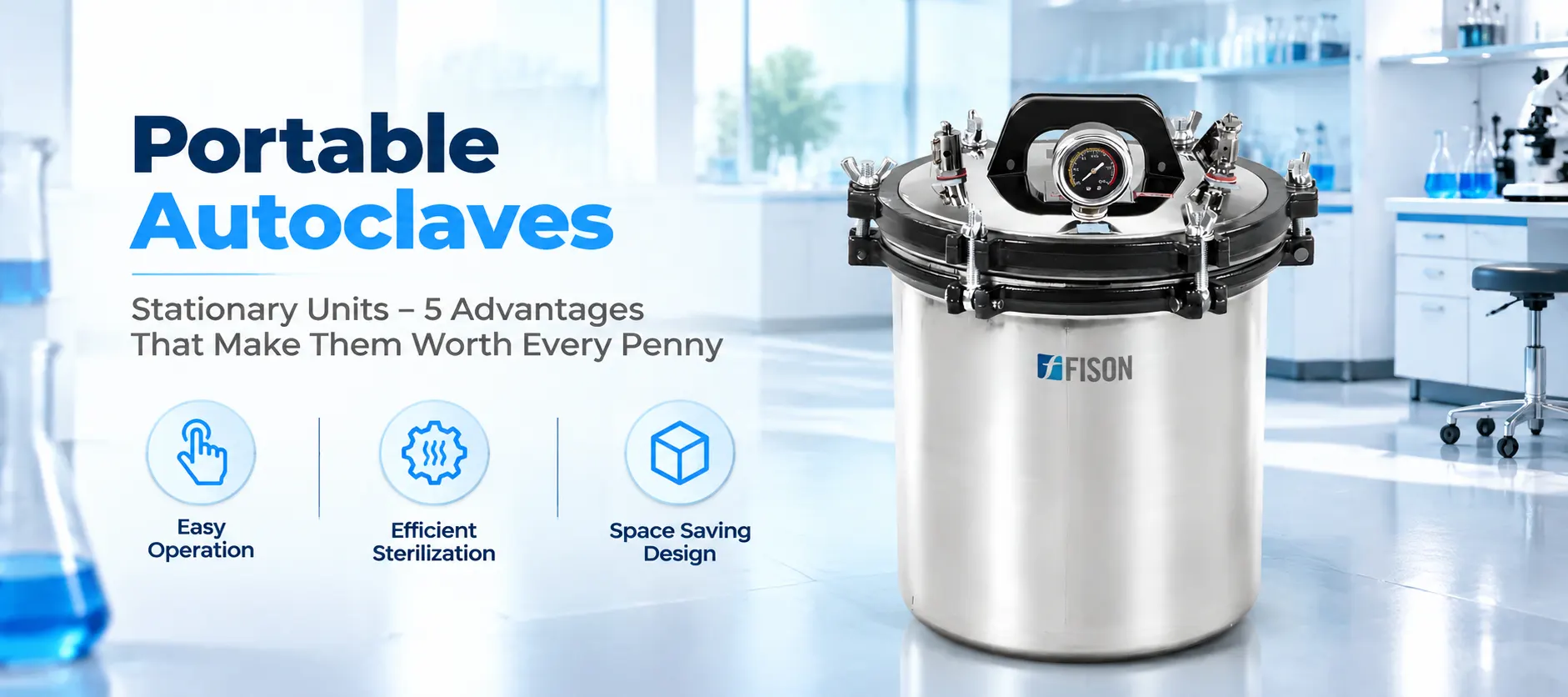
Laboratories, hospitals, research centres and advanced facilities that split sterilization work across several rooms, floors or sites often need equipment that can travel with the work rather than staying fixed to one utility hookup. A Fison portable autoclave answers that need directly, while a stationary chamber remains the established choice for a single, permanent workspace. This article compares the two directly and looks at where a compact, mobile design changes daily sterilization practice.
Why Portability Changes the Sterilization Equation
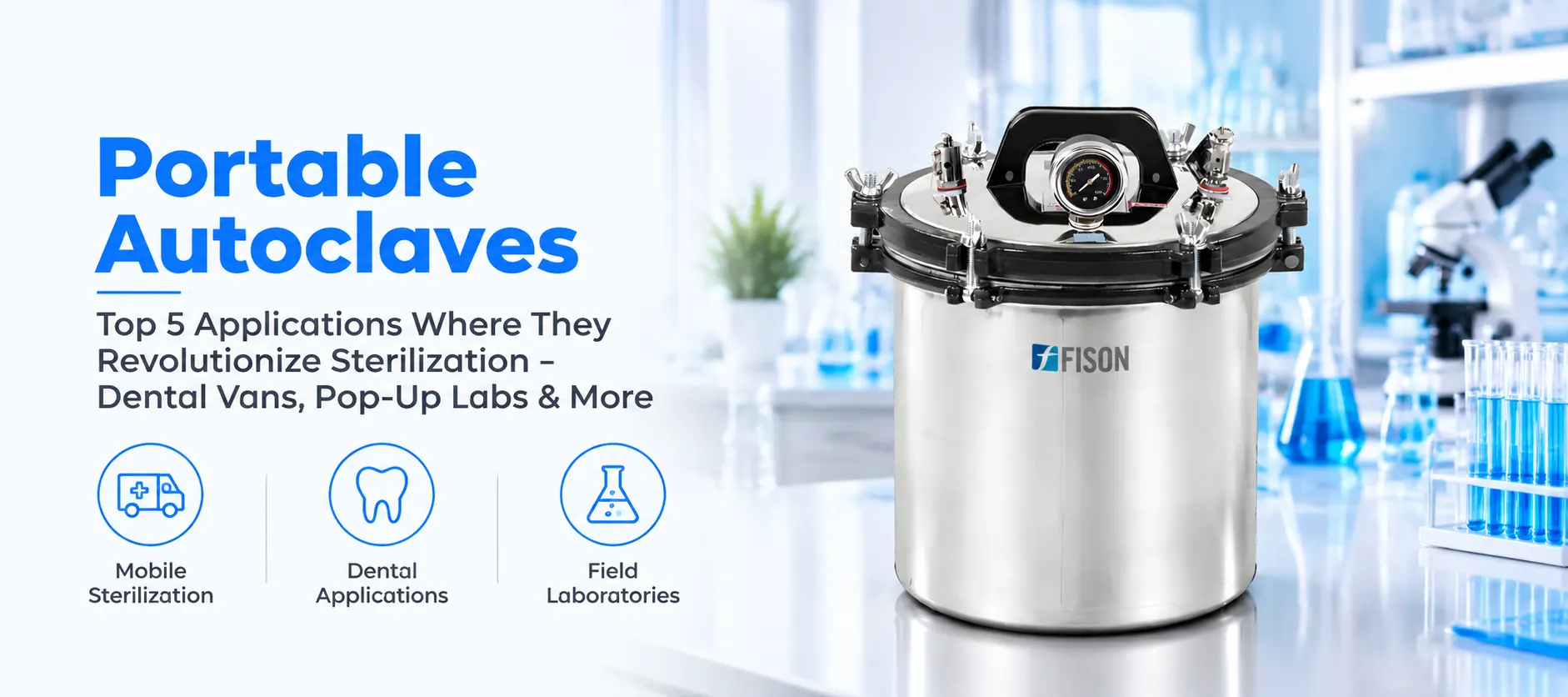
Choosing between a Portable Autoclave and a stationary installation is not simply a question of chamber size; it also shapes how sterilization work gets scheduled across rooms, shifts and sometimes separate sites. A portable steam sterilizer can move to wherever the day's workload happens to be, while a stationary chamber stays anchored to a single location with its own dedicated plumbing and drainage. That difference matters most for facilities juggling several departments or locations with only one or two instrument sets in rotation at any given time.
A stationary chamber still makes sense for a facility with a single, high-volume sterilization point, but a portable steam autoclave earns its place wherever workload, floor plan or budget flexibility rules out a fixed installation. Weighing these two approaches against actual daily instrument counts, rather than against chamber size alone, is usually what settles the decision.
How a Portable Autoclave Completes a Sterilization Cycle
A portable steam autoclave follows much the same core cycle as any autoclave, just packaged into a self-contained unit that does not need a fixed utility connection. The stages below outline how a typical cycle runs from loading through to a finished, dry load.
Load & Seal
Steam Buildup
Pressure & Temperature Hold
Cool-Down & Release
Once the chamber is loaded and sealed, an internal heating element brings a small reservoir of water to a boil, and the resulting steam builds pressure inside the sealed space instead of relying on a facility steam line. A control system holds temperature and pressure at the target level for the programmed exposure time, then vents pressure gradually before the door can be opened. Because a Portable Autoclave machine carries its own water reservoir and heating element, it can run this entire cycle from an ordinary wall outlet rather than a dedicated steam or water supply line.
Where the Portable Autoclave Sits Within Fison's Laboratory Autoclave Range
A Portable Autoclave belongs to the same laboratory autoclave category as benchtop, vertical and horizontal chambers, though it trades some batch capacity for the ability to move between rooms or sites. Within this category, facilities typically compare chamber volume, cycle time, power draw and how easily a unit can be relocated before deciding which format fits a given workflow. A Portable Autoclave sterilizer of this kind is usually weighed against a benchtop or vertical chamber whenever mobility, rather than raw batch size, is the deciding factor.
The full laboratory autoclave range lists these formats together for direct comparison, and the Fison home page lists the wider range of laboratory and hospital equipment built around each one.

Five Advantages a Portable Autoclave Holds Over a Stationary Installation
No fixed plumbing hookup to plan around, since a self-contained reservoir replaces the dedicated water and drain lines a stationary chamber typically needs.
Freedom to move between rooms or departments the same day, letting one Portable Autoclave cover sterilization needs that would otherwise sit idle in a single fixed location.
A smaller footprint that fits on a cart or countertop without requiring a dedicated utility room built around a permanent chamber.
Faster deployment for temporary clinics, field research stations or satellite locations that need sterilization capability without a lengthy installation process.
Standalone operation from a filled reservoir rather than a fixed water line, which keeps a unit working even where facility plumbing is limited or shared.
Where Laboratories, Hospitals, Research Centres and Advanced Labs Put a Portable Autoclave to Work
Portable Autoclave uses continue to expand as more facilities split sterilization work across multiple rooms rather than routing everything through one central chamber. Each Portable Autoclave application shares the same self-contained cycle, adapted to a different room, department or site rather than requiring a different piece of equipment. Reviewing the full laboratory autoclave category alongside a facility's room layout is a practical way to see how many separate points might benefit from a Portable Autoclave instead of one shared chamber.
Laboratories rotate a Portable Autoclave between benches or rooms, covering small instrument batches without booking time on a shared central autoclave.
Hospitals running dental or minor-procedure clinics alongside larger departments often rely on a portable dental sterilizer to keep small instrument sets moving on their own schedule.
Research centres set up temporary or field sampling stations where a Portable Autoclave reaches locations a stationary chamber never could.
Advanced labs handling sensitive instruments sterilize closer to the point of use, cutting the handling and transport steps a shared central chamber would add.
This spread of Portable Autoclave uses reflects how differently laboratories, hospitals, research centres and advanced labs structure sterilization workflow, rather than any single shared layout. Each new Portable Autoclave application tends to follow the same underlying cycle, adapted to a different daily caseload instead of a different technology.
Selection Mistakes to Watch For When Choosing a Portable Autoclave
A handful of recurring missteps show up when a facility moves from a stationary chamber to a mobile unit, and most only become clear once a Portable Autoclave machine is already in daily use:
- Assuming portable capacity matches a stationary chamber's batch size. A compact reservoir and chamber volume mean fewer items per cycle, so daily instrument counts need rechecking against the smaller batch — a portable dental sterilizer sized for a small clinic room will not match a larger department's daily volume.
- Overlooking power supply differences between rooms. Not all outlets on a shared circuit can support the heating element's draw, and tripped breakers during a cycle waste a full load.
- Skipping a routine for refilling and inspecting the reservoir. A unit that runs dry mid-cycle or draws from stale water can produce an incomplete or failed cycle.
- Underestimating daily cycle counts needed across multiple rooms. Covering several locations with one Portable Autoclave can mean more total cycles per day than a single stationary chamber would ever run.
- Moving a portable autoclave without reconfirming placement needs. Ventilation clearance and a level, stable surface matter just as much in a new room as they did in the last one.
Compare a Portable Autoclave Against Your Current Sterilization Setup
Chamber volume, power draw and mobility all vary between a Portable Autoclave sterilizer and a stationary alternative, and matching these to a facility's actual room layout matters more than choosing based on capacity alone. A portable steam sterilizer chosen today may still need revisiting as room layouts and daily caseloads change. Documenting how a Portable Autoclave moves between rooms and how often it cycles each day makes this comparison easier the next time sterilization equipment is reviewed.
Explore Portable Autoclave Options