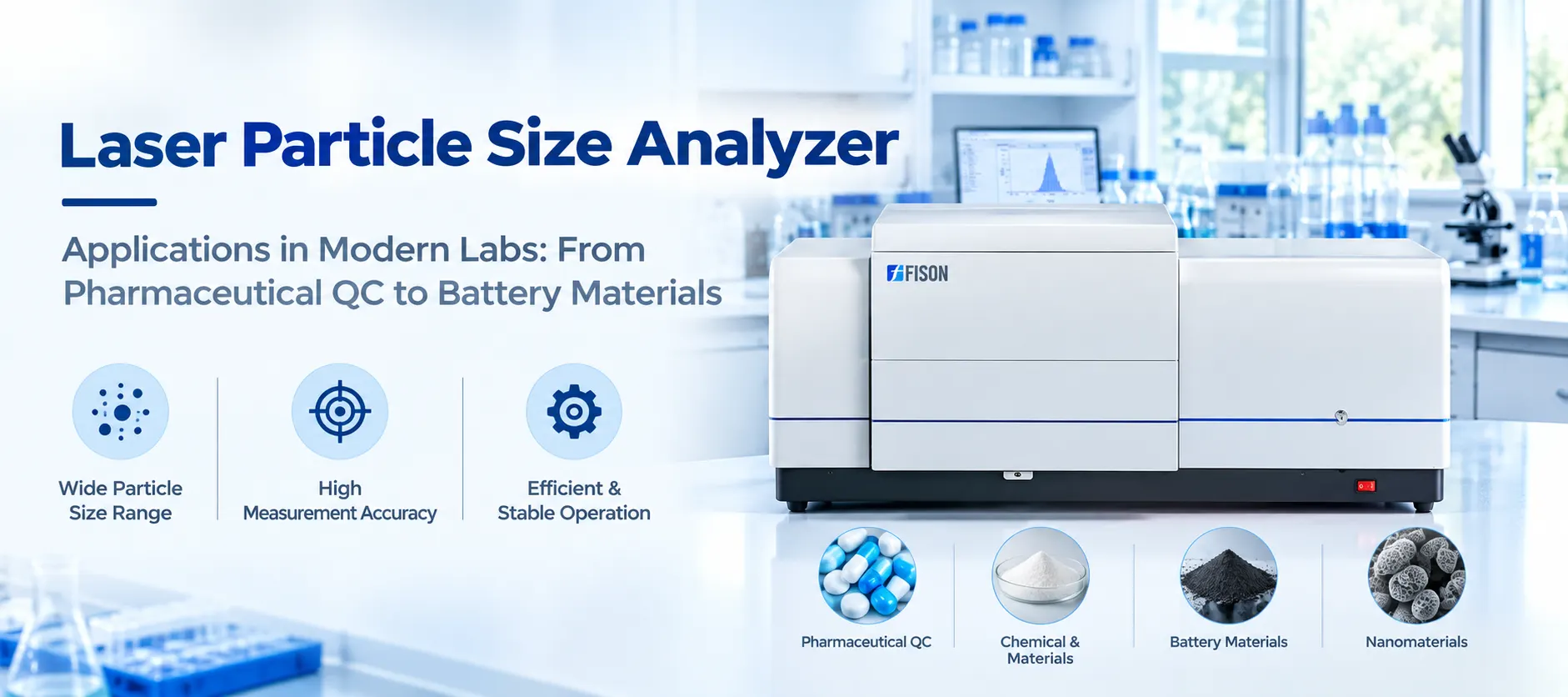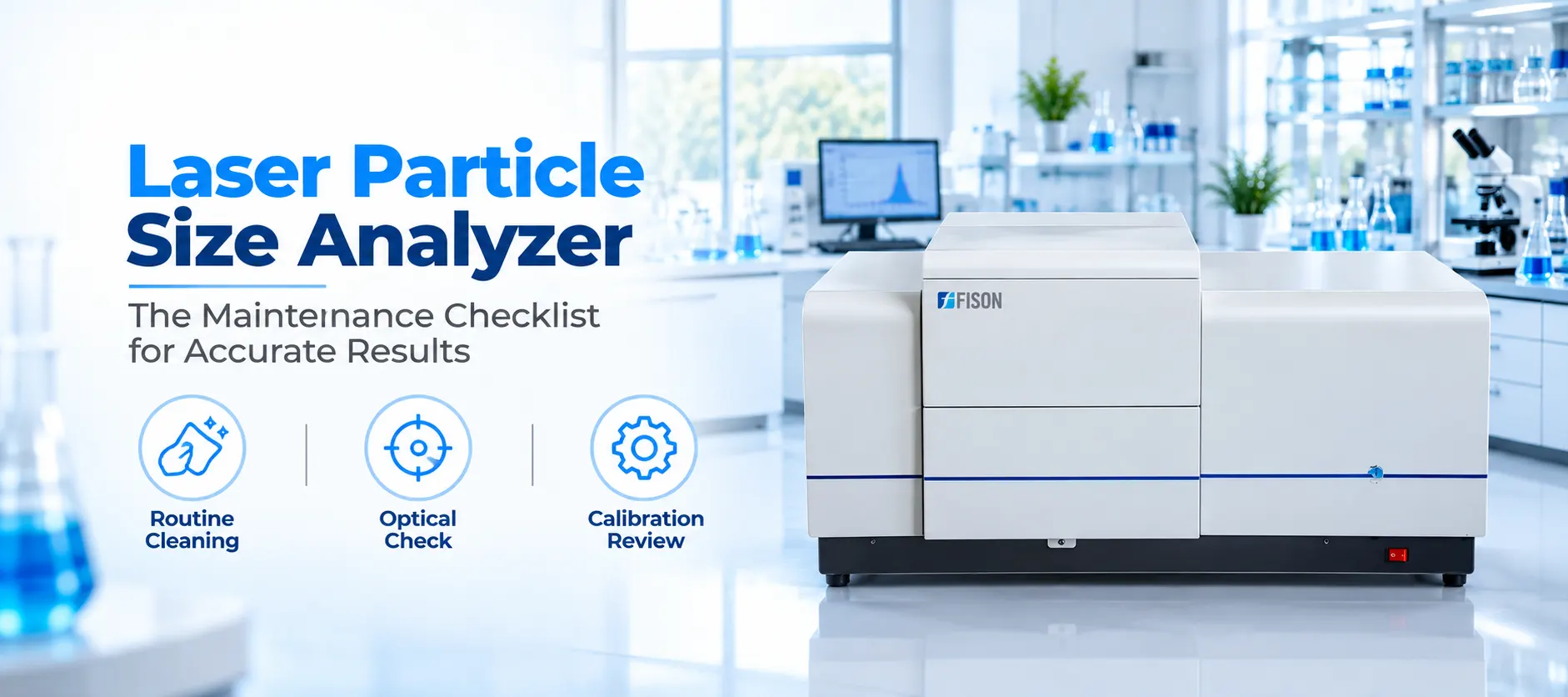
Manual sample prep introduces variation that has nothing to do with the sample itself. This article explains how automated features on a Fison Laser Particle Size Analyzer reduce operator bias and save time, where the gains matter most, and what automation does not fix on its own.
Where Operator Bias Enters a Manual Measurement
Before automation became common on bench instruments, Laser Particle Size Analysis depended heavily on how a technician prepared, loaded and ran a sample. Manual dispersion settings, inconsistent stirring and subjective judgement calls about when a laser particle size measurement had stabilised all introduced variation that had nothing to do with the sample itself.
A Laser Particle Size Analyzer with automated features removes much of that variation by fixing the steps that used to depend on an individual's habits. Laboratories, research centres and advanced labs running the same method across several operators gain the most from this consistency, since Laser Particle Size Analysis then reflects the sample rather than the person running it.
What Automation Actually Controls
Automated dispersion is the clearest example. Instead of a technician judging stirring speed and ultrasound duration by eye, software applies the same fixed sequence each time a method runs, so the same sample prepared by two different people reaches the detector the same way, which is a core benefit of Laser Particle Size Measurement done this way. This matters for particle size distribution analysis, where small differences in dispersion energy can shift the reported spread, and it matters just as much for laser particle size measurement taken at different times of day.
Automatic obscuration control is a second example that supports consistent particle size distribution analysis. Rather than a technician adding sample until a reading looks right, software monitors obscuration and signals when it falls inside the range the method specifies. Combined with automated background measurement and rinsing between runs, these steps turn a laser particle size analyzer into a system that applies the same laser diffraction particle size analyzer working principle in the same way, run after run, which is the point of laser diffraction particle size testing in a shared laboratory.
Measuring the Time Saved
Automation shortens a laser particle size analysis run in several places at once, which is a direct benefit of laser particle size measurement done with fewer manual steps. Sample changeover, dispersion set-up and background measurement that once needed a technician's attention can proceed without supervision, so one operator can queue several samples and return once results are ready rather than watching each run individually.
Detection channels also play a role in throughput. Laser particle size analyzer equipment with 97 detection channels and a measuring range that reaches 3000 µm needs fewer repeat runs to cover a wide distribution for laser particle size distribution analysis, which reduces the time spent re-measuring samples that fell outside a narrower range on a first attempt.
Where Automated Analysis Pays Off Most
Laboratories running high sample volumes see the clearest benefit, but the same efficiency gains apply in several settings. A laboratory running laser particle size analysis across pharmaceutical, battery, hospital, ceramic, food and research samples can review a laser diffraction particle size analyzer against its own sample throughput before deciding how much automation actually matters for its workload.
Pharmaceutical QC Batches
Pharmaceutical QC batches run through release testing benefit from a method that applies the same laser particle size analyzer principle regardless of which analyst is on shift.
Battery Material Screening
Battery material screening across production lots relies on a laser particle analyzer with consistent dispersion to make batches comparable.
Hospital Laboratory Throughput
Hospital laboratory teams running mixed sample queues benefit from unattended laser particle size analyzer runs that free staff for other work.
Ceramics and Cement QC
Ceramics and cement QC teams running routine fineness checks gain more from automated laser particle size analysis than from any single feature of the optics.
Food and Cosmetics Batches
Food and cosmetics batches tested by emulsion and powder sampling benefit from laser particle size measurement that does not drift between operators.
Multi-Operator Research Labs
Research centres and advanced labs training new staff on a laser particle analyzer gain faster onboarding when the method itself removes most manual judgement.

What Automation Does Not Remove
Automated dispersion and obscuration control reduce variation at the measurement stage, but they do not replace sample preparation decisions made before loading. Choosing a dispersant, weighing a representative sub-sample and selecting the correct optical model still rely on operator judgement before any laser particle size measurement begins, and a poor choice at this stage produces a consistent but still wrong result.
A laboratory that documents these upstream choices in its method, alongside the automated settings, gets the full benefit of reduced operator bias in its laser particle size analysis. Automation controls what happens once a sample reaches the instrument; it does not decide what sample reaches it in the first place.
Manual Versus Automated Workflow Compared
Looking at where time and variability enter a laser particle size analysis method clarifies what automation changes and what it leaves to the operator.
| Step | Manual workflow | Automated workflow |
|---|---|---|
| Dispersion energy | Set by operator judgement each run | Fixed by a saved method |
| Obscuration adjustment | Operator adds sample until it looks right | Software signals when the target range is reached |
| Background and rinse | Performed manually between samples | Runs automatically between samples |
| Operator attention needed | Throughout the run | Mainly at loading and review |
Common Mistakes When Adopting Automation
Moving to an automated laser particle size analyzer does not remove all sources of error in laser particle size measurement, and a few habits cause most of the trouble that follows.
- Treating automation as a substitute for method development. A fixed sequence still needs validating against a known reference before it is used for routine laser particle size distribution analysis work.
- Skipping periodic verification of laser particle size measurement. An unattended run can repeat a drifting result just as consistently as a correct one, so reference checks still matter.
- Ignoring sample-specific exceptions. Some materials need a dispersion setting outside the saved default for laser particle size measurement, and an automated method should flag rather than silently apply the wrong one.
- Underusing data review features. Software that logs each run's distribution curve is only useful if someone reviews it for trends, not just pass or fail status.
- Assuming less supervision means less training. Operators still need to understand the laser particle size analyzer principle, and the laser diffraction particle size analyzer working principle behind it, even when the instrument runs the steps automatically.
Where Automated Sizing Fits in the Broader Category
Automated laser particle size analyzer systems sit within the wider category of particle characterisation instruments, alongside dynamic light scattering, image analysis and sedimentation methods, each offering a different balance of automation, sample range and operator involvement. Laboratories comparing laser particle size analyzer equipment in this category weigh how much of the workflow they want software to control against how much flexibility they need for unusual samples.
The full range of laser particle size analyzer equipment is available on the Fison laser particle size analyzer category page, and the wider laboratory equipment portfolio can be reached through the Fison home page.