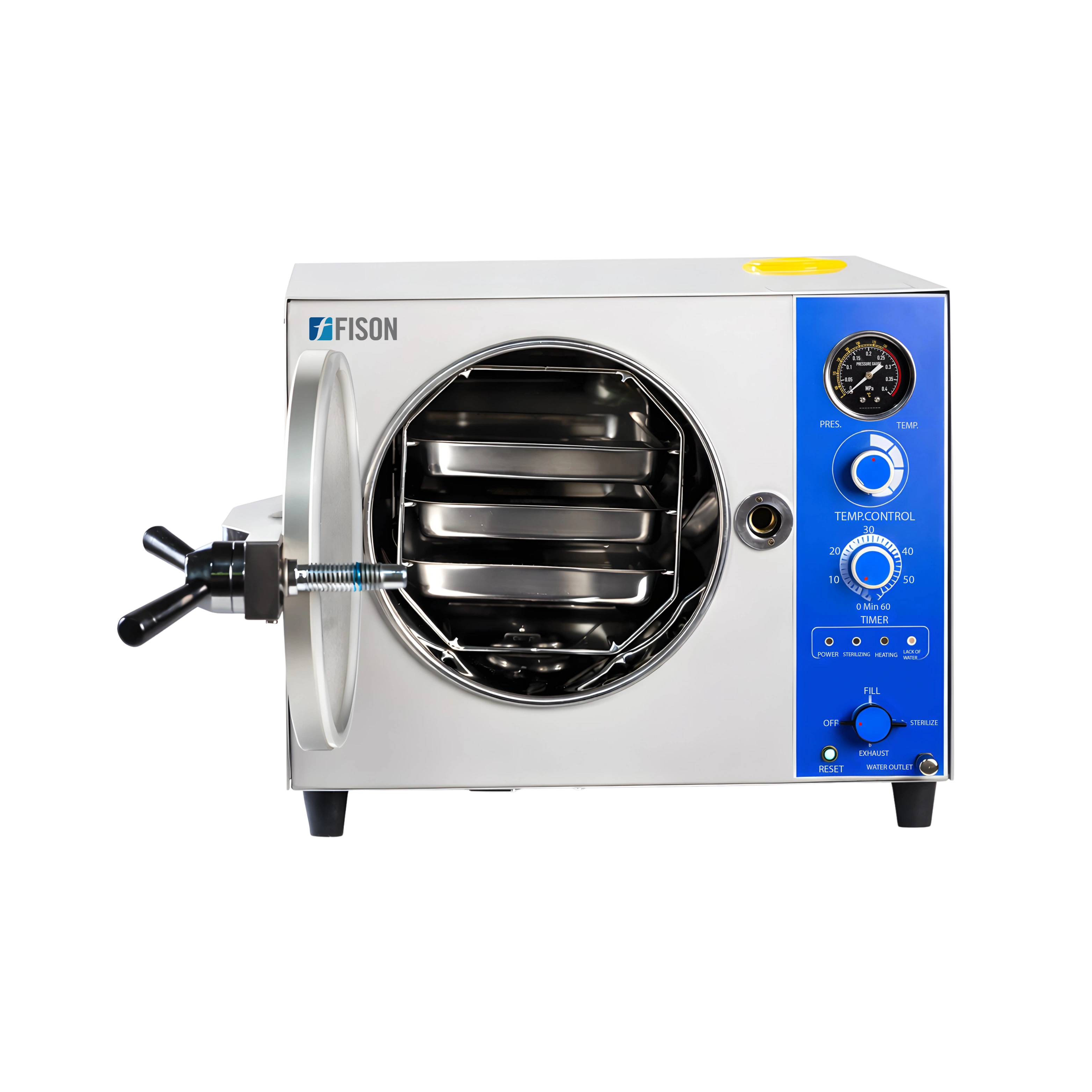
Small diagnostic labs, dental and medical clinics, and tattoo or piercing studios all need to sterilize a modest number of instruments quickly and often, without the floor space a full-size unit demands. A Fison Benchtop Autoclave sits directly on a counter or cart and handles this smaller, faster workload. This article looks at how the cycle works, where these compact sterilizers earn their keep, and what to check before choosing one.
Why Compact Settings Need a Sterilization Approach of Their Own
A facility running dozens of instrument trays a day has different sterilization priorities than a single-operator studio processing a handful of pouches between appointments. Cycle speed, chamber size and daily throughput all shift when the setting moves from a hospital central sterile department to a small clinic or tattoo studio counter. A bench top steam sterilizer is built around this smaller, faster rhythm rather than scaled down from large-batch equipment, which is part of why matching format to setting matters as much as matching sterilization quality itself.
This distinction shapes nearly all of the decisions that follow, from chamber size to cycle programming to how often the unit runs across a working day.
Benchtop Autoclave Principle: How a Compact Steam Cycle Runs
A benchtop sterilizer works on the same core steam-under-pressure principle as any autoclave, just scaled to a chamber that sits on a counter rather than the floor. Instruments, pouches or small trays load through a front-facing door, and the chamber then draws in steam and pressurizes to the temperature the selected cycle calls for.
Tray & Pouch Loading
Chamber Pressurization
Short-Cycle Hold
Rapid Exhaust & Drying
Because the chamber holds a fraction of the volume of a floor-standing unit, a benchtop steam sterilizer reaches sterilizing temperature and completes its hold phase faster than a large-batch machine running the same core cycle. Exhaust and drying phases are similarly shortened, which is part of why a Benchtop Autoclave sterilizer suits settings where instruments need to turn around between appointments rather than sit in a queue for a scheduled batch run.
The Benchtop Autoclave's Place Within Fison's Laboratory Autoclave Range
A Benchtop Autoclave belongs to a broader laboratory autoclave category that also includes vertical and horizontal formats, all built around the same steam sterilization goal but differing in chamber size, orientation and typical daily throughput. When comparing options within this category, teams typically weigh chamber capacity, the cycle types available, drying time, and how well a unit fits an existing counter or cart layout.
The full laboratory autoclave range is a practical starting point for lining up these factors side by side, and a benchtop laboratory autoclave typically sits at the smaller-footprint end of that range. For labs and clinics comparing sterilization equipment against other laboratory instrument categories, the Fison home page lists the wider catalogue available.

Choosing Between Benchtop, Vertical and Horizontal Formats
Chamber orientation and size are the main differences separating a Benchtop Autoclave from its vertical and horizontal counterparts. A vertical unit trades some floor footprint for a taller, deeper chamber suited to a moderate daily batch, while a horizontal design handles the largest loads a facility runs. A benchtop laboratory autoclave sits below both in capacity but ahead of them in cycle speed and counter-level convenience, which suits settings running frequent small loads rather than occasional large ones.
Reviewing the complete laboratory autoclave category alongside actual daily instrument volume helps narrow the choice to a format that matches real working patterns rather than the largest chamber on offer.
Where Small Labs, Clinics and Tattoo Studios Rely on a Benchtop Autoclave
Each Benchtop Autoclave application shares the same compact steam sterilization method, adapted to a different small-scale setting. A benchtop steam sterilizer earns its place across a range of small, fast-turnaround settings that share the same need: sterilize a limited instrument load quickly, without dedicating a room to it.
- Small diagnostic and research labs sterilize glassware, tips and minor tools between routine tests, where a floor-standing unit would sit underused most of the day.
- Dental and medical clinics reprocess hand instruments between patient appointments, often running several short cycles across a single day rather than one large batch.
- Tattoo and piercing studios sterilize needles, tubes and small metal tools ahead of each session, valuing a compact steam sterilizer that keeps pace with a walk-in appointment schedule.
- Veterinary practices process surgical kits and minor procedure tools in similarly small batches between clinic visits.
- Podiatry and aesthetic clinics rely on the same short-cycle approach for the smaller instrument sets these procedures use.
This spread of Benchtop Autoclave application areas illustrates how much ground a single compact design can cover, from routine lab work to walk-in service appointments.
Selection Mistakes to Watch For When Choosing a Benchtop Autoclave
A handful of recurring missteps show up when evaluating a benchtop sterilizer, and most only become clear once the unit is already in daily use:
- Matching cycle type to load, not convenience. Wrapped instruments, pouched sets and unwrapped trays often call for different cycle settings, and defaulting to one cycle for everything can leave some loads inadequately dried.
- Underestimating daily cycle count. A busy studio or clinic running many small cycles a day needs a chamber and heating element sized for that pace, not just a chamber volume that looks adequate on paper.
- Overlooking water quality and reservoir upkeep. The water reservoir needs regular attention, since mineral buildup shortens heating element life and can lengthen cycle times over months of use.
- Assuming drying time scales down with cycle time. Benchtop cycles run shorter overall, but the drying phase still needs its own allowance, and rushing it leaves pouches damp at the door.
- Skipping routine indicator checks. Chemical or biological indicators confirm a cycle actually reached sterilizing conditions, a step some small settings skip once initial confidence in the unit sets in.
Ready to Find the Right Benchtop Autoclave for Your Space?
Chamber size, cycle speed and daily throughput vary across Benchtop Autoclave sterilizer models, and matching a bench top steam sterilizer to actual daily instrument volume in a lab, clinic or studio matters more than choosing the largest chamber on offer.
Explore Benchtop Autoclave Options