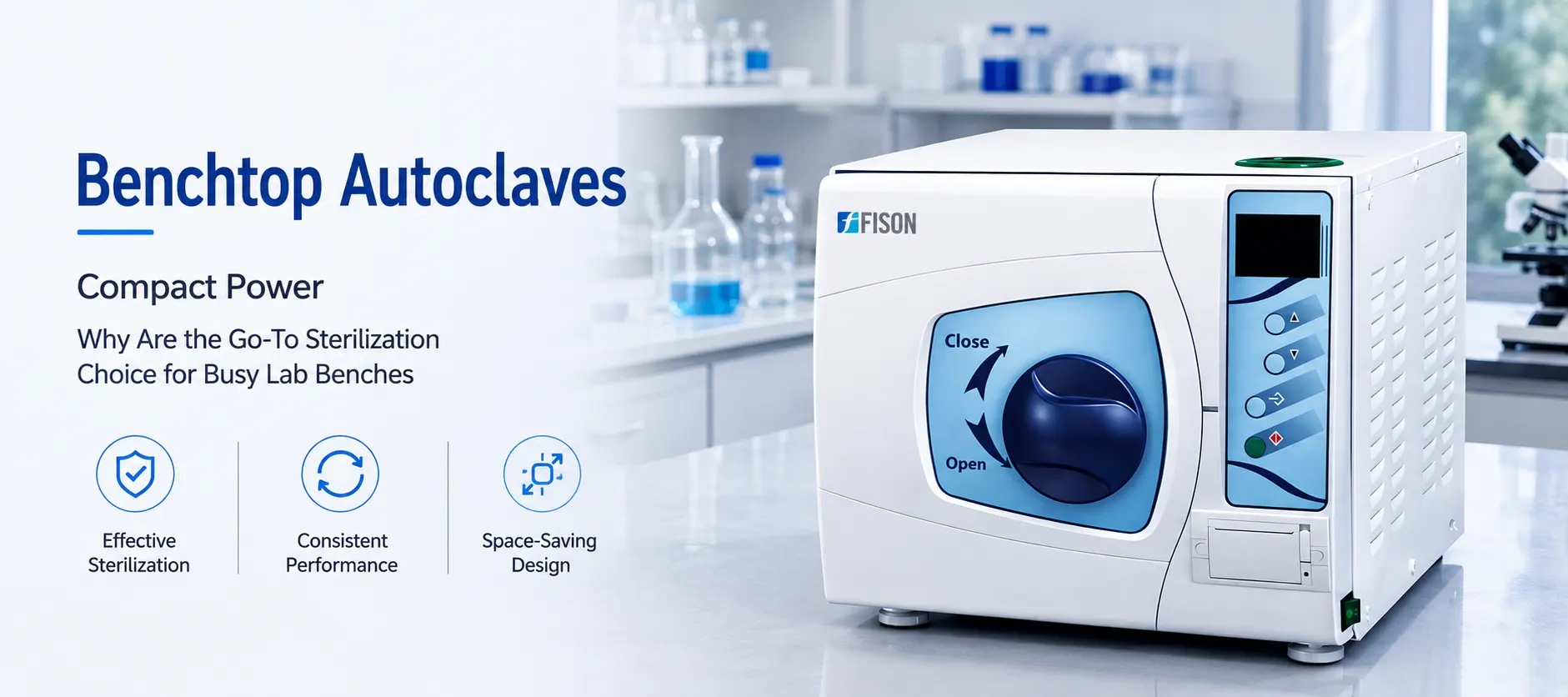
Laboratories, dental practices, research centres and advanced facilities working with limited bench space still need a way to sterilize instruments, media and glassware close to where the work happens, and that is exactly the gap A Fison Benchtop Autoclave fills. This article looks at how these units work, where they fit into a wider sterilization setup, and what to check before choosing one.
Why Space-Efficient Sterilization Matters for Busy Benches
Not all facilities have room for a floor-standing sterilizer, and many do not process a high enough daily volume to justify one. A satellite lab, a dental surgery or a research bench running occasional media preparation needs sterilization close at hand, without dedicating a separate room or utility supply to the task.
A Benchtop sterilizer answers that need by fitting the same steam-based principle into a chamber small enough to sit on a countertop, connecting to an ordinary electrical and water supply rather than the dedicated plumbing a larger Autoclave machine might require. That footprint difference is often the deciding factor for smaller sites choosing between formats.
How a Benchtop Autoclave Works: Principle Behind Compact Steam Sterilization
A Benchtop Autoclave seals a small chamber, removes air from around the load, then introduces saturated steam under pressure to raise the internal temperature well above what boiling water alone reaches. After holding that temperature for a set exposure period, the unit vents pressure and dries the load before the door releases. A bench top steam sterilizer relies on the same physics as a larger unit, scaled down to a chamber that fits comfortably on a countertop.
Load Chamber
Air Removal
Steam Exposure
Drying & Exhaust
Chamber size limits how a Benchtop unit removes air before the steam phase: many rely on a simple displacement method suited to solid, unwrapped items, while others add a pre-vacuum stage to reach wrapped or hollow instruments more evenly.
Class B and Class N Cycles: Matching Cycle Type to Load Type
A class N cycle uses gravity displacement to push air out as steam enters, which works well for solid, unwrapped instruments but struggles to reach the inside of wrapped packs, hollow items or porous materials evenly. A Benchtop Autoclave class b cycle instead pulls a vacuum before introducing steam, drawing air out of hollow and porous spaces so steam can penetrate the load more thoroughly.
Choosing between these cycle types depends entirely on what a practice or lab actually processes day to day: a dental surgery sterilizing wrapped handpieces needs class B capability, while a lab running only solid glassware may never need it. Facilities weighing cycle types against their typical load can compare chamber size, cycle options and drying time on the Benchtop Autoclave category page before settling on a model.
Where the Benchtop Autoclave Fits in the Wider Sterilization Equipment Category
A Benchtop Autoclave sits within a broader group of sterilization equipment that also includes floor-standing horizontal autoclaves and dry heat sterilizers. Within this group, facilities typically compare chamber volume, cycle type support, drying performance, door design, and how much bench or floor space the unit actually needs once accessories and utility connections are accounted for.
Reviewing the full range of Benchtop Autoclave machine options is a practical starting point for lining up these factors before narrowing a shortlist.
For facilities exploring sterilization equipment beyond Benchtop formats, the Fison home page lists the wider catalogue of laboratory and hospital equipment the brand carries.
Practical Uses Across Laboratories, Dental Practices and Research Centres
A Benchtop laboratory Autoclave supports more day-to-day tasks than a single department might expect once it becomes part of a shared workflow.
Dental practices rely on a Benchtop Autoclave dental setup to sterilize handpieces, small instrument trays and other items between patients, often running several short cycles across a working day. A Dental Autoclave built around class B cycles handles wrapped instrument packs that need to stay sterile until the next use. Laboratories use the same equipment for media preparation, glassware and general decontamination on a smaller scale than a hospital CSSD would need, while research centres running occasional media batches find a Benchtop unit fits sample volumes that would otherwise be a poor match for a large floor-standing autoclave.
Selection Mistakes to Watch For When Choosing a Benchtop Autoclave Sterilizer
A handful of recurring missteps show up during evaluation, and most only become clear once the unit is already installed:
- Choosing class N when class B is actually needed. A practice sterilizing wrapped or hollow instruments needs a pre-vacuum cycle, and a gravity-displacement-only unit will not penetrate those loads reliably.
- Undersizing the chamber for daily instrument counts. A chamber sized for occasional use can turn into a bottleneck once daily cycle counts grow.
- Overlooking water quality and reservoir maintenance. Mineral buildup from untreated water can affect heating elements and steam quality over time.
- Not accounting for drying time in scheduling. A cycle that finishes quickly but leaves a wet load still needs drying time built into the daily schedule.
- Skipping placement and ventilation checks. A compact unit still releases heat and moisture during a cycle, and poor placement can affect nearby equipment or work surfaces.
Benchtop and Floor-Standing Autoclaves: A Quick Comparison
Some facilities need the higher throughput of a floor-standing unit rather than a Benchtop Autoclave sterilizer sized for smaller daily volume. The table below outlines where each approach tends to fit.
| Aspect | Benchtop Autoclave | Floor-Standing Autoclave |
|---|---|---|
| Footprint | Sits on a countertop | Needs dedicated floor space |
| Chamber capacity | Suited to smaller, frequent loads | Suited to larger, bulk loads |
| Utility requirements | Ordinary electrical and water supply | Often needs dedicated steam and drainage lines |
| Typical setting | Dental practices, small labs and research benches | Hospital CSSDs and high-volume facilities |
Ready to Compare Benchtop Autoclave Options?
Chamber size, cycle type and drying performance differ meaningfully between models, and reviewing them together helps match a unit to actual daily instrument volume rather than a rough estimate.
View Benchtop Autoclave Options