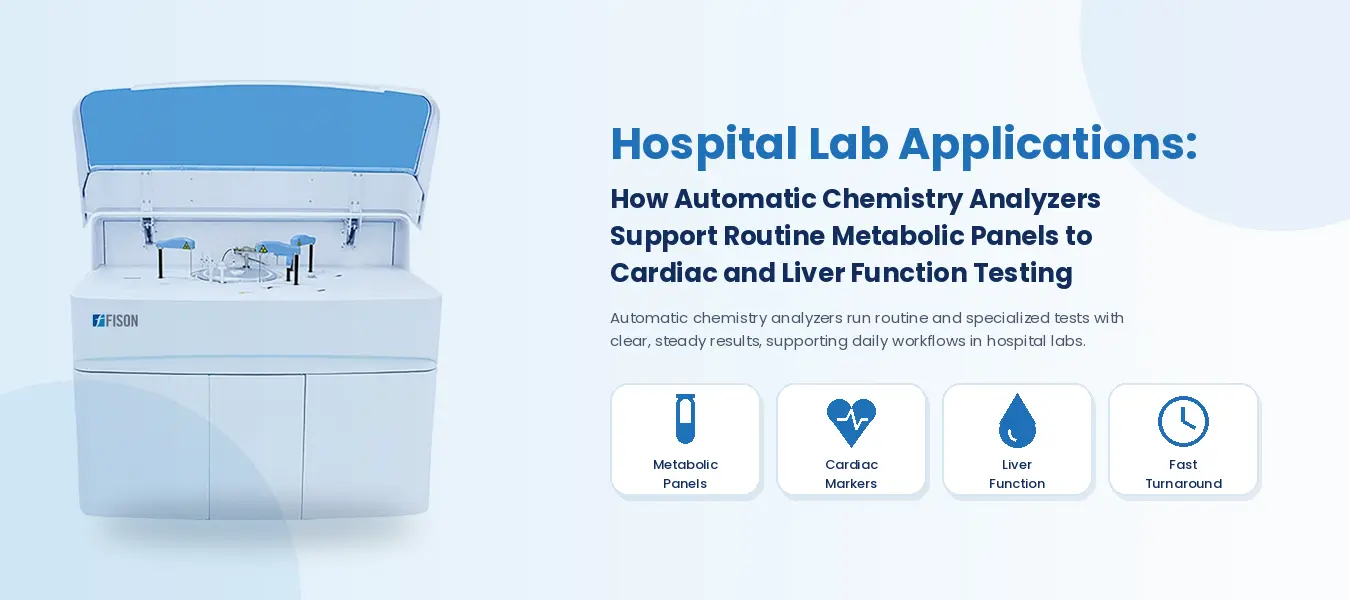
A practical walk through the working principle, the test menus hospitals run, and the mistakes that lead to a poor instrument match.
Why Hospital Labs Moved Beyond Manual Pipetting
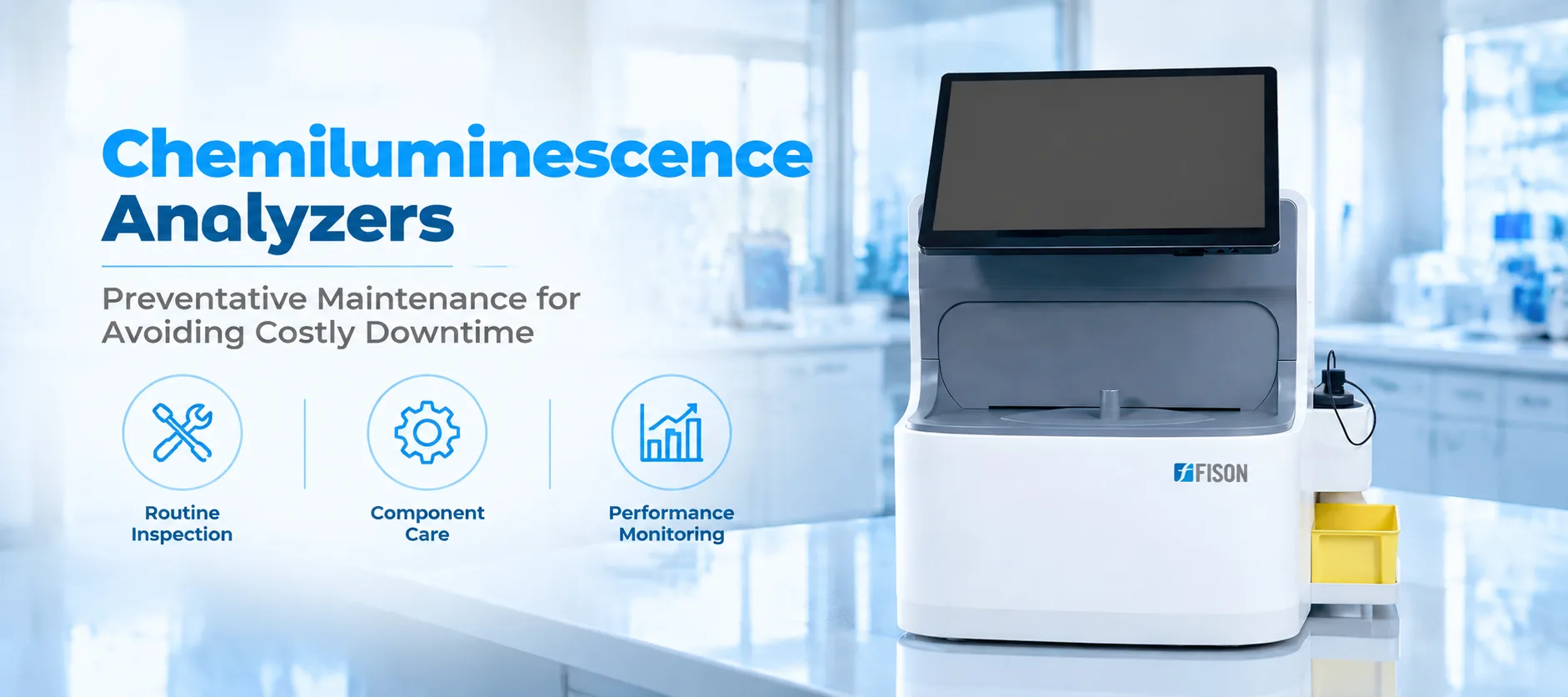
A hospital laboratory can receive several hundred serum and plasma tubes before the morning ward round starts, and that volume leaves little room for hand-prepared reactions. An automatic chemistry analyser places sample dispensing, reagent addition, mixing, incubation and reading inside one instrument, so technologists spend their time reviewing results instead of preparing them.
The Fison automatic chemistry analyser is used as the reference example in this article. The sections below cover how the measurement works, which routine, cardiac and liver tests the platform handles, how the workflow runs from tube to report, and where selection decisions tend to go wrong. The focus throughout is analytical chemistry automation as it is practised in clinical settings.
How the Measurement Works
The automated chemistry analyser principle rests mainly on photometry. A sampling probe moves a small serum or plasma volume into a reaction cuvette, a reagent probe adds the matching reagent, and a stirrer mixes the contents. After incubation at a controlled 37 °C, a lamp sends light of a chosen wavelength through the cuvette and a detector records how much light the mixture absorbs. Absorbance relates to analyte concentration through the Beer-Lambert relationship, and the software converts it into a reported value using a calibration curve.
Within the automatic chemistry analyser principle, two reading styles matter. End-point assays wait for the reaction to finish and read the final colour, which suits glucose or creatinine. Kinetic assays follow the change in absorbance over time, which suits enzymes. Turbidimetric methods measure light scattered by antigen-antibody complexes, and ion-selective electrodes handle sodium, potassium and chloride.
Routine Metabolic Panels
A basic metabolic panel usually bundles glucose, urea, creatinine, sodium, potassium, chloride, bicarbonate and calcium, while a comprehensive panel adds albumin, total protein and several liver enzymes. These are high-volume tests where turnaround and consistency matter most. Emergency departments need potassium and creatinine within minutes, whereas outpatient clinics send fasting glucose and lipid profiles in large morning batches.
Typical automatic chemistry analyser uses at this level include kidney function checks before contrast imaging, electrolyte monitoring for patients on diuretics, and glycaemic follow-up. A fully automated clinical chemistry analyser runs all of these from a single tube, which avoids splitting a limited paediatric or critical-care sample across several benchtop devices.
Cardiac Marker Support
Cardiac testing on a chemistry platform centres on markers that photometric or turbidimetric methods can measure. Creatine kinase and its MB fraction, lactate dehydrogenase and aspartate aminotransferase follow muscle and myocardial injury through enzyme kinetics. Total cholesterol, HDL, LDL, triglycerides and apolipoproteins describe long-term vascular risk, and latex-enhanced immunoturbidimetric assays quantify high-sensitivity C-reactive protein.
Liver Function Profiles
Liver profiles pair enzymes with synthetic markers: ALT, AST, ALP, GGT, total and direct bilirubin, albumin and total protein. The pattern carries more meaning than any single number. Raised ALT and AST with a normal ALP points toward hepatocellular injury, while raised ALP and GGT suggest cholestasis.
The enzymes are read with kinetic UV methods that follow NADH change at 340 nm, and bilirubin relies on diazo chemistry. Haemolysis, icterus and lipemia in a specimen can shift these readings, so a biochemistry analyser fully automatic in operation and able to report serum indices helps staff flag questionable samples before results leave the department.
From Tube to Verified Report
Once tubes are loaded, a barcode links each sample to its ordered tests in the laboratory information system. The analyser then schedules reactions, dilutes samples that exceed the measuring range, and sends results back for review. Calibration and quality control sit around this loop: control materials are run at set intervals, plotted on Levey-Jennings charts, and any shift in the mean prompts recalibration before patient results are released.
Semi-Automated and Fully Automated Platforms
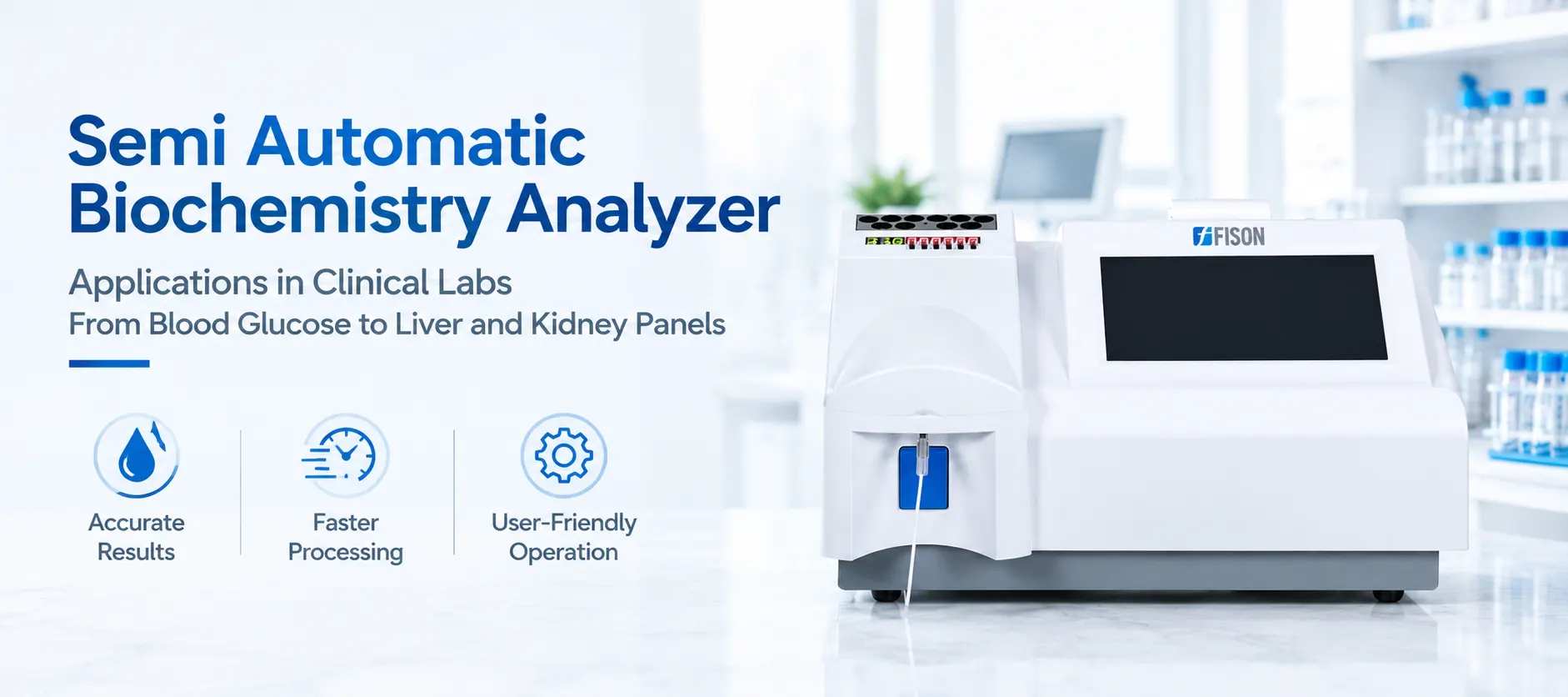
Smaller departments often begin with a semi auto chemistry analyser, where the operator pipettes the sample and the instrument handles incubation and reading. A semi automated chemistry analyser machine of this kind suits low daily volumes and a narrow test list. Larger hospitals move to full automation once sample numbers and menu breadth make manual steps the limiting factor.
| Aspect | Semi-automated | Fully automated |
|---|---|---|
| Sample handling | Operator aspirates or pipettes each sample | Barcoded tubes loaded on racks or a carousel |
| Reagent dispensing | Manual or partly manual | Onboard reagent positions with automatic dispensing |
| Test menu | Limited, run one assay at a time | Wide, many assays scheduled in parallel |
| Staff involvement | Hands-on throughout the run | Loading, review and maintenance |
| Typical setting | Small clinics, satellite and research labs | Hospital core laboratories |
Selection Mistakes to Avoid
Instrument choice is rarely a single-number decision, and several errors appear repeatedly when departments review their options. Comparing models side by side within the wider chemistry analyser range helps expose these gaps before a purchase decision is made.
- Judging by rated throughput alone. A high tests-per-hour figure means little if the assays your clinicians order are not on the menu.
- Overlooking reagent format. Open systems allow flexibility, while closed systems tie the laboratory to one supplier's packs. Decide which model fits your procurement pattern.
- Ignoring sample volume. Dead volume and minimum sample requirements decide whether paediatric and neonatal tubes can be tested at all.
- Sizing for today's workload. Test volumes tend to grow, so allow headroom in throughput and onboard reagent capacity.
- Skipping interface planning. Confirm the LIS connection, barcode format and quality control software before installation, not after.
- Forgetting service access. Check how quickly spare parts and trained support are available in your region.
Understanding the Chemistry Analyser Category
Chemistry analysers form a family of benchtop and floor-standing instruments that measure biochemical markers in serum, plasma, urine and other fluids. The family spans semi-automated units, fully automated systems and modules with ion-selective electrodes, each aimed at a different sample load and laboratory size.
When laboratories evaluate options in this category, they usually compare test menu breadth, throughput, minimum sample volume, onboard reagent capacity, calibration stability, software and LIS connectivity, and bench footprint. The complete range of instruments is listed on the chemistry analyser category page, and the broader laboratory equipment families supplied alongside them can be found through the website.
Practical Takeaways
Match the instrument to the tests ordered, not to a brochure figure. Run routine panels on the main platform, send specialised markers such as troponin to the system designed for them, and keep quality control records visible to the whole team. A clear view of workload, menu and support needs makes the final comparison far simpler.
Name: Daniel Parker
Specialty: Laboratory Equipment, Scientific Technology, and SEO Blog Writing
Writing Style: Informative, research-driven, professional, and reader-friendly
Bio: Daniel Parker writes informative blog articles about laboratory equipment, scientific technologies, and laboratory applications. His content focuses on explaining product features, highlighting key benefits, discussing technical specifications, and exploring the practical applications of laboratory instruments. He aims to make complex technical information clear, accessible, and useful for laboratory professionals, researchers, and science enthusiasts.
LinkedIn: www.linkedin.com/in/daniel-parker-322451447