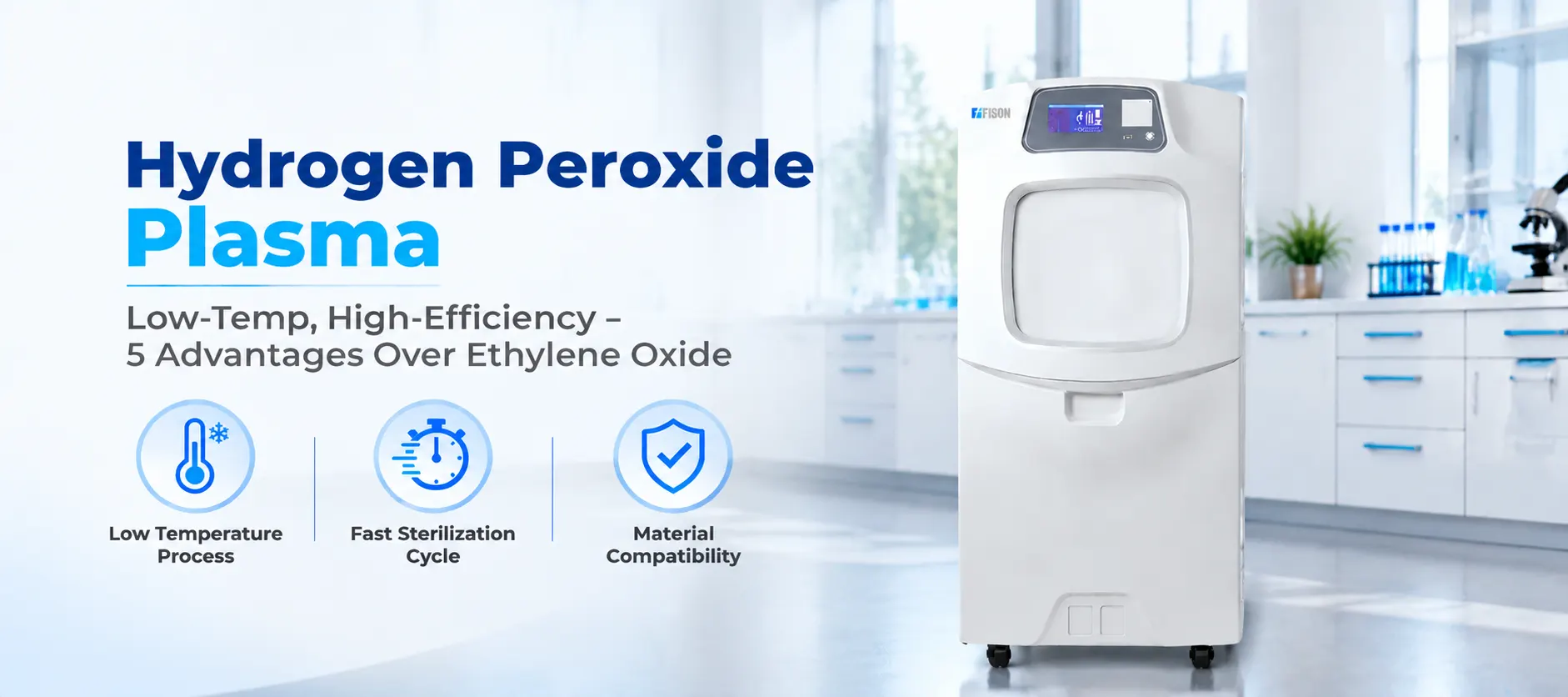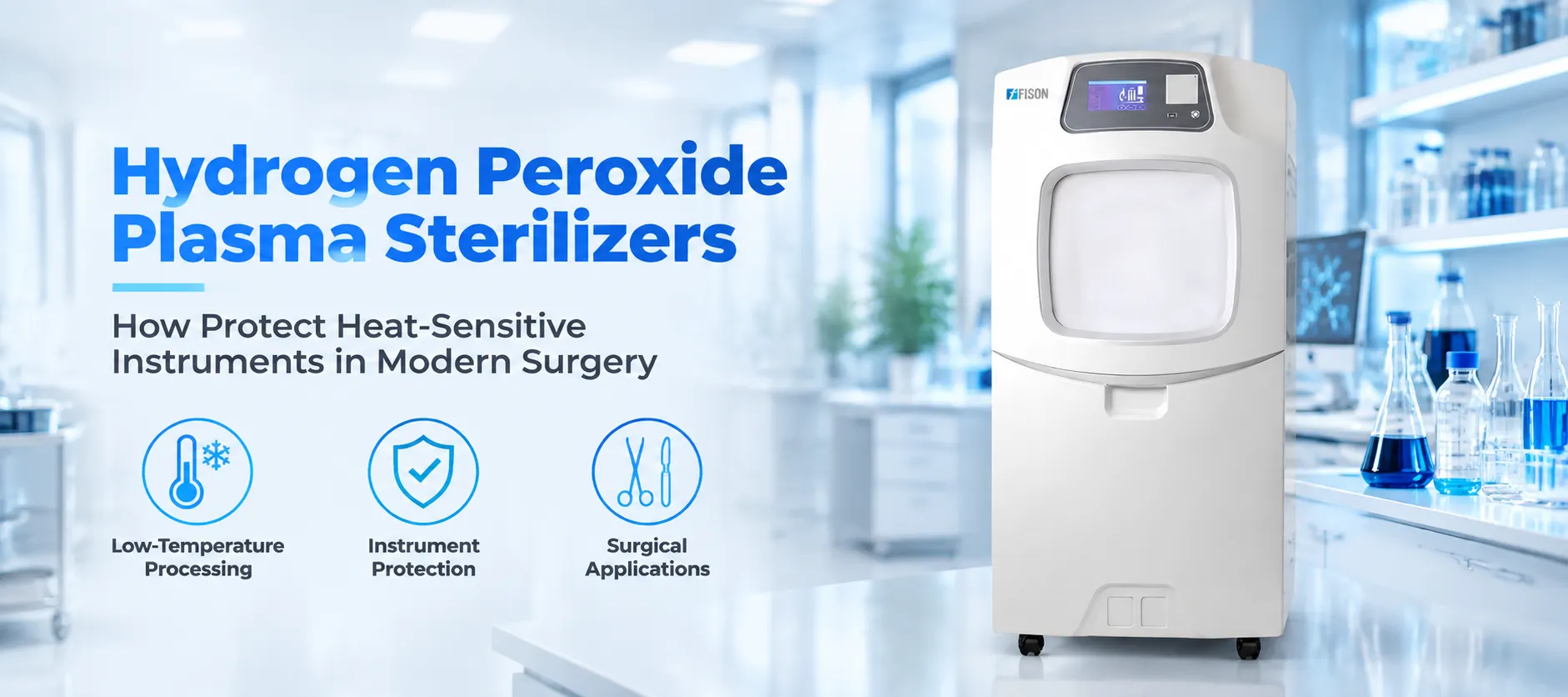
Endoscopes, powered surgical instruments and other heat-sensitive devices can't withstand a steam sterilization cycle without damage, yet still need to reach the same sterility level surgical teams rely on for safer procedures. A Fison Hydrogen Peroxide Plasma Sterilizer handles this by sterilizing at low temperature, using vaporized hydrogen peroxide and a plasma stage instead of heat and moisture. This article covers how the process works, where hospitals put it to use, and the details worth checking before choosing one.
Why Heat-Sensitive Instruments Need a Different Sterilization Method
Modern surgical instrument sets increasingly include components that a steam autoclave would damage: fiber-optic bundles, electronic sensors, adhesive-bonded parts and long narrow lumens that trap condensation. Gas plasma sterilization was developed specifically to reach these instruments without exposing them to the heat and moisture a steam cycle requires. A hydrogen peroxide sterilizer accomplishes this by working at ambient-range temperatures rather than the higher heat a steam cycle applies, which is why this hydrogen peroxide sterilization method continues to expand into new instrument categories as device design changes. Hospitals running high volumes of heat-sensitive equipment through central sterile processing depend on this lower-temperature route to keep instrument turnaround on schedule between procedures.
Hydrogen Peroxide Plasma Sterilizer Working Principle: From Vapor to Plasma
The hydrogen peroxide sterilization method starts by drawing a vacuum inside a sealed chamber, then injecting a measured dose of vaporized hydrogen peroxide that diffuses around and, where geometry allows, through the load. This vapor phase reaches instrument surfaces and exposed lumens ahead of the next stage.
Vacuum Chamber Loading
Hydrogen Peroxide Vaporization
Plasma Generation
Aeration & Venting
An electric field then converts the remaining hydrogen peroxide gas plasma into reactive species such as free radicals, which is the plasma sterilizer working principle that gives the process its name. These reactive species break down microbial cell structures directly, and the plasma stage doubles as a way to convert leftover hydrogen peroxide into water vapor and oxygen before the chamber vents to ambient pressure and the load can be removed. Any hydrogen peroxide gas plasma sterilization system depends on this same vapor-to-plasma sequence regardless of chamber size.
Where the Hydrogen Peroxide Plasma Sterilizer Fits in the Wider Sterilizer Category
A Hydrogen Peroxide Plasma Sterilizer belongs to a broader sterilizer category that spans several distinct technologies, from steam and dry heat to gas plasma sterilisation and ethylene oxide processing, each suited to a different combination of material and load type. Within this category, hospitals typically compare cycle time, chamber volume, lumen restrictions and compatible packaging when narrowing down options, and interest in gas plasma sterilisation and hydrogen peroxide plasma sterilisation has grown at a similar pace across European and North American facilities alike.
The full sterilizer range lists these technologies side by side, and for facilities comparing sterilization equipment against other laboratory and hospital instrument lines, the Fison home page catalogues the wider range available.

Hydrogen Peroxide Gas Plasma Sterilization Compared with Steam Autoclaving
Steam autoclaving remains the default choice for solid metal instruments that tolerate heat and moisture, but it isn't suitable for devices with electronic components, adhesive bonds or long narrow lumens that trap condensation. A hydrogen peroxide gas plasma sterilization system runs at a fraction of the temperature a steam cycle needs, which is why hospitals keep both technologies available in central sterile processing rather than relying on just one. Facilities weighing a hydrogen peroxide sterilizer against a steam autoclave typically start by looking at how much of their instrument set is actually heat or moisture sensitive.
Reviewing the complete sterilizer category alongside the specific instruments a facility processes most often helps determine how much of a caseload can move to the lower-temperature route versus what still needs a steam cycle.
Practical Uses of a Hydrogen Peroxide Plasma Sterilizer in Modern Surgical Settings
Each Hydrogen Peroxide Plasma Sterilizer application shares the same vapor-and-plasma method, adapted to a different heat-sensitive device category. Hydrogen Peroxide Plasma Sterilizer uses concentrate around instruments that combine complex geometry with sensitivity to heat or moisture.
- Endoscopes and flexible scopes carry long, narrow lumens and delicate optics that a steam cycle's heat and condensation would damage over repeated reprocessing.
- Powered surgical instruments and handpieces contain motors, batteries and electronic controls that cannot tolerate steam exposure.
- Robotic surgery instrument sets combine wristed components and cabling into complex geometries that benefit from a lower-temperature cycle, reducing material fatigue over repeated reprocessing.
- Fiber-optic cables and light sources use bonded optical components that degrade under repeated heat cycling.
- Implant trial components with embedded sensors, increasingly common in orthopedic and cardiac procedures, need a sterilization route that doesn't risk electronic failure.
This spread of Hydrogen Peroxide Plasma Sterilizer application areas sits alongside the broader Hydrogen Peroxide Plasma Sterilizer uses already common in central sterile processing, and both keep expanding as more surgical instruments incorporate electronics, adhesives or fiber optics into their design.
Selection Mistakes to Watch For When Choosing a Hydrogen Peroxide Plasma Sterilizer
A handful of recurring missteps affect hydrogen peroxide plasma sterilisation results, and most only become clear once a load has already failed a cycle:
- Ignoring lumen diameter and length restrictions. Hydrogen peroxide vapor only diffuses effectively through lumens within a certain diameter-to-length ratio, and exceeding it risks incomplete exposure deep inside a channel.
- Using incompatible packaging materials. Cellulose-based wraps and paper absorb hydrogen peroxide, so cycles need polypropylene or similar synthetic wrap and pouch materials instead.
- Overlooking material compatibility. Some absorbent or highly porous materials trap residual hydrogen peroxide, leaving a longer aeration need than a typical load.
- Underestimating cycle time against caseload. Routing a high volume of heat-sensitive instruments through a single chamber can create bottlenecks if throughput isn't matched to actual instrument turnover.
- Skipping indicator placement inside device lumens. An indicator on the outside of a load alone doesn't confirm that vapor actually reached deep into a narrow channel, so an internal indicator is needed too.
Ready to Explore Hydrogen Peroxide Plasma Sterilizer Options?
Chamber size, cycle length and lumen compatibility all vary across hydrogen peroxide plasma sterilization process models, and matching these to a facility's actual heat-sensitive instrument mix matters more than choosing on chamber size alone. Facilities new to the hydrogen peroxide plasma sterilization process often pilot it on a limited instrument set before a wider rollout across central sterile processing.
Explore Plasma Sterilizer Options