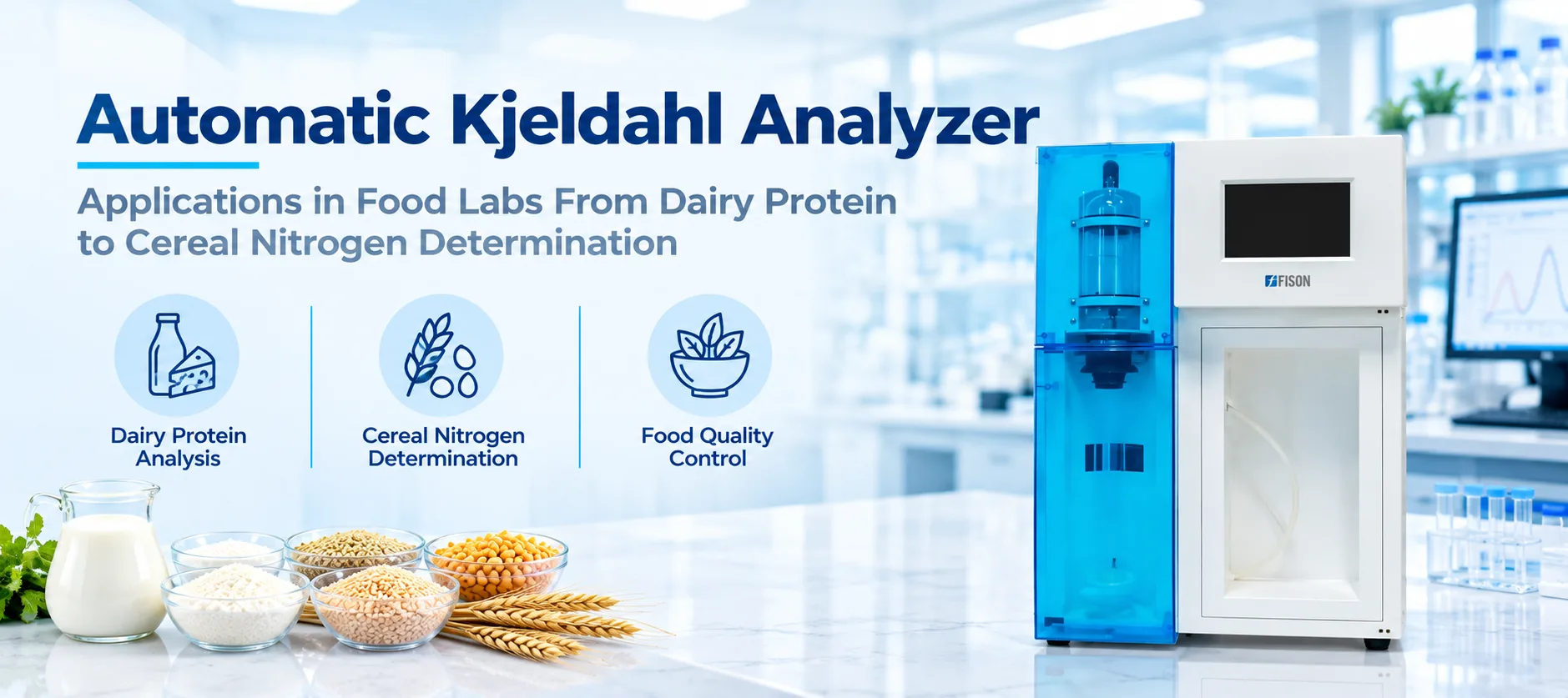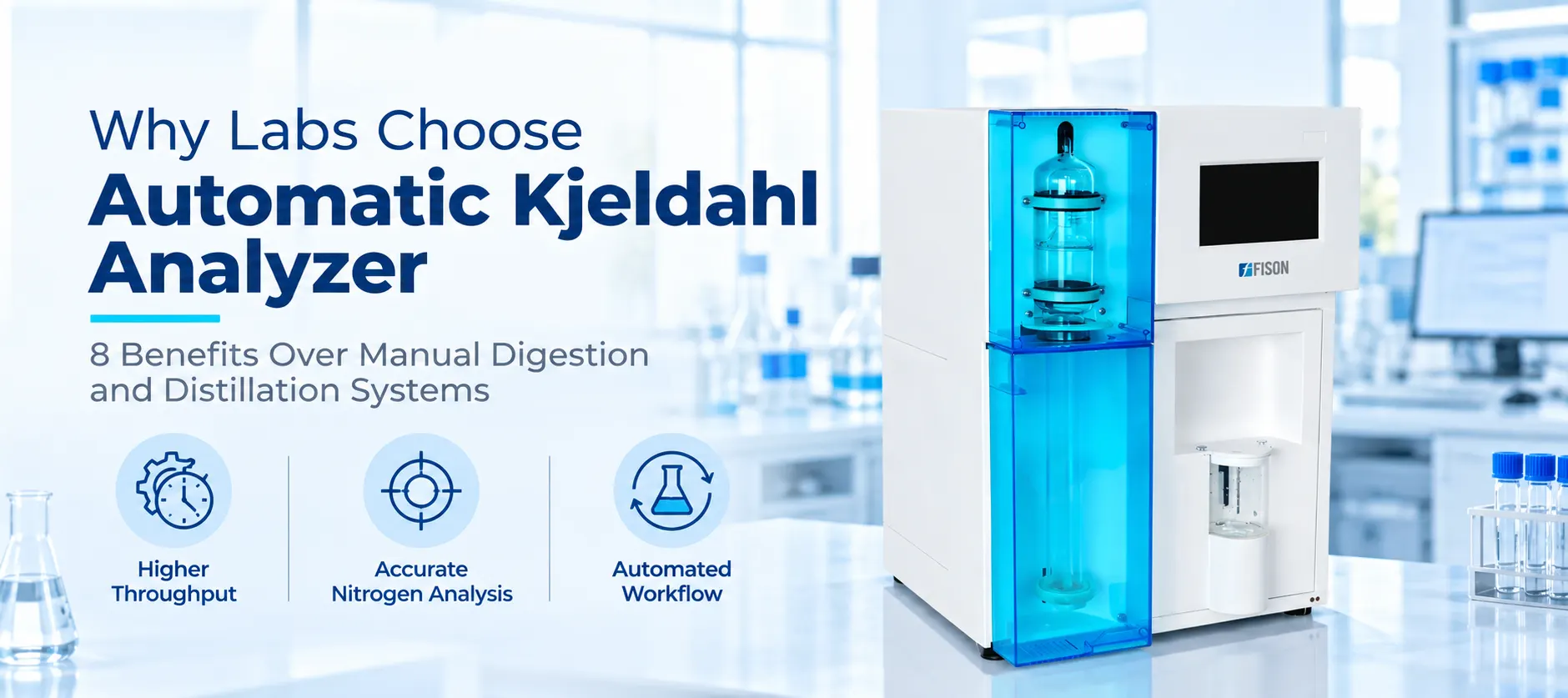
Manual Kjeldahl testing asks staff to handle hot reagents, watch a distillation, and judge a titration endpoint by eye. This explains which of those steps an Fison Automatic Kjeldahl Analyzer takes over, the benefits it brings, and what to check before choosing one.
How a Manual Kjeldahl Setup Works
The Kjeldahl method measures nitrogen in three stages. Digestion breaks the sample down and releases its nitrogen. Distillation carries that nitrogen into a receiver liquid. Titration then shows how much nitrogen was collected, and the result is converted to protein. In a manual setup, staff add reagents, run the distillation, read a burette, watch for a color change, and calculate the result by hand.
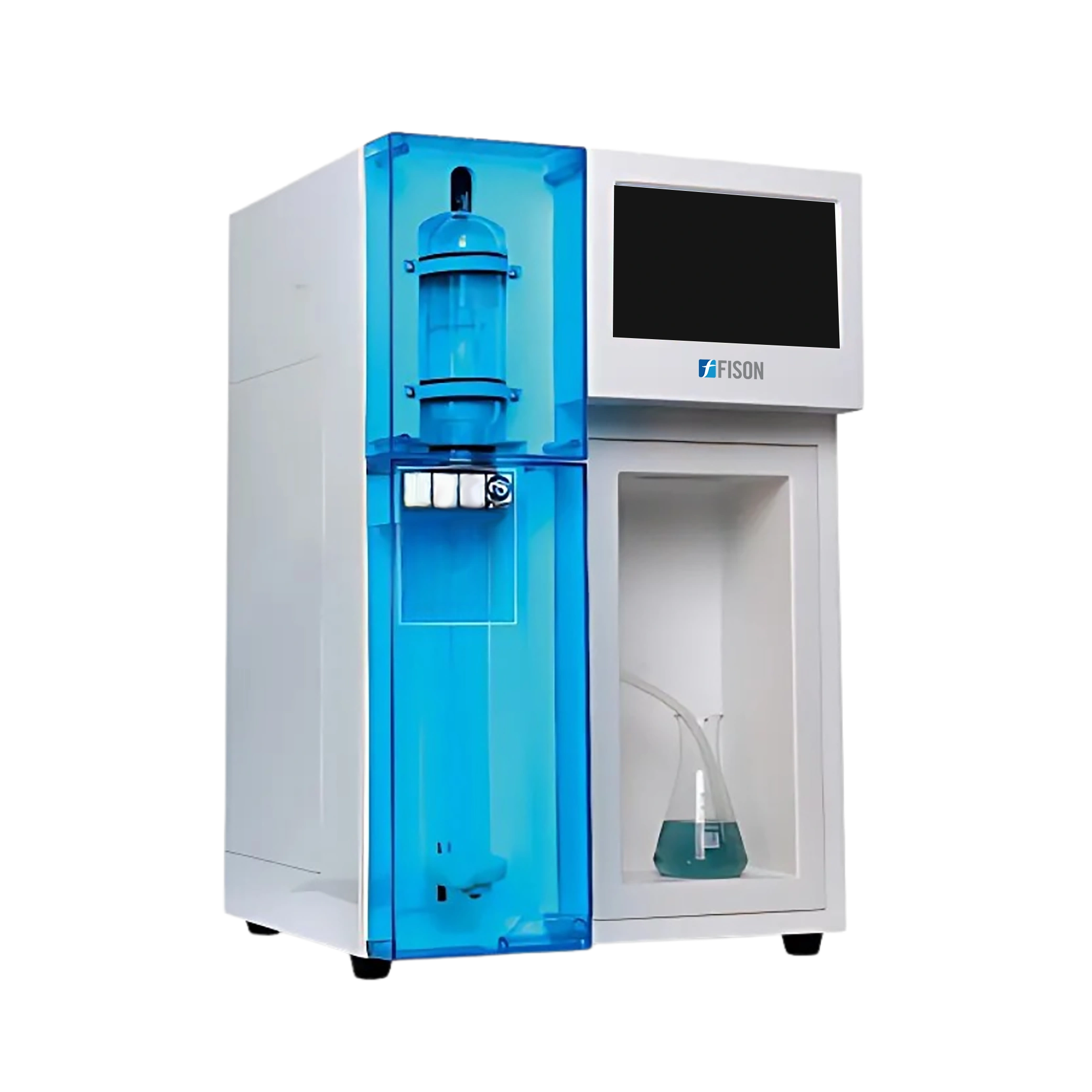
An Automatic Kjeldahl Analyzer automates the distillation and titration stages and calculates nitrogen and protein on its own. Digestion still takes place in a separate digester, so the benefits below come from replacing manual distillation, titration, and calculation rather than the digestion step itself.
What Happens After the Sample Is Digested
The Automatic Kjeldahl Analyzer principle picks up where digestion ends. The digested sample is placed in the Automatic Kjeldahl Analyzer Apparatus, and the instrument runs the remaining stages in sequence.
Reagent Dosing
Dilution water, alkali, and receiver liquid are added automatically, so staff do not pour them by hand.
Steam Distillation
Steam drives the released nitrogen into the receiver liquid, with steam flow and distillation time adjustable for the sample.
Sensor Titration
High-precision dosing pumps titrate the receiver liquid. Depending on the model, an RGB sensor detects the color endpoint or a titration curve tracks progress online.
The analysis range runs from a fraction of a milligram to hundreds of milligrams of nitrogen, with high recovery and low variation between repeat tests. That range lets one Kjeldahl nitrogen analyzer cover low and high nitrogen samples.
Eight Advantages Over Manual Distillation and Titration
Compared with a manual bench setup, a kjeldahl Automatic Nitrogen Analyzer changes daily nitrogen testing in these ways.
No Hand-Poured Reagents
Automatic addition of dilution water, alkali, and receiver liquid reduces manual handling of alkali, and a safe alkali adding mode controls how it enters.
Controlled Steam
Adjustable steam flow and distillation time on the Automatic Kjeldahl Analyzer replace watching distillation by hand.
No Endpoint by Eye
On models with an RGB sensor, the Automatic Kjeldahl Analyzer finds the titration endpoint, so results do not depend on judging a color change.
Live Titration Curve
On other models, a titration curve on the Automatic Kjeldahl Analyzer touch screen allows online monitoring instead of a burette reading.
Automatic Protein Result
The Automatic Kjeldahl Nitrogen protein analyzer converts nitrogen to protein without manual calculation.
Minutes per Sample
On the Automatic Kjeldahl Analyzer, distillation and titration finish within minutes per sample when cooling water conditions are met.
Built-In Safety Alarms
Flow detection, liquid level alarms, and over-temperature and over-pressure protection watch each run on the Automatic Kjeldahl Analyzer.
Stored and Printed Records
Storage for up to a million result sets, three-level user access with operation tracking, and a thermal printer on the Automatic Kjeldahl Analyzer replace handwritten notebooks.
Where Automatic Nitrogen Testing Is Used
An Automatic Nitrogen Analyser supports research, quality control, and industry labs that test protein and nitrogen in food processing, animal husbandry, agriculture, soil fertilizer, and environmental monitoring work.
Food and Feed Protein
Food processing and animal husbandry labs use an Automatic Kjeldahl Nitrogen Protein Analyzer to report protein in solid and liquid samples within the sample size limits.
Agriculture and Soil Fertilizer
Agriculture and soil fertilizer labs run nitrogen determination on an Automatic Kjeldahl System to support quality control of their materials.
Environmental Monitoring
Environmental monitoring teams use a Kjeldahl nitrogen analyzer for nitrogen testing in their samples.
Research, Medicine, and Education
Scientific research, medicine, and education labs, along with quality control teams in the tobacco industry, rely on a kjeldahl Automatic Nitrogen Analyzer for repeatable nitrogen and protein results.
Labs that want both manual and Automatic operation can look at a Semi-Automatic Kjeldahl Analyzer, which offers dual analysis modes. The range of Kjeldahl Systems shows how the two levels of automation compare.
Manual Bench Setup and Automatic Analysis Compared
Labs weighing an Automatic Kjeldahl Analyzer and distillation unit setup against a manual bench can use the table to see what changes at each stage.
| Stage | Manual Setup | Automatic Kjeldahl Analyzer |
|---|---|---|
| Digestion | Separate digester | Separate digester |
| Reagent addition | Poured by hand | Automatic dosing |
| Distillation | Watched by staff | Adjustable steam flow and time |
| Titration endpoint | Color change judged by eye | RGB sensor or titration curve, by model |
| Protein result | Calculated by hand | Calculated automatically |
| Records | Handwritten | Stored, logged, and printed |
Common Selection Mistakes to Avoid
Expecting Digestion to Be Automated
The Automatic Kjeldahl Analyzer apparatus starts from a digested sample. Plan digester capacity alongside it.
Ignoring Sample Size Limits
Each Automatic Kjeldahl Analyzer sets a maximum size for solid and liquid samples. Confirm your samples fit before changing methods.
Overlooking Cooling Water
Analysis time depends on cooling water temperature. Check your lab supply before relying on the minutes per sample an Automatic Nitrogen Analyser quotes.
Mixing Up Analyzer and Distillation Unit
An Automatic Kjeldahl Analyzer and distillation unit differ. A distillation unit handles distillation only, while the analyzer adds titration and protein calculation.
Exploring the Kjeldahl Systems Category
Kjeldahl systems cover Automatic and Semi-Automatic Kjeldahl Analyzers for nitrogen and protein analysis through digestion, distillation, and titration. Labs comparing an Automatic Kjeldahl Analyzer with Semi-Automatic options usually weigh level of automation, nitrogen range, recovery, sample size limits, endpoint detection, safety alarms, data handling, and connections such as Ethernet or an electronic balance.
Whether you are replacing a manual bench or adding capacity, you can review the full Kjeldahl Systems lineup to compare models, or browse other laboratory instruments on the Fison home.
See Automatic Nitrogen Analysis in Detail
Compare nitrogen range, endpoint detection, and safety features.
Explore Automatic Kjeldahl Analyzers