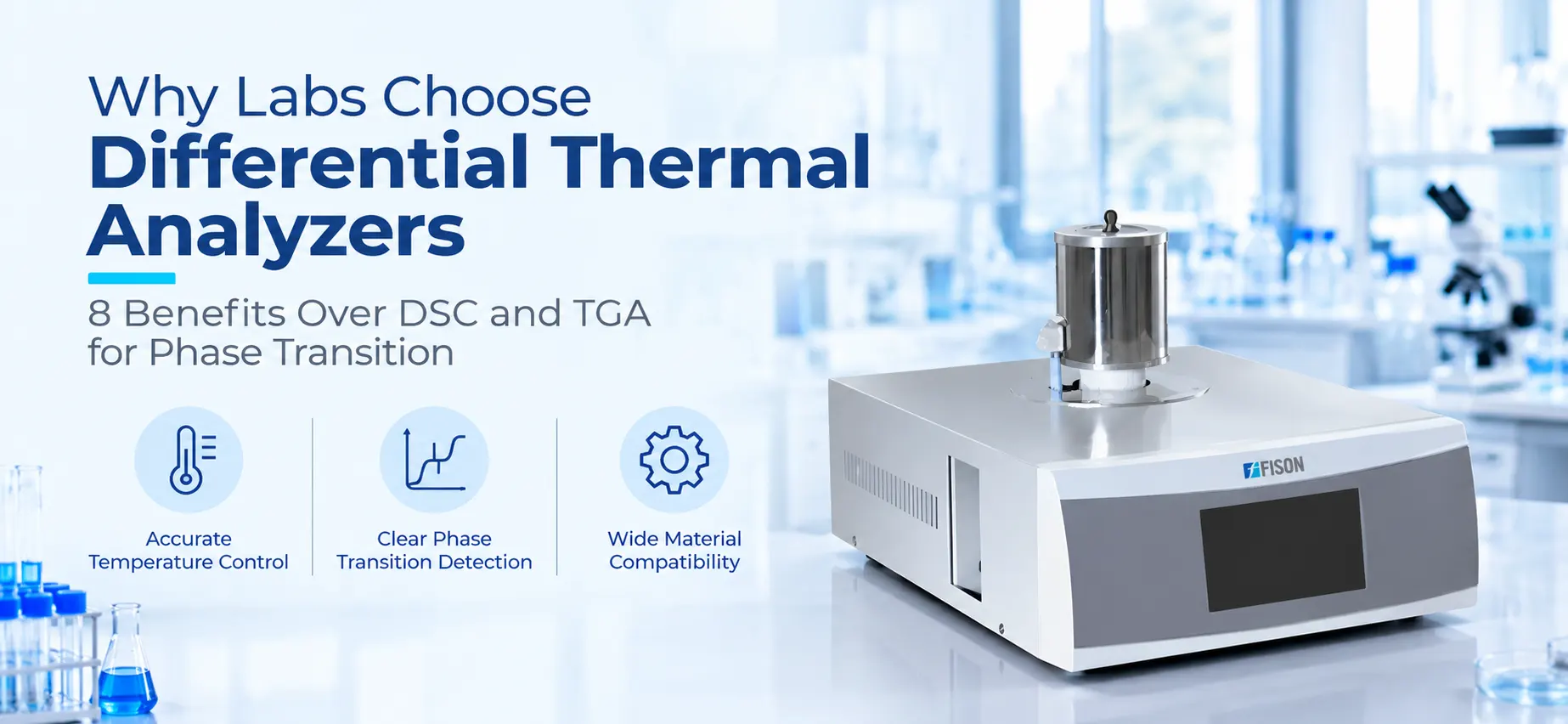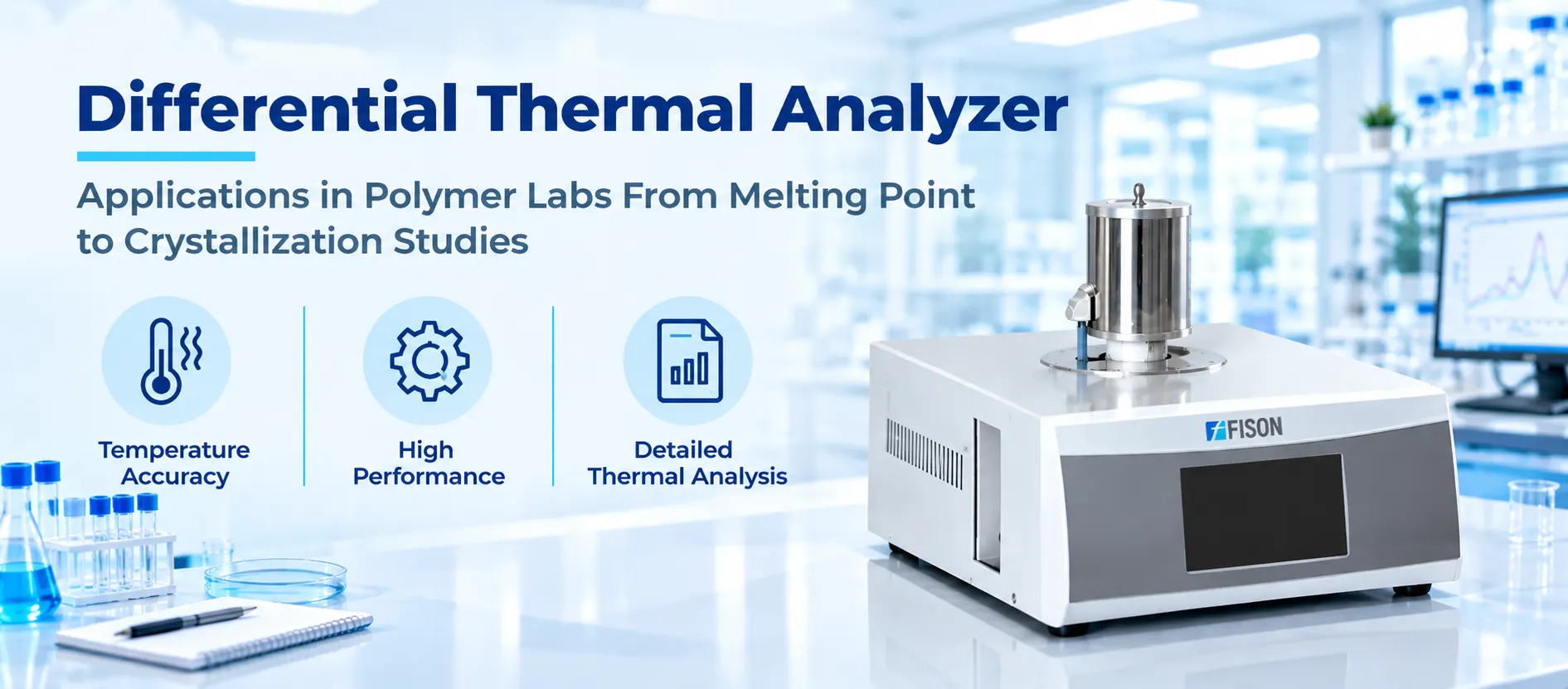
Heating a material reveals when it melts, crystallizes, or changes phase. This explains how a Fison Differential Thermal Analyzer records those changes, how the instrument is built, and what to check before choosing one.
Why Labs Study Materials Under Heat
Many material properties only show up as temperature changes. A sample may absorb heat as it melts, release heat as it crystallizes, or pass straight from solid to vapor through sublimation. Finding the temperature at which each change happens helps labs characterize materials and study their properties.
A Differential Thermal Analyzer detects these events by heating a sample alongside an inert reference material and recording how their temperatures differ. Because the Differential Thermal Analyzer measures that difference rather than the sample temperature alone, it offers high sensitivity to small heat changes on the resulting curve.
How Temperature Difference Reveals Phase Changes
The Differential Thermal Analysis principle is simple. The sample and the reference sit side by side in the same furnace and are heated at a programmed rate. As long as nothing happens in the sample, both heat up together and the difference between them stays close to zero.
Heat Absorbed
When the sample melts, it absorbs heat and briefly lags behind the reference. The Differential Thermal Analyzer records this as a peak in one direction on the curve.
Heat Released
When the sample crystallizes, it releases heat and briefly runs ahead of the reference. This appears as a peak in the opposite direction.
The Differential Thermal Analyzer principle relies on a thermal differential detector that reads the difference as a small electrical signal in microvolts. The DTA curve plots that signal against time and temperature, so the position of each peak marks where a change occurs.
Instrumentation of Differential Thermal Analysis
The instrumentation of differential thermal analysis combines several parts that work together inside one differential thermal analysis apparatus.
Furnace with Lid
A furnace body with a lid holds the sample and reference and heats them together from room temperature upward.
Crucibles
Aluminum crucibles suit lower temperatures, while ceramic crucibles handle higher ones.
Differential Detector
The detector measures the sample and reference difference with fine precision across its microvolt range.
Temperature Control
Microprocessor control sets the heating rate across a wide range and holds fine temperature resolution.
Gas Flowmeter
A built-in gas flowmeter controls the atmosphere around the sample during heating.
Cooling Fan
A built-in fan beside the furnace body lowers the temperature outside the furnace.
Touch Screen
A color touch screen lets staff set programs and watch the curve as the test runs.
Software and USB
Operating software analyzes thermal curves in real time, adjusts baseline slope and intercept, and exports data over USB.
From Melting Point to Crystallization in Practice
A differential thermal analysis machine supports material characterization wherever phase changes matter, from polymer labs to metallurgy.
Melting Point Studies
Polymer labs and analytical chemistry teams use a Differential Thermal Analyzer to find the temperature at which a solid sample melts.
Crystallization Studies
Heat released during crystallization shows up as a clear peak, helping labs study how and when a material crystallizes.
Pharmaceutical and Food Testing
The pharmaceutical industry and food labs use differential thermal analysis for material characterization of their samples.
Metallurgy and Environmental Research
Metallurgy labs and environmental and field research teams use it to study phase transitions in solid and liquid samples.
A Differential Thermal Analyzer handles both solid and liquid samples, which widens its use across analytical chemistry, pharmaceutical, food, and metallurgy work. The range of Differential Thermal Analyzers shows how temperature limits differ between models.
How DTA Compares with Related Thermal Techniques
| Factor | Differential Thermal Analyzer | Thermogravimetric Analyzer | Thermal Mechanical Analyzer |
|---|---|---|---|
| What it measures | Temperature difference against a reference | Change in sample mass | Change in sample dimensions |
| Typical events | Melting, crystallization, sublimation | Weight loss or gain on heating | Expansion or softening |
| Output | DTA curve with heat peaks | Mass curve | Dimension curve |
Common Selection Mistakes to Avoid
Choosing the Wrong Temperature Limit
Models differ in their upper temperature limit. Match the Differential Thermal Analyzer to the highest temperature your samples need, especially for metallurgy work.
Using the Wrong Crucible
Aluminum crucibles are limited to lower temperatures. High-temperature tests need ceramic crucibles, which are rated well above the aluminum limit.
Ignoring Heating Rate
The right heating rate depends on the sample and the study. Check that the Differential Thermal Analyzer offers a wide adjustable heating rate.
Overlooking Atmosphere Control
Some samples need a controlled gas atmosphere during heating. A built-in gas flowmeter controls the gas flow around the sample.
Exploring the Thermal Analyzer Category
A Differential Thermal Analyzer is one type of thermal analyzer instrument. The wider group also includes thermogravimetric analyzers, synchronous thermal analyzers, and differential scanning calorimeters. Labs comparing options usually weigh temperature range, heating rate, measurement precision, crucible options, atmosphere control, and software features.
Whether you study polymer melting or high-temperature metallurgy samples, you can review the full Differential Thermal Analyzer lineup to compare models, or browse other laboratory instruments on the Fison home page.
Review Differential Thermal Analysis in Detail
Compare temperature ranges, heating rates, and crucible options.
Explore Differential Thermal Analyzers