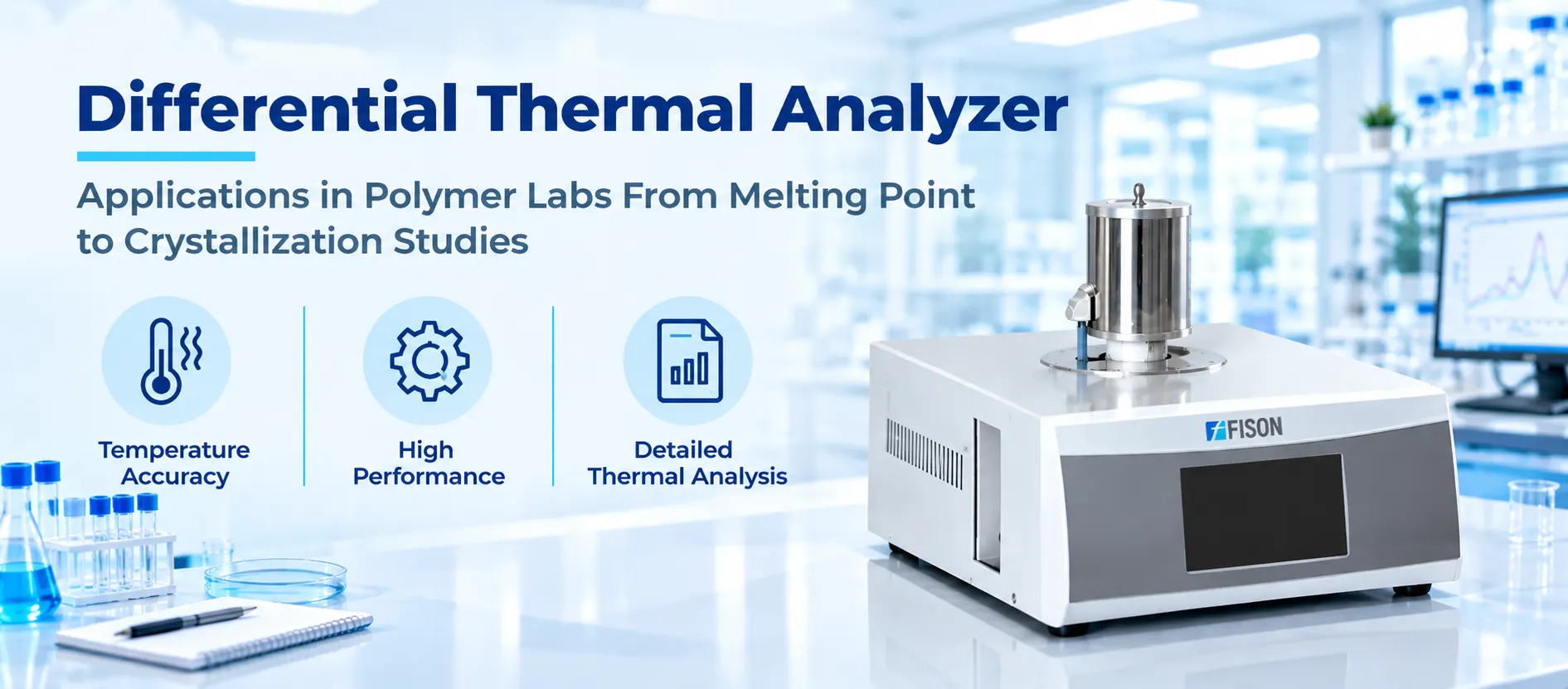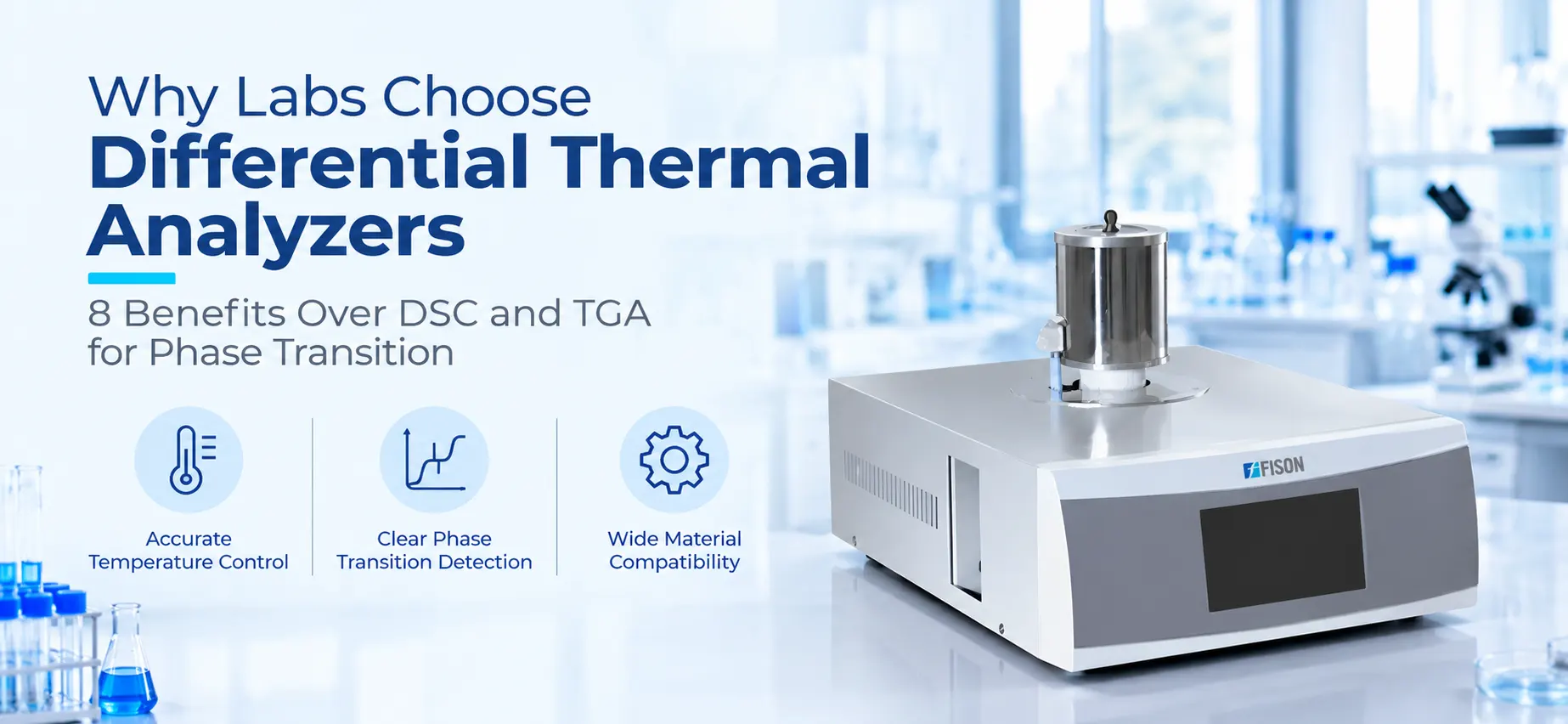
Melting, crystallization, and sublimation each absorb or release heat. This explains why a Fison Differential Thermal Analyzer suits phase transition work, where it differs from DSC and TGA, and what to check before choosing one.
Three Thermal Techniques, Three Different Questions
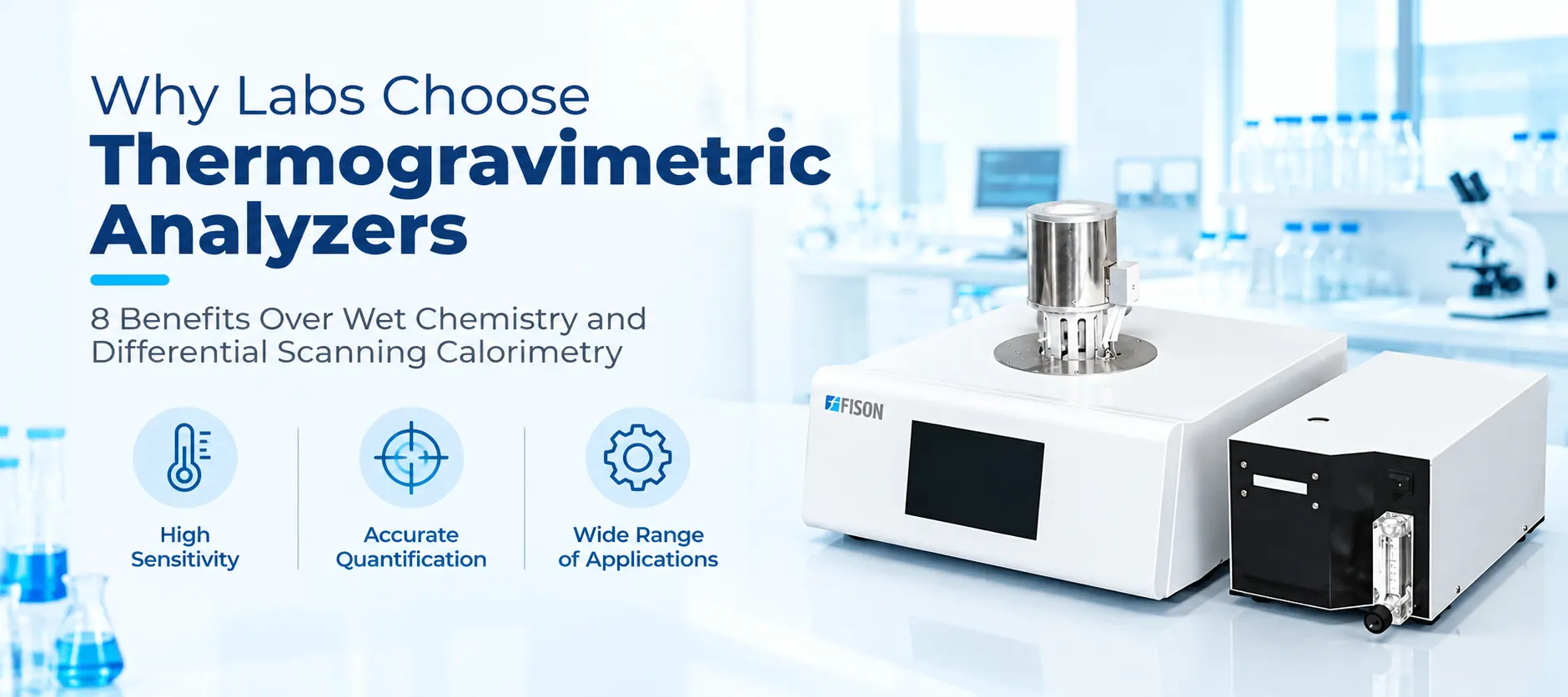
Thermal analysis covers several instruments that each answer a different question. A thermogravimetric analyzer tracks changes in sample weight. A differential scanning calorimeter measures heat flow between a sample and a reference. Differential thermal analysis records the temperature difference between a sample and an inert reference as both are heated.
A Differential Thermal Analyzer is built around that temperature difference, which makes it well suited to phase transitions such as melting, crystallization, and sublimation. The Differential Thermal Analyzer also reaches high temperatures and handles both solid and liquid samples, which shapes how it compares with DSC and TGA.
How Temperature Difference Reveals Phase Transitions
The Differential Thermal Analyzer principle places a sample and an inert reference side by side in one furnace and heats them at a programmed rate. When nothing happens in the sample, both temperatures rise together. When the sample melts, crystallizes, or sublimes, it absorbs or releases heat, and a temperature difference appears.
Thermal Differential Detector
A Thermal Differential Detector reads that difference as a small signal in microvolts with fine precision.
DTA Curve
The signal is plotted against time and temperature, so each peak marks the temperature of a phase transition.
This Differential Thermal Analysis principle detects transitions whether or not the sample loses weight, which is the key difference from a thermogravimetric analyzer. The instrumentation of Differential Thermal Analysis combines a furnace with a lid, sample and reference crucibles, a Thermal Differential Detector, microprocessor temperature control, a gas flowmeter, and a cooling fan.
Eight Reasons It Suits Phase Transition Work
For phase transition studies, these features make a Differential Thermal Analysis machine a practical choice. The first two are where it differs most from DSC and TGA.
Sees Transitions Without Weight Loss
Melting and crystallization show up as heat peaks even when the sample weight does not change, which TGA alone cannot detect.
Much Higher Temperatures
The Differential Thermal Analyzer runs from room temperature to well over a thousand degrees Celsius, far beyond the few hundred degrees covered by the differential scanning calorimeter in the same lineup.
Solid and Liquid Samples
Both solid and liquid samples can be tested on the same Differential Thermal Analyzer.
Adjustable Heating Rate
Microprocessor control sets the heating rate across a broad range, from slower to faster runs.
High-Temperature Crucibles
Ceramic crucibles cover high-temperature work, while aluminum crucibles suit lower ranges.
Atmosphere Control
A built-in gas flowmeter on the Differential Thermal Analyzer controls the atmosphere around the sample during heating.
Real-Time Curve Analysis
Differential Thermal Analyzer software analyzes the DTA curve in real time and lets staff adjust baseline slope and intercept.
Touch Screen and USB
A color touch screen sets programs, and USB output exports results.
Where Differential Thermal Analysis Is Used
A Differential Thermal Analysis apparatus supports material characterization in analytical chemistry, metallurgy, pharmaceutical, food, and environmental research.
Metallurgy
Metallurgy labs use the high temperature range of a Differential Thermal Analyzer to study phase transitions in solid samples.
Pharmaceutical Industry
The pharmaceutical industry uses Differential Thermal Analysis for material characterization, including melting behavior.
Analytical Chemistry
Analytical chemistry labs use a Differential Termal Analyzer to study crystallization and sublimation in solid and liquid samples.
Food and Environmental Research
Food and environmental research teams use Thermal Analysis to characterize their materials.
Each Thermal Analyzer instrument answers a different question, so a lab may need more than one. The range of Differential Thermal Analyzers shows how temperature limits differ between models.
DTA, DSC, and TGA Compared for Phase Transitions
| Factor | Differential Thermal Analyzer | Differential Scanning Calorimeter | Thermogravimetric Analyzer |
|---|---|---|---|
| What it measures | Temperature difference against a reference | Heat flow difference against a reference | Change in sample weight |
| Upper temperature | Well over a thousand degrees | A few hundred degrees | Well over a thousand degrees |
| Melting and crystallization | Detected as peaks | Detected as heat flow changes | Not seen without weight change |
| Temperature resolution | Fine | Finer | Fine |
| Strongest use | High-temperature phase transitions | Detailed heat flow at lower temperatures | Decomposition and weight loss |
Common Selection Mistakes to Avoid
Using DTA for Weight Loss Studies
Decomposition and weight loss call for a thermogravimetric analyzer, and dimensional change calls for a Thermal mechanical analyzer. Match the instrument to the question.
Overlooking Resolution Needs
When finer temperature resolution at lower temperatures matters most, a differential scanning calorimeter may fit better.
Choosing the Wrong Temperature Limit
Models differ in their upper limit. Match the Differential Thermal Analyzer to your highest test temperature.
Using the Wrong Crucible
Aluminum crucibles are limited to lower temperatures, so high-temperature runs need ceramic crucibles.
Exploring the Thermal Analyzer Category
Differential Thermal Analyzers sit within a wider Thermal Analyzer group that also includes differential scanning calorimeters, thermogravimetric analyzers, and synchronous Thermal analyzers. Labs comparing options usually weigh temperature range, heating rate, measurement precision, sample types, crucible options, and atmosphere control.
Whether your work centers on high-temperature transitions or a mix of Thermal tests, you can review the full Differential Thermal Analyzer lineup to compare models, or browse other laboratory instruments on the Fison home page.
See Differential Thermal Analysis in Detail
Compare temperature limits, crucibles, and atmosphere control.
Explore Differential Thermal Analyzers