Laboratories, hospitals, research centres and advanced facilities handling large batches of instruments, media or waste rely on a Fison Horizontal Autoclave to sterilize substantial loads in a single cycle. This article looks at how these instruments work, the high-volume settings where they prove most useful, and what to check before choosing one.
Horizontal Autoclave Principle: Large-Batch Steam Sterilization in a Cylindrical Chamber
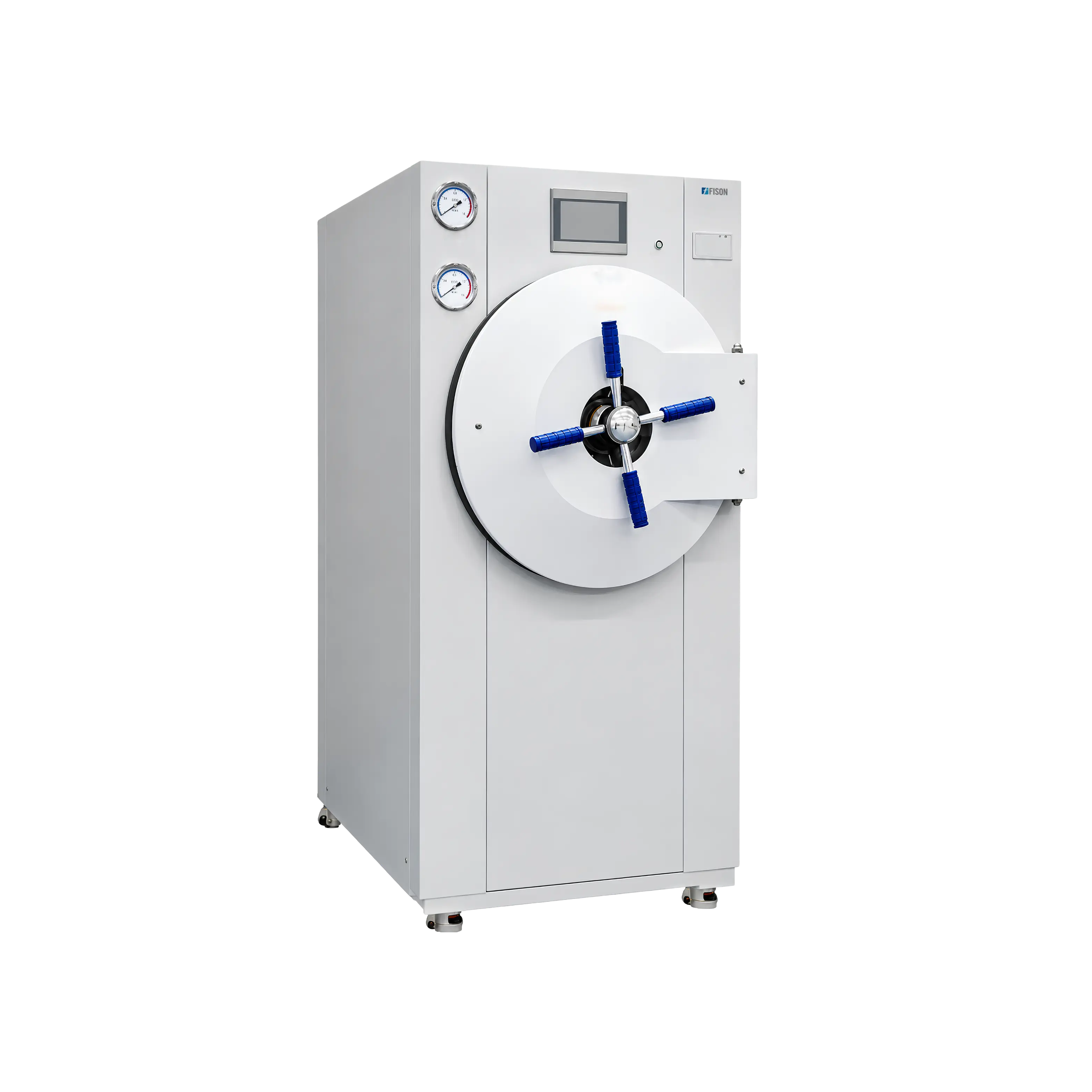
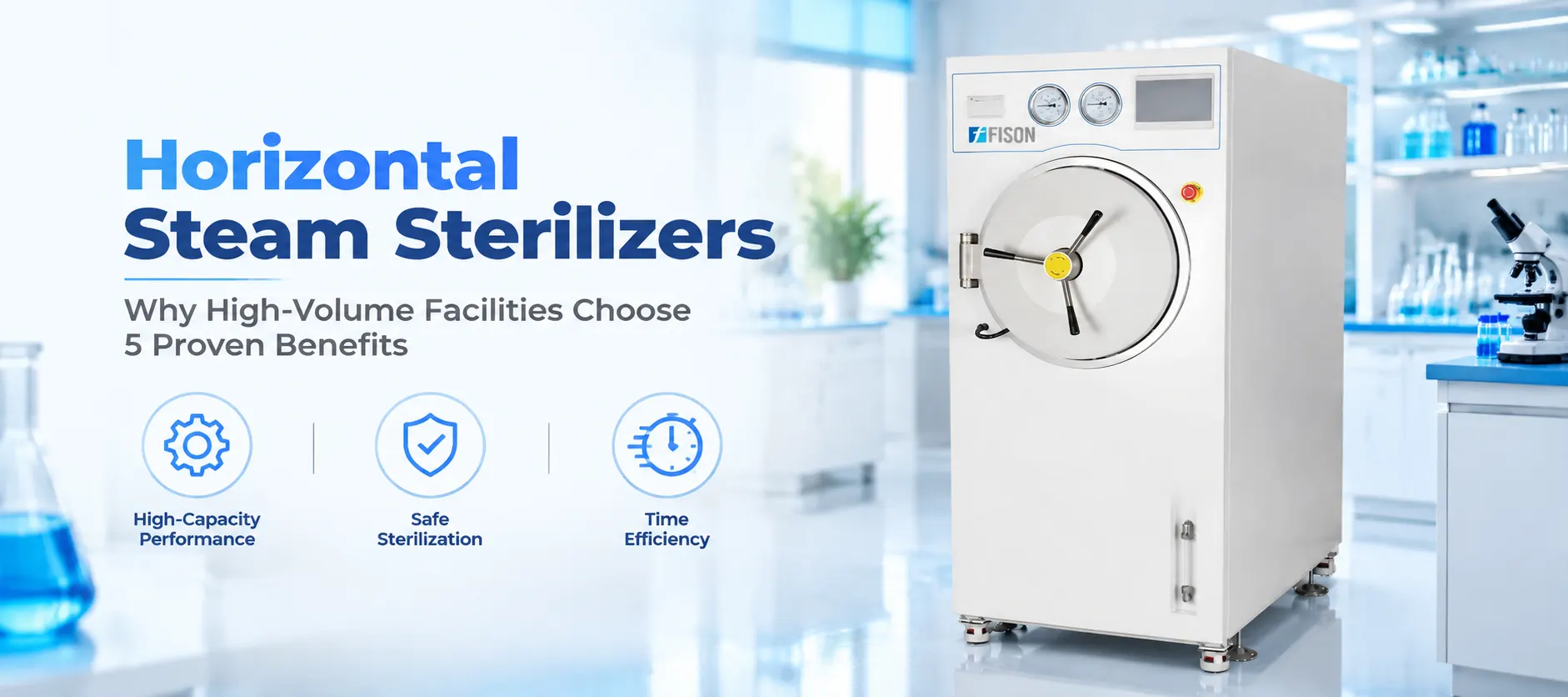
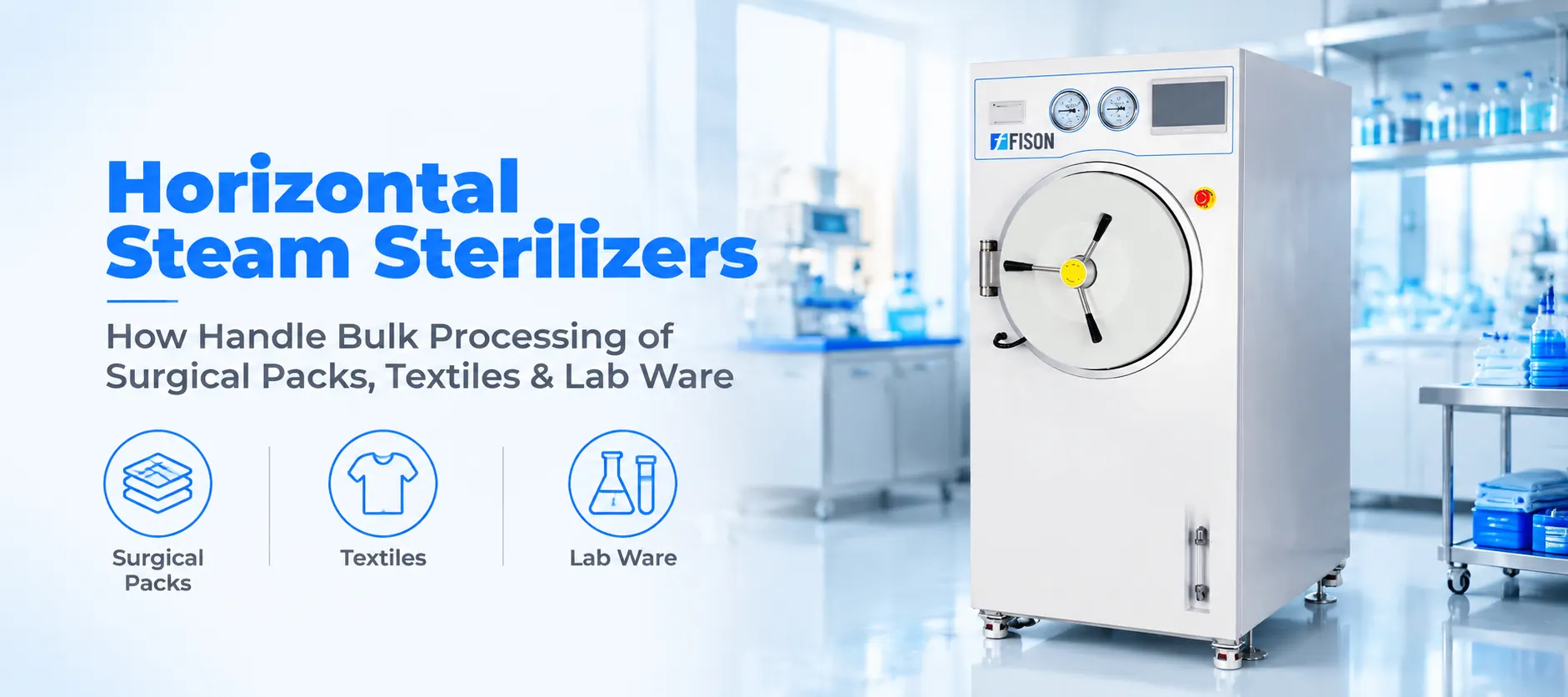
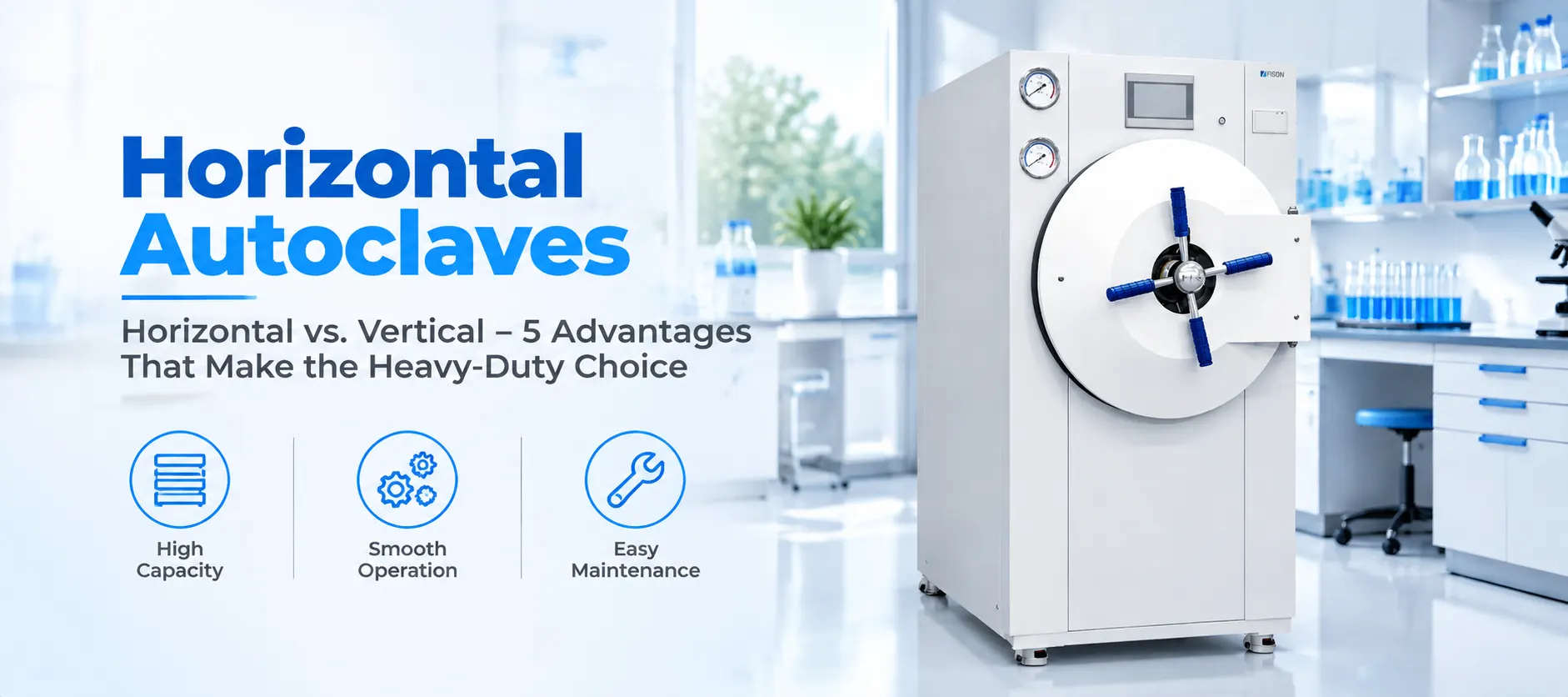
A horizontal cylindrical pressure steam sterilizer uses a chamber laid on its side, a shape that supports sliding racks or carts loaded with trays, containers or waste bags deep into the chamber without lifting them overhead. This horizontal steam sterilizer autoclave design also allows a larger door opening relative to floor space than a comparable vertical unit.
Cart Loading
Steam Injection
Vacuum & Pressure Pulses
Extended Hold & Exhaust
Many large-batch cycles pull air from the chamber through a series of vacuum and pressure pulses before the main sterilization hold, since a dense, mixed load can trap air pockets that a single steam pulse might not reach. Extended hold times account for the greater mass of material heating through to sterilizing temperature. This same horizontal cylindrical pressure steam sterilizer sequence repeats consistently regardless of what fills the chamber on a given run.
Horizontal Autoclave Capacity and Batch Loading Design
Horizontal Autoclave capacity is typically expressed in chamber volume or the number of common tray sizes a load can hold per cycle, with larger units built for facilities running frequent, high-volume batches rather than occasional small loads. A Horizontal Autoclave machine with a rail or cart system reduces manual handling when moving a heavy, fully loaded rack in and out of the chamber.
Facilities comparing chamber diameter, depth and loading hardware can review the full laboratory autoclave range before settling on a capacity that matches actual daily batch volume rather than a worst-case estimate. A horizontal steam sterilizer autoclave sized correctly from the start avoids running partial loads just to keep pace with daily demand.

Where the Horizontal Autoclave Fits in the Wider Laboratory Autoclave Category
A Horizontal Autoclave belongs to a broader laboratory autoclave category that also covers vertical and tabletop sterilizers, all sharing the same steam sterilization goal but differing in chamber orientation, capacity and typical batch size. Within this category, teams typically compare chamber volume, cycle programming, door mechanism and how well a unit fits an existing sterile processing layout.
Reviewing the full laboratory autoclave category page is a practical starting point for lining up these factors. For laboratories comparing sterilization equipment against other laboratory instrument categories, the Fison home page lists the wider catalogue the brand carries.
Large-Batch Sterilization: Five Settings That Rely on a Horizontal Autoclave
Each Hhorizontal Autoclave application shares the same large-batch steam sterilization method, adapted to a different stage of laboratory, hospital or production work. Horizontal Autoclave uses concentrate in settings where batch size and daily throughput matter as much as sterilization quality itself, rounding out the range of Horizontal Autoclave uses a single instrument design can cover.
Research facilities use a horizontal cylindrical sterilizer to decontaminate biowaste in bulk, processing multiple waste bags or containers from several labs in a single cycle before disposal, the same horizontal cylindrical sterilizer format many multi-lab buildings share.
Biopharma production support areas rely on a horizontal laboratory autoclave to sterilize media, buffers and process components ahead of filling or formulation work, often running the same horizontal laboratory autoclave across multiple shifts to keep pace with production schedules.
Hospital central sterile supply departments use large horizontal units to process full carts of surgical instrument trays between high-volume operating room schedules.
Veterinary and animal research facilities sterilize bedding, cages and related waste in bulk, a volume that a smaller benchtop unit would struggle to keep pace with.
Environmental and agricultural testing laboratories sterilize soil samples, growth media and glassware in larger batches ahead of seasonal testing peaks.
Selection Mistakes to Watch For When Choosing a Horizontal Autoclave
A handful of recurring missteps show up during evaluation, and most only become clear once the instrument is already in routine use:
- Overlooking floor loading and clearance needs. A large Horizontal Autoclave machine needs adequate floor loading capacity and door swing clearance that some room layouts cannot easily accommodate.
- Ignoring drainage and utility capacity. Larger chambers generate more condensate and use more steam per cycle, which can outpace an existing drain or utility line sized for smaller equipment.
- Underestimating batch record and cycle logging needs. High-volume operations often need detailed cycle logs for each batch, and a unit with limited data output can create manual record-keeping work.
- Skipping door gasket and seal inspections. Larger doors carry longer gasket runs, and a worn section can be harder to spot than on a smaller chamber.
- Assuming all horizontal sterilizer models load the same way. Confirming rail height, cart compatibility and load orientation before installation avoids handling problems during actual daily use.
Ready to Explore Horizontal Autoclave Options?
Chamber capacity, loading hardware and cycle programming differ meaningfully between models, and reviewing a Horizontal Autoclave machine lineup together helps match a horizontal sterilizer to the specific Horizontal Autoclave application a facility runs most often, rather than a rough estimate.
Explore Autoclave Options