Introduction
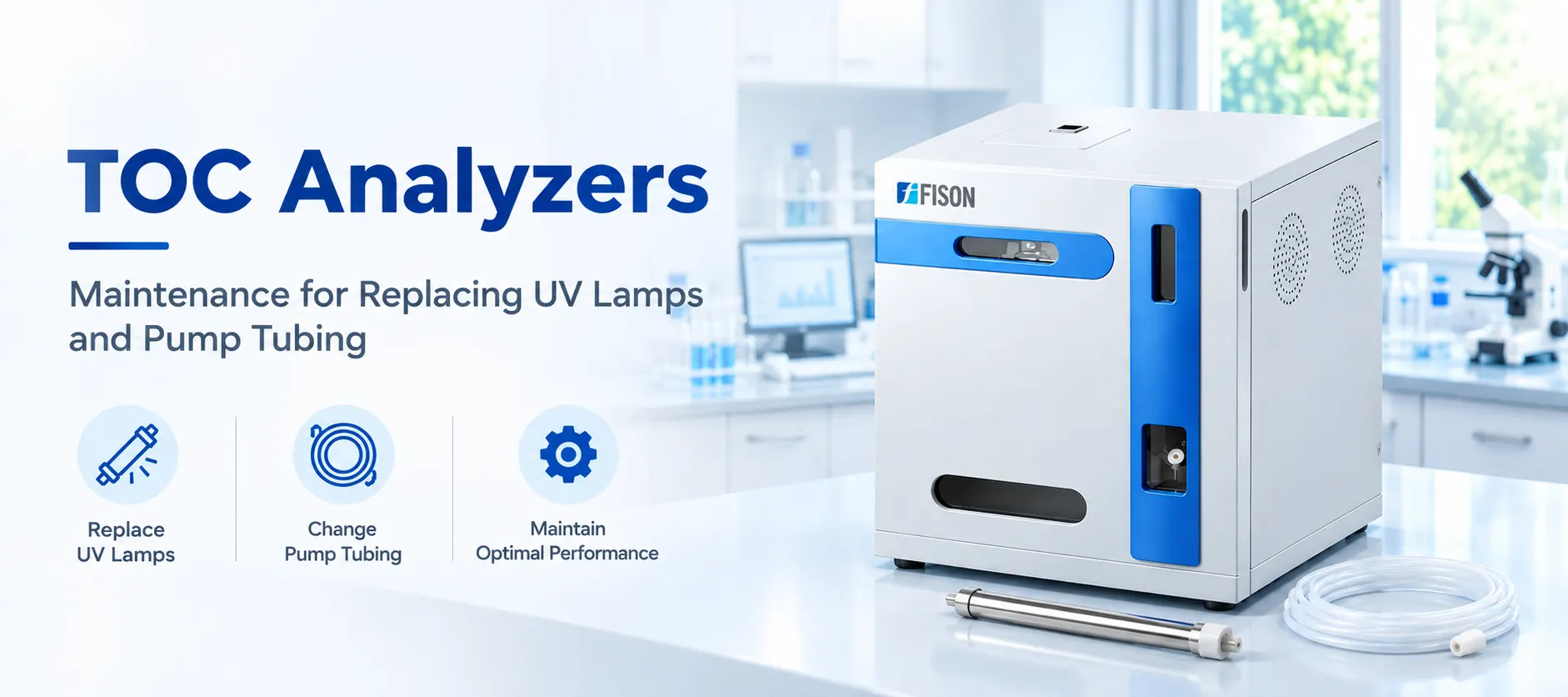
A practical look at the two parts that wear out fastest inside a Fison TOC Analyzer, and how to recognize when the UV lamp or pump tubing is starting to affect an organic carbon reading.
Why the UV Lamp and Pump Tubing Wear First
Most bench-top total organic carbon analyzer units built around UV-persulfate oxidation push a sample past an ultraviolet source strong enough to break down organic compounds into carbon dioxide, and that same intensity that makes the chemistry work also shortens the lamp's usable life. Output fades gradually rather than failing outright, so a TOC Analyzer can keep producing results for weeks after oxidation efficiency has already started to slip, with the drop only becoming obvious once check-sample recovery drifts below where it should sit.
Pump tubing wears for a more mechanical reason. A peristaltic pump repeatedly compresses the same short length of tubing thousands of times a day, and that flexing eventually fatigues the material, especially where it also sees regular contact with acid or persulfate reagent. The result is a slow flow-rate drift long before a visible leak ever appears. This wear pattern affects any TOC Analyzer running a peristaltic pump design, regardless of manufacturer. A TOC Analyzer with a well-documented consumable replacement history is much easier to troubleshoot when either wear pattern eventually shows up.
How a TOC Analyzer Reaches a Reading
Knowing the sequence a sample travels through makes it easier to tell whether a drifting result traces back to the lamp, the tubing, or something else entirely. TOC analysis generally follows four stages.
Acidification & Sparging
The sample is acidified and purged with gas to drive off inorganic carbon before the organic fraction is measured.
UV / Persulfate Oxidation
Ultraviolet light combined with a persulfate reagent breaks remaining organic carbon down into carbon dioxide.
CO2 Detection
A non-dispersive infrared or conductivity detector measures the carbon dioxide produced during oxidation.
Concentration Calculation
Onboard software converts the detector signal into a total organic carbon result, typically in parts per billion or million.
Grasping the TOC Analyzer working principle at this level of detail makes troubleshooting a drifting result far more systematic than guessing which part might be at fault.
Recognizing Wear and Making the Swap
A lamp nearing the end of its life usually shows up as a slowly rising blank value or a check-sample recovery that trends downward run after run, rather than a sudden failure. Once recovery falls outside the range a lab considers acceptable, replacing the lamp is generally more efficient than chasing the drift through repeated recalibration, since a weaker lamp cannot fully oxidize the sample no matter how the rest of the TOC Analyzer is tuned. Most facilities find it useful to track a TOC analyzer's blank value trend over several weeks rather than reacting to a single unusual run. Lamps should be handled with the housing's UV shielding intact, since direct exposure is a genuine safety concern independent of the instrument's performance. Budgeting for consumables is as much a part of owning toc analyzer equipment as budgeting for the instrument itself.
Pump tubing is easier to judge visually: flattening, discoloration, or small cracks where the rollers contact the tubing are all signs it is due for replacement, and matching the replacement material's chemical resistance to the acid and persulfate reagent in use matters more than simply matching the previous tubing's brand. A portable TOC Analyzer used across multiple sample points tends to see tubing wear faster than a fixed benchtop unit, simply because it is transported, restarted, and re-primed more often. Any TOC Analyzer that changes location often should have its tubing checked on a shorter interval than the manufacturer's default recommendation.
Replacing both components on a fixed schedule rather than waiting for a visible failure keeps toc measurement results consistent between routine services, and logging each replacement date makes it far easier to spot a lamp or tubing issue early the next time a reading looks slightly off. Fison's TOC Analyzer lineup documents manufacturer-recommended replacement intervals for both parts, which is a useful starting point before setting a facility-specific schedule.

Where TOC Measurement Gets Used
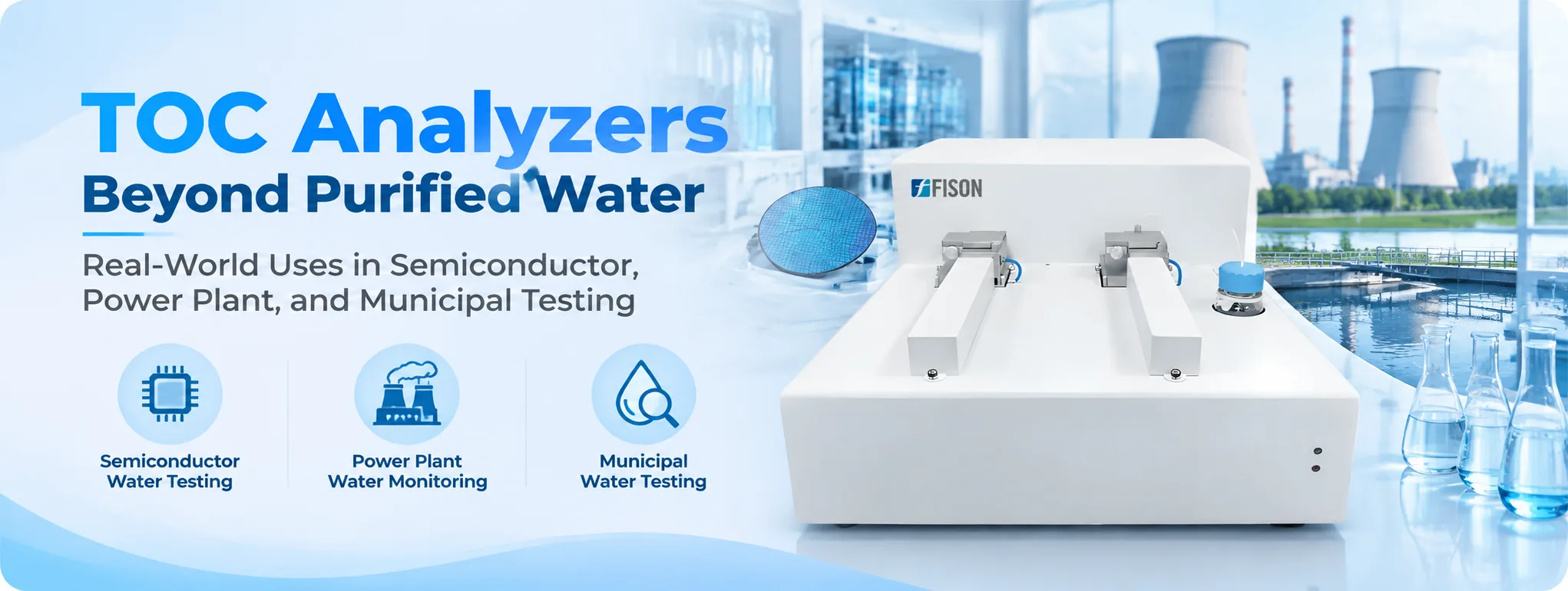
Drinking water treatment plants track organic carbon through each treatment stage to judge how effectively upstream processes are removing precursor material before disinfection. Pharmaceutical water systems rely on frequent toc analysis to confirm purified water and water-for-injection systems stay within the organic carbon limits set for that application. Industrial process water and boiler feedwater circuits use the same measurement to catch organic carryover that could affect downstream equipment, while environmental labs apply it to surface water and wastewater samples as part of broader water-quality testing programs. A TOC Analyzer laboratory supporting several of these programs at once often runs a mix of grab samples and automated batches from a TOC Analyzer autosampler across a single working day. Field teams collecting samples away from a fixed lab often rely on a portable TOC Analyzer to get a same-day reading before sending split samples back for confirmation.
The specific TOC Analyzer uses within any one facility tend to shift over time as treatment processes or regulatory limits change, which is one reason instrument flexibility across sample types matters as much as raw sensitivity. Documented TOC Analyzer uses across a facility should factor into which oxidation method and detection range get prioritized during procurement.
This spread of organic-carbon monitoring application areas reflects how central total organic carbon analyzer technology has become across regulated and process water testing alike. Each new application tends to follow the same underlying oxidation-and-detection principle, adapted to a different water matrix rather than a different measurement technology.
Common Selection Mistakes
- Overlooking Oxidation Method Fit. UV-persulfate oxidation suits lower-carbon aqueous samples well, but a facility routinely testing high-carbon or particulate-heavy samples may find a combustion-based method a better match. Selecting a TOC Analyzer instrument based on detection range alone, without checking oxidation method fit first, is a related and common early misstep.
- Underestimating Consumable Turnover. Treating a total organic carbon analyzer as a one-time purchase without budgeting for regular lamp and tubing replacement leads to unplanned downtime later. A TOC Analyzer's ongoing consumable needs are part of its total ownership picture, not just the initial unit.
- Choosing a Toc Meter on Range Alone. A wide detection range looks appealing on a spec sheet, but resolution at the low end of that range matters more for facilities working with already-clean water. A toc meter used mainly for simple screening differs from a full laboratory-grade analyzer chiefly in detection range and data-logging depth.
- Ignoring Autosampler Compatibility. Adding a toc Analyzer autosampler later as an afterthought sometimes limits which vial sizes or carousel capacities a lab can actually run.
- Skipping a Trial on Real Samples. A unit that performs well on clean reference water does not always behave the same way on a facility's actual sample matrix, so a short trial run catches mismatches early. This step matters most for a TOC Analyzer laboratory handling several distinct sample matrices, since a TOC Analyzer calibrated for one matrix rarely translates directly to another without a check run.
The Wider Category This Instrument Belongs To
A TOC analyzer belongs to a broader group of water quality instruments used to characterize dissolved and particulate content before discharge, treatment, or further processing, alongside conductivity meters, turbidity monitors, and ion analyzers. Within this group, evaluators typically compare oxidation or detection method, sample throughput, autosampler compatibility, and how much routine consumable replacement a given TOC Analyzer configuration requires. Each TOC Analyzer instrument in this category differs mainly in oxidation method and detector type, while surrounding TOC Analyzer equipment, such as autosamplers and gas supplies, can often be shared or upgraded independently. The TOC Analyzer working principle of oxidizing organic carbon and measuring the resulting carbon dioxide underpins most instruments in this category, regardless of which oxidation method a particular model uses.
Readers exploring Fison's wider laboratory and process instrumentation catalog can review the TOC analyzer range to compare oxidation methods and detection options side by side before settling on a configuration. A TOC Analyzer chosen with both future consumable availability and oxidation method in mind tends to stay in steady service longer between major overhauls.