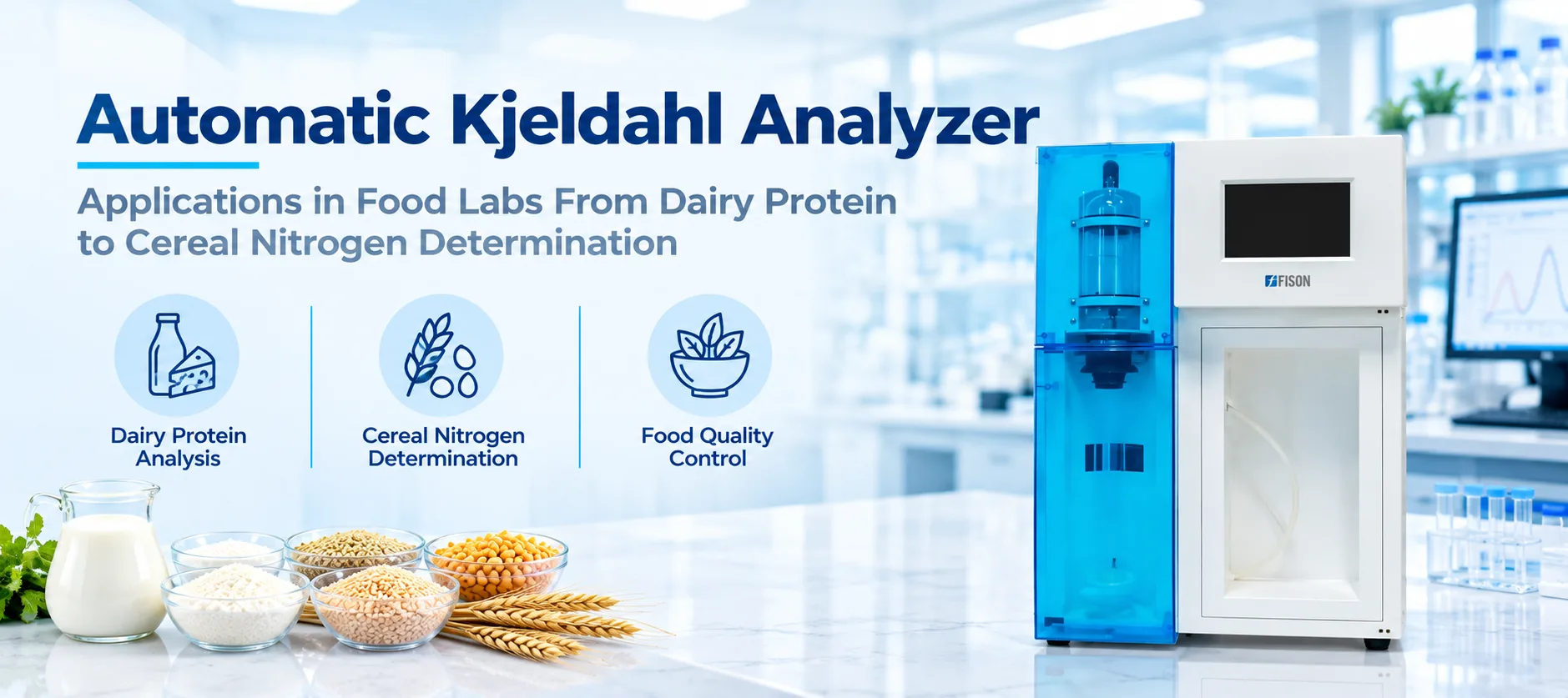
Nitrogen content is the basis for protein values in food and feed testing. This explains how an Fison Automatic Kjeldahl Analyzer measures nitrogen, where it is used in food labs and beyond, and what to check before choosing one.
Why Food Labs Measure Nitrogen
Protein is a key value in food analysis, and the Kjeldahl method finds it by measuring nitrogen. The sample is first digested to release its nitrogen, then distilled to carry that nitrogen into a receiver liquid, and finally titrated to find out how much was collected. The nitrogen value is then converted into a protein result.
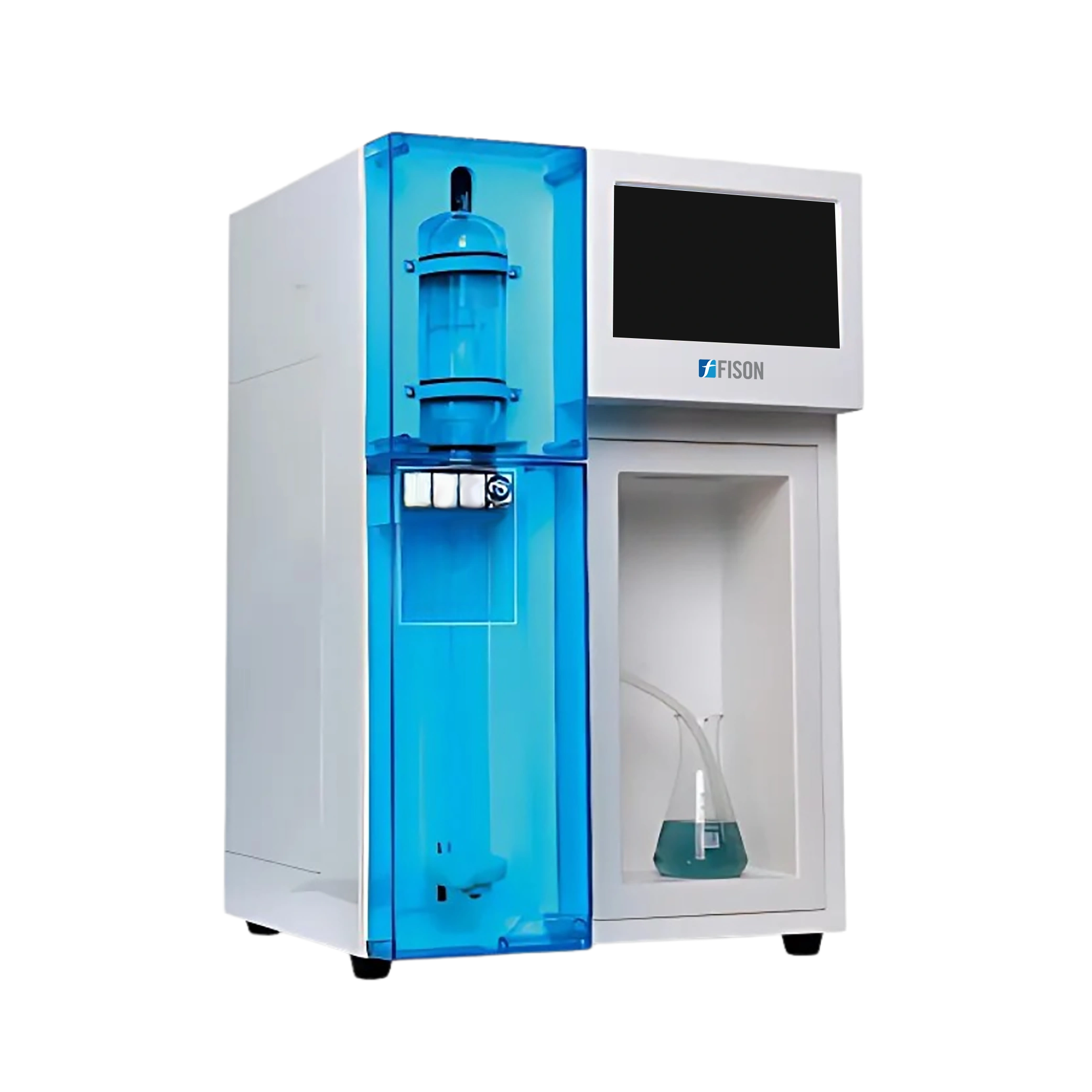
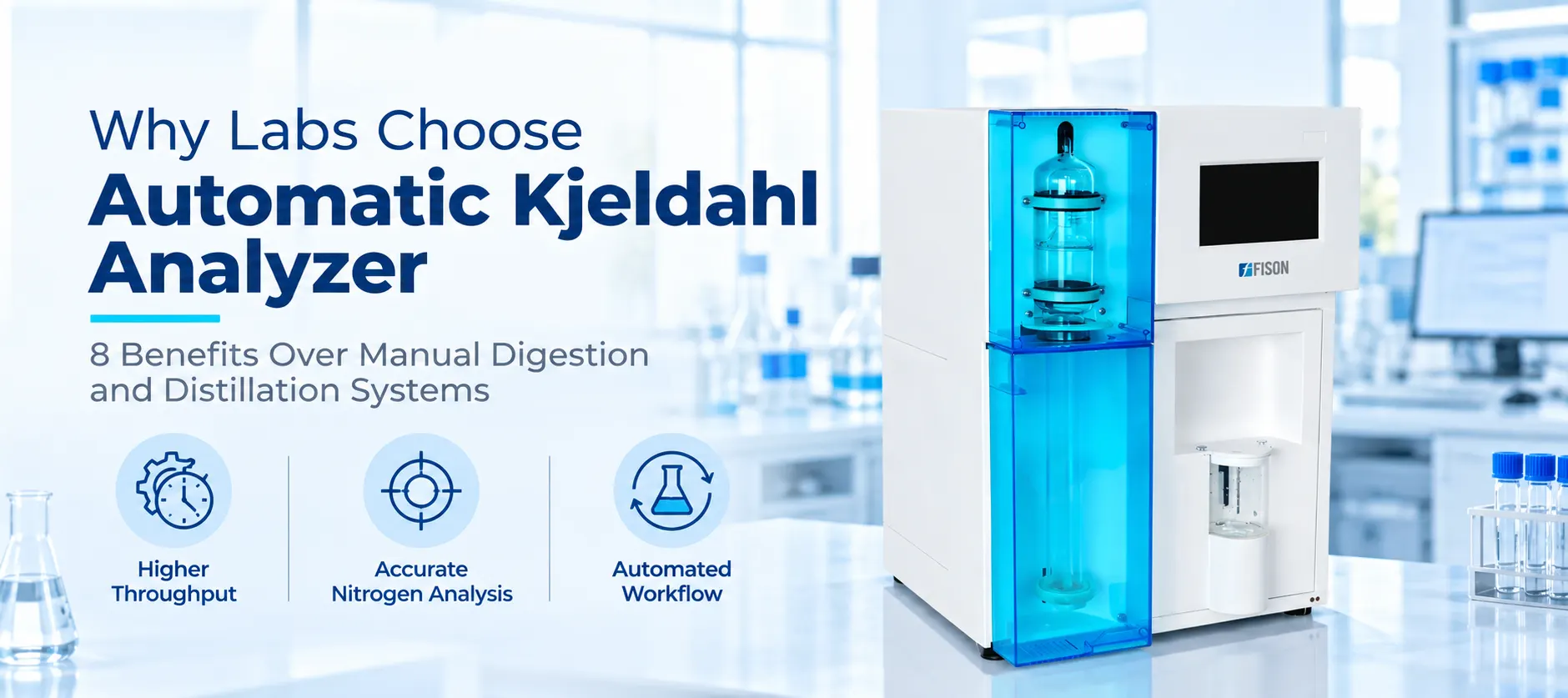
An Automatic Kjeldahl Analyzer takes over the distillation and titration stages. The Automatic Kjeldahl Analyzer adds reagents, controls steam distillation, detects the titration endpoint, and calculates protein automatically. For food processing labs testing dairy, cereal, and feed samples, that turns a hands-on routine into an Automatic Kjeldahl System with recorded, repeatable results.
How Distillation and Titration Become Automatic
After digestion, the sample is placed in the Automatic Kjeldahl Analyzer apparatus. From there, the instrument runs the remaining Kjeldahl stages on its own.
Reagent Addition
The analyzer Automatically adds dilution water, alkali, and receiver liquid, so staff do not handle these reagents by hand during each run.
Steam Distillation
Steam carries the released nitrogen into the receiver liquid. Steam flow and distillation time are adjustable to suit the sample.
Automatic Titration
A precision dosing pump titrates the receiver liquid. Depending on the model, an RGB sensor detects the color endpoint and a live titration curve shows the progress.
Once titration ends, the kjeldahl Automatic nitrogen Analyzer calculates nitrogen and converts it to protein. This makes it an Automatic Kjeldahl nitrogen protein Analyzer that reports both values from one run.
What Automation Changes in Nitrogen Testing
Compared with manual distillation and titration, an Automatic nitrogen Analyser changes daily lab work in these ways.
Minutes per Sample
Distillation and titration finish within minutes per sample when cooling water conditions are met.
Sensor Endpoint
An RGB sensor detects the endpoint, so results do not depend on judging a color change by eye.
Automatic Protein Calculation
The Automatic Kjeldahl Analyzer converts nitrogen to protein without manual calculation.
Wide Nitrogen Range
The Automatic Kjeldahl Analyzer offers a wide measuring range in milligrams of nitrogen, with high recovery and low variation between repeat tests.
Built-In Protection
Flow detection, liquid level alarms, and over-temperature and over-pressure protection guard each run.
Touch Screen Control
On the Automatic Kjeldahl Analyzer, a color touch screen sets programs and displays the titration curve during the run.
Large Data Storage
The analyzer stores a very large number of results, with user access control and data logs.
Instant Printing
A built-in thermal printer produces a report as soon as the Automatic Kjeldahl Analyzer finishes.
From Dairy Protein to Cereal Nitrogen and Beyond
Food processing heads the list of applications, but a Kjeldahl nitrogen analyzer serves several other fields as well.
Dairy Protein in Food Processing
Food processing labs use an Automatic Kjeldahl Analyzer to report protein in liquid and solid dairy samples within the sample size limits of the instrument.
Cereal and Feed Nitrogen
Cereal and feed analysis relies on nitrogen determination, which supports quality checks in food processing and animal husbandry.
Agriculture and Soil Fertilizer
Agriculture, soil fertilizer management, and environmental monitoring rely on Kjeldahl nitrogen determination.
Research and Environmental Labs
Scientific research, environmental monitoring, medicine, and education labs use a Kjeldahl analyzer across diverse sample types.
An Automatic Kjeldahl analyzer handles distillation and titration, while digestion takes place in a separate digester. The range of Kjeldahl systems shows how Automatic and semi-Automatic Analyzers compare.
Manual Kjeldahl Testing and Automatic Analysis Compared
| Factor | Manual Distillation and Titration | Automatic Kjeldahl Analyzer |
|---|---|---|
| Reagent addition | By hand | Automatic dilution water, alkali, and receiver liquid |
| Endpoint detection | Visual color change | RGB sensor |
| Titration record | Burette reading | Live titration curve |
| Protein result | Calculated by hand | Calculated automatically |
| Safety monitoring | Operator attention | Flow, level, temperature, and pressure alarms |
Common Selection Mistakes to Avoid
Forgetting the Digestion Step
An Automatic Kjeldahl Analyzer starts from a digested sample. Plan a digester alongside it, as the analyzer does not digest samples itself.
Ignoring Sample Size Limits
Each model sets maximum sample sizes for solids and liquids. Check that your dairy, cereal, or feed samples fit within them.
Overlooking Utility Needs
Analysis time depends on cooling water temperature, and power demand differs widely between models. Confirm your lab can supply both.
Confusing the Analyzer with a Distillation Unit
An Automatic Kjeldahl Analyzer and distillation unit are not the same. A distillation unit handles only distillation, while the analyzer adds titration and protein calculation.
Exploring the Kjeldahl Systems Category
Kjeldahl systems cover Automatic and semi-Automatic Kjeldahl Analyzers, with digesters and distillation units as related equipment. Labs comparing options usually weigh nitrogen range, recovery, sample size limits, endpoint detection, safety protection, data storage, and printing.
Whether you test dairy protein or cereal nitrogen, you can review the full Kjeldahl systems lineup to compare Automatic and semi-Automatic options, or browse other laboratory instruments on the Fison home page.
Review Automatic Kjeldahl Analysis in Detail
Compare nitrogen range, endpoint detection, and safety features.
Explore Automatic Kjeldahl Analyzers