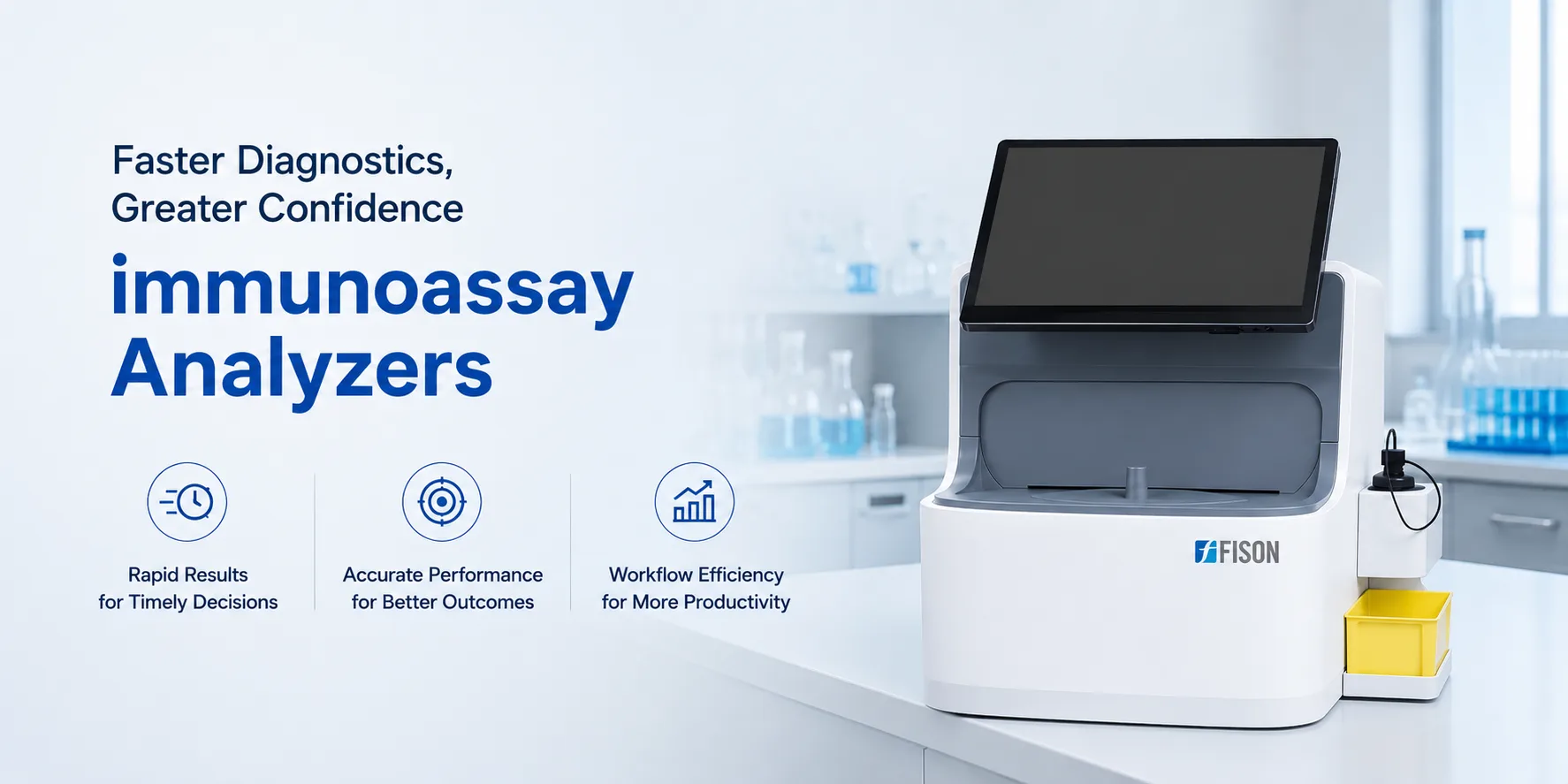
Faster Diagnostics, Greater Confidence: The Clinical Benefits of Modern Immunoassay Analyzers
Laboratories, hospitals, research centres and advanced diagnostic labs are re-examining how they run hormone panels, infectious disease markers and tumor marker tests, and much of that shift centers on the immunoassay analyzer sitting at the core of the workflow. This article looks at how these systems work, where they fit into a wider lab setup, and what to look for while evaluating one.
Why Diagnostic Workflows Are Shifting Toward Automated Testing
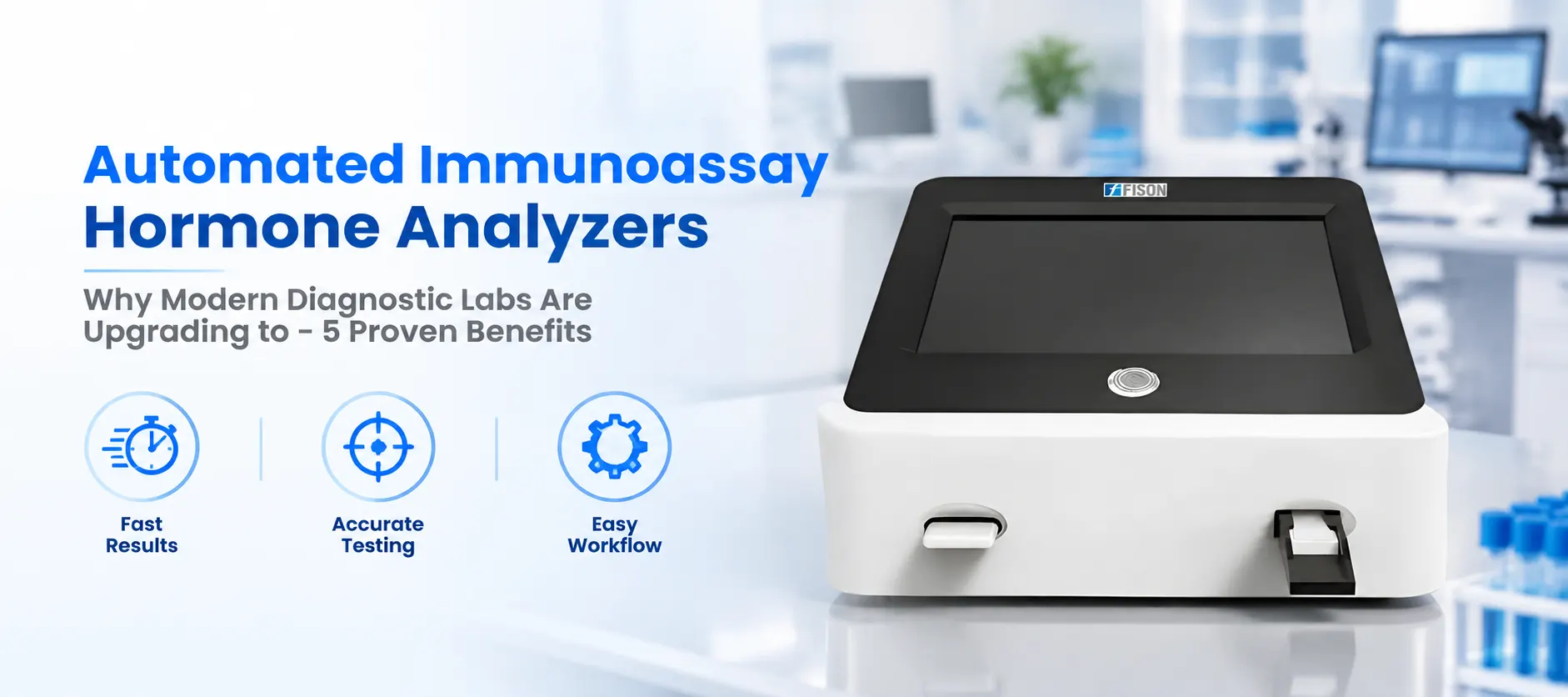
Sample volumes in hospital and reference laboratories have grown steadily, and turnaround-time expectations from clinicians have grown along with them. An immunoassay machine automates steps that technologists once carried out by hand: pipetting, incubation, washing and signal reading, condensing a process that could take hours into a shorter, more consistent run.
Because an automatic immunoassay analyzer carries out these steps in sequence without constant supervision, staff can spend more time on sample preparation, quality checks and result review instead of standing at a bench for each batch. This shift matters most in busy, high-volume settings, where manual immunoassay work can become a bottleneck ahead of reporting deadlines.
Immunoassay Analyzer Principle: How Detection Actually Happens
At its core, an immunoassay analyzer measures the concentration of a target substance - a hormone, protein, antibody or drug marker - by relying on the binding between an antigen and its matching antibody. A labeled reagent attaches to the target, unbound material is washed away, and the remaining signal is measured and compared against a calibration curve to calculate the result.
Sample Loading
Antibody Binding
Wash & Separation
Signal Detection
The labeling method used at the detection stage is what separates one analyzer type from another, and it has a direct effect on sensitivity, assay time and the range of tests a lab can run on a single platform.
Chemiluminescent and Fluorescence Detection: Two Common Approaches
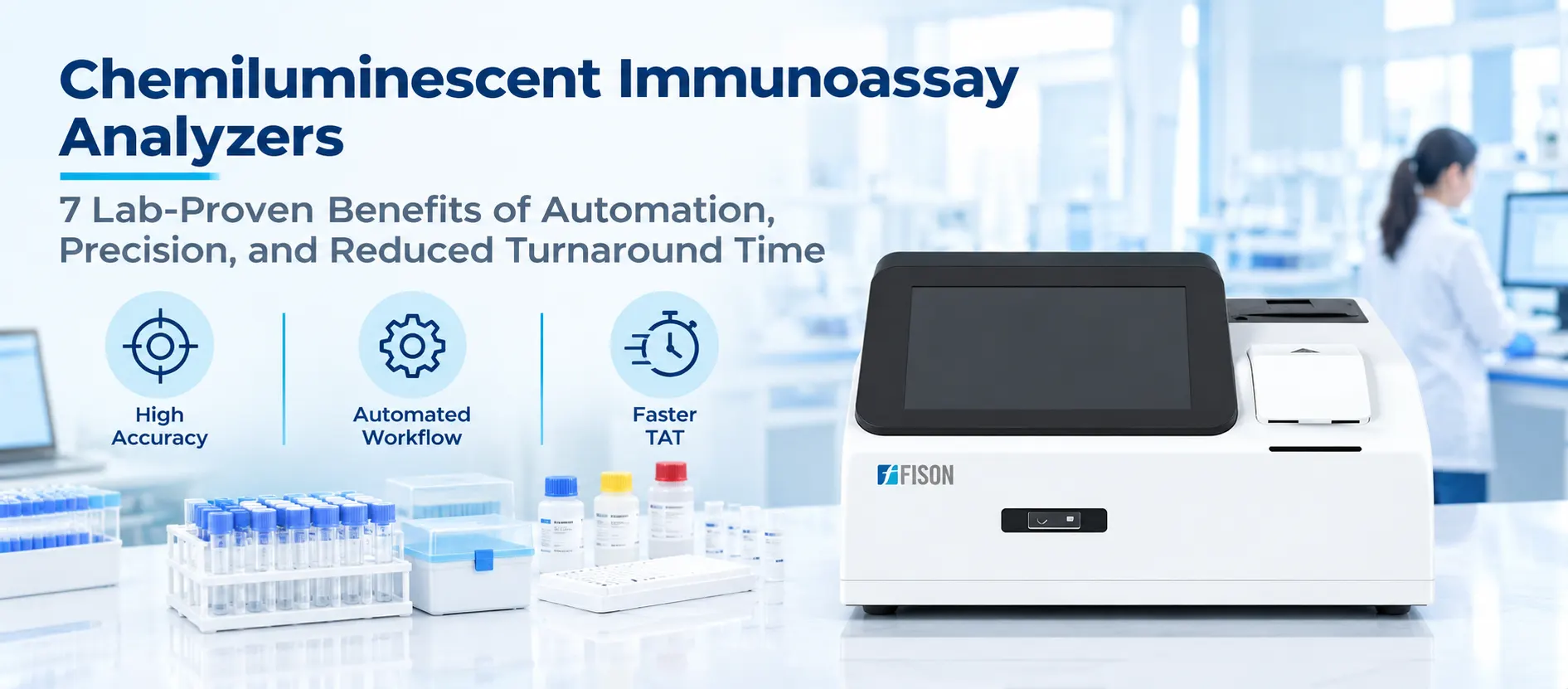
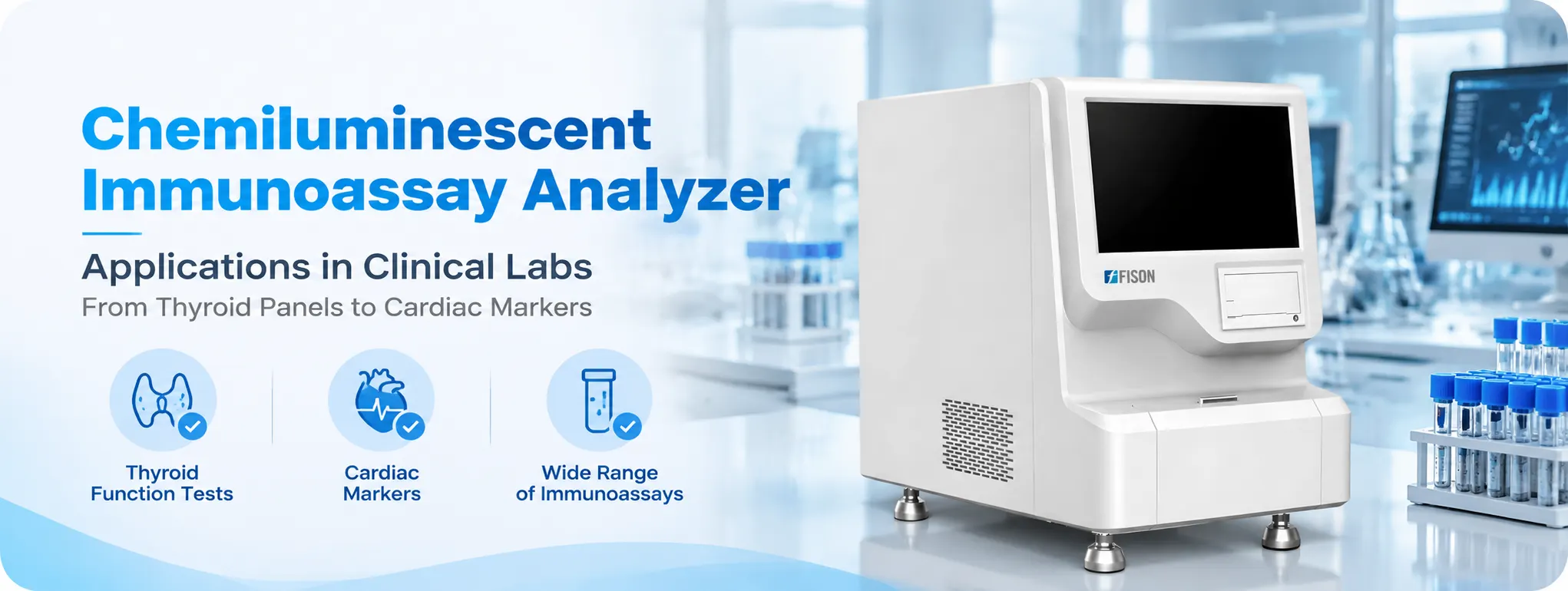
A chemiluminescent immunoassay analyzer generates a light-emitting chemical reaction at the labeled antibody site, then measures the light output with a photon detector. This method reads very low analyte concentrations well, which is why it shows up often in hormone, cardiac marker and tumor marker panels that need a wide measurement range.
A fluorescence immunoassay analyzer works differently: it excites a fluorescent label with light at one wavelength and measures the light emitted back at another. This approach fits well in labs running smaller batches or a narrower assay menu, since it often needs less setup between runs.
Lab managers weighing these two detection methods against each other can review individual models on the immunoassay analyzer category page, where detection technology, throughput and assay menu are listed side by side for each device.
Where the Immunoassay Analyzer Machine Fits in the Broader Diagnostic Equipment Category
An immunoassay analyzer machine belongs to a wider group of in-vitro diagnostic equipment used for automated clinical testing, alongside clinical chemistry analyzers, hematology analyzers and coagulation analyzers. Within this group, immunoassay analyzers devices are typically compared on throughput (tests per hour), the breadth of the assay menu, accepted sample types such as serum, plasma or urine, onboard reagent capacity and how the unit connects to a laboratory information system.
Looking through the full immunoassay analyzer range is a practical starting point for lining up these factors side by side before narrowing a shortlist.
For labs exploring instruments beyond immunoassay testing, the Fison home page lists the wider catalogue of laboratory and diagnostic equipment the brand carries.
Practical Uses of an Immunoassay Analyzer Across Labs, Hospitals and Research Centres
Immunoassay analyzer uses vary quite a bit depending on the setting, and understanding that range helps a team size the right model instead of over- or under-buying capacity.
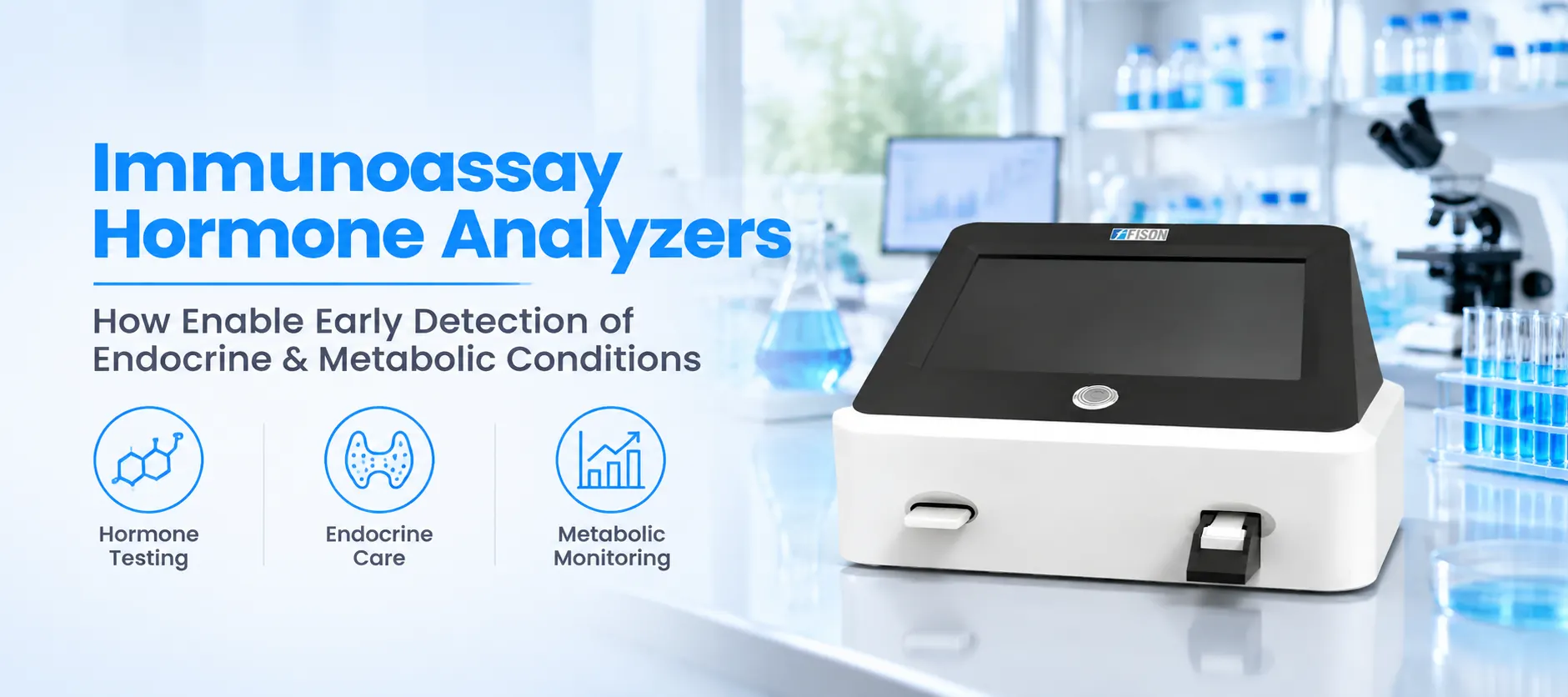
In hospital laboratories, the instrument often doubles as a hormone analyzer for thyroid, reproductive and adrenal panels, alongside cardiac markers such as troponin that need fast turnaround for emergency department decisions. Reference and advanced labs typically run a broader menu - tumor markers, infectious disease screening and allergy panels - and lean on higher throughput to keep pace with sample batches arriving from outside clients. Research centres use the same instrument type differently again: running an immunoassay analyzer test alongside an established reference method is a common way to validate a new assay before it moves into routine use.
Selection Mistakes Laboratories Should Watch For
A few recurring missteps show up when labs evaluate a new immunoassay analyzer machine, and most of them surface only after the instrument is already in routine use:
- Sizing throughput on peak days only. Basing capacity purely on the busiest day of the month, rather than average daily volume, often leads to an oversized or undersized instrument.
- Overlooking assay menu overlap. Adding a new analyzer without checking which tests duplicate an existing instrument can leave a lab carrying two reagent inventories for the same panel.
- Underestimating reagent reload frequency. A small onboard reagent capacity means more interruptions to reload during a long run, which adds up across a fast-paced shift.
- Skipping integration checks. Not confirming how the analyzer connects to the laboratory information system can mean manual data entry after installation, undoing much of the time saved by automation.
- Ignoring cold-chain storage space. Reagents for hormone and tumor marker panels often need refrigerated storage near the instrument, which is easy to overlook during a site walk-through.
Automatic and Manual Immunoassay Analyzer Devices: A Quick Comparison
Some labs still run assays on semi-automated benchtop equipment rather than a fully automatic immunoassay analyzer. The table below outlines where each approach tends to fit.
| Aspect | Manual / Semi-Automated | Automatic Immunoassay Analyzer |
|---|---|---|
| Hands-on time per run | Higher, with multiple manual steps | Lower, most steps run unattended |
| Result consistency across runs | Varies with operator technique | Stays consistent run to run |
| Staff training needs | Higher, technique-dependent | Lower once the workflow is set up |
| Typical setting | Low-volume or specialised research work | Hospital, reference and high-volume labs |
Ready to Compare Immunoassay Analyzer Options?
Detection technology, throughput and assay menu differ meaningfully between models, and reviewing them together helps match an instrument to actual daily test volume rather than a rough estimate.
View Immunoassay Analyzer Options