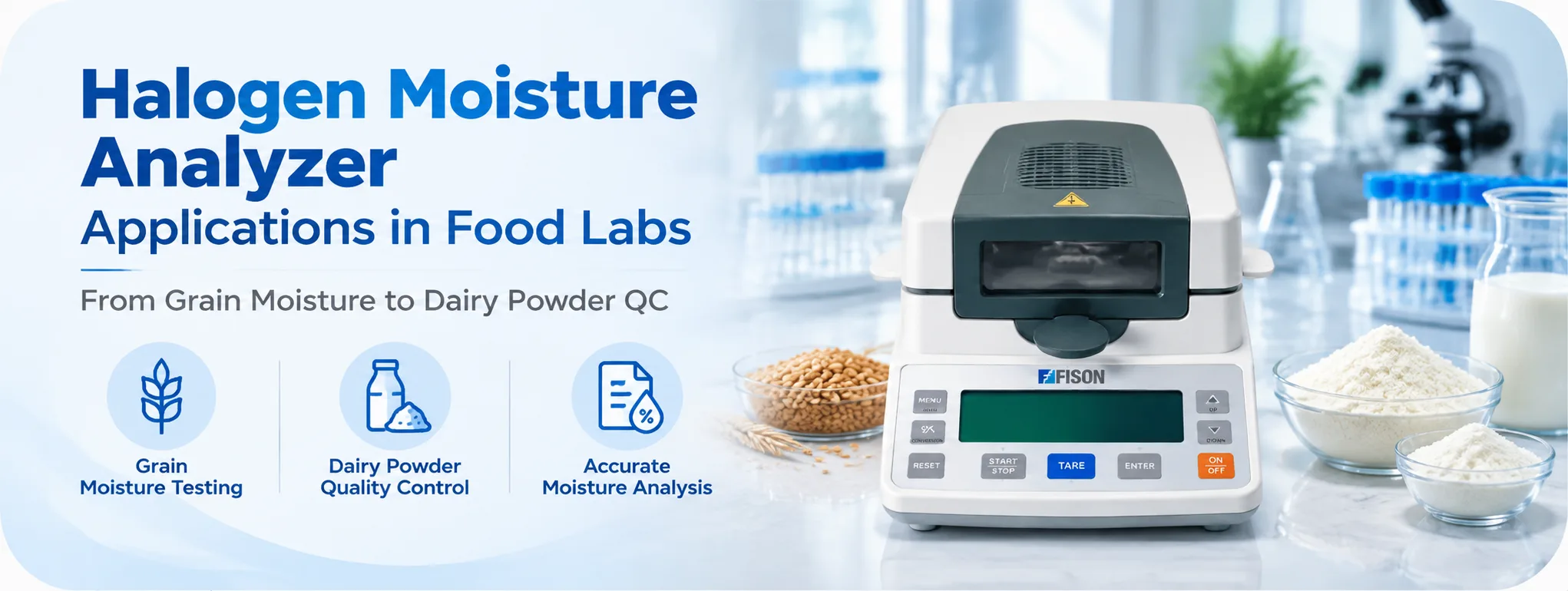
Moisture readings influence storage life, texture and release decisions. This article explains how a Fison Halogen Moisture Analyzer works, where food laboratories, research centres and advanced labs use it, and which choices most often lead to poor results.
Why Moisture Content Decides Food Quality
Water content shapes shelf life, mould risk, caking, flowability and even how a batch is weighed and labelled. A grain lot stored a little too damp can spoil, and a dairy powder that is too dry can lose texture, so laboratories check moisture at intake, during processing and before release.
A halogen moisture analyzer supports these checks by drying a small sample and recording its mass loss in one instrument. Compared with a separate oven and balance, a halogen moisture balance keeps heating and weighing together, which reduces handling between steps.
Working Principle: Heat, Weigh, Repeat
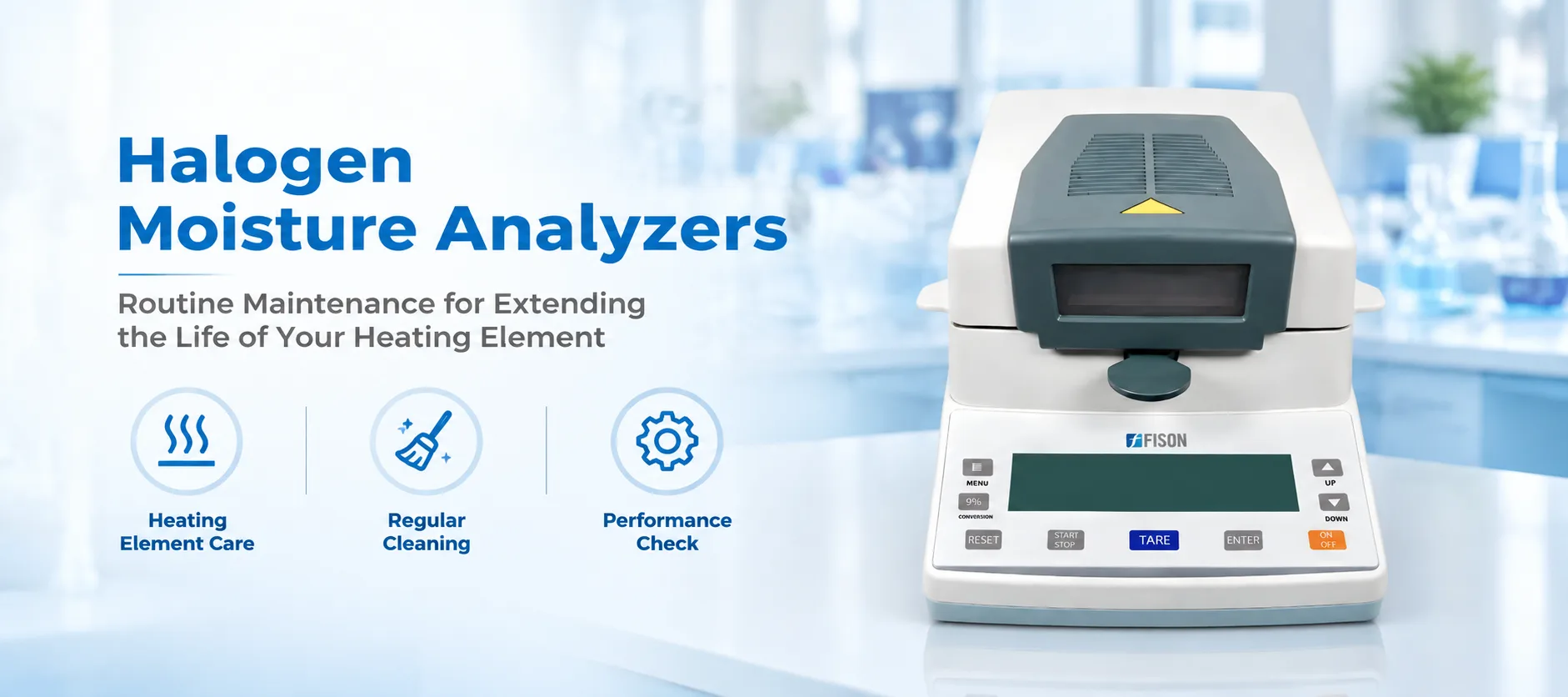
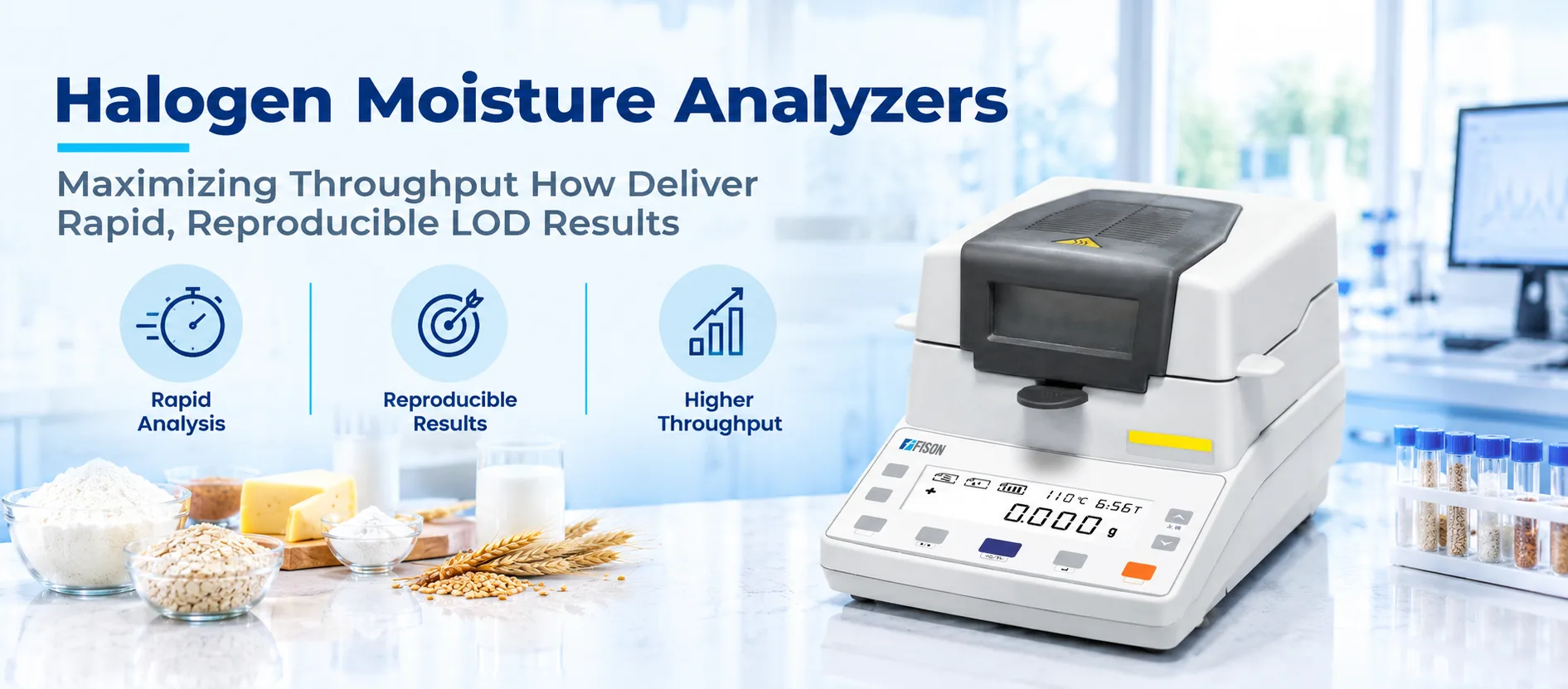
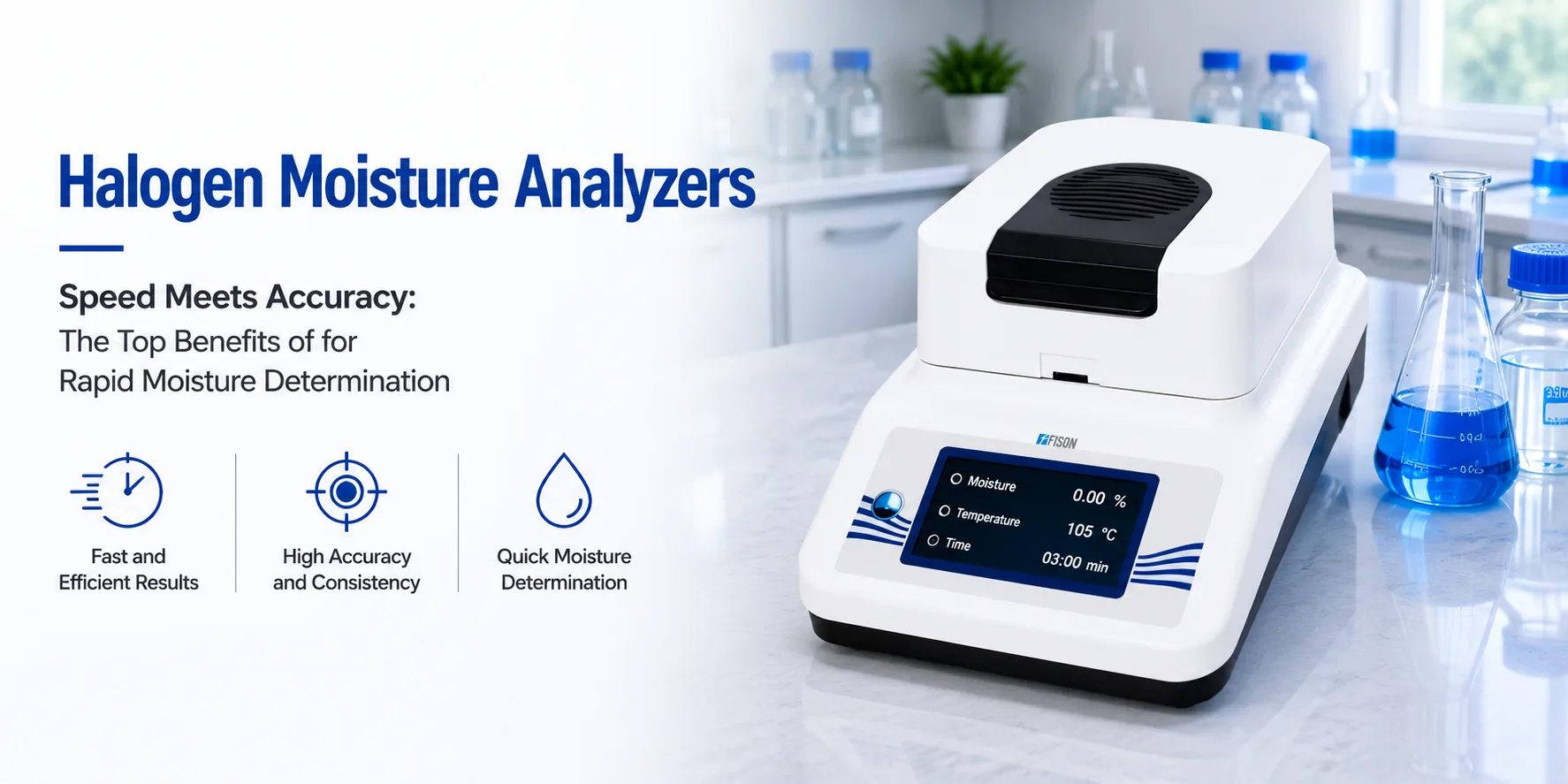
The Halogen Moisture Analyzer Working Principle is thermogravimetric. A sample sits on a pan connected to a balance, and a halogen lamp heats it. As water and other volatiles leave the sample, the balance records the falling mass until the reading settles at the end point.
The result is calculated from the difference between the starting mass and the final mass, expressed as a percentage of the starting mass. Because the value reflects all volatile components lost on heating, a Digital Halogen Moisture Analyzer reports total moisture loss rather than water alone.
Features That Shape Daily Use
According to the Fison halogen moisture meter range, the units offer multiple drying programs for different sample types and real-time moisture loss tracking, so the operator can watch a run develop and adjust settings.
A Halogen Analyser also supports USB and data storage options for transferring records. Sample weight ranges differ by model, from as little as 1 mg up to 210 g, so the capacity of a model should match the sample amounts a laboratory handles.
Applications in Food Laboratories
Routine moisture work covers many food materials, and laboratories comparing options for these samples can start with the moisture analyzer category before narrowing to a halogen model.
Grain and Cereals
Wheat, rice and maize are checked at intake because moisture decides storage life and mould risk.
Flour and Bakery
Flour moisture affects dough handling and baking behaviour, so mills and bakery labs test each lot before use.
Dairy Powder QC
Milk powder and whey powder are tested to protect flow, prevent lumping and keep stability during storage.
Spices and Dried Herbs
Moisture in spices influences aroma retention and the growth of moulds during transport.
Sugar and Confectionery
Sugar, cocoa and confectionery ingredients absorb moisture readily, which changes texture and shelf life.
Research and Feed Samples
Research centres and advanced labs test feed, dried plant material and formulation powders as part of wider studies.
Sample Handling Habits That Protect Results
A representative portion, spread in a thin, even layer, dries more consistently than a heap. Samples should be weighed promptly, because open powders such as milk powder or flour can take up moisture from room air before the run starts.
The drying program matters as much as the sample. On a halogen analyzer, a temperature set too high can scorch sugars or fats and inflate the apparent loss, while one set too low leaves the run unfinished. Recording the program with each result makes later runs easier to repeat.

Calibration and Routine Checks
Halogen moisture analyzer calibration has two parts. The balance is adjusted with reference weights, and the heating unit is checked against a temperature verification method described in the instrument's user manual. A halogen moisture analyser used daily benefits from short checks between formal calibrations.
Many laboratories also run a familiar sample of known behaviour at intervals. If the result drifts, the sample pan, the lamp area and the balance environment are the first places to look, since dust and draughts disturb small mass readings.
How Halogen Drying Differs from Other Moisture Methods
Moisture can be measured in several ways, and each answers a slightly different question.
| Aspect | Halogen moisture analyzer | Oven drying | Karl Fischer titration |
|---|---|---|---|
| What is measured | Total mass loss on heating | Mass loss after a set drying time | Water content specifically |
| Sample handling | Heated and weighed in one unit | Weighed before and after drying | Sample introduced to a titration cell |
| Typical use | Rapid routine checks of food and powders | Batch drying checks | Water-specific measurements |
Common Selection Mistakes
Model choice is often made from a brochure range rather than from the sample. These patterns cause the most rework.
- Ignoring sample weight range. A model built for small samples may struggle with bulky, low-density powders, while a large-capacity model may read small samples less clearly.
- Expecting water-only results. A halogen moisture analyzer counts all volatiles, so samples rich in alcohol or oils may need Karl Fischer titration as a complement.
- Overlooking drying programs. Heat-sensitive foods need gentler programs than dry grain.
- Forgetting data needs. USB and data storage options matter when several operators must share records.
- Neglecting calibration routine. An instrument without scheduled checks slowly loses agreement with other methods.
Exploring the Wider Moisture Analysis Category
Halogen units belong to a broader group of moisture measurement equipment. Related Fison categories include the moisture meter, the Karl Fischer titrator, the laboratory oven and the drying cabinet.
Laboratories evaluating this group usually weigh sample capacity, weighing range, drying programs, data output and how well a model matches their sample mix. To review the full range, visit the Fison moisture analyzer category , or browse the wider laboratory portfolio on the Fison home page.