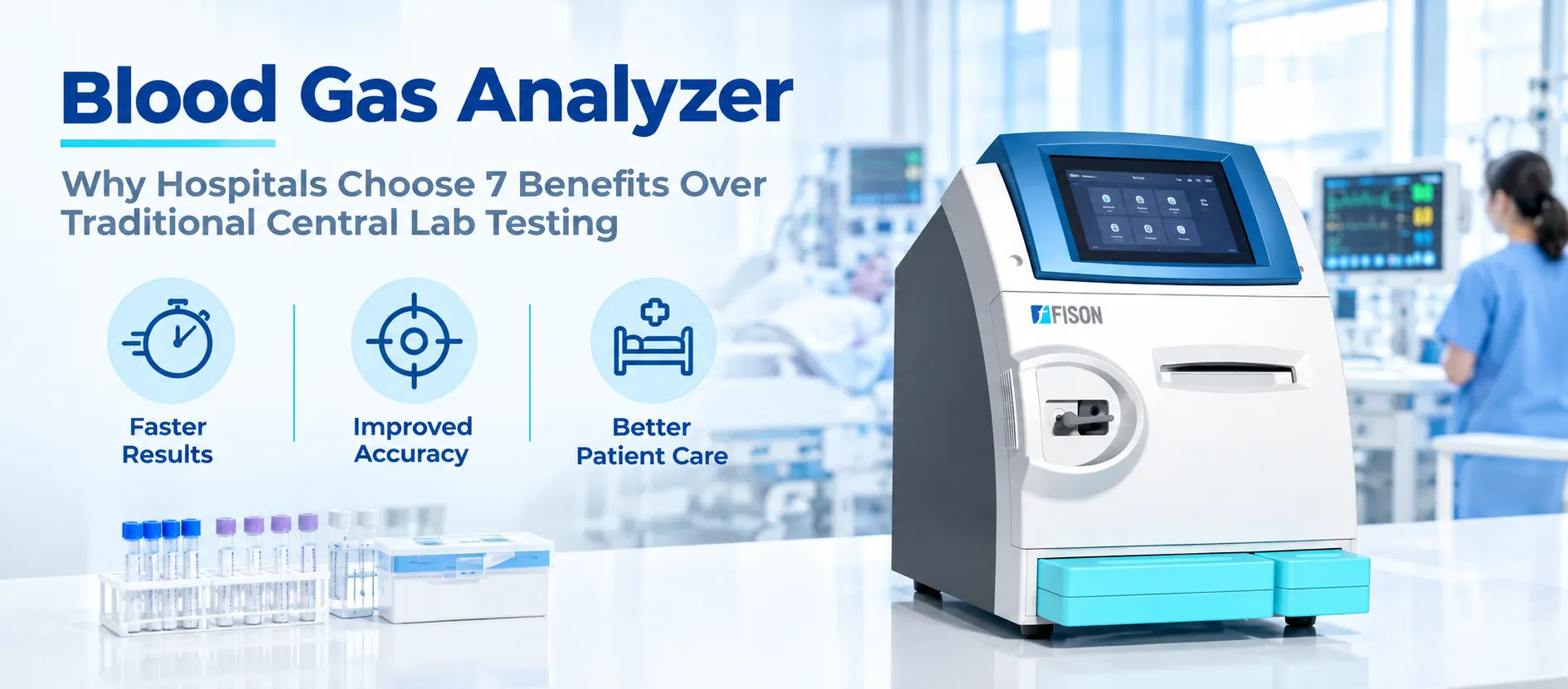
Oxygen, carbon dioxide and pH values can shift within minutes in a critically ill patient. This article explains how a Fison Blood Gas Analyzer works, where hospital and research laboratories apply it, and which choices most often lead to poor results.
Why Blood Gas Results Drive Fast Decisions
A critically ill patient's oxygen level, carbon dioxide level and blood pH can shift within minutes, so waiting for a full laboratory panel is rarely an option. Emergency departments, intensive care units and surgical theatres rely on results that arrive while the clinical picture is still current.
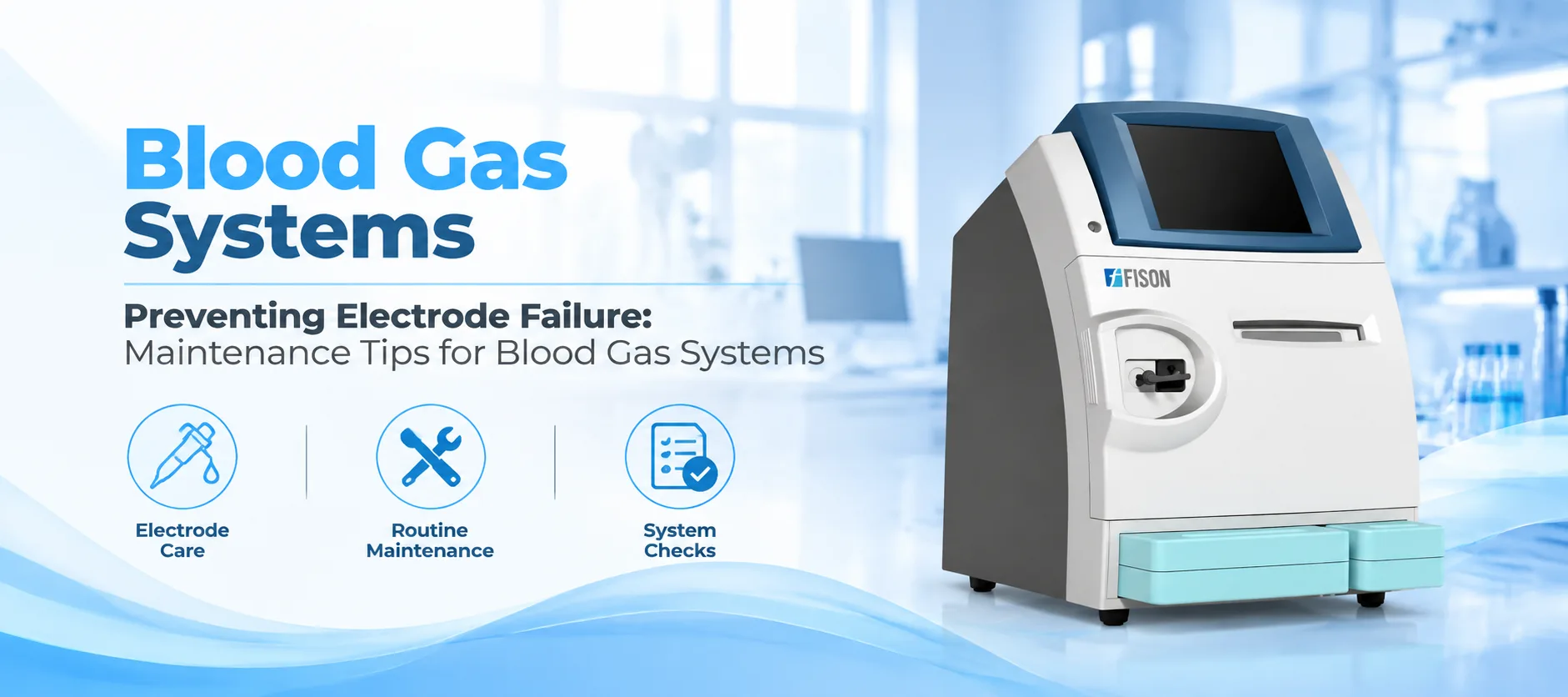
A Blood Gas Analyzer, sometimes described as a blood gas machine, answers this need by processing a small blood sample at the point of care and returning results in under 90 seconds. That speed, paired with storage for thousands of past outcomes, lets a hospital laboratory track a patient's trend rather than a single snapshot.
Working Principle: From Sample to Panel
The Blood Gas Analyzer Working Principle in current portable systems relies on dry electrochemistry combined with a microfluidic method. A small blood sample, typically between 50 and 120 µL, draws into a sensor cartridge through capillary or syringe action, where electrochemical sensors respond to specific gases and ions.
Each sensor generates a signal proportional to the concentration of its target parameter, and onboard software converts that signal into pH, blood gas and electrolyte values. Because the reaction happens in a sealed cartridge, the Blood Gas Analyzer Principle keeps the sample contained from loading to disposal, which matters in any setting handling biological material.
What a Portable Analyzer Adds at the Bedside
A blood gas analyzer portable enough for ward-to-ward use brings testing to the bedside instead of sending a sample to a central laboratory, which shortens the wait during a deteriorating event. Fison blood gas analyzer devices combine a high-definition touchscreen with an integrated thermal printer, so a clinician reads and prints a result without a separate workstation.
An operating range of 15°C to 30°C suits most clinical environments, and storage for over 5,000 outcomes keeps a working history on the instrument itself. These features make an automated blood gas analyzer practical for wards that cannot wait on a shared laboratory analyzer.
Applications Across Critical and Clinical Care
Blood gas analyzer uses extend beyond the intensive care unit, and a laboratory reviewing options can start with the blood gas analyzer category before matching a model to its testing volume.
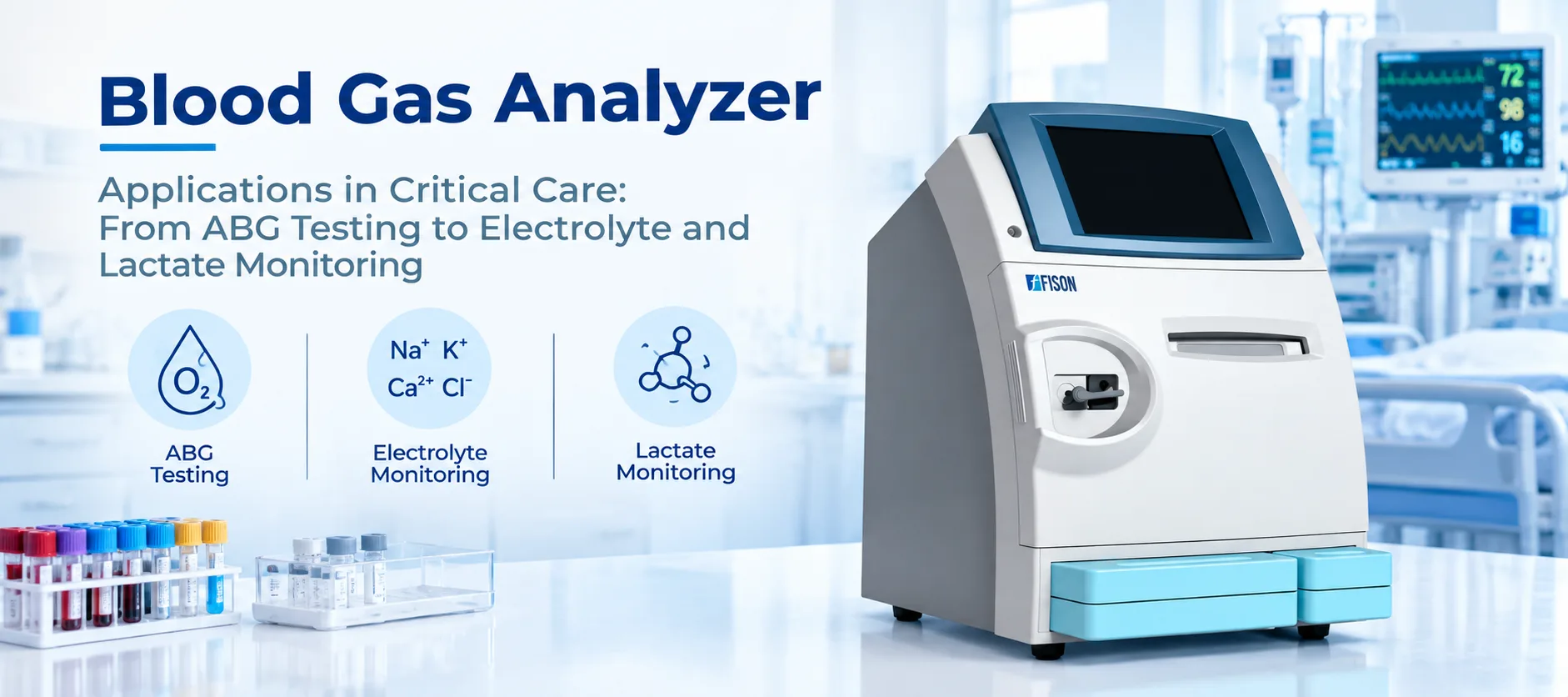
ABG Testing
Arterial blood gas testing checks oxygenation, ventilation and acid-base status in critically ill patients.
Electrolyte Monitoring
Sodium, potassium and calcium values support fluid and cardiac management alongside blood gas results.
Lactate Monitoring
Lactate trends help clinicians assess tissue perfusion during sepsis and shock states.
Surgical and ICU Use
Theatres and intensive care units use blood gas analysis test results to guide ventilation and fluid decisions during a procedure.
Research and Veterinary Use
Research centres and veterinary practices apply the same panel to biotechnology studies and animal patients.
Sport Science
Lactate and blood gas readings support performance testing in sport science laboratories.
Sample Handling Habits That Protect Accuracy
A blood gas sample changes as soon as it leaves the vein, since ongoing cell metabolism shifts gas and lactate values minute by minute. Testing promptly after collection, and avoiding air bubbles in the syringe, keeps results close to the patient's true physiological state.
Because the analyzer works with whole blood, serum, plasma, dialysate and cerebrospinal fluid, matching the sample type to the correct cartridge and method setting on a given run avoids a mismatched result being reported with confidence it does not deserve.

Choosing Between Near-Patient and Central Laboratory Testing
Blood gas testing sits between two common workflows, and the choice affects how quickly a result reaches the care team.
| Aspect | Near-patient blood gas analyzer machine | Central laboratory testing |
|---|---|---|
| Typical turnaround | Under 90 seconds at the bedside | Sample transport plus queue time |
| Sample volume | 50 to 120 µL | Often a larger draw |
| Suited to | Emergency, ICU and theatre settings | Routine, non-urgent panels |
Common Selection Mistakes
Choosing among blood gas analyzer manufacturers often starts and ends with a turnaround time claim. These patterns cause the most rework once a device is in daily clinical use.
- Overlooking sample type coverage. A device suited to whole blood alone may not cover CSF or dialysate testing a laboratory also needs.
- Ignoring cartridge storage conditions. Sensor cartridges have their own temperature and shelf-life needs, separate from the analyzer itself.
- Underestimating data storage needs. A department reviewing trends benefits from an analyzer that stores thousands of past outcomes rather than a handful.
- Forgetting mobility requirements. A portable blood gas analyzer earns its place only if battery life and size actually suit ward-to-ward movement.
- Skipping connectivity checks. Printout alone may not satisfy a laboratory information system that expects a digital result feed.
Exploring the Wider Point-of-Care Testing Category
Blood gas analyzers sit within a broader group of point-of-care and clinical chemistry instruments used across hospital and research settings. Related Fison categories include the electrolyte analyzer, the coagulation analyzer and the biochemistry analyzer, each covering a different slice of the same patient workup.
Laboratories comparing options in this category typically weigh sample volume, turnaround time, sample type coverage and data storage. The full range of blood gas analyzer machines is available on the Fison blood gas analyzer category page, and the wider laboratory equipment portfolio can be reached through the Fison home page.