Introduction
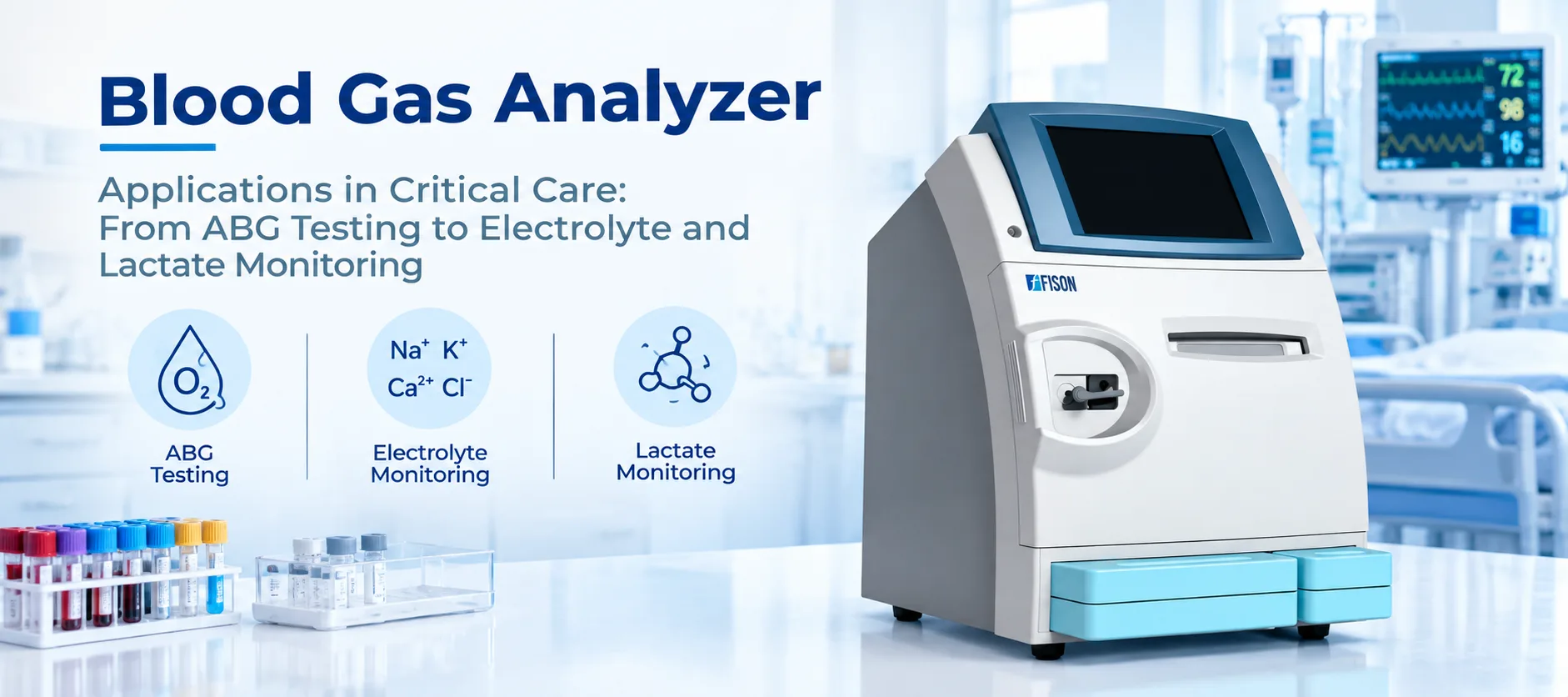
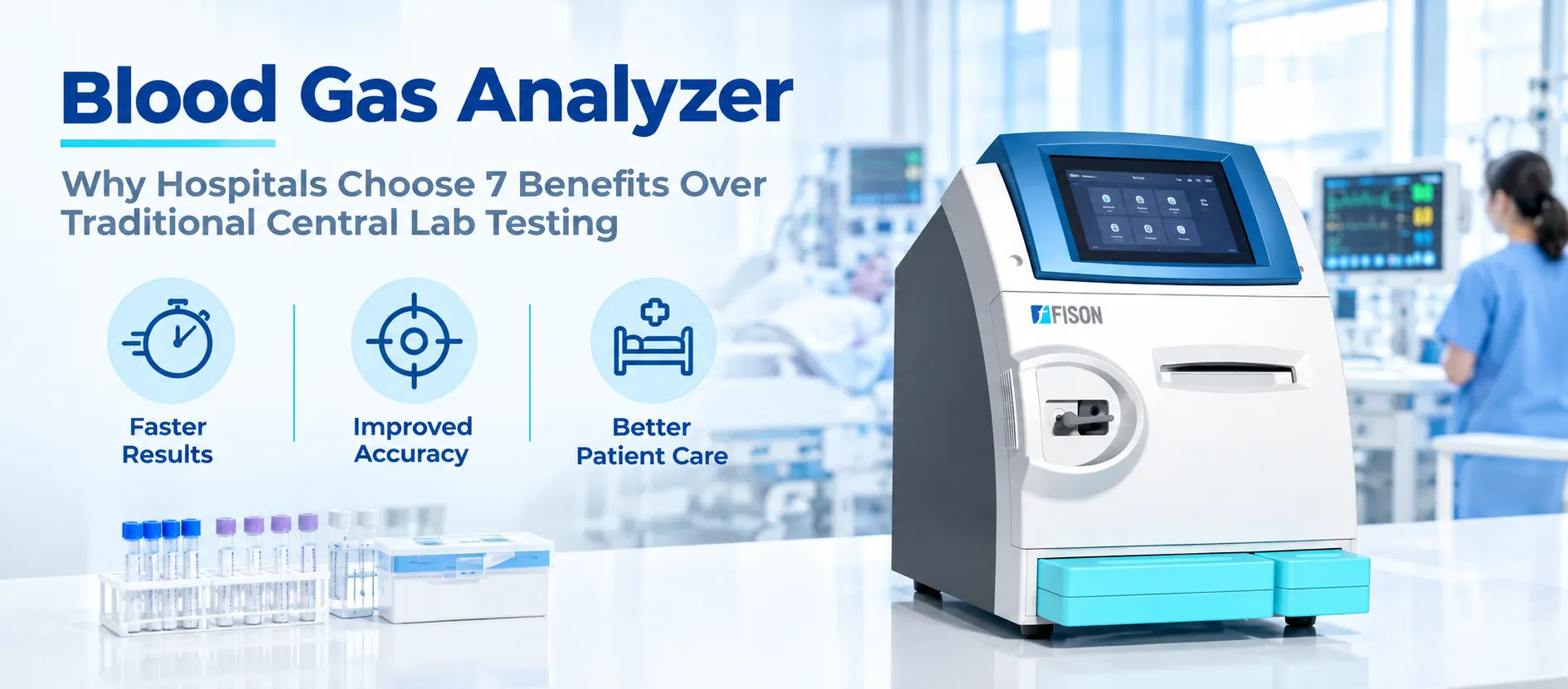
A sample sent to a central lab keeps changing while it waits in transit and in queue. This article covers seven benefits a Fison Blood Gas Analyzer offers over traditional central lab testing, how its working principle delivers them, and where central testing still has a role.
The Core Problem with Sending Blood Gas Samples to a Central Lab
A sample sent to a central laboratory has to survive transport, wait in a queue and go through accessioning before a result reaches the ward, and a blood gas sample changes with each passing minute because cell metabolism keeps consuming oxygen and producing carbon dioxide after the draw. By the time a central lab result returns, it may already describe a patient who has moved on clinically.
A Blood Gas Analyzer placed at or near the bedside removes most of that delay. Hospitals choose this automated blood gas analyzer approach not for one single reason but for a set of practical benefits that stack up across emergency departments, intensive care units and operating rooms, which this article works through one at a time.
Seven Benefits Over Traditional Central Lab Testing
Results in Under 90 Seconds
A Blood Gas Analyzer device returns a full result in under 90 seconds, against the transport and queue time a central lab sample typically needs, which is why many wards simply call it a blood gas machine rather than a central lab instrument.
A Sample That Has Not Had Time to Change
Testing minutes after collection, rather than after a trip to the lab, means the blood gas analysis test on a Blood Gas Analyzer device reflects the patient's current state rather than a delayed one.
One Panel, Several Parameters
An automated Blood Gas Analyzer reports blood gas, electrolyte and metabolite values from one sample, so a clinician using this Blood gas analyzer for electrolyte and metabolite panels is not waiting on separate requests to build a full picture.
A Small Sample Volume
A sample volume as low as 50 to 150 µL, depending on the Blood Gas Analyzer machine model, matters for patients where repeated larger draws are not an option.
A Printed Result at the Point of Care
An integrated thermal printer gives staff a physical record immediately, without waiting on a central lab report to be generated and delivered back to the ward.
A Running History on the Instrument
Storage for over 5,000 outcomes means this portable Blood Gas Analyzer keeps a working history of a patient's trend, not just a single isolated value.
A Design Built for the Ward, Not the Lab
An operating temperature range suited to a clinical setting, rather than a controlled laboratory environment, lets a Blood Gas Analyzer portable enough for ward use sit where staff actually need it.
Blood Gas Analyzer Working Principle Behind the Speed
The Blood Gas Analyzer working principle explains why these benefits are possible at all. A small blood sample draws into a sensor cartridge, where dry electrochemical sensors respond to specific gases and ions, and each sensor's signal converts directly into a pH, blood gas or electrolyte value. Because the reaction happens inside a sealed cartridge rather than across separate lab instruments, there is no transport step between measurement and result.
Response times around 60 seconds on some Blood Gas Analyzer Machine models come from this same design: the sample reaches the sensors almost as soon as it is loaded, instead of moving through several pieces of equipment in sequence. Understanding the Blood Gas Analyzer principle this way makes clear why a near-patient Blood Gas Analyzer device, not just a faster central lab process, is what delivers these benefits.
Blood Gas Analyzer Uses Where the Benefits Matter Most
These seven benefits are not equally valuable everywhere, and a laboratory can weigh its own patient flow against the full range of Blood Gas Analyzer machine models before deciding how much near-patient testing it needs.
Emergency Departments
Rapid triage decisions depend on results arriving before a patient's condition has moved past the point they describe.
Intensive Care Units
Continuous monitoring of ventilated patients on a Blood Gas Analyzer benefits from a running history rather than isolated spot checks.
Operating Rooms
A small sample volume and a result at the point of care suit a setting where a central lab trip is not practical mid-procedure.
Research and Biotechnology
Research centres running repeated measurements on a portable Blood Gas Analyzer benefit from the stored history it keeps between sessions.
Veterinary Medicine
The same automated Blood Gas Analyzer panel of parameters applies to animal patients in veterinary medicine, where a small sample volume is often just as important as it is in paediatric human care.
Sport Science
In sport science settings, lactate and blood gas readings support performance testing where results are needed between sessions, not days later.
Where Central Lab Testing Still Has a Place
None of these seven benefits means central lab testing has no role left. A central lab remains better suited to complex panels outside a point-of-care cartridge's scope, to formal result verification, and to settings outside critical care where sample volume is not restricted and turnaround pressure is lower. The choice is less about replacing central testing outright and more about moving the specific tests that benefit from speed closer to the patient.
A laboratory weighing both approaches can review the blood gas analyzer category alongside its existing central lab workflow to decide where each one fits a given patient flow.
Common Mistakes When Adopting Near-Patient Testing
Moving blood gas testing closer to the patient introduces its own risks if the change is not planned carefully.
- Assuming speed alone justifies the switch. Cartridge storage conditions, connectivity and sample type coverage on a Blood Gas Analyzer machine all affect whether the benefit holds up in daily use.
- Skipping staff training on sample handling. A fast instrument does not fix a poorly drawn sample with air bubbles or delayed testing.
- Ignoring data connectivity needs. A printed result alone may not satisfy a laboratory information system expecting a digital feed.
- Underestimating quality control requirements. Near-patient devices still need scheduled verification against reference material.
- Choosing Blood Gas Analyzer manufacturers on speed figures alone. Sample type coverage, cartridge supply arrangements and support matter just as much over the life of the instrument.
Where Blood Gas Testing Fits in the Wider Category
Blood Gas Analyzers sit within a broader group of point-of-care and clinical chemistry instruments used across hospital and research settings. Related Fison categories include the electrolyte analyzer, the coagulation analyzer and the biochemistry analyzer, each covering a different slice of the same patient workup.
The full range of Blood Gas Analyzer machines is available on the Fison Blood Gas Analyzer category , and the wider laboratory equipment portfolio can be reached through the Fison home .