Introduction
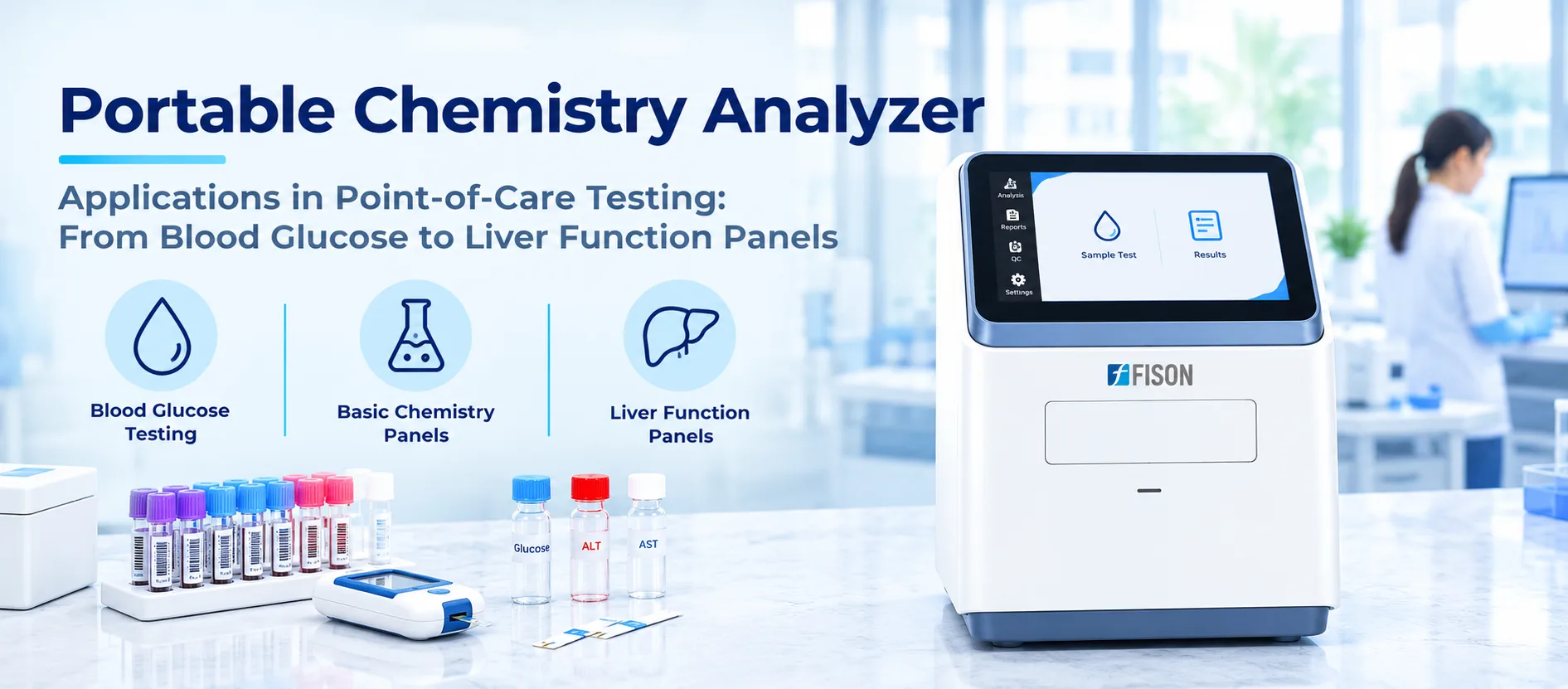
Glucose, electrolyte and liver results can change the next clinical step. This article explains how a Fison Portable Chemistry Analyzer works, where hospital and research laboratories apply it, and which choices most often lead to poor results.
Why Point-of-Care Testing Needs Chemistry Results on the Spot
A patient's glucose, electrolytes or liver enzymes can change the next clinical step entirely, and waiting for a sample to travel to a central laboratory adds time a critical situation may not have. Point-of-care testing closes that gap by bringing the measurement to the patient instead of the other way round.
A Portable Chemistry Analyzer, sometimes described as a portable blood chemistry analyzer, supports this by running a chemical test from a small sample, with no external preparation, and returning a result within minutes. Hospitals, research centres and advanced labs use this format wherever a result needs to reach a clinician quickly, and a portable chemistry analyzer laboratory setup can sit alongside a central lab rather than replacing it.
Working Principle: Reagent Discs and Automated Reactions
A Portable Biochemistry Analyzer of this type, and specifically the portable chemistry analyzer discussed in this article, is built around reagent disc technology. A small blood or plasma sample is applied to a disc holding the reagents needed for several parameters at once, and the instrument runs each reaction automatically once the disc is loaded.
Inside, this Chemistry Analyzer Machine mixes the sample with each reagent zone in sequence and reads the resulting colour or signal change optically, the same process any Portable Chemistry Analyzer Machine relies on. Software converts each reading into a concentration value for its parameter, so a single disc can report glucose, electrolytes and liver markers from one small sample rather than requiring a separate draw for each test.
What Makes a Unit Practical at the Bedside
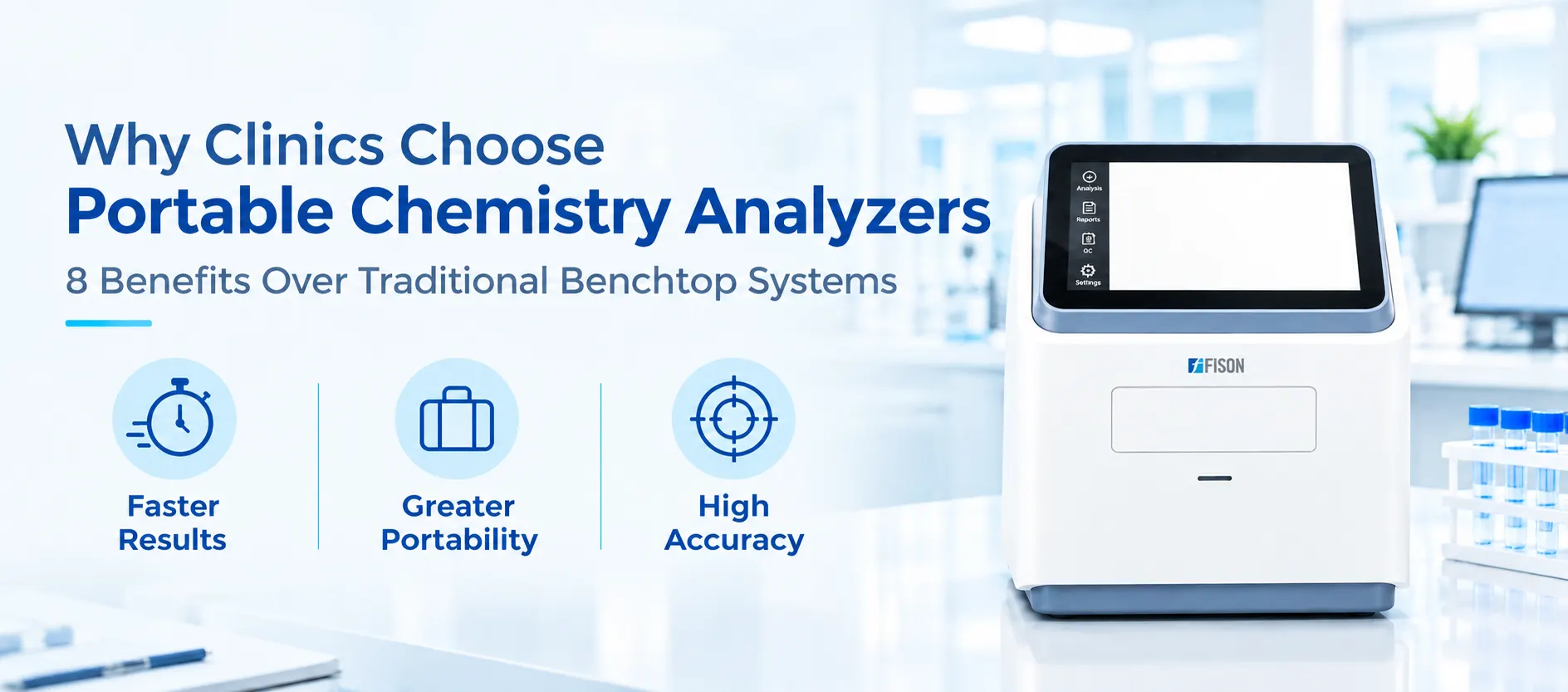
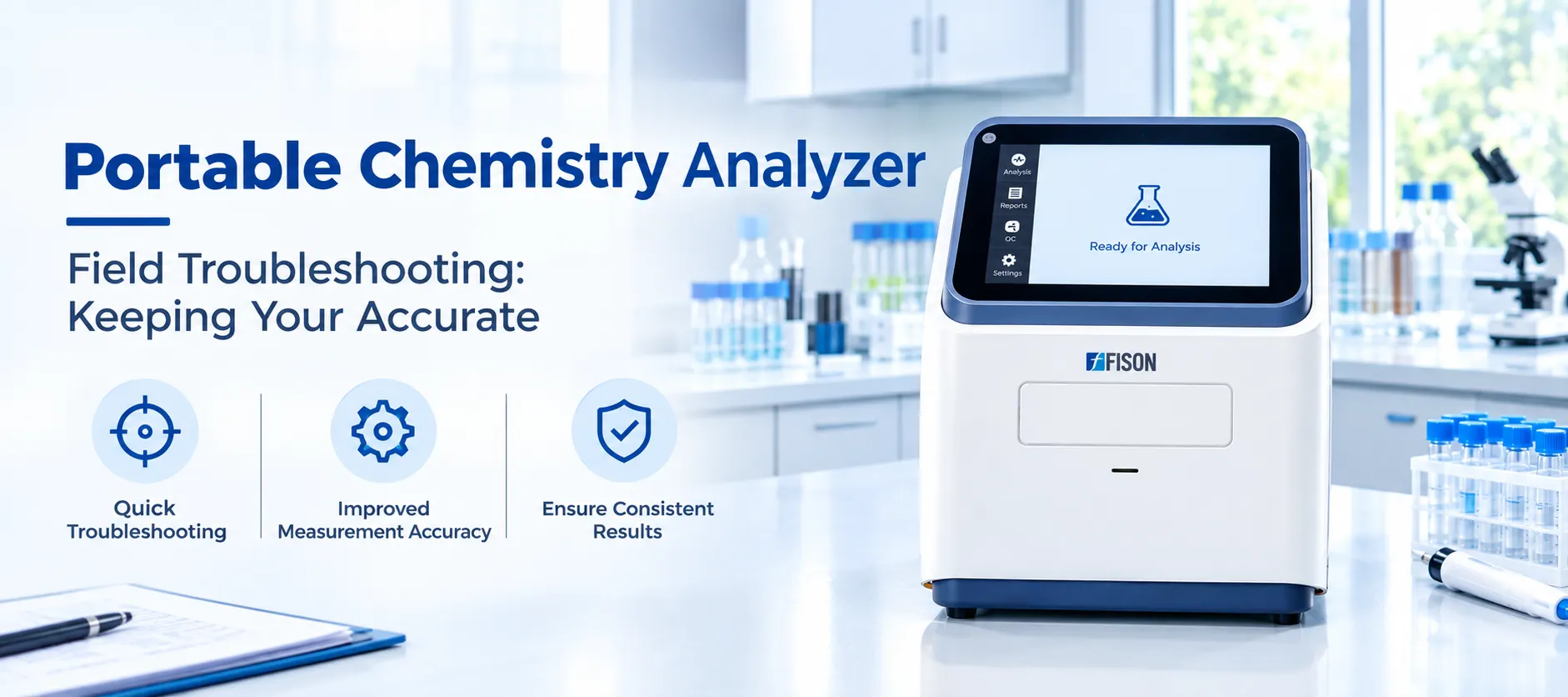
A Portable Chemistry Analyzer instrument is judged on more than its panel list, and comparing one portable chemistry analyzer against another means looking past the headline features. A portable chemistry analyzer system of any kind benefits from this comparison before purchase. A compact, fully automated design means a clinician loads a disc and reads a result without a separate workstation, and a minimal sample volume matters most with paediatric or critically ill patients where blood draws are limited.
A portable chemistry analyzer system built for both clinical and field environments extends testing beyond a fixed laboratory bench, which is why a portable chemistry analyzer appears in emergency care, mobile diagnostics and outreach clinics as much as in a hospital laboratory.
Applications Across Point-of-Care Settings
Chemistry panels from a portable chemistry analyzer support decisions across many care settings, and a laboratory comparing options can start with the Fison chemistry analyzer range before narrowing to a portable format.
Blood Glucose Monitoring
A portable chemistry analyzer delivers rapid glucose results that support diabetes management and emergency assessment at the point of care.
Liver Function Panels
Run on a portable chemistry analyzer, ALT, AST and bilirubin readings help assess liver status without waiting for a central laboratory panel.
Renal Function Testing
A portable chemistry analyzer reports creatinine and urea results that support kidney function assessment in clinic and field settings.
Electrolyte Panels
Sodium, potassium and chloride values from a portable chemistry analyzer support fluid and cardiac management decisions.
Mobile Diagnostics
Outreach vehicles and mobile healthcare units use a portable chemistry analyzer where a fixed laboratory is not available.
Emergency Care
Emergency departments use a portable chemistry analyzer for rapid chemistry results that guide treatment decisions within the first critical minutes.

Sample Handling Habits That Protect Results
A capillary or venous sample should be applied to the disc of a portable chemistry analyzer promptly after collection, since prolonged standing can shift glucose and some electrolyte values before the reading is taken. Haemolysis from poor technique can also distort potassium and other parameters, so collection technique matters as much as the instrument.
Storing reagent discs at the stated temperature, and checking the expiry date before use, keeps a portable chemistry analyzer consistent between runs. A disc used past its stated shelf life may still run, but the result can no longer be used with the same confidence.
Portable Systems Compared with Central Laboratory Analyzers
Portable chemistry analyzer testing sits between two common workflows, and the choice shapes how quickly a result reaches the care team.
| Aspect | Portable chemistry analyzer | Central laboratory analyzer |
|---|---|---|
| Typical turnaround | Minutes at the point of care | Sample transport plus queue time |
| Sample volume | Minimal, disc-based | Often a larger draw |
| Suited to | Clinics, field sites, mobile units | Fixed laboratory bench |
Common Selection Mistakes
Choosing a portable chemistry analyzer that laboratory teams can rely on is often decided from a panel list alone. These patterns cause the most rework once a unit is in daily use.
- Overlooking panel coverage. A disc covering glucose alone will not help with a liver or renal panel request on a portable chemistry analyzer, so the available discs should match the expected test mix.
- Ignoring reagent disc storage needs. Temperature and shelf-life requirements for discs are separate from the portable chemistry analyzer itself.
- Underestimating training needs. Staff moving from a central laboratory to a Portable Chemistry Analyzer still need a short orientation on sample application and disc handling.
- Forgetting connectivity requirements. A result from a Portable Chemistry Analyzer on a screen may not satisfy a laboratory information system that expects a digital feed.
- Skipping quality control runs. Periodic checks on a Portable Chemistry Analyzer with a known control sample catch drift before it affects a patient result.
Exploring the Wider Chemistry Analyzer Category
A portable chemistry analyzer sits within a broader category of clinical chemistry instruments, spanning benchtop systems for high-volume laboratories through to compact, disc-based units for the point of care. Laboratories comparing options in this category typically weigh panel coverage, sample volume, turnaround time and whether a benchtop analyzer or a Portable Chemistry Analyzer machine better fits their setting.
The full range of Portable Chemistry Analyzer models and benchtop chemistry analyzer machine options is available on the Fison chemistry analyzer category , and the wider laboratory equipment portfolio can be reached through the Fison home.