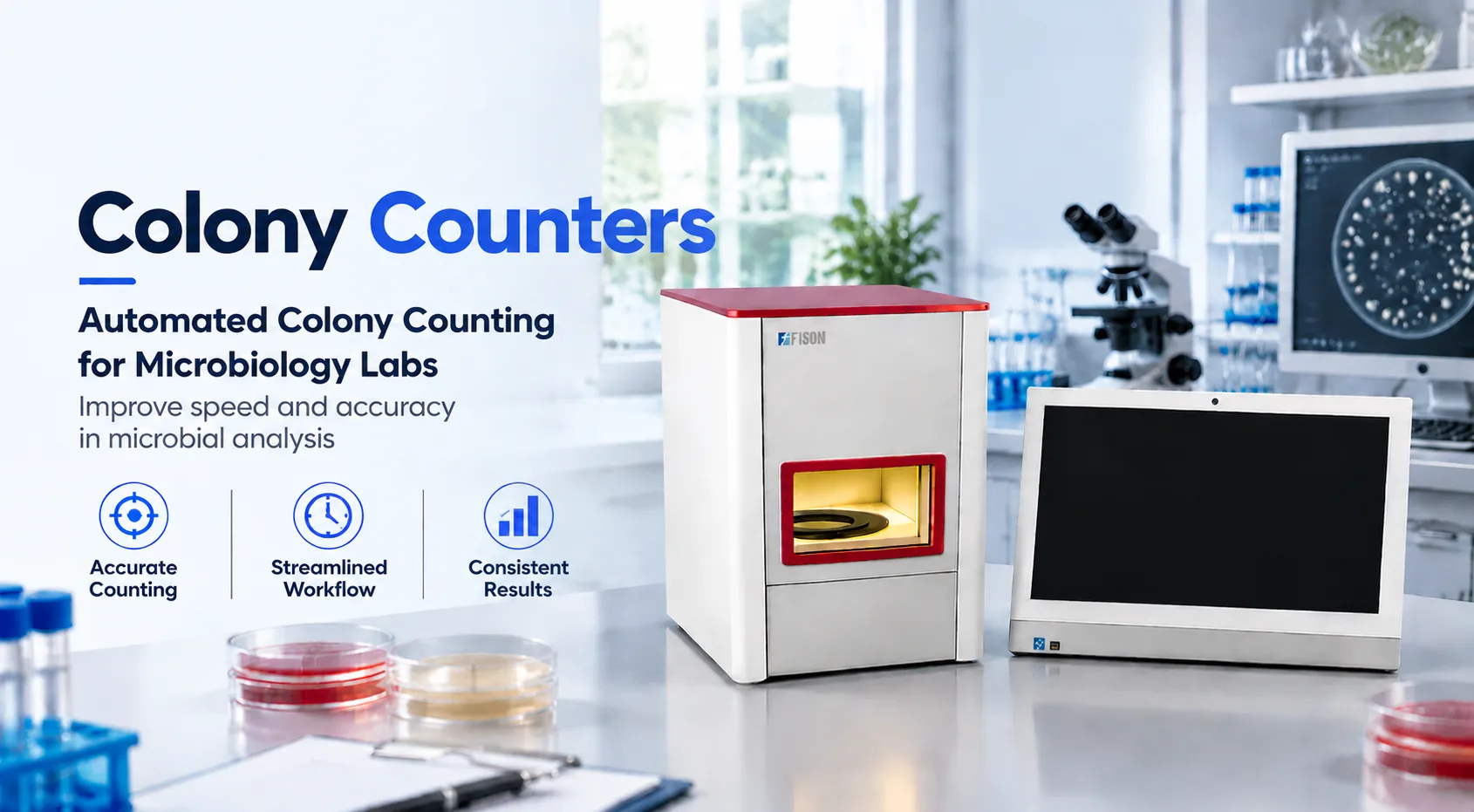
Laboratories, hospitals, research centres and advanced facilities running microbiology testing rely on a Fison Colony Counter to turn a plate full of bacterial growth into an accurate count in seconds rather than minutes. This article looks at how these instruments work, where they fit into a wider microbiology testing setup, and what to check before choosing one.
Why Manual Colony Counting Still Limits Microbiology Throughput
Counting colonies by eye means tallying each visible spot on a plate one by one, often while holding a handheld clicker counter and squinting at crowded or faint growth under a lamp. After the first few dozen plates in a batch, fatigue sets in, and small colonies sitting close together become easy to miss or double count, a familiar problem for anyone running a Colony Counter in laboratory settings with a heavy plate load.
This manual approach also invites inconsistency between analysts, since two people counting the same plate can arrive at noticeably different totals depending on how they judge borderline colonies. Moving that judgment into a repeatable imaging and counting process, following the same Colony Counter principle used in an automated Colony Counter machine, is what pushed labs toward automated counting equipment in the first place.
How a Colony Counter Works: From Plate Imaging to Automated Count
The Colony Counter principle starts with placing an inverted petri dish onto a lit stage, where a camera captures an image of the plate from above. Software then analyzes that image, distinguishing colonies from the agar background and from each other based on contrast, shape and size, the same task a bacterial Colony Counter performs many times over during a single testing run.
Plate Placement
Illumination & Imaging
Colony Detection
Count & Result
Once the software separates individual colonies, it tallies the total and displays the count on screen, often alongside the captured plate image so an operator can review and adjust borderline calls before the result is recorded, a workflow now common in Colony Counter in microbiology labs today.
Handheld and Automatic Colony Counters: Matching Format to Workload
A handheld Colony Counter, built around a simple clicker and magnifying lens, still suits labs running only a small number of plates a day, where the pace of manual tallying does not become a bottleneck. It keeps the setup simple and needs no imaging software to operate.
An automatic Colony Counter instead captures and processes plate images on its own, which matters once plate volume climbs high enough that manual tallying starts eating into other laboratory work. Facilities weighing handheld against automatic formats can compare imaging resolution and plate capacity on the Colony Counter category page before settling on a configuration.
Where the Colony Counter Fits in the Wider Microbiology Testing Equipment Category
A Colony Counter belongs to a broader microbiology testing equipment category that also includes incubators, autoclaves and biosafety cabinets used across laboratories and treatment facilities. Within this category, teams typically compare Colony Counter equipment on imaging resolution, plate size compatibility, counting software accuracy on crowded or overlapping colonies, and how easily results export into a laboratory record system.
Reviewing the full Colony Counter instrument range is a practical starting point for lining up these factors before narrowing a shortlist. A Colony Counter meter reading pulled from that range should still match the plate formats and throughput a lab already runs day to day.
For facilities exploring microbiology testing equipment beyond colony counting alone, the Fison home page lists the wider catalogue of laboratory and hospital equipment the brand carries.

Colony Counter Uses Across Microbiology and Quality Testing
Each Colony Counter application shares the same imaging-and-counting method, even though the plate type and count volume shift from one setting to the next. Colony Counter uses in food and water microbiology testing centre on tracking bacterial counts through processing and treatment stages, giving a quick read on whether a sample falls within the range a facility expects. A bacterial Colony Counter used this way turns a routine plate count into a fast, repeatable step rather than a manual bottleneck between sampling and reporting.
Pharmaceutical environmental monitoring programs use a digital Colony Counter to track microbial levels across cleanroom surfaces and air samples over time, while a Colony Counter in laboratory settings supporting clinical microbiology also handles diagnostic culture work. Research centres studying microbial growth patterns also depend on Colony Counter in microbiology settings where consistent, repeatable counts matter more than speed alone, rounding out the range of Colony Counter application areas a single instrument design can cover.
Selection Mistakes to Watch For When Choosing a Colony Counter Device
A handful of recurring missteps show up when evaluating a Colony Counter instrument, and most only become clear once the instrument is already in routine use:
- Overlooking plate format compatibility. A Colony Counter meter sized for one petri dish diameter may not accommodate other plate sizes a lab regularly uses.
- Underestimating lighting and contrast needs. Poor illumination can cause a Colony Counter machine to miss faint or translucent colonies against certain agar types.
- Ignoring overlapping colony discrimination. Crowded plates with colonies touching each other need software capable of separating them accurately rather than counting a cluster as one.
- Choosing throughput that does not match plate volume. A single-plate Colony Counter equipment setup can become a bottleneck once daily plate counts grow substantially.
- Skipping periodic verification against manual counts. Comparing automated results to a manual tally on a sample basis helps confirm the counting software stays accurate over time.
Manual and Digital Colony Counters: A Quick Comparison
Some labs still tally colonies by hand, while others let imaging software handle detection and counting. The table below outlines where each approach tends to fit.
| Aspect | Manual Clicker Counter | Digital Colony Counter |
|---|---|---|
| Counting method | Operator tallies by eye | Camera and software detect automatically |
| Result consistency between operators | Depends on operator judgment | Consistent regardless of operator |
| Plate throughput | Lower, one plate at a time | Higher, faster per-plate processing |
| Typical setting | Low plate volume, occasional testing | Higher-volume routine microbiology testing |
Ready to Compare Colony Counter Options?
Imaging resolution, plate capacity and counting software differ meaningfully between models, and reviewing a Colony Counter device lineup together helps match an instrument to actual microbiology testing needs rather than a rough estimate.
View Colony Counter Options