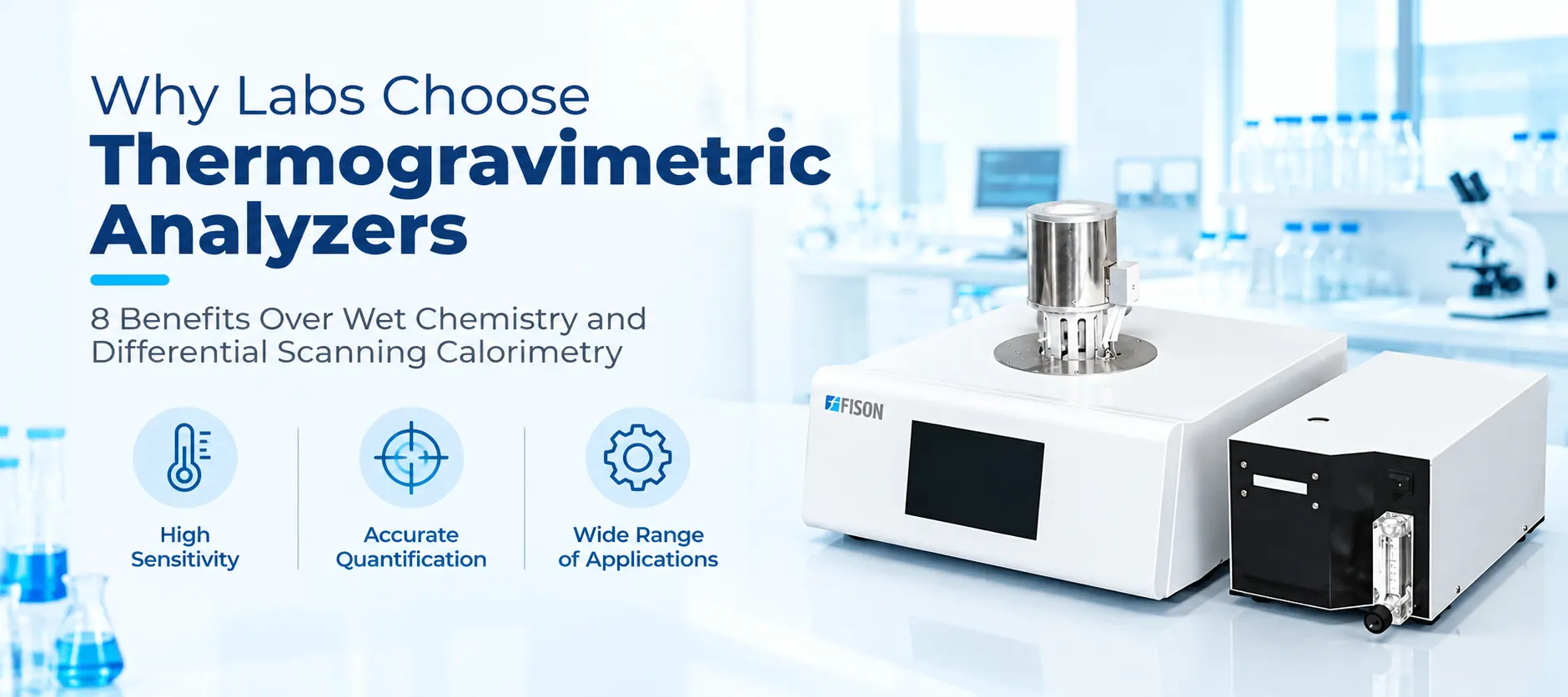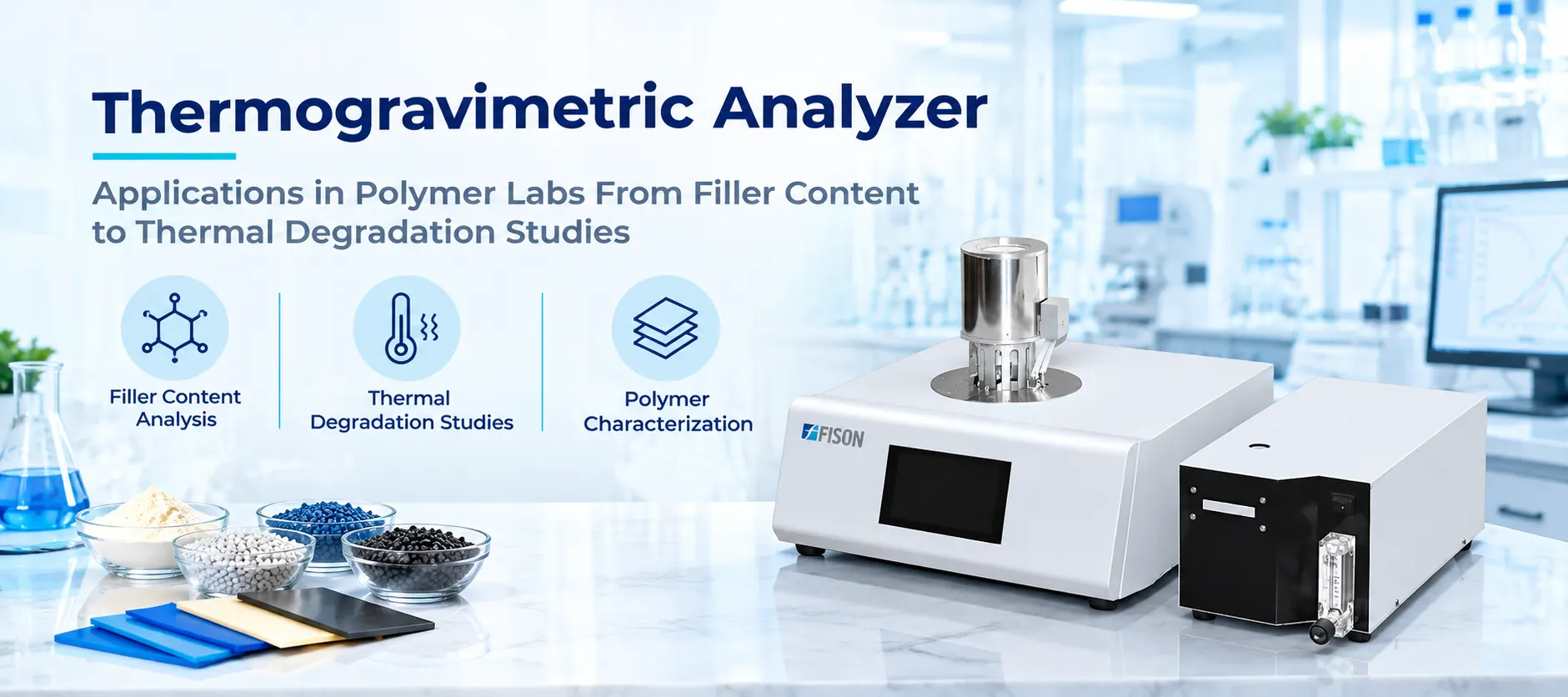
Weighing a material while it heats reveals how much of it breaks down or stays behind. This explains how a Fison Thermo Gravimetric Analyzer works, where polymer labs use it, and what to check before choosing one.
Why Polymer Labs Track Mass Under Heat
Plastics, rubber, and coatings change as they heat. Parts of a sample can decompose, oxidize, or be released, while other ingredients remain. Measuring how the mass of a sample changes through that process tells a lab how stable the material is and what it contains.
A Thermo Gravimetric Analyzer records these mass changes as temperature rises, falls, or holds steady. The Thermo Gravimetric Analyzer tracks weight, temperature, and time together in real time, giving polymer labs a direct view of thermal stability, decomposition, and ingredient content.
How Weight Change Becomes Material Data
The Thermo Gravimetric Analysis principle is straightforward. A small sample sits in a crucible on a precision balance inside a furnace. As the furnace follows a set temperature program, the balance records each change in sample weight.
Precision Weighing
The Thermo Gravimetric Analyzer balance resolves mass changes down to fractions of a microgram, so even small losses appear clearly on the curve.
Controlled Atmosphere
A built-in gas flowmeter on the Thermo Gravimetric Analyzer, with a two-way gas switch, supports inert, oxidizing, reducing, static, and dynamic atmospheres around the sample.
Built-in software records the TG curve automatically, plotting weight against temperature and time. Each drop in the curve marks a stage where part of the sample is lost, while the weight that remains at the end reflects ingredients that survive the heating program.
What the Instrument Brings to Polymer Testing
These features explain why polymer and materials labs rely on a Thermo Gravimetric Analyzer instrument for Thermo Gravimetric Analysis.
Fine Balance Resolution
Microgram-level resolution captures small weight changes during heating.
Wide Weight Range
The Thermo Gravimetric Analyzer balance handles samples from milligrams up to grams, with an extended range available.
High Temperature Limits
Models run from room temperature to well over a thousand degrees Celsius.
Flexible Programs
Rising, cooling, and constant temperature modes, with adjustable hold times, suit different test methods.
Adjustable Heating Rate
A wide heating rate range lets the Thermo Gravimetric Analyzer suit different test methods.
Fast Cooling
The furnace cools from high temperature within minutes, shortening the wait between runs.
Automatic TG Curves
Software records the TG curve automatically and monitors weight, temperature, and time in real time.
Crucible Options
Aluminum crucibles suit lower temperatures, and ceramic crucibles cover high-temperature work.
From Filler Content to Thermal Degradation
A Thermo Gravimetric Analysis machine supports chemical, pharmaceutical, and materials research wherever composition and stability matter.
Filler and Ingredient Content
Quantitative analysis of ingredients shows how much inorganic material plastics, rubber, and coatings contain, based on the weight the Thermo Gravimetric Analyzer records after heating.
Thermal Degradation and Stability
Polymer labs use a Thermo Gravimetric Analyzer to see at what temperature plastics and rubber begin to decompose.
Pharmaceutical and Coatings Testing
Pharmaceutical labs test drugs on a Thermo Gravimetric Analyzer, and coatings producers study thermal stability and decomposition of their materials.
Materials Research
Research and education labs study oxidation, reduction, adsorption, and desorption in metal materials and inorganic samples.
Thermo Gravimetric Analyzers serve chemical, pharmaceutical, materials production, biotechnology, and research settings. The range of Thermo Gravimetric Analyzers shows how temperature limits differ between models.
Thermogravimetric and Differential Thermal Analysis Compared
| Factor | Thermogravimetric Analyzer | Differential Thermal Analyzer |
|---|---|---|
| What it measures | Change in sample weight | Temperature difference against a reference |
| Typical events | Decomposition, oxidation, adsorption, desorption | Melting, crystallization, sublimation |
| Output | TG curve | DTA curve |
| Polymer question answered | How much remains, and when it breaks down | When it melts or crystallizes |
Common Selection Mistakes to Avoid
Choosing the Wrong Temperature Limit
Models differ in their upper limit. Match the Thermo Gravimetric Analyzer to the highest temperature your samples need, especially for metal and inorganic work.
Using the Wrong Crucible
Aluminum crucibles are limited to lower temperatures. High-temperature degradation tests need ceramic crucibles.
Overlooking Atmosphere Needs
Test methods may call for inert, oxidizing, or reducing conditions. Check that the analyzer supports the atmospheres your methods need.
Ignoring Data Output
Results leave the Thermo Gravimetric Analyzer through a serial data interface. Confirm how TG curves will reach your lab computers and reports.
Exploring the Thermal Analyzer Category
A Thermo Gravimetric Analyzer is one type of thermal analyzer. The wider group also includes differential thermal analyzers, synchronous thermal analyzers, and differential scanning calorimeters. Labs comparing Thermo Gravimetric Analyzers usually weigh temperature range, balance resolution, weight range, heating rate, atmosphere options, and software.
Whether you check filler content in rubber or thermal degradation in plastics, you can review the full Thermo Gravimetric Analyzer lineup to compare models, or browse other laboratory instruments on the Fison home page.
Review Thermogravimetric Analysis in Detail
Compare temperature limits, balance range, and atmosphere options.
Explore Thermogravimetric Analyzers