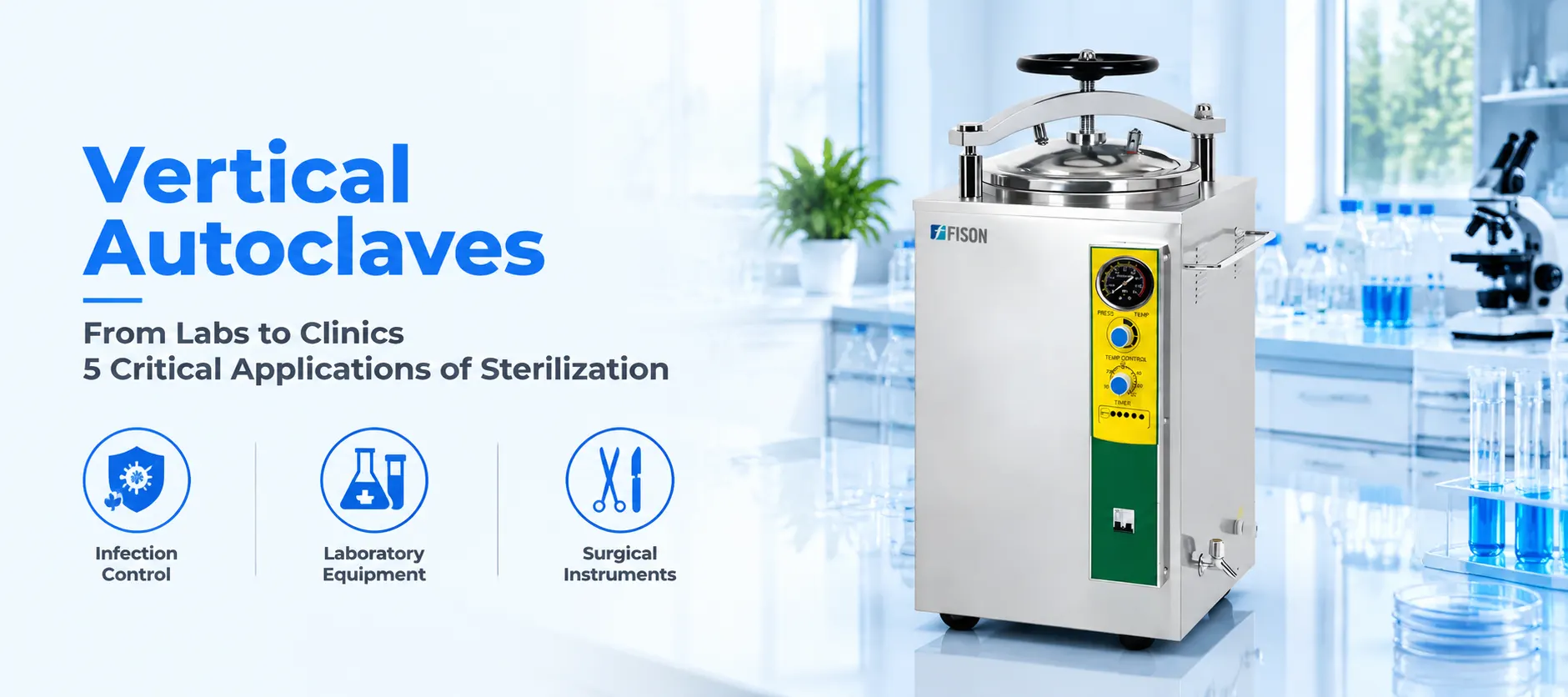
Laboratories, hospitals, research centres and advanced facilities that need consistent steam sterilization in a compact footprint rely on a Fison vertical autoclave to process glassware, media, instruments and waste under controlled pressure and temperature. This article looks at how these instruments work, the settings where they prove most useful, and what to check before choosing one.
Vertical Autoclave Principle: How Steam Sterilization Under Pressure Works
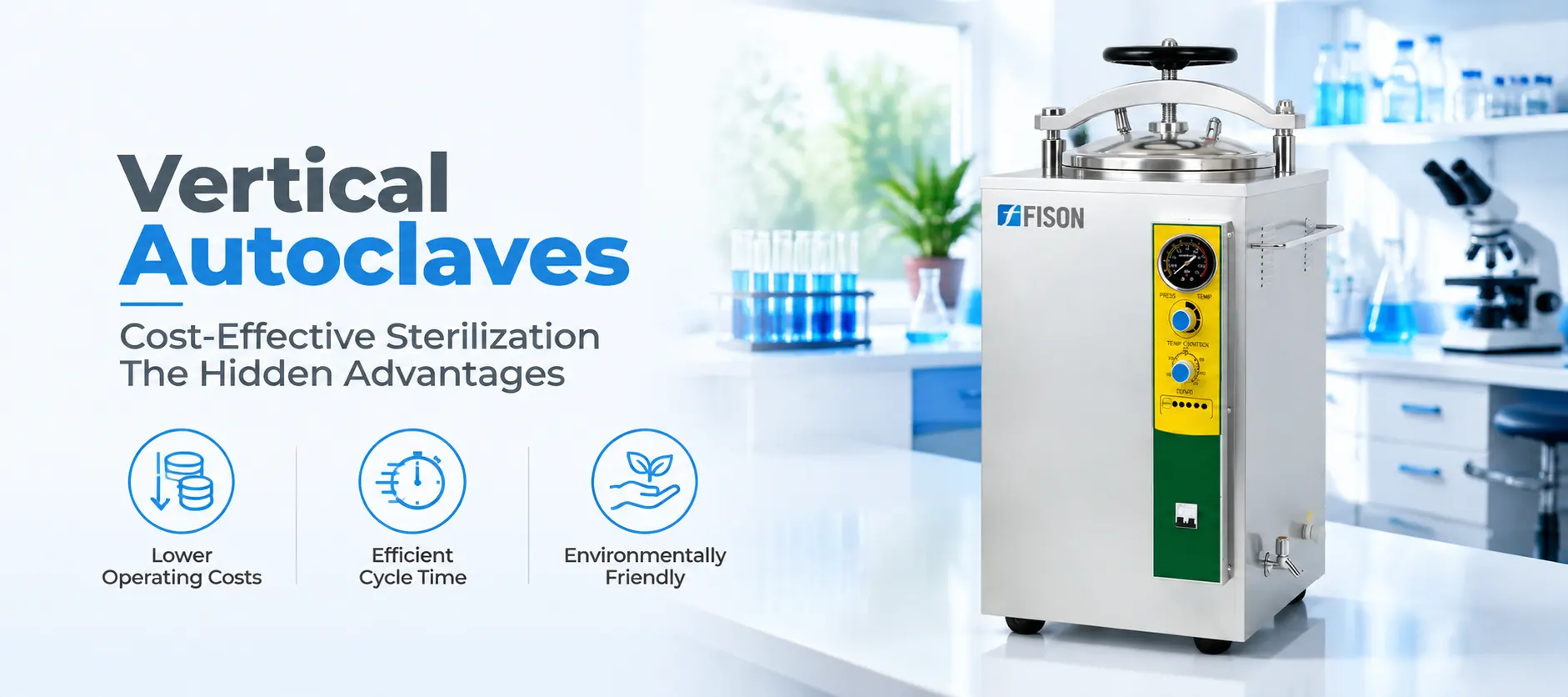
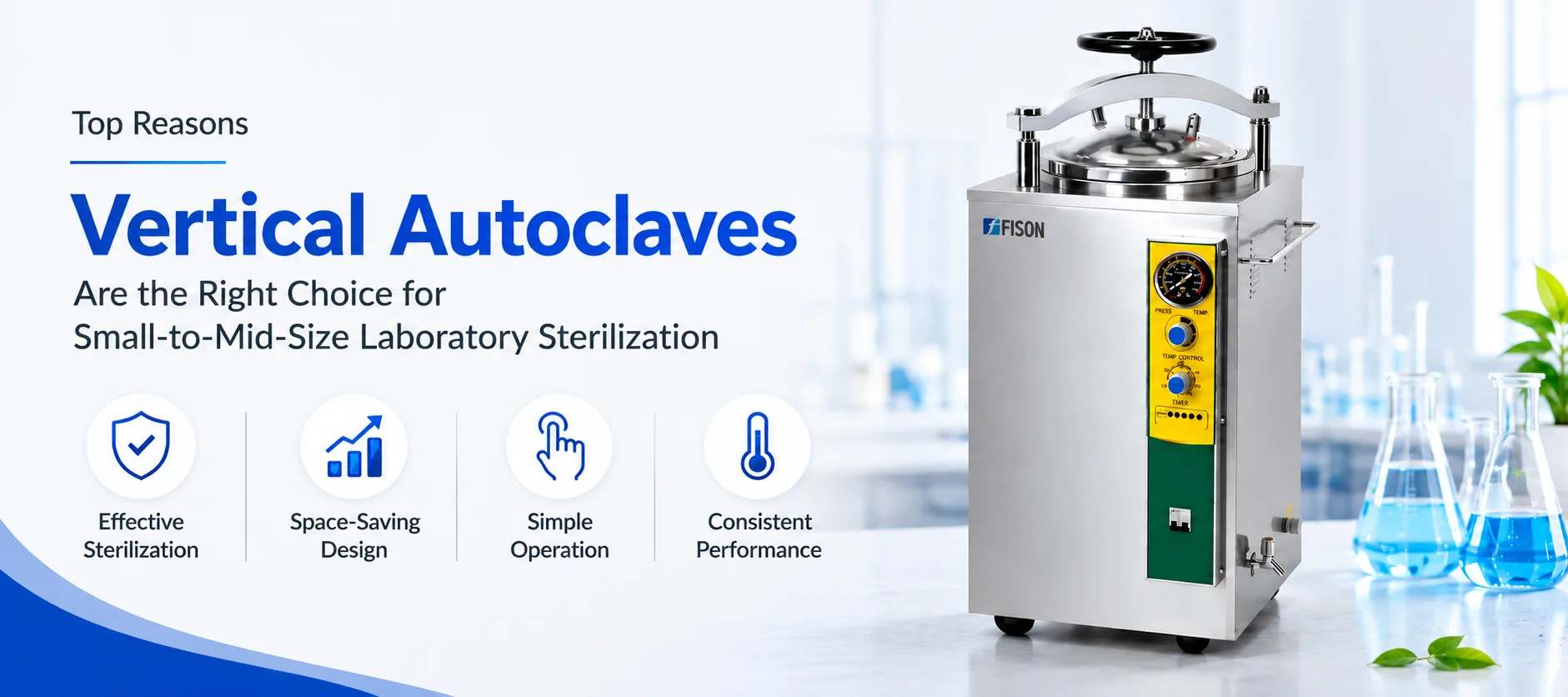
The Vertical Autoclave principle relies on saturated steam held at elevated pressure and temperature for a set exposure time, long enough to destroy microorganisms and spores that survive ordinary boiling. The vertical chamber orientation lets the unit occupy a smaller floor footprint than a horizontal design, which suits laboratories and clinics working with limited bench or floor space.
Chamber Loading
Steam Generation
Pressure & Temperature Hold
Exhaust & Drying
Vertical Autoclave pressure typically builds gradually as steam displaces air from the chamber, since trapped air pockets can shield microorganisms from direct steam contact and undermine the cycle. Once the hold time completes, controlled exhaust and a drying phase leave the load ready for handling or storage.
Vertical Autoclave Capacity and Chamber Design Considerations
Vertical Autoclave capacity ranges from small benchtop chambers suited to a single research bench to larger floor-standing units that process multiple trays of glassware or instrument sets per cycle. A vVertical Autoclave machine with a narrower chamber diameter but greater depth can still hold a useful load while keeping the unit's footprint compact, an advantage in space-constrained sterile processing areas.
Facilities comparing chamber volume, cycle time and loading configuration can review the full Vertical Autoclave range before settling on a capacity that matches daily sterilization volume without oversizing the unit.
Where the Vertical Autoclave Fits in the Wider Sterilization Equipment Category
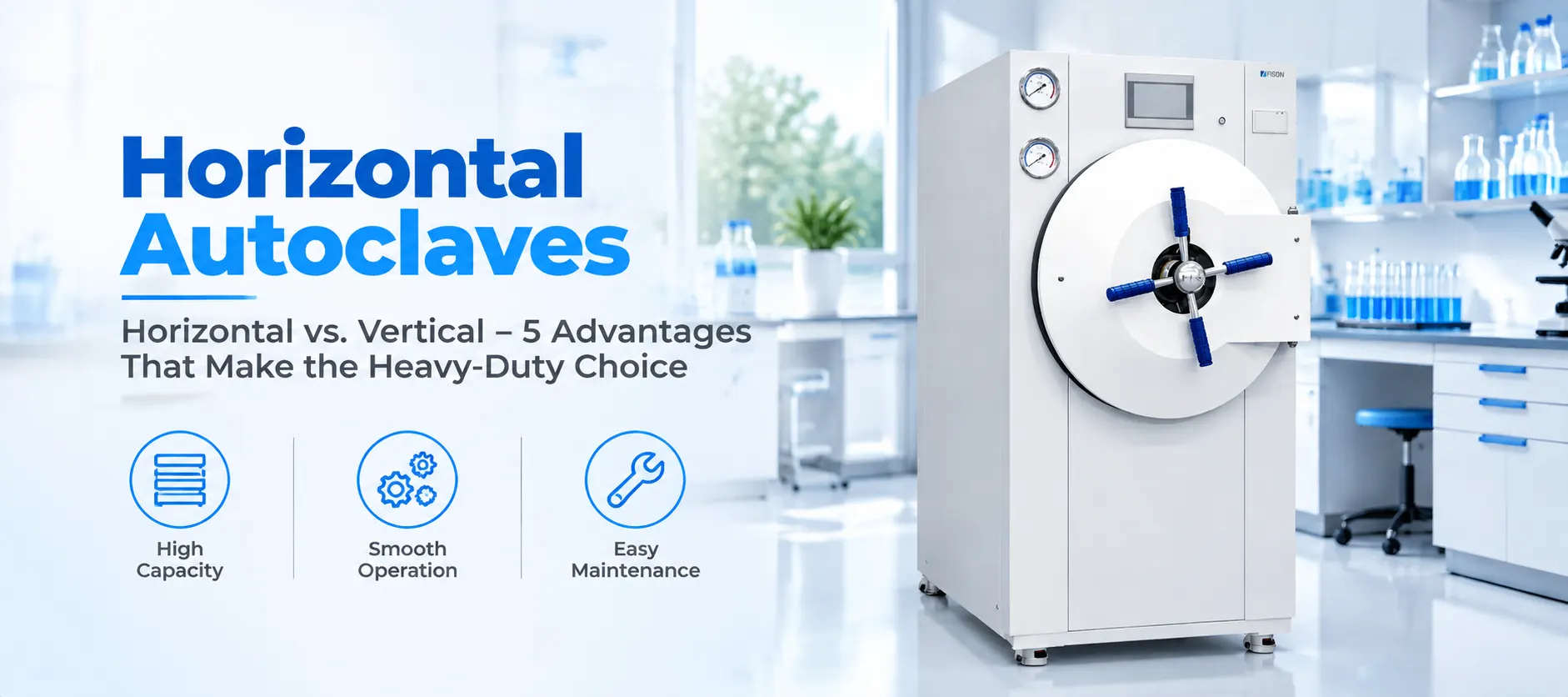
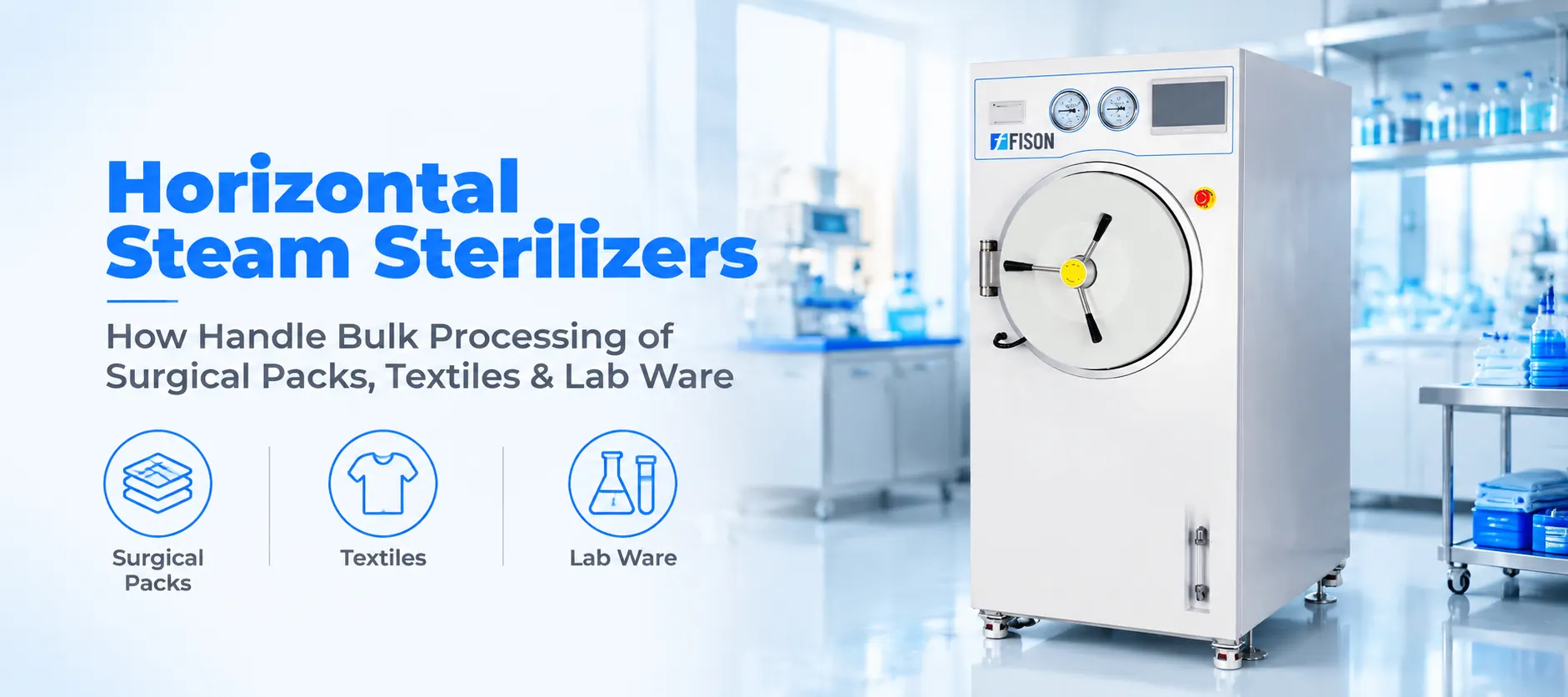
A Vertical Autoclave belongs to a broader sterilization equipment category that also covers horizontal autoclaves, tabletop sterilizers and dry heat ovens, all sharing the goal of eliminating viable microorganisms from equipment, media or waste before reuse or disposal. Within this category, teams typically compare chamber orientation, capacity, cycle programming and how the unit fits existing lab or clinic layouts.
Reviewing the full Vertical Autoclave category page is a practical starting point for lining up these factors. For laboratories comparing sterilization equipment against other laboratory instrument categories, the Fison home page lists the wider catalogue the brand carries.

Five Settings Where a Vertical Autoclave Does the Most Work
Each Vertical Autoclave application shares the same steam sterilization method, adapted to a different stage of laboratory or clinical work. Vertical Autoclave uses span several distinct settings, each drawing on the same core cycle for a different purpose, and rounding out the range of Vertical Autoclave uses a single instrument design can cover.
Microbiology laboratories rely on a vertical sterilizer to sterilize culture media, glassware and instruments before and after use, preventing contamination between experiments.
Hospital central sterile supply departments use a vertical steam sterilizer for smaller instrument sets and trays where a full horizontal chamber would be underused, an approach that keeps the same vertical steam sterilizer cycle available for urgent turnarounds between procedures.
Research centres studying biological samples depend on a vertical laboratory autoclave to decontaminate waste before disposal, meeting biosafety handling expectations for infectious material, with the same vertical laboratory autoclave often shared across several research groups within one facility.
Dental and outpatient clinics with limited floor space favor a compact Vertical Autoclave sterilizer to process handpieces and small instrument kits between patient appointments, since a benchtop Vertical Autoclave sterilizer fits into a treatment room without crowding other equipment.
Pharmaceutical quality laboratories use the same equipment to sterilize sample containers and lab consumables ahead of sterility testing work.
Selection Mistakes to Watch For When Choosing a Vertical Autoclave
A handful of recurring missteps show up during evaluation, and most only become clear once the instrument is already in routine use:
- Overlooking chamber depth versus load shape. A Vertical Autoclave machine with a deep, narrow chamber can be awkward for wide, shallow trays even when total volume looks adequate on paper.
- Ignoring cycle programming needs. Different loads, such as liquids versus wrapped instruments, need different cycle types, and a unit with limited programmability can force compromises.
- Underestimating water supply and drainage requirements. Steam generation and exhaust both depend on adequate water supply and drainage, which some facilities overlook during installation planning.
- Skipping routine pressure gauge and seal checks. A worn door seal or an inaccurate pressure gauge can misread Vertical Autoclave pressure without an obvious external sign, compromising a cycle unnoticed.
- Assuming all vertical sterilizer models share the same footprint. Confirming chamber diameter, height and clearance space before installation avoids a poor fit in an already tight room.
Ready to Explore Vertical Autoclave Options?
Chamber capacity, cycle programming and footprint differ meaningfully between models, and reviewing a vertical autoclave machine lineup together helps match an instrument to the specific vertical autoclave application a facility runs most often, rather than a rough estimate.
Explore Autoclave Options