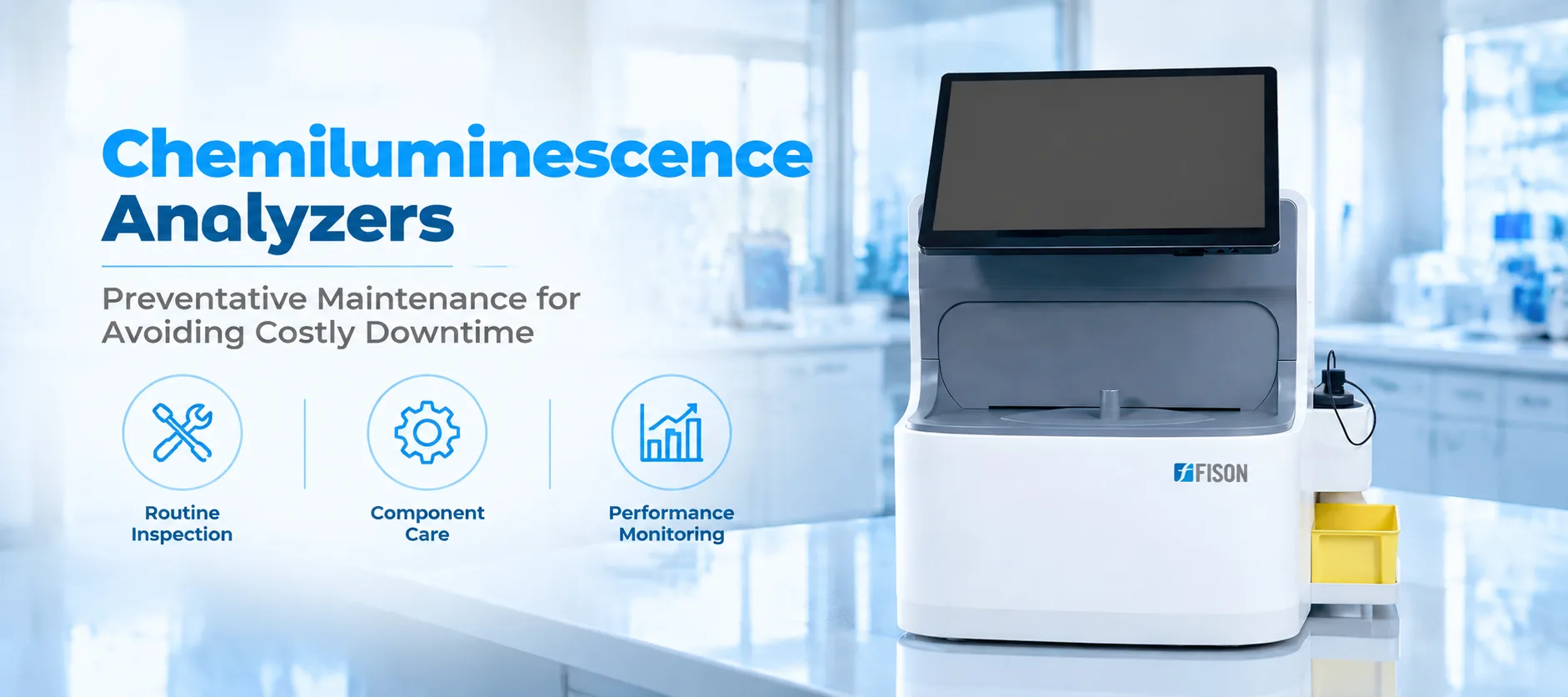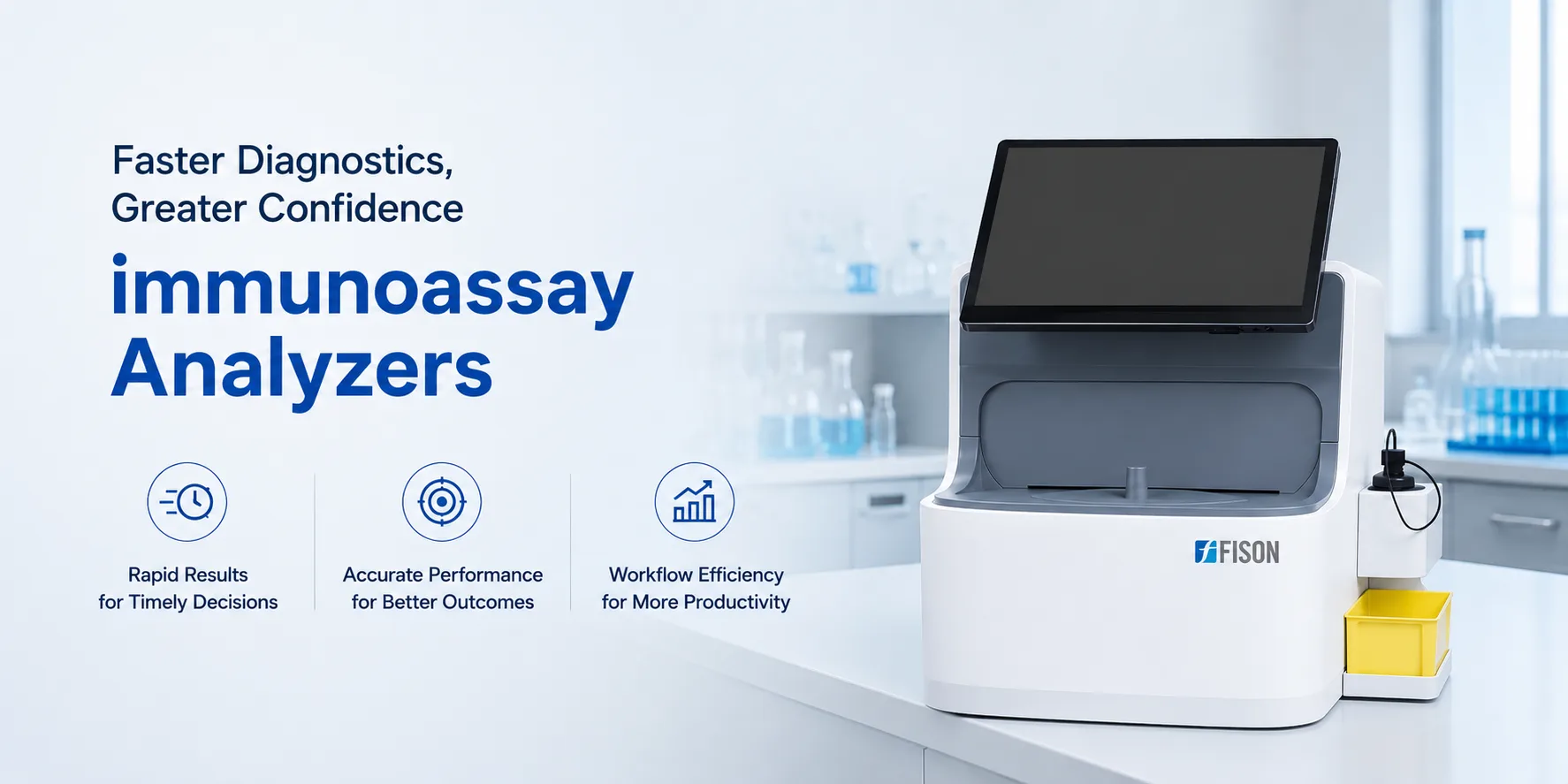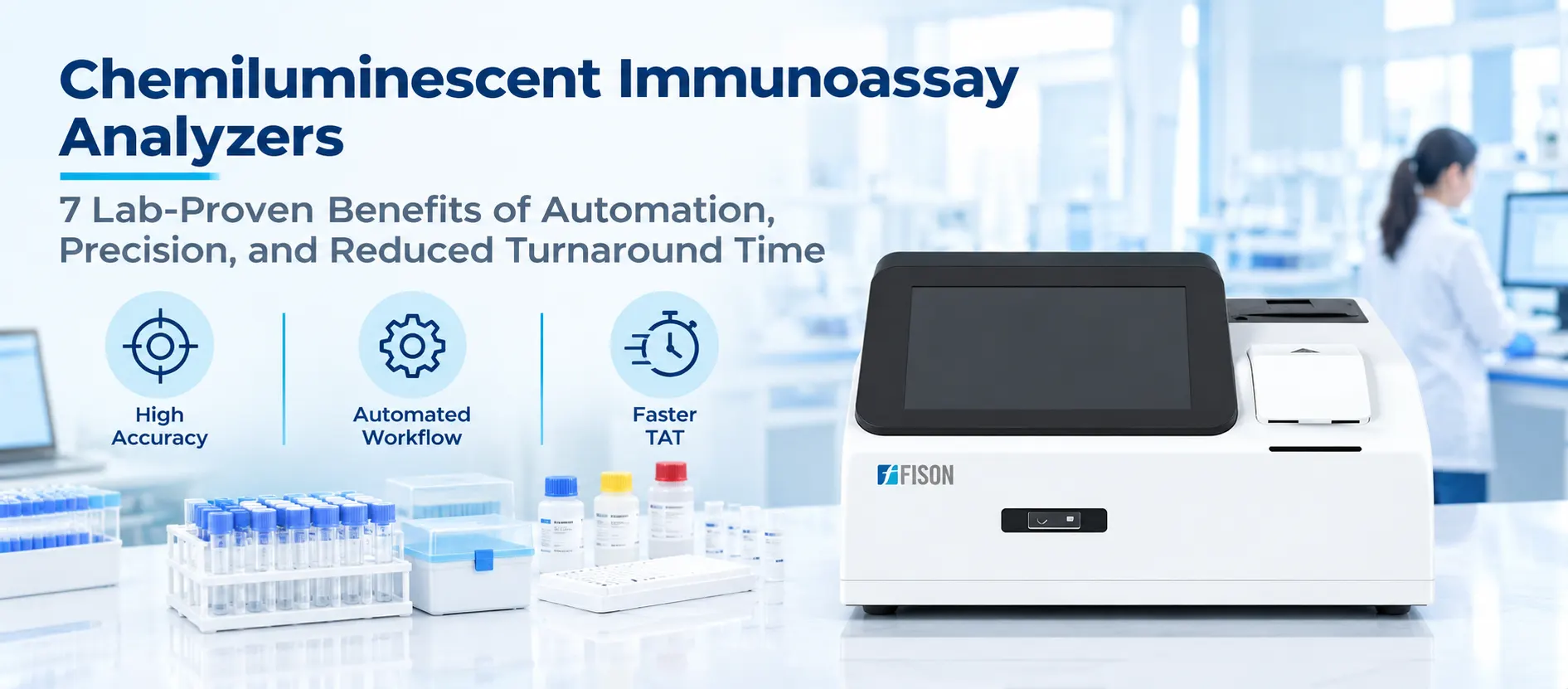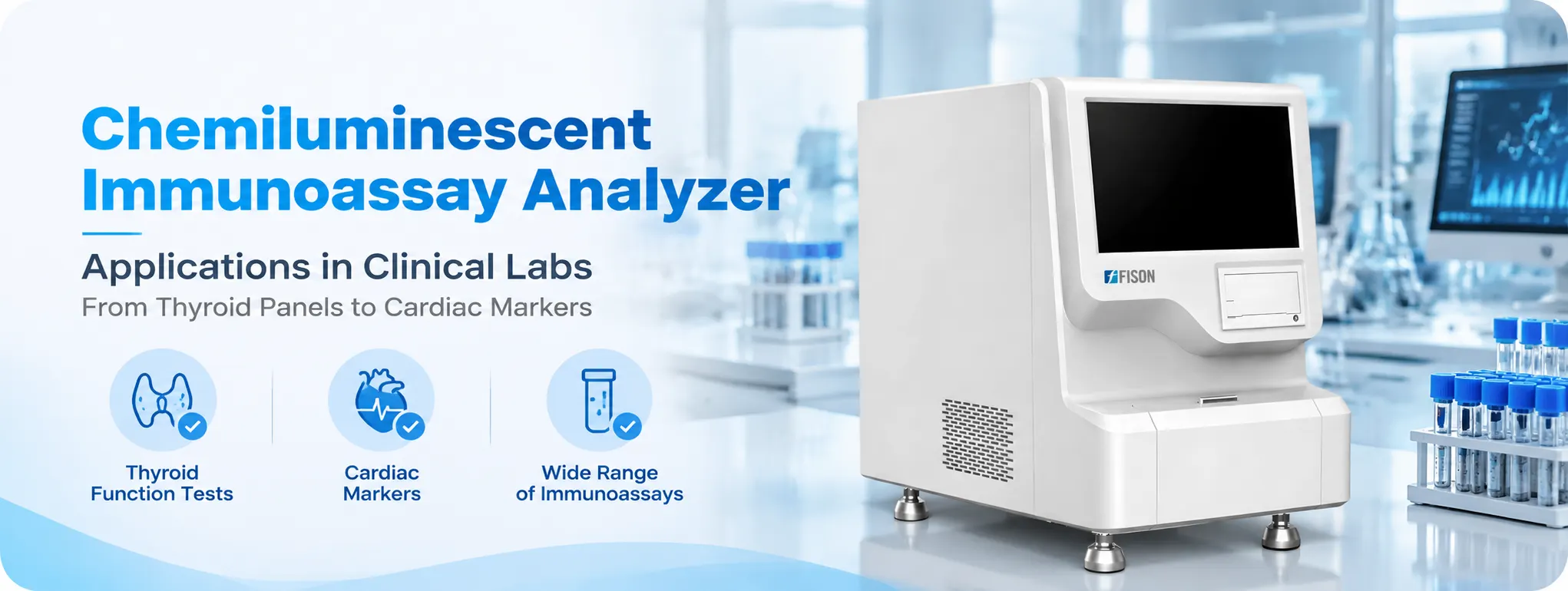
Biomarker levels for thyroid, cardiac and tumour panels often sit at concentrations that need sensitive detection. This article explains how a Fison Chemiluminescent Immunoassay Analyzer works, where clinical laboratories and research centres apply it, and which choices most often lead to poor results.
Why Clinical Labs Depend on Chemiluminescence
Hormone levels, tumour markers and cardiac proteins often sit at concentrations far too low for older colorimetric methods to catch consistently. A Chemiluminescence Immunoassay System solves this by pairing an antigen-antibody reaction with a light-emitting label, so even trace amounts of a biomarker produce a signal a detector can count.
A Chemiluminescent Immunoassay Analyzer automates this reaction from sample loading to result, which is why hospital laboratories, research centres and advanced labs lean on it for panels that must be both sensitive and fast to turn around. Beyond the thyroid, cardiac and tumour panels covered later in this article, the same chemiluminescent immunoassay analyzer range also supports cancer screening and drug monitoring work within one test menu.
Working Principle: From Antibody Binding to Light Signal
The Chemiluminescent Immunoassay Analyzer working principle starts with magnetic microparticles coated in antibodies specific to the target biomarker. The sample, reagent and these particles mix in a reaction cup, and the target binds to the antibody-coated particles while unbound material is separated out magnetically.
A chemiluminescent substrate is then added, and the resulting reaction gives off light in proportion to the amount of bound target. A photomultiplier reads this light output, and the Chemiluminescent Immunoassay Analyzer principle converts the signal into a concentration value against a stored calibration curve. Magnetic separation cleans the particles between steps, which keeps background signal low and the Chemiluminescence Immunoassay Test specific to the intended marker.
What a Fully Automated System Offers
A fully automated chemiluminescence immunoassay analyzer carries samples through loading, reaction, separation and detection without manual transfer between steps. Fison models reach a maximum throughput of 180 tests per hour and accept sample volumes from 10 to 200 µL, so a single run can cover a wide test menu without a large draw from the patient.
Real-time progress updates let staff follow a run as it proceeds, and safety alarms flag conditions that need attention. Triple magnetic separation cleaning reduces carryover between cycles, which matters most on panels that combine markers present at very different concentrations.
Applications in Clinical Testing
Clinical panels span many organ systems, and a laboratory reviewing options can start with the immunoassay analyzer category before comparing Chemiluminescent Immunoassay Analyzer uses against its own test menu.
Thyroid Panels
FT4, FT3, TT4, TT3 and TSH testing supports the diagnosis and monitoring of thyroid disorders.
Cardiac Markers
D-dimer, BNP, NT-proBNP, CK-MB, Myo and hs-cTnT assist rapid assessment in suspected cardiac events.
Tumour Markers
tPSA, fPSA, CEA, AFP, CYFRA21-1, CA19-9 and CA125 support cancer screening and monitoring.
Hormones and Fertility
Beta-hCG, prolactin, progesterone, cortisol, FSH, AMH, testosterone, LH and estradiol cover reproductive and endocrine testing.
Inflammation and Sepsis
CRP, SAA, IL-6, PCT, KL-6 and HBP help track infection and inflammatory response.
Diabetes and Bone Metabolism
HbA1c, insulin and 25-OH vitamin D testing support diabetes management and bone health assessment.
Sample and Reagent Habits That Protect Results
Haemolysed or lipaemic samples can distort a light-based signal, so visual inspection before loading remains worthwhile even on an automated system. Reagent storage at the stated temperature, and attention to onboard stability windows, keeps the chemiluminescent reaction consistent between runs.
Because the analyzer reads a light signal rather than colour, stray light and reagent carryover matter more than they would on a colorimetric method. Following the manufacturer's maintenance schedule for the detection chamber and separation module helps a laboratory keep results stable over time.

Matching Throughput to Daily Test Volume
Fison Chemiluminescent Immunoassay Analyzer models span a wide throughput range, and matching that range to actual daily test volume avoids paying for capacity a laboratory will not use, or bottlenecking a busy panel schedule.
| Aspect | Entry-level model | Mid-range model | High-throughput model |
|---|---|---|---|
| Throughput | 32 tests per hour | 80 to 120 tests per hour | Up to 180 to 220 tests per hour |
| Sample volume | 10 to 150 µL | 10 to 200 µL | 10 to 200 µL |
| Reagent positions | Single chamber, 8 channels | 10 positions | 10 positions |
| Suited to | Smaller laboratories with a focused panel | Mid-size laboratories running mixed panels | Hospital laboratories with high daily volume |
A laboratory can review the full specification for each configuration through the Chemiluminescent Immunoassay Analyzer product before settling on a throughput tier.
Common Selection Mistakes
Laboratories often choose a chemiluminescence machine on throughput figures alone. These patterns cause the most rework once a system is in daily use.
- Overlooking test menu fit. A high throughput number matters less than whether the panel actually covers thyroid, cardiac, tumour and hormone markers the laboratory runs daily.
- Ignoring sample volume needs. Paediatric or critical-care samples may not allow the larger end of a 10 to 200 µL draw.
- Underestimating maintenance. Reaction cups, probes and the separation module need scheduled care to keep results consistent.
- Skipping calibration planning. Each biomarker needs its own calibration curve, and a full menu means a full calibration schedule.
- Choosing chemiluminescence immunoassay analyzer manufacturers on throughput alone. Support, spare parts and software updates affect uptime as much as the instrument itself.
Exploring the Wider Immunoassay Category
Chemiluminescence is one detection method within the broader immunoassay analyzer category, which also includes ELISA-based systems and other automated immunoassay platforms used across clinical diagnostics.
Laboratories evaluating this category typically compare test menu breadth, throughput, sample volume, reagent format and data connectivity. The full range of immunoassay analyzer models sits on the Fison immunoassay analyzer category page, and the wider laboratory equipment portfolio is reachable from the Fison home page.