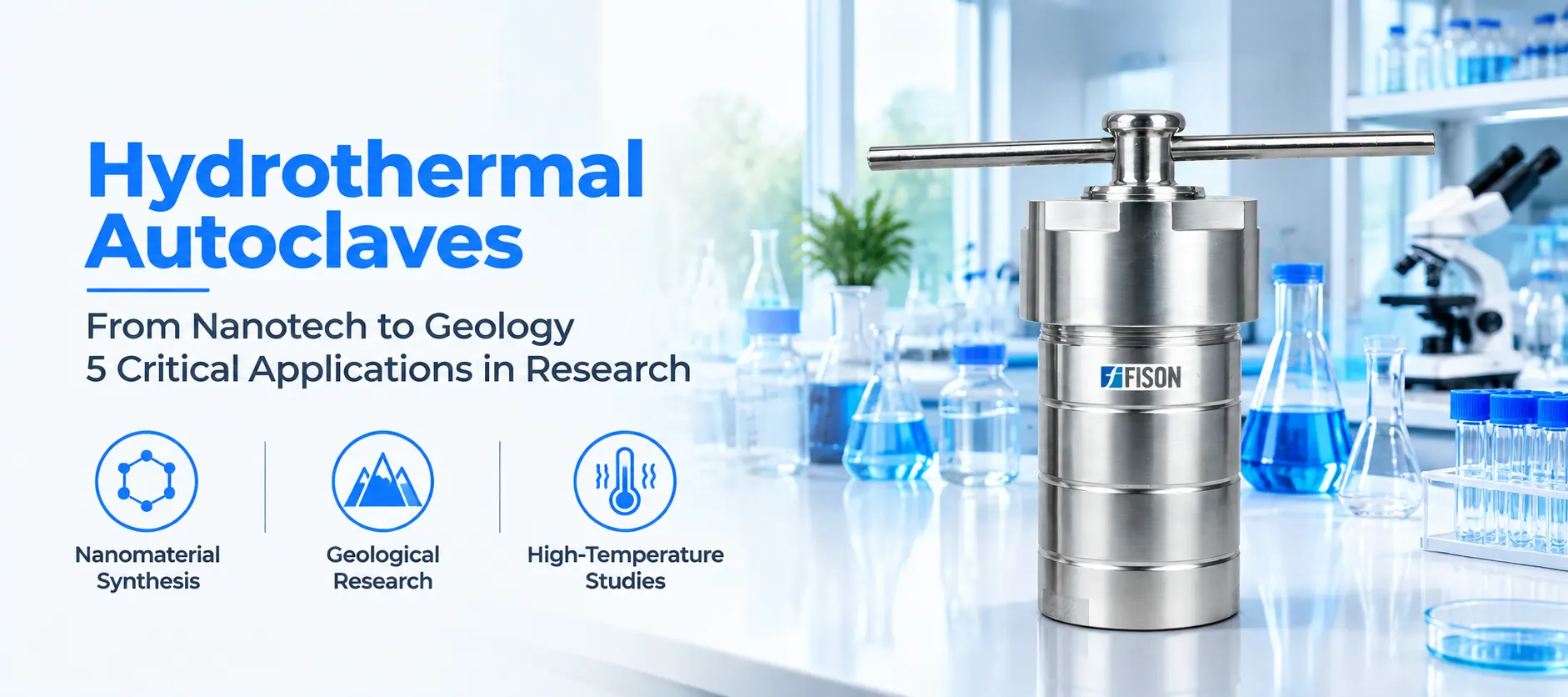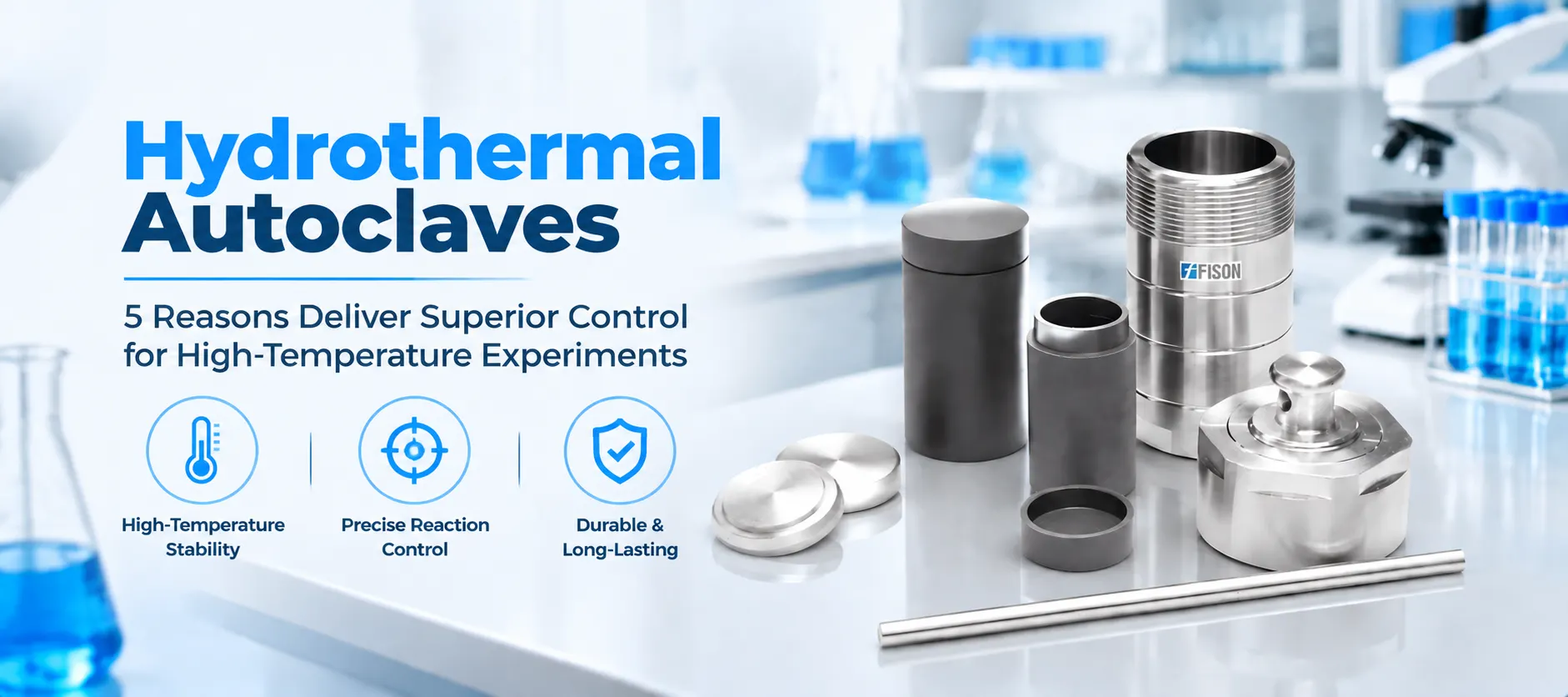
Laboratories, hospital-affiliated research units, research centres and advanced facilities running reactions well above a solvent's normal boiling point need more than heat and pressure — they need those conditions to behave predictably from one run to the next. A Fison Hydrothermal Autoclave is built around exactly that kind of predictability. This article looks at how a hydrothermal autoclave works, five reasons its design supports tighter experimental control, and what to check before choosing one.
Why Precision Control Matters for High-Temperature, High-Pressure Experiments
A reaction run at elevated temperature and pressure is only as reproducible as the consistency of the conditions producing it. Small variations in headspace, heating rate or vessel sealing can shift a crystal growth or synthesis outcome in ways that are hard to trace back after the fact, which makes the equipment holding those conditions as important as the reaction chemistry itself.
An autoclave reactor addresses this by containing the reaction inside a fixed, sealed geometry rather than an open system exposed to ambient variability, giving researchers a smaller number of variables to control and monitor across a run. A Hydrothermal Autoclave applies this same principle specifically to reactions that need elevated temperature and pressure sustained for extended periods.
Hydrothermal Autoclave Principle: Turning a Sealed Vessel Into a Controlled Reaction Environment
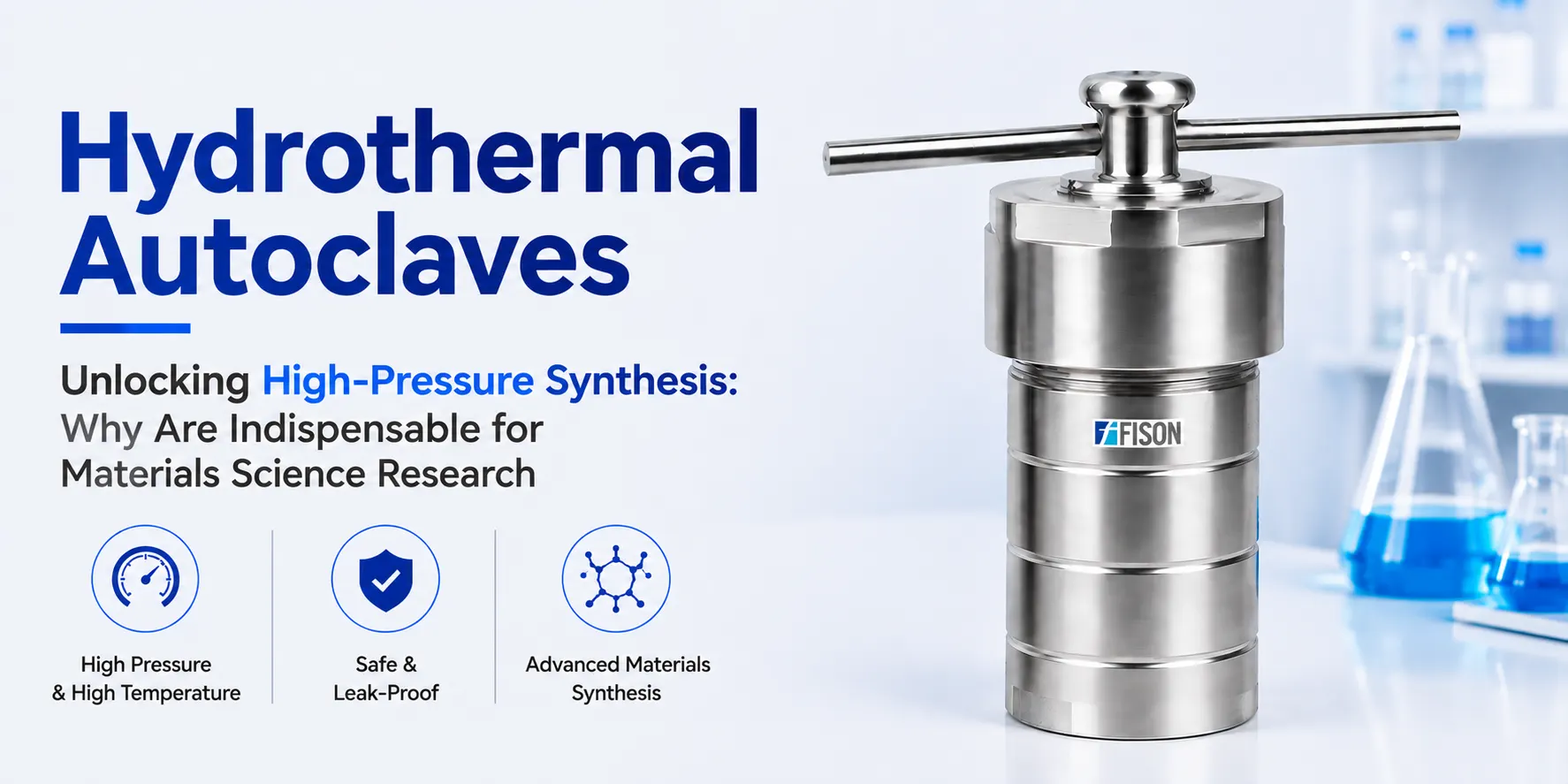
A hydrothermal reactor holds a chemically resistant liner, typically PTFE, inside an outer stainless steel body rated to contain elevated internal pressure safely. Sample and solvent go into the liner first, filled to a set proportion of total volume so there is enough headspace for pressure to build without exceeding the vessel's rated limit, the same fill discipline that keeps a hydrothermal synthesis reactor producing consistent results run after run.
Liner Fill & Headspace Check
Vessel Sealing
Autogenous Pressure Buildup
Controlled Cooldown
Once sealed, the Hydrothermal Autoclave reactor goes into an oven set to the reaction temperature, where the enclosed solvent generates its own autogenous pressure as it heats, without any external pump or compressor setting that pressure directly. This same hydrothermal synthesis reactor sequence repeats consistently regardless of which material system fills the liner on a given run, which is a large part of where its reputation for control actually comes from.
Where the Hydrothermal Autoclave Sits Within Fison's Laboratory Autoclave Range
A Hydrothermal Autoclave sits within a broader laboratory autoclave category that spans sterilization units as well as sealed reaction vessels, grouped together by the shared idea of a chamber built to hold elevated pressure. Within this category, researchers comparing Hydrothermal Autoclave equipment typically look at liner material, maximum rated temperature and pressure, and total vessel volume rather than the cycle programming features that apply to sterilization equipment instead.
The full laboratory autoclave range lists these options side by side, and for labs comparing reactor equipment against other laboratory instrument lines, the Fison home page catalogues the wider range available. Choosing a Hydrothermal Autoclave from within this range still comes down to matching liner chemistry and rated pressure to the actual reaction planned.

Five Reasons a Hydrothermal Autoclave Delivers Superior Control for High-Temperature Work
Autogenous pressure that scales predictably with fill volume and temperature, letting a Hydrothermal Autoclave reactor reach a target pressure through the reaction chemistry itself rather than an externally set pump pressure.
A fully sealed vessel that removes ambient air and moisture exposure entirely, useful for reactions sensitive to open-air contamination or solvent evaporation over long hold times.
A uniform oven-heated environment that brings the whole hydrothermal reactor to a consistent temperature, avoiding the localized hot spots a directly heated open vessel can develop, the same consistency a Hydrothermal Autoclave depends on for reproducible crystal or particle formation.
Chemically resistant liner materials that hold up against strongly acidic or basic reaction mixtures for the full duration of a run without the liner itself altering the reaction chemistry.
A fixed, repeatable vessel geometry that lets a Hydrothermal Autoclave machine reproduce the same fill ratio and hold profile run after run, supporting both replication studies and gradual scale-up.
Where This Level of Control Gets Put to Work
Each Hydrothermal Autoclave application shares the same sealed, high-pressure method, adapted to a different research question across these settings.
Laboratories synthesizing nanoparticles, zeolites or catalyst supports depend on Hydrothermal Autoclave equipment to hold precise fill ratios and hold temperatures across many sequential runs.
Hospital-affiliated translational research units synthesizing nanoparticle contrast agents or drug-delivery carriers rely on the same sealed, repeatable process to keep particle characteristics consistent between batches intended for downstream biological testing.
Research centres studying mineral formation reproduce geological temperature and pressure conditions inside a Hydrothermal Autoclave reactor machine to observe reaction pathways that would otherwise unfold over geological timescales.
Advanced materials labs growing single crystals for electronics or photonics use larger vessels to sustain slow, controlled growth over days or weeks, relying on a Hydrothermal Autoclave to keep that environment undisturbed for the full duration.
This spread of Hydrothermal Autoclave application areas across laboratories, translational research units, geology and advanced materials work is part of why the same sealed-vessel design covers so much ground.
Selection Mistakes to Watch For When Choosing a Hydrothermal Autoclave
A handful of recurring missteps show up when evaluating Hydrothermal Autoclave equipment, and most only become clear once a reaction has already produced an inconsistent result:
- Assuming pressure can be dialed in directly. Confusing autogenous pressure with a directly settable parameter can lead to overfilling a vessel while chasing a target pressure that fill ratio and temperature actually determine together.
- Overlooking oven temperature uniformity over time. An oven that drifts out of calibration undermines the consistent heating environment a Hydrothermal Autoclave is chosen for, even when the vessel itself performs as expected.
- Rushing the cooldown phase. Cutting a cooldown short to save time in a Hydrothermal Autoclave can affect crystal quality or phase purity in reactions where a controlled cooling rate is part of the intended pathway.
- Not tracking cumulative liner wear. A liner that has run many cycles can lose some of its chemical resistance gradually, and skipping periodic inspection lets that decline go unnoticed until a reaction fails.
- Skipping sensor calibration checks. A pressure or temperature reading that has drifted from actual vessel conditions can make a run look controlled on paper while the real reaction environment has shifted.
Find the Hydrothermal Autoclave That Matches Your Reaction Conditions
Liner material, rated pressure and vessel volume all vary across hydrothermal autoclave reactor machine options, and matching a hydrothermal autoclave machine to the specific reaction system a lab runs matters more than choosing the largest vessel available. Reviewing the full laboratory autoclave lineup alongside a reaction's fill volume and temperature requirements helps confirm a vessel is sized correctly before committing to one.
Explore Hydrothermal Autoclave Options