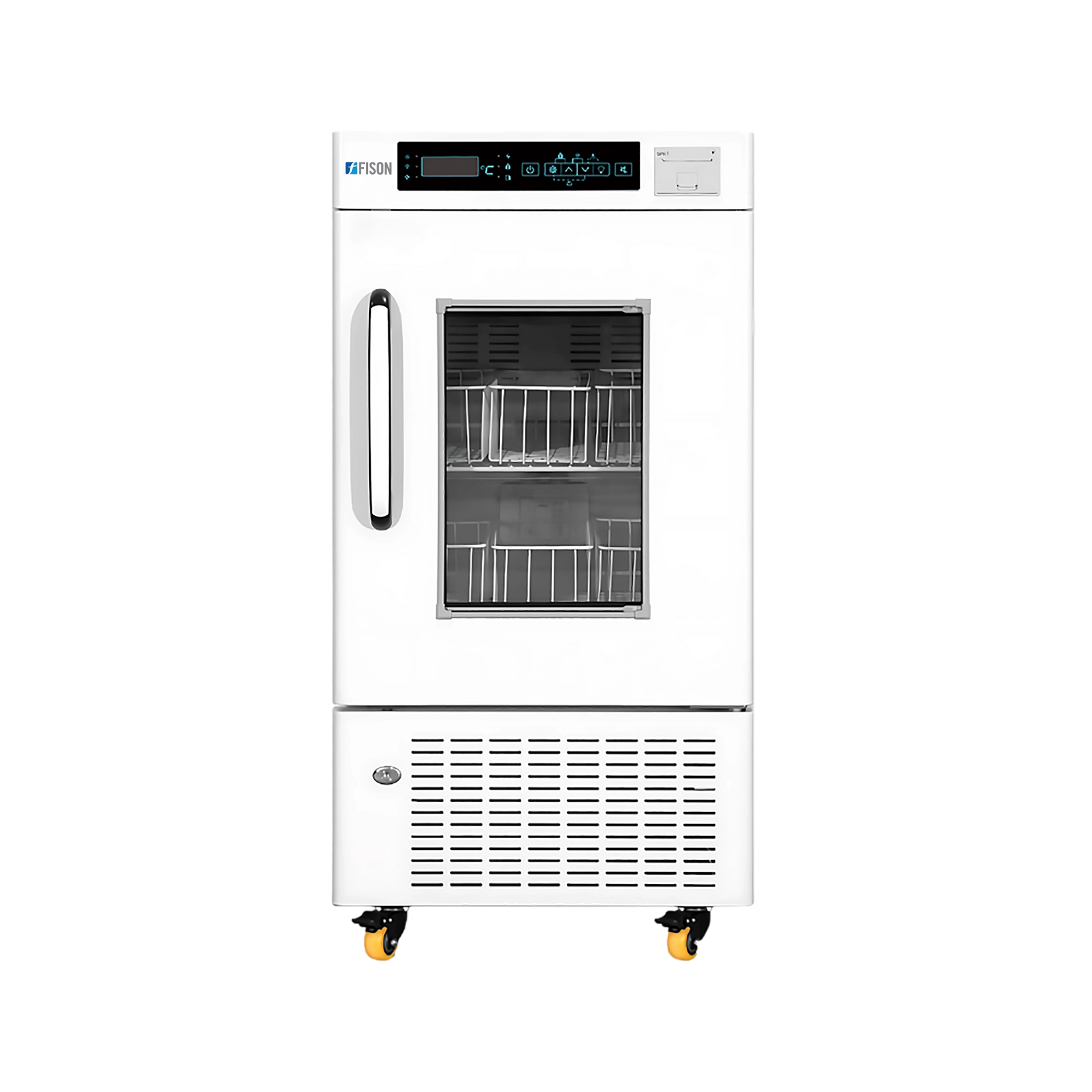
Laboratories, hospitals, research centres and advanced facilities storing donated blood between collection and transfusion rely on a Fison Blood Bank Refrigerator to hold each unit within a narrow, closely watched temperature band. This article looks at how these cabinets keep stored blood viable, where they fit within wider laboratory refrigeration, and what to check before choosing one.
Why Temperature Control Determines Whether a Blood Unit Stays Viable
Whole blood and red cell units remain usable for transfusion only while they stay within a set temperature range from the moment of collection onward. A rise outside that range, even for a short stretch, can allow cell breakdown to accelerate, while a drop too far the other way risks freezing red cells and destroying the unit entirely.
A domestic or general-purpose fridge cannot hold that narrow band consistently, since its door opens often and its cooling cycle is tuned for food storage rather than blood. A dedicated blood refrigerator instead holds a tight, continuously logged temperature so a stored unit stays within range from the time it enters the cabinet until it leaves for transfusion.
Blood Bank Refrigerator Working Principle: From Cabinet Seal to Temperature Alarm
The Blood Bank Refrigerator working principle centres on a sealed, insulated cabinet paired with a refrigeration circuit that removes heat at a steady rate, keeping the interior air within the narrow Blood Bank Refrigerator temperature range a facility has set. A circulating fan distributes cooled air evenly across all shelves, so a unit stored at the back holds the same temperature as one near the door.
Cabinet Sealing
Refrigeration Cycle
Temperature Sensing
Alarm & Monitoring
If the interior drifts outside the set band, an audible and visual alarm alerts staff before the drift becomes a problem for stored units. This closed loop of sensing, circulating and alerting is the practical Blood Bank Refrigerator definition most laboratories work from day to day, and it is the same behavior a facility should expect from any cabinet holding a stated Blood Bank Refrigerator temperature range on its data sheet.
Blood Bank Refrigerator and Freezer: Matching Storage to Component Type
Whole blood and red cell units belong in a blood storage refrigerator held a few degrees above freezing, while plasma and cryoprecipitate need a blood storage freezer set well below zero to stay usable for extended periods. A single Blood Bank Refrigerator and freezer pairing lets a facility hold both component types under the correct condition without moving units between separate rooms, an arrangement that also makes it easier to route freshly separated plasma from a blood bank refrigerated centrifuge straight into the freezer compartment next to it.
Platelets sit apart from both formats again, since they need gentle, continuous agitation at room temperature rather than either a Blood Refrigerator or a Blood Bank Freezer, which is why a blood bank's storage area typically runs several distinct pieces of equipment side by side rather than one unit covering all component types.
Where the Blood Bank Refrigerator Fits in the Wider Laboratory Refrigeration Category
A Blood Bank Refrigerator belongs to a broader laboratory refrigeration category that also includes general lab refrigerators and freezers, Blood Bank Freezers and a Blood Bank Refrigerated centrifuge used for component separation once storage begins. Within this category, teams typically compare interior capacity, alarm response time, temperature logging depth and how closely a cabinet's cooling profile matches blood-specific storage needs rather than general laboratory samples.
Reviewing the full lab refrigerator category page is a practical starting point for lining up these factors before narrowing a shortlist, since each option on it is built around the same Blood Bank Refrigerator definition of a sealed, continuously monitored storage space. For facilities exploring laboratory and hospital equipment beyond blood storage alone, the Fison home page lists the wider catalogue the brand carries.

Practical Uses of a Blood Bank Refrigerator Across Blood Banks and Research Facilities
Each Blood Bank Refrigerator application shares the same closed-loop temperature control, adapted to a different stage of the blood banking workflow. Hospital blood banks hold donor units in a medical Blood Bank Refrigerator between collection and cross-matching, keeping stock ready for transfusion requests that can arrive at any hour. Research centres use the same closely watched storage to keep archived samples usable for later testing, where a temperature excursion could otherwise invalidate results collected earlier.
Advanced labs running component separation keep freshly processed red cell units in a Blood Bank Refrigerator immediately after centrifugation, and facilities can compare interior layout, door alarm response and shelf configuration on the full lab refrigerator range before matching a cabinet to daily unit volume. Facilities running both refrigerated and frozen storage side by side often keep a companion blood storage freezer nearby for plasma pulled from the same centrifugation batch, rounding out the range of Blood Bank Refrigerator application areas a single storage plan can cover.
Selection Mistakes to Watch For When Choosing a Blood Bank Refrigerator
A handful of recurring missteps show up during evaluation of a blood storage refrigerator, and most only become clear once the cabinet is already holding stock:
- Undersizing interior capacity. A cabinet sized for current unit volume can run out of shelf space the moment collection activity picks up.
- Overlooking alarm response time. A slow alarm can let a temperature drift continue well past the point it should have been flagged.
- Ignoring door-opening frequency. A cabinet opened often needs a faster recovery cycle than one built for occasional access, or the interior temperature never fully settles.
- Skipping temperature logging depth. A unit that records readings only at long intervals can miss a short excursion that still affects stored units.
- Choosing a single cabinet for all component types. Whole blood, plasma and platelets each need a distinct storage condition, and one cabinet cannot hold all three correctly.
Ready to Explore Blood Bank Refrigerator Options?
Interior capacity, alarm response and temperature logging depth differ meaningfully between models, and reviewing a medical Blood Bank Refrigerator lineup together helps match a cabinet to actual storage needs rather than a rough estimate.
Explore Refrigerator Options