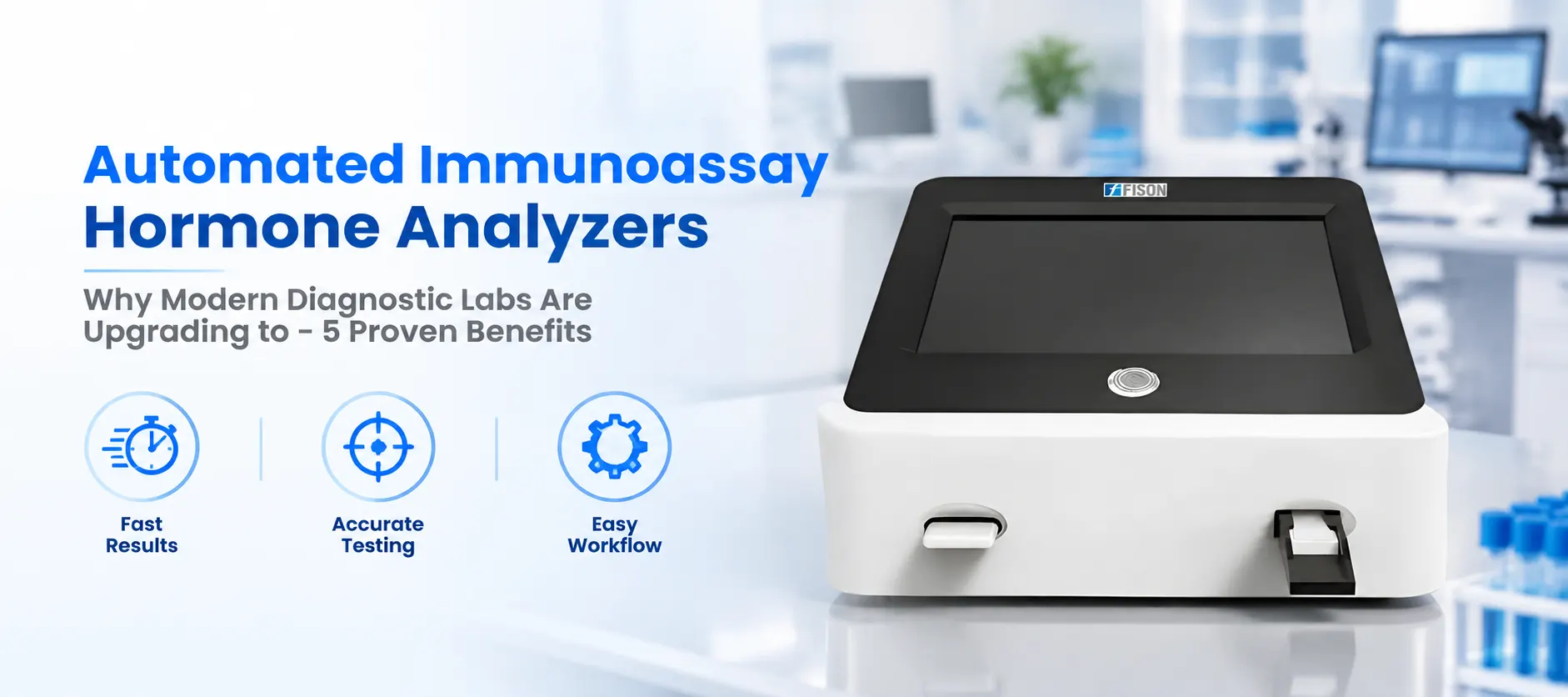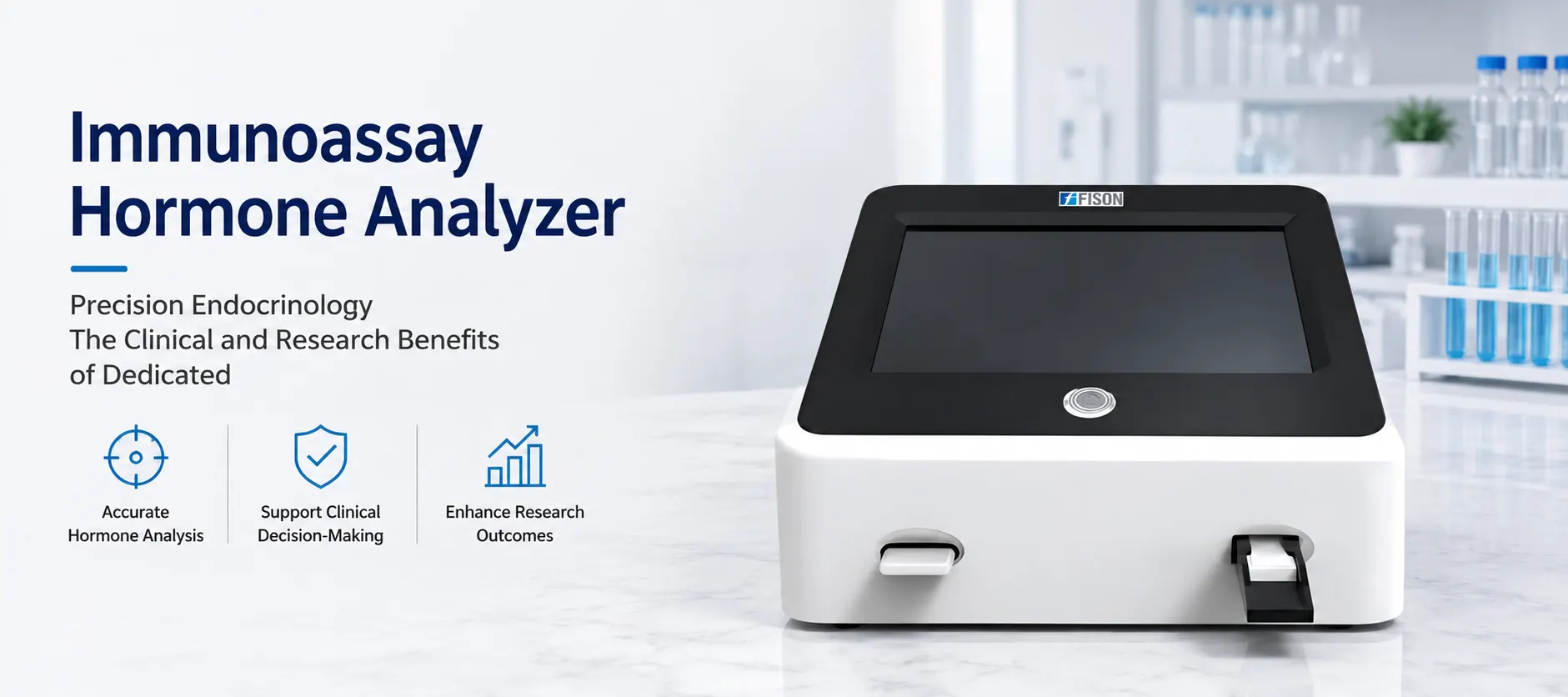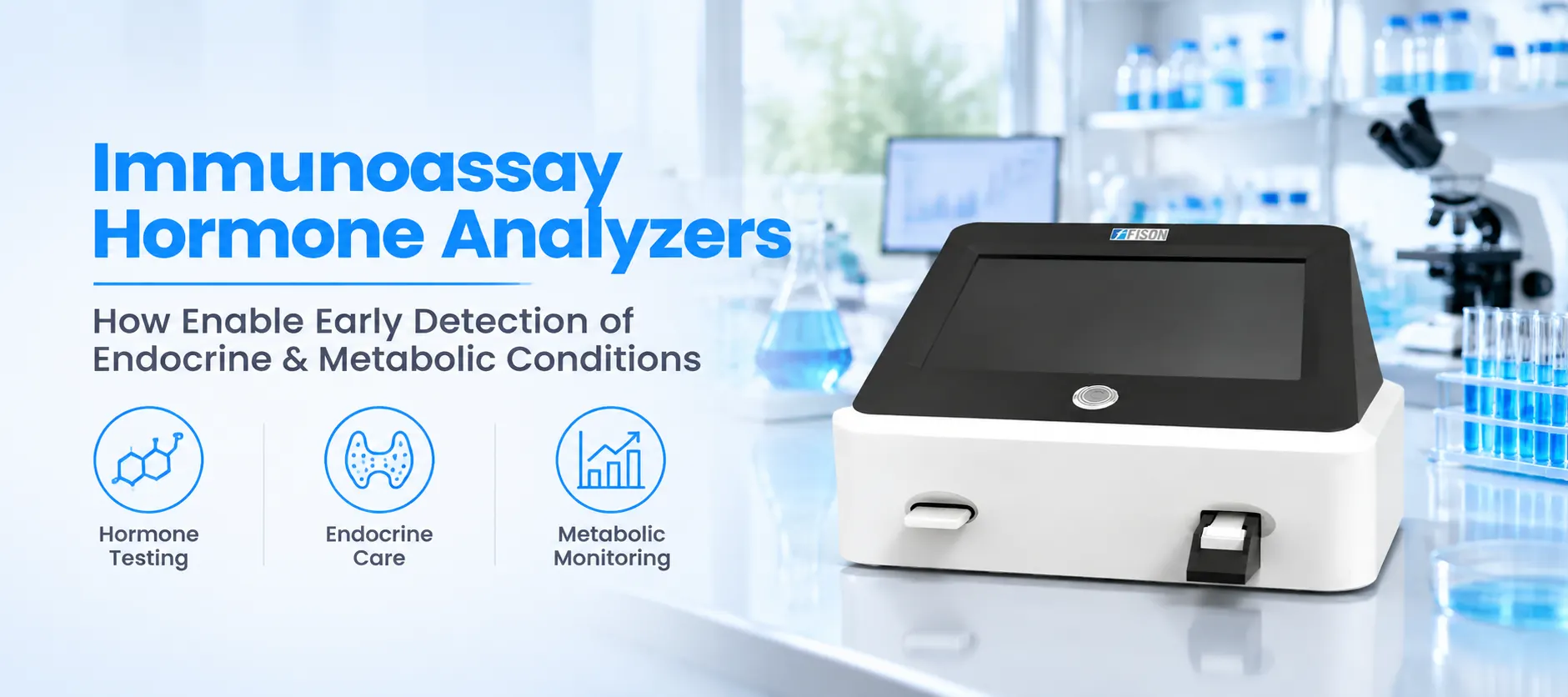
Many endocrine and metabolic conditions develop gradually, with hormone levels shifting well before symptoms become obvious enough to prompt a diagnosis. An Immunoassay Hormone Analyzer detects these early shifts by measuring hormone concentrations far below what older testing methods could reliably catch. This article looks at how the analyzer works, which conditions it helps flag early, and what's easy to overlook when choosing one.
Why Early Hormone Changes Often Go Undetected
Hormone concentrations in blood often sit in the picogram-to-nanogram range, far lower than most other blood analytes, and a small shift within that range can signal a developing thyroid, adrenal or metabolic condition long before a patient reports symptoms. A hormone analyzer built for this sensitivity range catches these early shifts that a less sensitive testing method would simply report as within normal limits.
Immunoassay Hormone Analyzer Device Principle: Detecting Trace Hormone Levels
An Immunoassay Hormone Analyzer measures hormone concentration through antibody binding rather than direct chemical detection, since antibodies can recognize a target hormone at concentrations far too low for most routine chemistry methods to measure directly.
Sample Aspiration
Immune Complex Formation
Enzyme-Substrate Reaction
Light Signal Measurement
Once the antibody-hormone complex forms, an enzyme or label attached to the assay reacts with a substrate to produce a measurable signal, usually light, and the analyzer converts that signal into a hormone concentration value. A Hormone Analyzer Machine repeats this same sequence for each sample loaded, whether the panel calls for one hormone or several run in parallel. Any Hormone Analyzer Machine on the market follows some version of this antibody-binding sequence, regardless of assay menu size.
Where the Immunoassay Hormone Analyzer Sits Within Fison's Immunoassay Analyzer Range
An Immunoassay Hormone Analyzer belongs to a broader immunoassay analyzer category that also covers infectious disease markers, tumor markers and cardiac markers, all built around the same antibody-based detection principle but configured for different target analytes. Within this category, labs typically compare assay menu breadth, throughput and the degree of automation an immunoassay machine offers before settling on a configuration, and an immunoassay machine chosen without checking hormone-specific assay availability can leave a lab reordering testing elsewhere.
The full immunoassay analyzer range lists these configurations side by side, and for labs comparing immunoassay platforms against other laboratory instrument categories, the Fison home page catalogues the wider range available.

Immunoassay Hormone Analyzer Device Formats: From Manual-Assist to Fully Automated Testing
An automatic immunoassay Hormone Analyzer still needs an operator to load reagents and initiate runs at set points in the workflow, while a fully automated immunoassay analyzer carries out sample loading, reagent handling and result reporting with minimal manual intervention across a full working shift. Higher-volume labs generally lean toward the fully automated format, while lower-volume settings often find an automatic Immunoassay Hormone Analyzer easier to manage without dedicated automation staff. A fully automated immunoassay analyzer also reduces the manual handling steps that can introduce variability into high-volume hormone testing runs.
Reviewing the complete immunoassay analyzer category alongside actual daily sample volume helps match automation level to real staffing and throughput needs rather than defaulting to the most automated option available. Comparing immunoassay analyzer machine specifications side by side before purchase makes this match easier to get right.
Immunoassay Hormone Analyzer Blood Tests That Support Early Endocrine and Metabolic Screening
Each Immunoassay Hormone Analyzer application shares the same antibody-based detection method, adapted to a different hormone panel. Immunoassay Hormone Analyzer blood tests cover a wide range of conditions, with metabolic and endocrine screening among the areas where early detection carries the most practical benefit.
- Thyroid function panels. TSH, free T3 and free T4 testing catches subclinical thyroid dysfunction well before a patient develops noticeable symptoms.
- Diabetes and insulin resistance screening. Insulin and C-peptide testing helps identify early metabolic dysfunction alongside routine glucose testing.
- Cortisol and adrenal function testing. Tracking cortisol patterns helps flag adrenal conditions that glucose or electrolyte panels alone would miss.
- Growth hormone and IGF-1 testing. Supports early identification of growth hormone deficiency or excess in both pediatric and adult patients.
- Reproductive hormone panels. FSH, LH and related hormone testing supports fertility assessment and broader endocrine workups.
This spread of Immunoassay Hormone Analyzer application areas extends beyond any single condition, and an immunoassay hormone test ordered for one indication often surfaces findings that prompt further immunoassay hormone testing beyond the original request.
Selection Mistakes to Watch For When Choosing an Immunoassay Hormone Analyzer
A handful of recurring missteps show up during evaluation, and most only become clear once daily testing volume exposes them:
- Assuming a broad assay menu automatically fits patient population needs. A menu built for general endocrinology may not cover the metabolic-specific panels a facility actually orders most often.
- Underestimating calibration frequency. Hormone assays often need more frequent calibration than routine chemistry tests, and treating calibration schedules the same across all assay types can affect result accuracy.
- Overlooking cross-reactivity with structurally similar hormones. Some antibody-based assays cross-react with related hormone molecules, which can distort results if the assay's specificity data isn't checked in advance.
- Ignoring sample volume requirements for pediatric or low-volume draws. Some hormone panels need more sample than a pediatric or geriatric draw reliably provides.
- Mismatching throughput to staffing model. A fully automated hormone machine benefits labs with steady high volume, but underuses its capacity in a lower-volume setting without adjusting workflow expectations.
Ready to Explore Immunoassay Hormone Analyzer Options?
Assay menu, throughput and automation level all vary across immunoassay analyzer machine models, and matching these to actual daily hormone testing volume matters more than choosing on throughput alone. Any hormone machine considered for a shared lab space should also fit the physical footprint and staffing pattern already in place.
Explore Immunoassay Hormone Analyzer Options