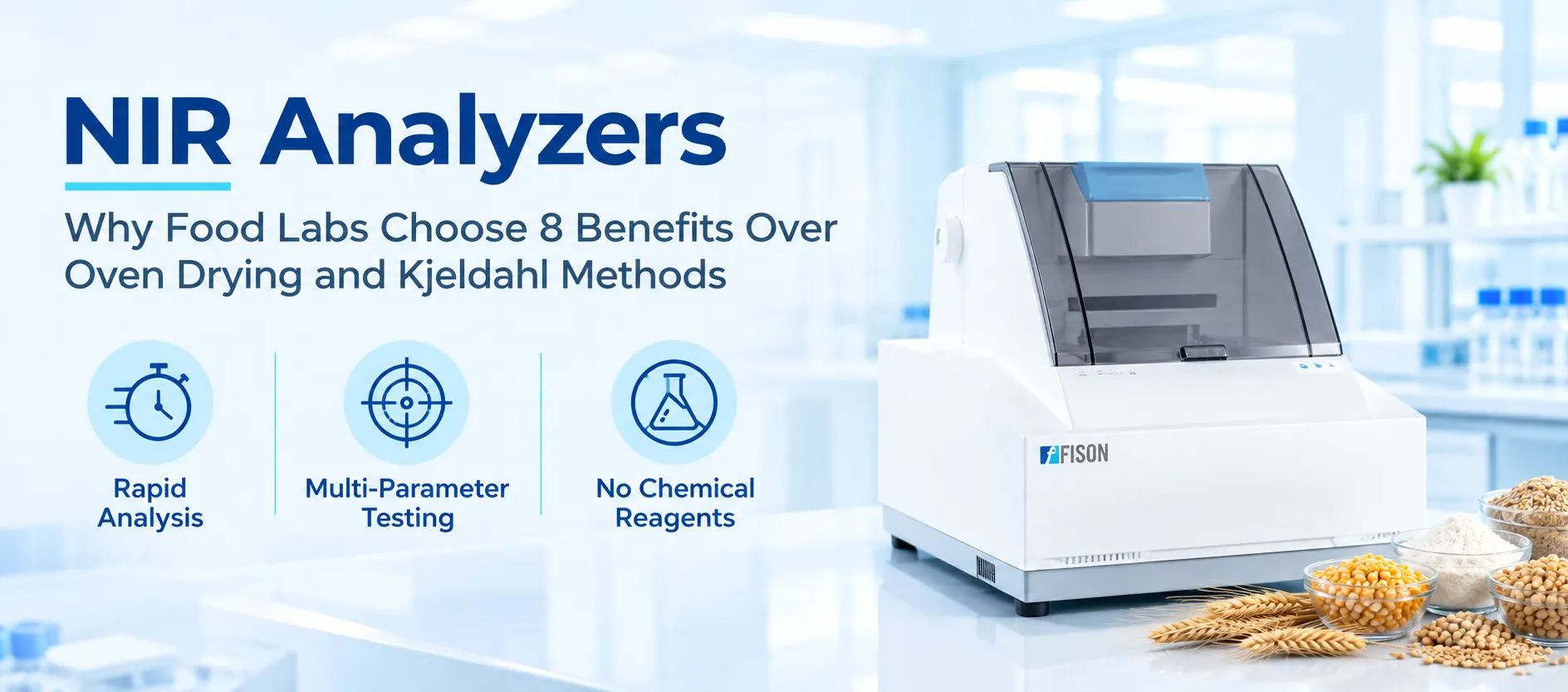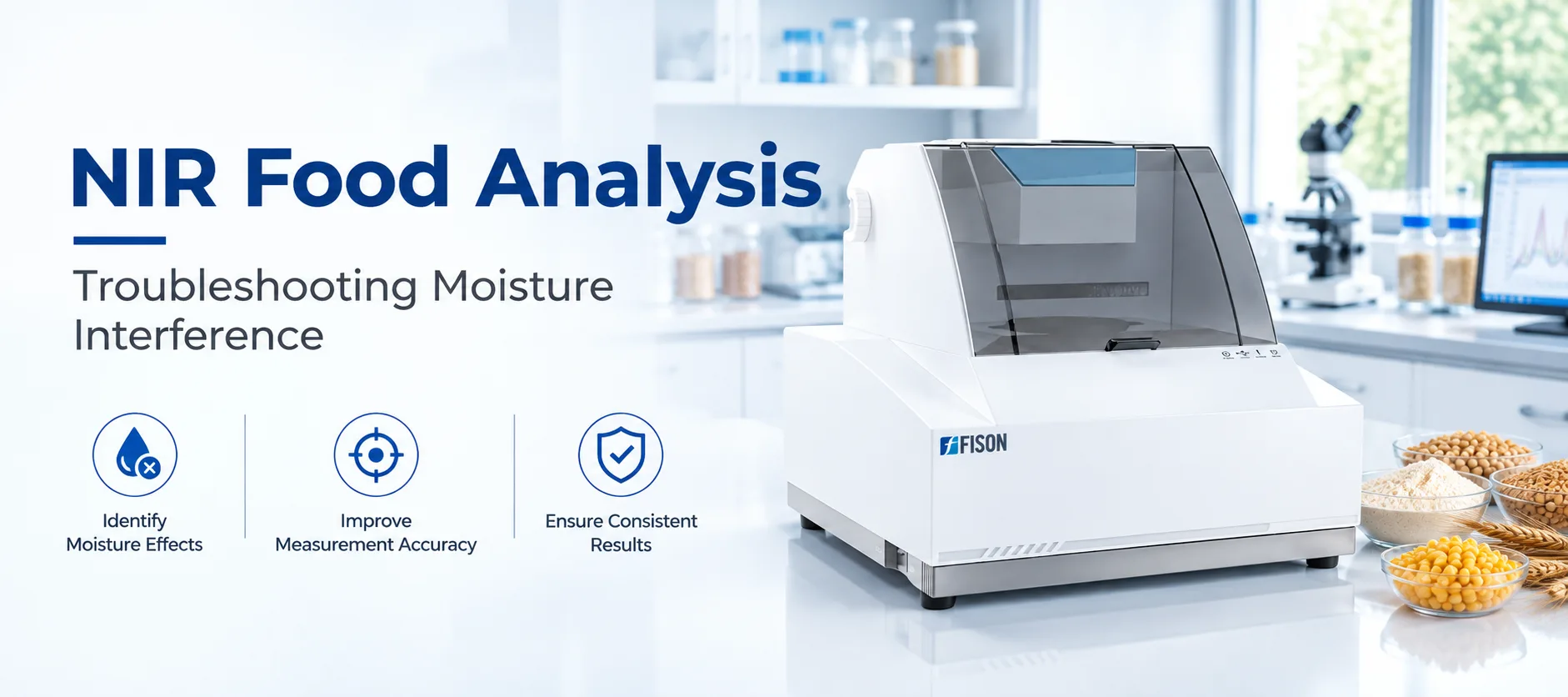
Moisture is the single most common source of interference behind an unexpected reading on a Fison NIR Food Analyzer, and knowing where that interference enters the measurement makes it far easier to correct.
Why Water Dominates the Near-Infrared Spectrum
A near infrared analyzer measures how strongly light at specific wavelengths is absorbed by chemical bonds inside a sample. Water's O-H bond produces one of the strongest absorption signatures anywhere in this region, and because most food matrices carry meaningful moisture content, that signal can overlap with the comparatively weaker bands associated with fat, protein, and sugar. Each NIR Food Analyzer product on the market has to account for this overlap, typically through calibration models that separate the moisture contribution from the compositional signal a lab actually wants to read. Any well-calibrated NIR analyzer relies on this separation step rather than raw spectral resolution alone to tell real compositional change apart from moisture noise.
Ambient humidity and uneven sample surfaces add a second layer of variability on top of the chemistry itself. A sample that has dried unevenly on its exposed face, or one measured shortly after being pulled from refrigeration, can show a moisture reading that reflects surface condition rather than the bulk of the material. A NIR-IR-Food Analyzer held to stable bench conditions and a consistent sample presentation routine will show noticeably less run-to-run scatter than one operated without either.
How an NIR Food Analyzer Reads a Sample
Tracing a moisture-related error back to its source is easier once the measurement sequence itself is clear. A near infrared analyzer generally moves through four stages to turn a sample into a usable result.
Light Source & Sample Presentation
A broadband light source illuminates the sample through a cup, vial, or flow cell sized to the material being tested.
Reflectance & Transmittance Capture
A detector records how much light is reflected from or passed through the sample across the scanned wavelength range.
Spectral Absorption Pattern
The instrument builds an absorption spectrum showing which wavelengths were absorbed most strongly by the sample.
Chemometric Calibration Output
A calibration model converts the absorption pattern into a moisture, fat, or protein percentage specific to that food matrix.
Understanding where a NIR Food Analyzer sits in this sequence at the moment a reading looks unusual makes it possible to isolate whether the cause lies in sample presentation, the optical path, or the calibration model itself.

Recognizing and Correcting Moisture-Related Errors
A moisture reading that drifts gradually across a shift, rather than jumping between individual samples, usually points to calibration drift rather than a genuine change in the material. Running a reference sample of known composition at the start of a session, and again partway through, is the most direct way to catch that drift before it affects production results.
Sample preparation accounts for a large share of the remaining error. Grinding or homogenizing a sample before it reaches the analyzer removes the surface moisture pockets that an unground sample can trap unevenly, and keeping cup depth or path length consistent between readings prevents the instrument from sampling different effective volumes of material from one run to the next. Labs running a nir food testing analyzer for quality control programs typically build a short moisture check into each incoming batch precisely because these two factors, sample preparation and reference verification, catch most drift before it reaches a shipped product. Most quality control laboratories keep a written log of these reference checks, since a nir food testing analyzer for quality control programme stays accurate over time only when those records are kept consistently.
Where NIR Food Analyzer Machines Are Applied
Dairy processors use an NIR - Food Analyzer Machine to track moisture, fat, and protein content in milk, cheese, and milk powder without waiting on a wet-chemistry result. Grain and flour milling operations lean on the same measurement to confirm moisture sits within a safe range before storage, since over-wet grain is prone to spoilage in silos. Meat and poultry processors monitor the fat-to-moisture ratio across a production line, bakeries check moisture and fat in flour and dough inputs, and edible oil producers use it to confirm oil content in seed and press-cake samples.
An NIR Food Analyzer for food quality testing is frequently the first instrument a quality lab adds, since moisture and fat checks touch most stages of food production from raw material intake through finished product release. Facilities weighing options across Fison's food analyzer range generally start by matching detection range and calibration library breadth to their primary matrix, whether that is dairy, grain, or processed meat.
Common Selection Mistakes
- Overlooking Matrix-Specific Calibration. An NIR analyzer calibrated for one food matrix rarely carries over cleanly to another, so checking that the calibration library actually covers the intended material matters more than the instrument's raw wavelength range.
- Ignoring Sample Presentation Requirements. Cup depth, path length, and sample packing method all affect a reading, and a unit chosen without confirming these fit the intended sample type can produce results that look precise but are not comparable between runs.
- Underestimating Reference Verification. Skipping periodic checks against a known sample lets calibration drift go unnoticed until a batch result is already questioned.
- Choosing a Digital NIR - Food Analyzer on Wavelength Range Alone. A wide wavelength range looks appealing on a spec sheet, but the chemometric software behind it determines how well that range actually translates into a usable moisture or fat figure.
- Skipping a Matrix-Specific Trial. A unit that performs well on a reference sample does not always behave the same way on a facility's actual product mix, so a short trial run on real material catches mismatches early.
The Wider Category of Food Composition Analyzers
A NIR Food Analyzer sits within a broader group of food composition instruments that also includes moisture balances, protein analyzers, and fat extraction systems. Teams evaluating options in this category typically compare wavelength range, the breadth of the calibration library supplied with the unit, sample accessory compatibility, and how much routine sample preparation each method demands before a result can be read. The full range of options in this category can be reviewed through Fison's food analyzer category, which groups these instruments by matrix and measurement principle.
This category sits within Fison's wider laboratory and process instrumentation catalog, alongside water quality, materials testing, and general analytical instrumentation used across the same food testing laboratories and research centres that rely on food composition testing. In a busy quality control laboratory, an nir food analyzer for food quality testing typically sits alongside moisture balances and protein analyzers rather than replacing them outright.