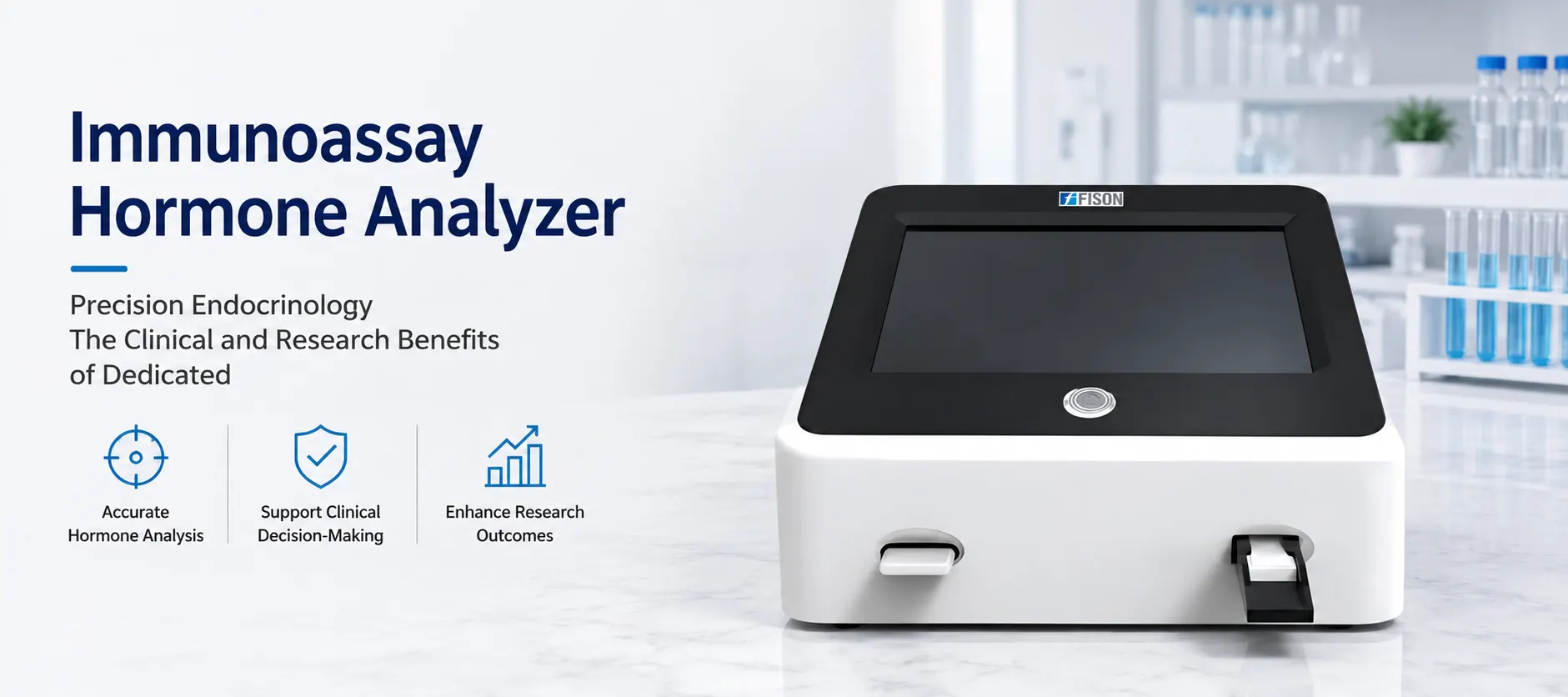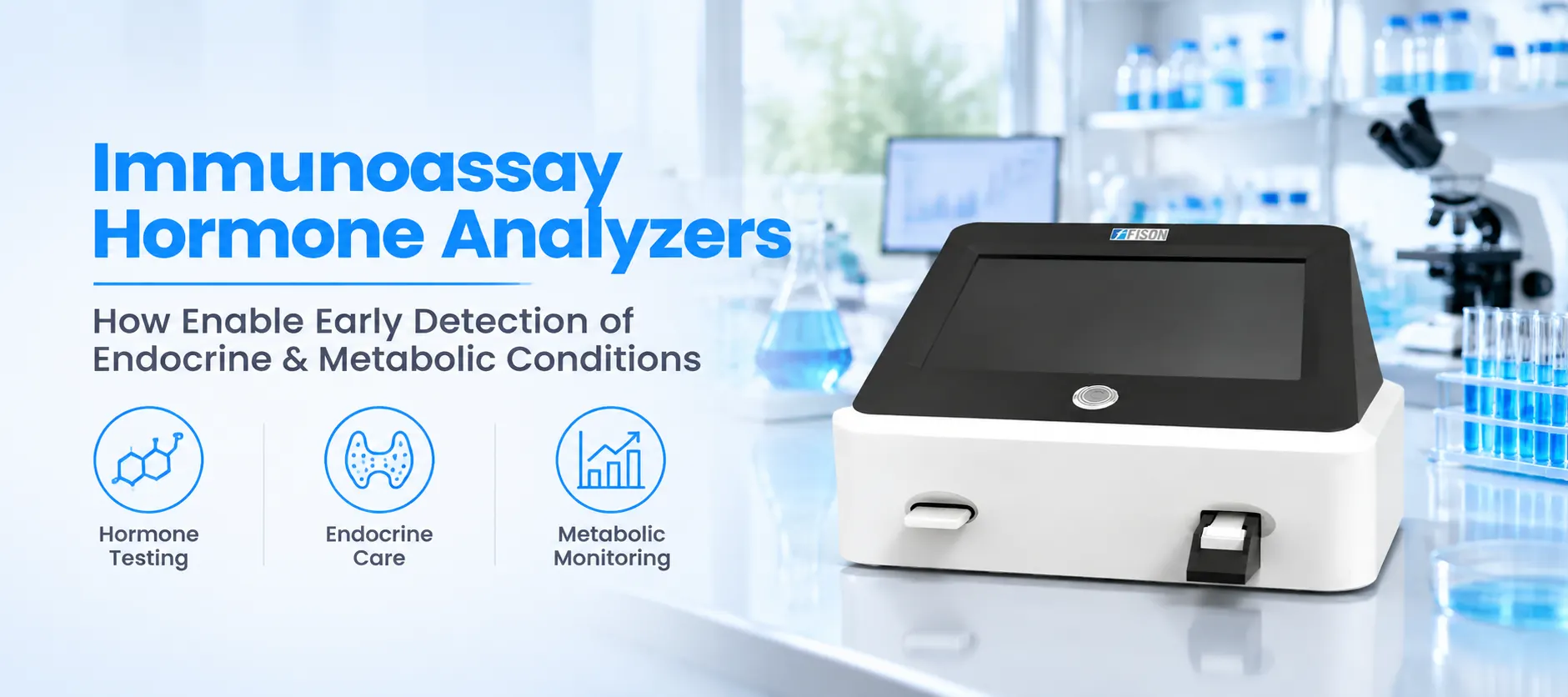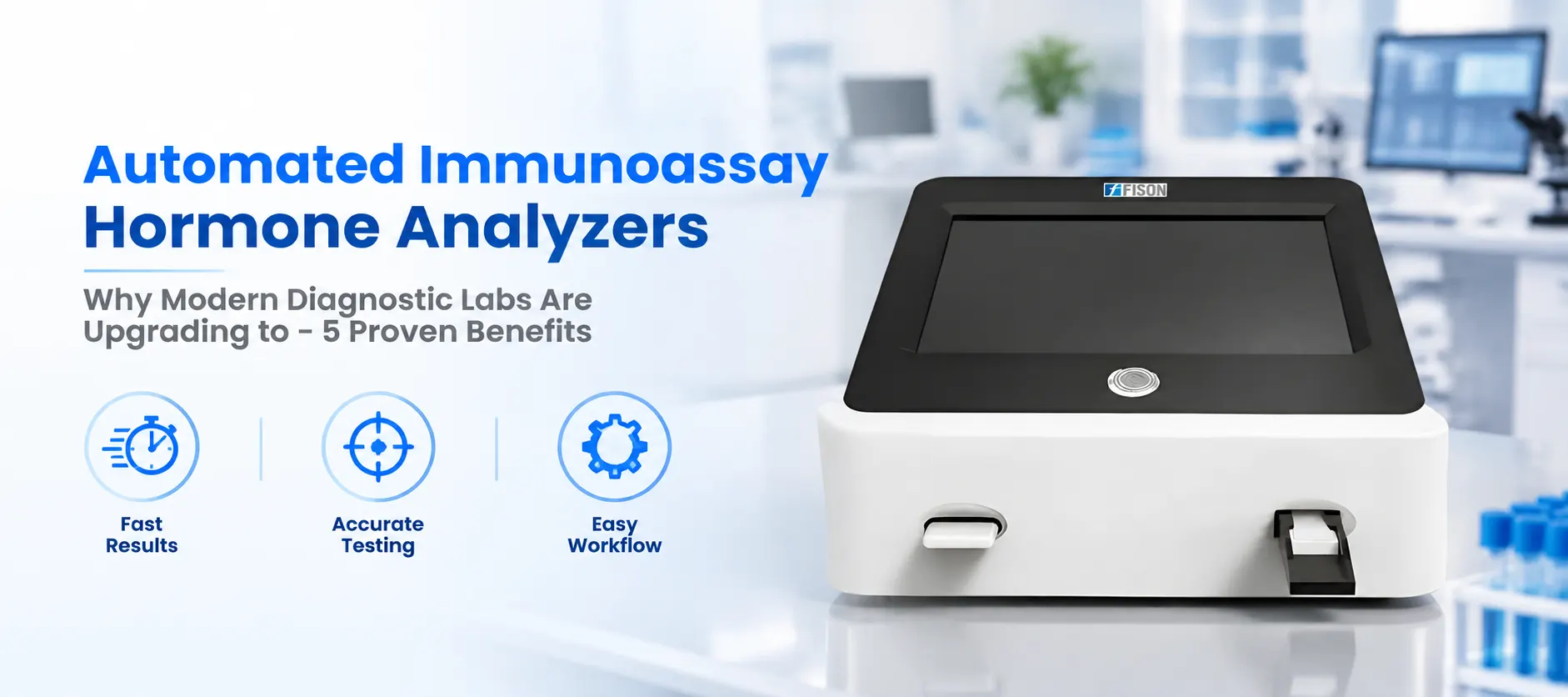
Hormone testing depends on measuring very small amounts of a target molecule in a sample. This explains how an Fison Automated Immunoassay Analyzer handles that work, the benefits it brings to hormone and fertility panels, and what to check before choosing one.
What Immunoassay Testing Measures
An Immunoassay uses the binding between an antibody and its target to detect and quantify biomolecules. That makes it a natural fit for hormones, proteins, and drugs, which are present in small amounts and need a sensitive, specific measurement method.
An Immunoassay Analyzer automates that measurement. Sample handling, calibration, separation, and signal reading run inside one instrument, so the Immunoassay Analyzer can work through a mixed batch of tests with minimal human intervention. For labs building out hormone, thyroid, and fertility testing, this is where immunoassay instruments earn their place on the bench.
How Binding Becomes a Measurable Signal
The Immunoassay Analyzer Principle follows a simple idea: a labeled reagent binds to the target in the sample, unbound material is removed, and the remaining label produces a signal in proportion to the amount of target present. Two detection methods are common.
Chemiluminescence
A chemiluminescence immunoassay analyzer uses magnetic particles to separate and isolate the bound components, then reads the light produced by the label. Triple magnetic separation cleaning helps remove unbound material before reading.
Fluorescence
A fluorescence immunoassay analyzer excites the label at one wavelength and detects emitted light at another, with multiple detection channels that read several items on one card.
Because the signal scales with the amount of target, the Automatic Immunoassay Analyzer converts each reading into a quantified result using automatic calibration, without manual curve plotting.
Five Reasons Labs Make the Move
For hormone and fertility work, these are the benefits a fully automated immunoassay analyzer brings to daily lab routines.
Broad Hormone Menu on One Platform
One immunoassay analyzer machine covers fertility hormones such as beta-hCG, prolactin, progesterone, FSH, LH, AMH, estradiol, and testosterone, along with cortisol, thyroid markers such as TSH, and insulin.
Higher Throughput
Chemiluminescent models reach up to a hundred and eighty tests per hour, while fluorescence models run over two hundred tests per hour with a detection time of seconds per test.
Small Sample Volume
A chemiluminescence immunoassay analyzer processes samples from ten to two hundred microliters, which helps when only a small draw is available.
Cleaner Separation
Magnetic particle separation with triple cleaning removes unbound material before the automatic immunoassay analyzer reads the signal.
Less Hands-On Work
Automatic calibration, random sample insertion, real-time progress updates, and safety alarms reduce manual steps and keep staff informed during a run.
Immunoassay Analyzer Uses in Diagnostic Labs
Immunoassay analyzer uses cover clinical diagnosis, hormone testing, cancer screening, and drug monitoring, with samples such as blood, plasma, serum, and urine.
Hormone and Fertility Testing
Fertility panels for beta-hCG, FSH, LH, AMH, estradiol, progesterone, and prolactin run on the same immunoassay analyzer machine as cortisol and testosterone checks.
Thyroid Function Testing
Thyroid testing covers TSH alongside free and total thyroid hormone markers, giving clinical diagnosis a fuller hormone picture.
Cancer Screening
Tumor markers such as tPSA, fPSA, CEA, and AFP support cancer screening on the same immunoassay instruments used for hormone testing.
Drug Monitoring and Wider Panels
Drug monitoring, cardiac markers, inflammation markers, diabetes markers such as insulin, and allergy testing extend immunoassay analyzer uses beyond hormone testing.
Hormone testing, cancer screening, and drug monitoring often share one instrument, so check that the test menu covers all the panels your lab runs. The range of immunoassay analyzers shows how chemiluminescent and fluorescence models differ.
Chemiluminescent and Fluorescence Analyzers Compared
Both detection methods automate immunoassay testing, but they suit different workloads. A chemiluminescent immunoassay analyzer focuses on a broad test menu, while a fluorescence immunoassay analyzer focuses on fast card-based testing.
| Factor | Chemiluminescent Analyzer | Fluorescence Analyzer |
|---|---|---|
| Detection | Light from label after magnetic separation | Fluorescence at separate excitation and detection wavelengths |
| Throughput | Up to a hundred and eighty tests per hour | Over two hundred tests per hour |
| Test format | Reagent channels with a broad menu | Multiple items on one card |
| Hormone panels | Fertility, thyroid, cortisol, insulin | Check the card menu |
| Sample types | Small volume, from ten microliters | Blood, plasma, serum, urine |
Common Selection Mistakes to Avoid
Assuming All Menus Include Hormones
Test menus differ by detection method. Confirm the fully automated immunoassay analyzer covers the hormone and fertility markers your lab runs most.
Reading Only the Peak Throughput
Throughput varies between configurations. Match the tests per hour to your busiest sessions, not only the maximum figure.
Overlooking Reagent Positions
The number of reagent channels limits how many assays stay loaded at once. Check it against the size of your hormone panel.
Forgetting Result Output
Some models print results on a built-in thermal printer and send data through a serial port. Confirm how results will reach your records.
Exploring the Immunoassay Analyzer Category
The immunoassay analyzer category covers chemiluminescent and fluorescence models used for detecting and quantifying biomolecules. Labs comparing options usually weigh detection method, test menu, tests per hour, sample volume, reagent capacity, calibration, and result output.
Whether your focus is hormone testing or a wider diagnostic menu, you can review the full immunoassay analyzer lineup to compare models, or browse other laboratory instruments on the Fison home page.
See Automated Immunoassay Testing in Detail
Review detection methods, test menus, and throughput across models.
Explore Immunoassay Analyzers