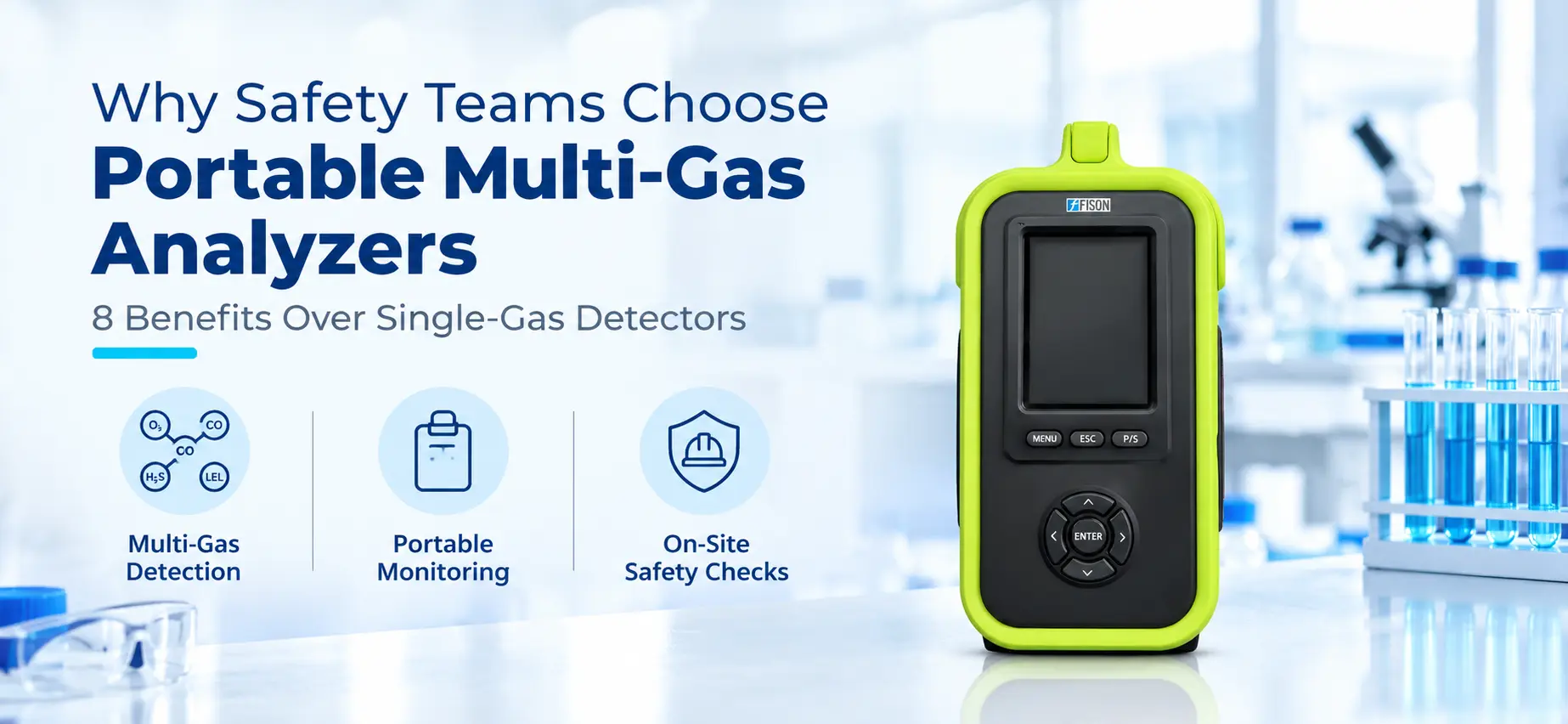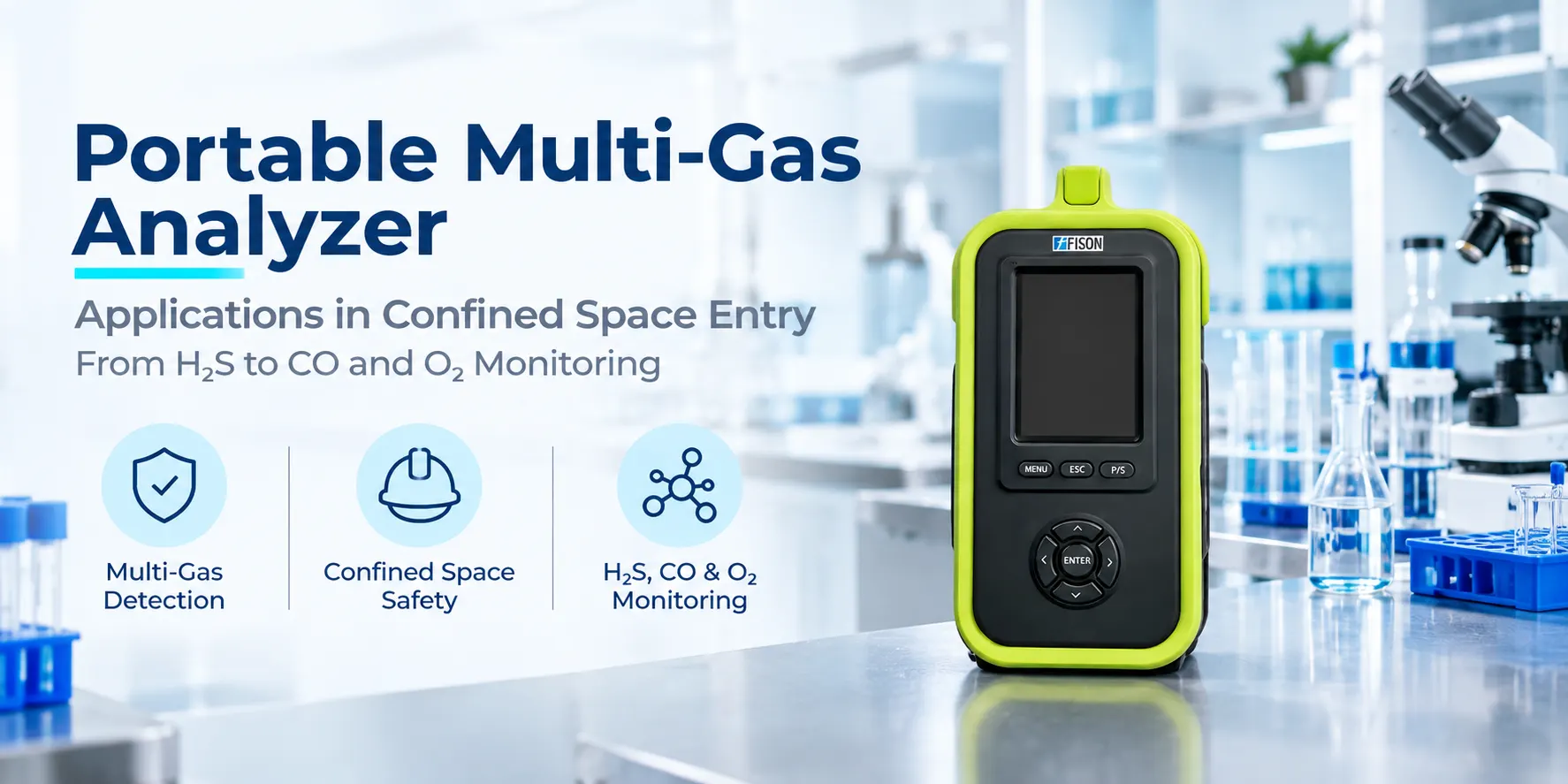
Enclosed work areas can hide low oxygen, toxic gases, and combustible vapors that people cannot see or smell. This explains how a Fison Portable Multi Gas Analyzer works, which gases matter most before entry, and what to check when choosing one.
Why Enclosed Spaces Need Gas Checks Before Entry
Tanks, vessels, pits, and similar enclosed areas have limited airflow, so gases can build up or oxygen can be displaced without warning. Several hazards often appear together: too little oxygen, toxic gases such as hydrogen sulfide and carbon monoxide (CO), and combustible gases such as methane. Checking only one gas leaves the others unknown.
A Portable Multi Gas Analyzer measures several gases at the same time and shows the readings together in real time. Because a Portable Multi Gas Analyzer draws air in with a built-in pump, staff can sample the atmosphere at the opening before anyone steps inside, then keep monitoring while work continues.
How Different Sensors Detect Different Gases
The Portable Multi Gas Analyzer Principle relies on more than one sensor type, because no single sensor responds well to all gases. A built-in pump pulls the sample through a multi-layer filter that keeps dust out of the analyzer gas path, then the air passes over separate sensor modules that each handle a group of gases.
Electrochemical
The target gas reacts at an electrode and produces a small current in proportion to its concentration. This method covers oxygen, hydrogen sulfide, CO, sulfur dioxide, and nitric oxide.
Infrared
Gases such as methane, carbon dioxide, and CO absorb infrared light at specific wavelengths. The analyzer measures how much light is absorbed to calculate concentration.
Photoionization
Ultraviolet light ionizes volatile organic compounds (VOC), and the resulting current indicates how much vapor is present in the sample.
From Hydrogen Sulfide to CO and Oxygen
Each gas creates a different risk in an enclosed space, which is why they are checked together rather than one at a time.
Oxygen
Other gases can displace oxygen in a closed area. Electrochemical sensing tracks the oxygen level directly as a percentage by volume.
Hydrogen Sulfide
An electrochemical sensor detects this toxic gas in parts per million, so even small amounts appear on the display.
Carbon Monoxide
Depending on the configuration, the analyzer reads CO with electrochemical sensing in parts per million or infrared sensing by volume.
Methane
Combustible methane is measured by infrared sensing, with readings available as a percentage of the lower explosive limit (LEL).
Practical Portable Multi Gas Analyzer Uses
Portable Multi Gas Analyzer uses extend beyond entry checks to emissions work, air quality assessment, and research.
Chemical Manufacturing
Chemical manufacturing sites use a Portable Multi Gas Analyzer to check vessels, tanks, and process areas for toxic and combustible gases.
Waste Gas and Flue Gas Analysis
Emission points and flue gas lines are sampled for sulfur dioxide, nitric oxide, carbon dioxide, and CO to track what leaves a process.
Air Pollution Monitoring
Environmental teams and research centers carry a Portable Multi Gas Analyzer to different sites to measure air pollution across locations.
Indoor Air Analysis
Laboratories and indoor work areas use multi gas analysis to check air quality where gases are stored or used.
Catalogs sometimes describe a compact unit as a handheld multi gas analyzer or a four-gas multi gas detector, while larger models are sold as a Portable Multi-Gas Analyzer unit with selectable modules. Whatever the label, check which gases and sensor types it actually carries. The range of gas analyzers shows how configurations differ.
Matching Sensors to Enclosed Space Hazards
| Hazard | Gas | Sensor Type | Reading |
|---|---|---|---|
| Oxygen deficiency | Oxygen | Electrochemical | Percent by volume |
| Toxic exposure | Hydrogen sulfide | Electrochemical | Parts per million |
| Toxic exposure | Carbon monoxide | Electrochemical or infrared | Parts per million or percent by volume |
| Combustible atmosphere | Methane | Infrared | Percent of LEL or by volume |
| Solvent vapors | VOC | Photoionization | Parts per million |
| Displacing gas | Carbon dioxide | Infrared | Percent by volume |
Common Selection Mistakes to Avoid
Assuming All Units Detect the Same Gases
Configurations differ. One Portable Multi Gas Analyzer may list sulfur dioxide, nitric oxide, CO, carbon dioxide, and methane, while a multi gas analyzer may also cover oxygen, hydrogen sulfide, chlorine, ammonia, and VOC. Confirm the module set matches the hazards in your space.
Overlooking the Explosion Protection Rating
Areas that may hold combustible gas need an analyzer with a suitable explosion protection rating. Check the rating against the zone where the unit will be used.
Ignoring Battery Life and Alarms
Long jobs need a battery that lasts the full shift. Look for low battery, fault, and pump abnormal alarms so a failing analyzer never goes unnoticed.
Skipping Data Logging
Records of each check matter for safety reviews. Choose a unit with SD card logging, USB or wireless transfer, and PC software for analysis.
Exploring the Gas Analyzer Category
The gas analyzer category includes multi gas analyzers and Portable Multi Gas Analyzers that combine electrochemical, infrared, and photoionization sensors. Laboratories, research centers, and chemical manufacturing safety teams comparing options usually weigh the gases covered, sensor types, pump design, battery life, protection rating, and data logging.
Whether you need a Portable Multi Gas Analyzer for entry checks or a multi gas analyzer for indoor air and wider air quality work, you can review the full gas analyzer lineup to compare configurations, or browse other laboratory instruments on the Fison home page.
Review Portable Gas Monitoring in Detail
Compare sensor modules, alarms, and data logging for portable units.
Explore Portable Multi Gas Analyzers