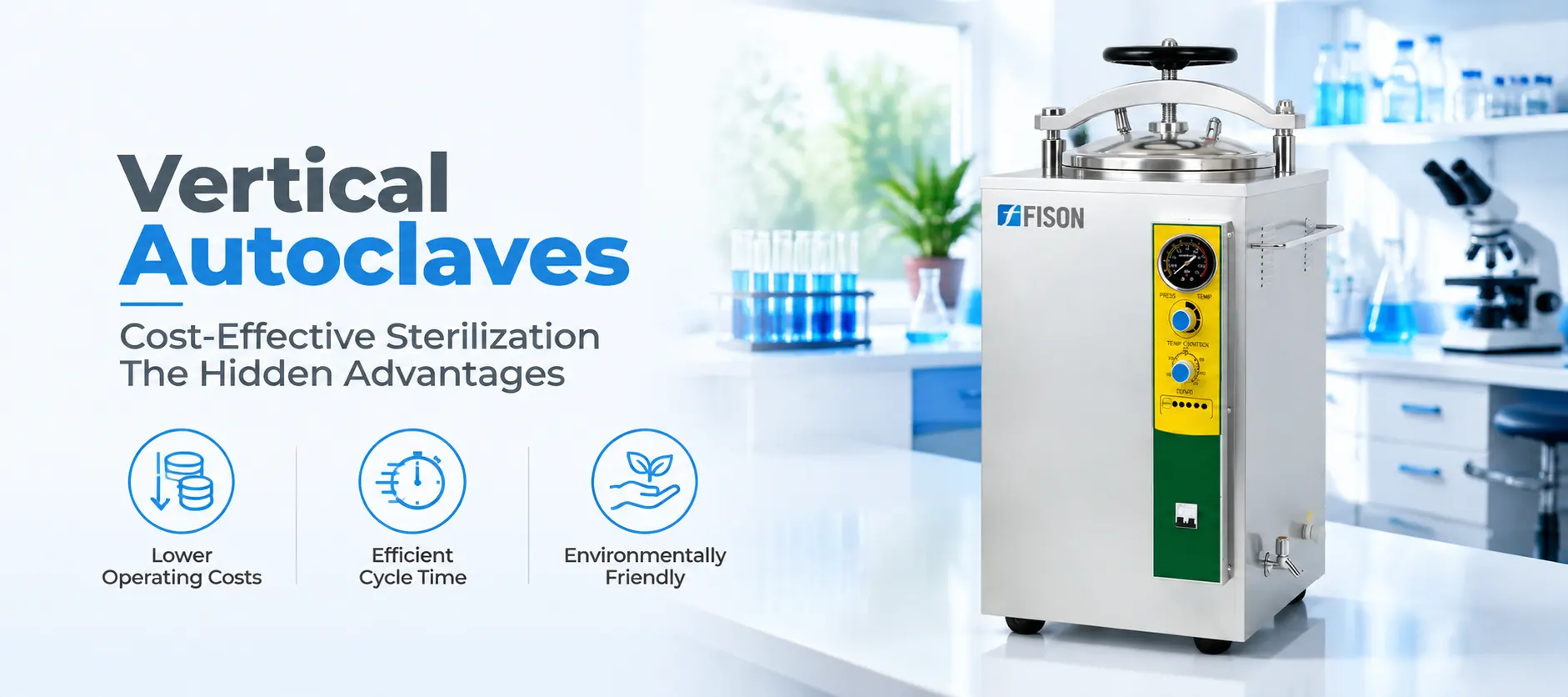
Laboratories, hospitals, research centres and advanced facilities that need consistent steam sterilization without added operating complexity often turn to a Vertical Autoclave to process glassware, media, instruments and biological waste. Beyond the initial equipment decision, several practical advantages shape how much day-to-day value a vertical autoclave delivers, from chamber efficiency to long-term ease of use.
Why a Vertical Autoclave's True Value Extends Beyond the Initial Equipment Decision
Comparing sterilization equipment on specification sheets alone misses several factors that shape how much value a facility gets from a Vertical Autoclave over years of daily use. Cycle efficiency, water and energy draw per load, ease of routine maintenance and how well the chamber size matches typical batch volume all influence how an instrument performs once it moves from evaluation into daily operation.
A Vertical Sterilizer that looks similar to a competing model on paper can behave quite differently once installed, particularly in facilities running several cycles a day where small efficiency differences accumulate across a full working week.
Vertical Autoclave Principle: How a Top-Loading Chamber Completes a Sterilization Cycle
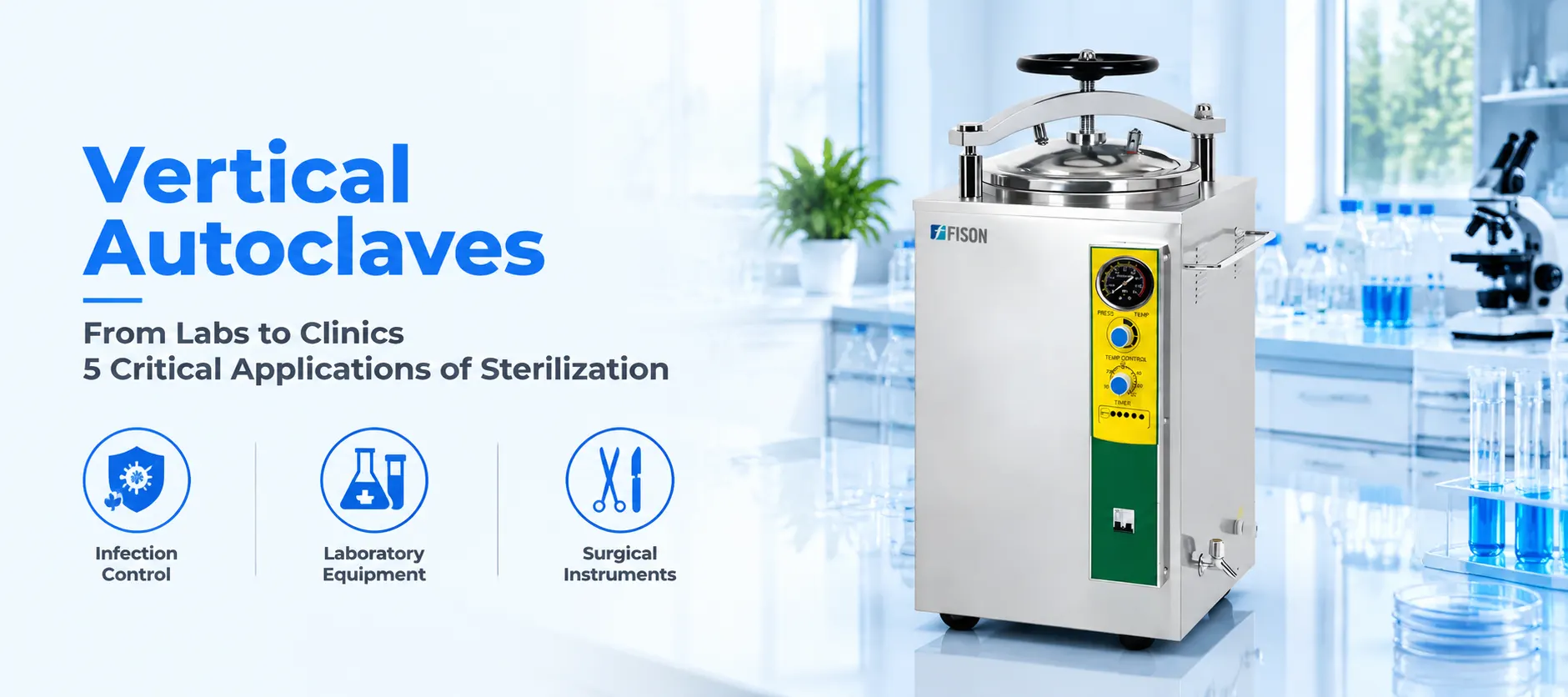
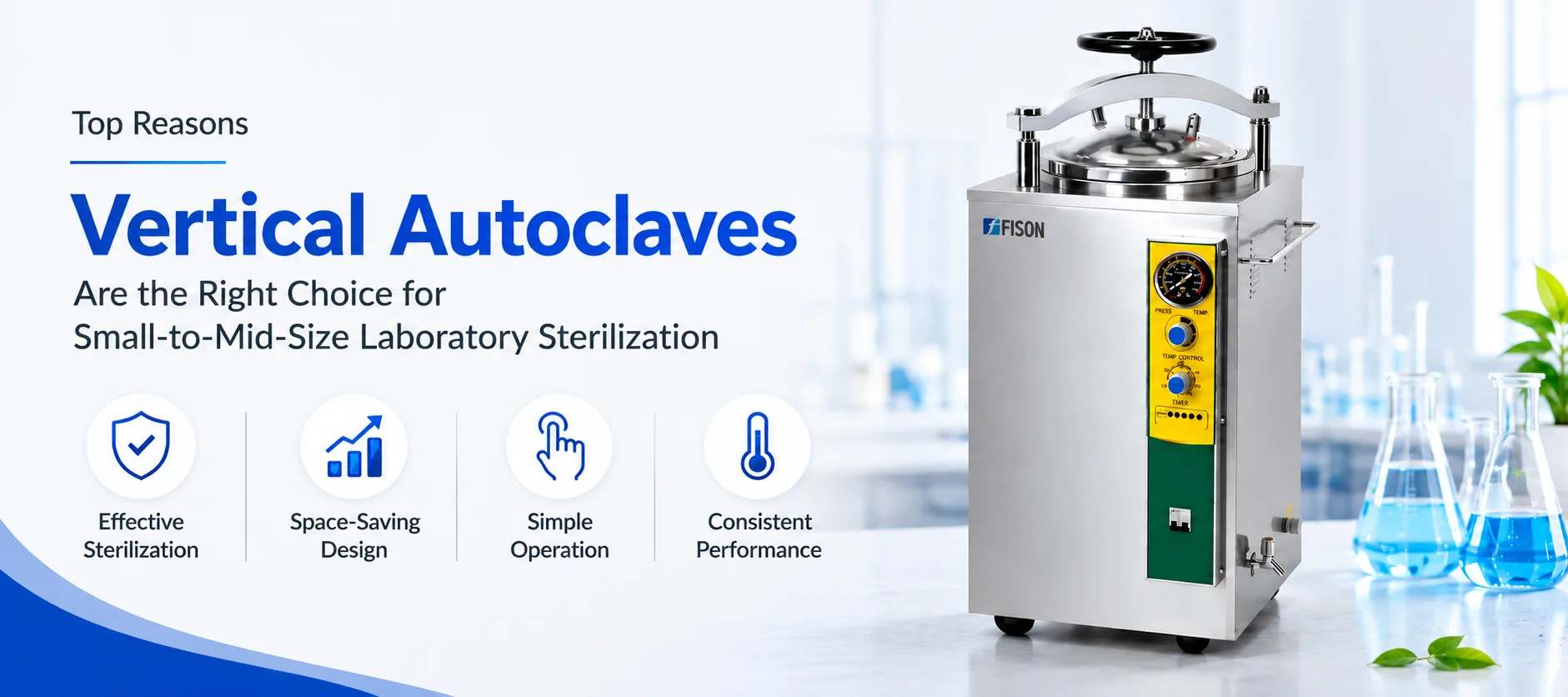
The Vertical Autoclave principle relies on saturated steam held at controlled pressure and temperature for a fixed exposure period, long enough to inactivate microorganisms and resistant spores that survive ordinary boiling. Because the chamber sits upright rather than on its side, a Vertical Autoclave machine can hold a useful load within a narrower equipment footprint, an advantage in laboratories and research spaces where floor or bench space is already committed to other instruments.
Top-Loading Setup
Steam Injection & Pressurization
Sterilization Hold
Depressurization & Unloading
Vertical Autoclave pressure builds steadily as steam displaces trapped air from the chamber, since pockets of residual air can shield microorganisms from direct steam contact and leave a cycle incomplete. Once the hold period finishes, a controlled pressure release brings the chamber back to a safe condition before unloading.
Where the Vertical Autoclave Sits Within Fison's Laboratory Autoclave Range
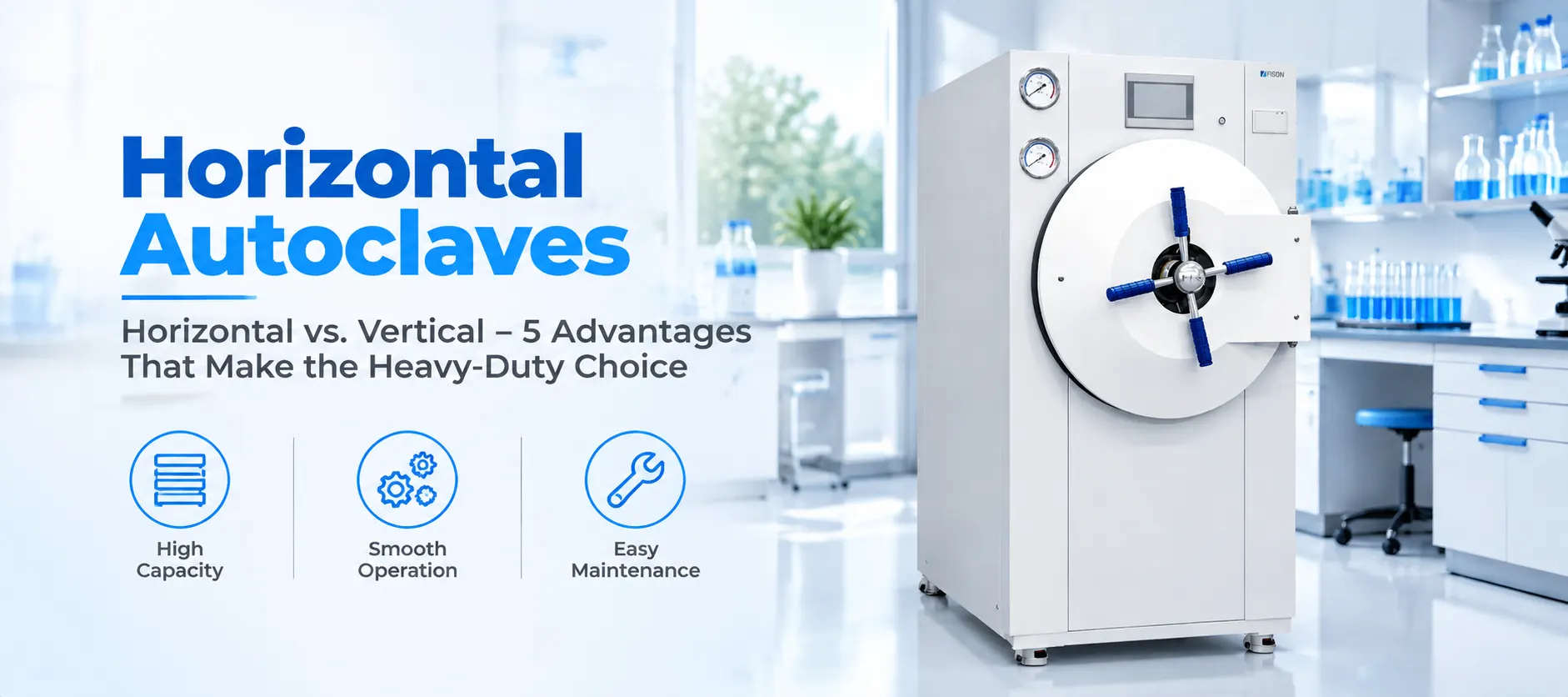
A Vertical Autoclave belongs to a broader laboratory autoclave category that also includes horizontal and benchtop chamber formats, all built around the same steam sterilization principle but suited to different batch sizes, footprints and workflow patterns. Within this category, teams typically compare chamber orientation, loading style, cycle programming and how easily a unit integrates into an existing bench or floor layout.
The complete laboratory autoclave range is a practical starting point for comparing these formats side by side, and for facilities weighing sterilization equipment against other laboratory instrument categories, the Fison home page catalogues the wider range available.

Hidden Efficiency Advantages Behind a Vertical Autoclave's Everyday Operation
A vertical steam sterilizer typically draws from a smaller water reservoir and needs a shorter steam generation time than a larger horizontal chamber processing a similar instrument count across smaller batches, which can translate into lower day-to-day utility draw across a full working week. A compact vertical sterilizer also tends to reach operating pressure faster from a cold start, shortening the wait between the first cycle of the day and actual sterilization output.
The single top-loading door design common to a Vertical Autoclave machine simplifies routine seal inspection and gasket replacement compared with the dual-access points found on some larger chamber styles, which can shorten the time a unit sits out of service for scheduled maintenance. A smaller footprint also frees up floor or bench space that a laboratory or hospital department can put toward other equipment.
These efficiency differences rarely appear on a specification sheet, yet they shape how much value a Vertical Autoclave returns over its working life, particularly in facilities running multiple cycles throughout the day.
Chamber Design and Capacity Choices That Shape a Vertical Autoclave's Practical Value
Vertical Autoclave capacity ranges from small benchtop chambers suited to a single research bench to larger floor-standing units able to process multiple trays of glassware or instrument sets within one cycle. A vertical laboratory autoclave with a narrower chamber diameter but greater depth can still hold a useful load while keeping the unit's footprint compact, a practical advantage in space-constrained sterile processing areas.
Facilities comparing chamber volume, cycle time and Vertical Autoclave pressure ratings can review the full laboratory autoclave lineup before settling on a Vertical Autoclave capacity that matches daily sterilization volume, since an undersized chamber forces repeated partial cycles while an oversized one runs mostly empty on lighter days.
Where Laboratories, Hospitals, Research Centres and Advanced Labs Put a Vertical Autoclave to Work
Vertical Autoclave uses span several distinct settings, each drawing on the same core steam cycle for a different purpose, and the full range of Vertical Autoclave machine uses a single instrument design can cover often surprises facilities evaluating equipment for the first time.
Microbiology and molecular biology laboratories rely on a vertical laboratory autoclave to sterilize culture media, glassware and instruments between experiments, keeping contamination risk low across repeated daily use.
Hospital central sterile supply departments use a vertical steam sterilizer for smaller instrument sets and trays where a full-size horizontal chamber would run under capacity, keeping the same cycle available for urgent turnarounds between procedures.
Research centres handling biological samples depend on a Vertical Autoclave sterilizer to decontaminate waste before disposal, meeting biosafety handling expectations for infectious material generated during ongoing study work.
Advanced analytical and quality laboratories use the same equipment to sterilize sample containers, media and consumables ahead of sensitive testing work where any contamination would compromise results.
Selection Mistakes to Watch For When Choosing a Vertical Autoclave
A handful of recurring missteps show up during evaluation, and most only become clear once the instrument is already in routine use:
- Weighing the initial equipment decision alone. Overlooking water, energy and consumable use across the equipment's working life can undercut the very efficiency advantages a Vertical Autoclave sterilizer is meant to offer.
- Underestimating maintenance and service intervals. Skipping scheduled seal and gauge checks to save time in the short term often leads to longer unplanned downtime later, undoing any early efficiency advantage.
- Choosing a chamber size built for occasional peak demand. Sizing a chamber for rare high-volume days rather than typical daily volume can leave a facility running more cycles than necessary on an average day.
- Ignoring facility electrical and water supply limits. Confirming supply capacity before installation avoids added infrastructure work once installation is already underway.
- Assuming all models within a lineup perform the same. Comparing chamber orientation, door style and cycle programming across the full range helps identify meaningful differences before committing to one configuration.
Choose the Vertical Autoclave That Matches Your Sterilization Needs
Chamber capacity, cycle programming and day-to-day efficiency differ meaningfully between models, and reviewing a Vertical Autoclave machine lineup together helps match an instrument to the specific Vertical Autoclave application a facility runs most often, rather than a rough estimate. Comparing Vertical Autoclave uses against actual daily sterilization volume, and reviewing Vertical Autoclave machine uses across a full product lineup, makes it easier to settle on a configuration that fits rather than one that simply looks adequate on paper.
Explore Vertical Autoclave Options