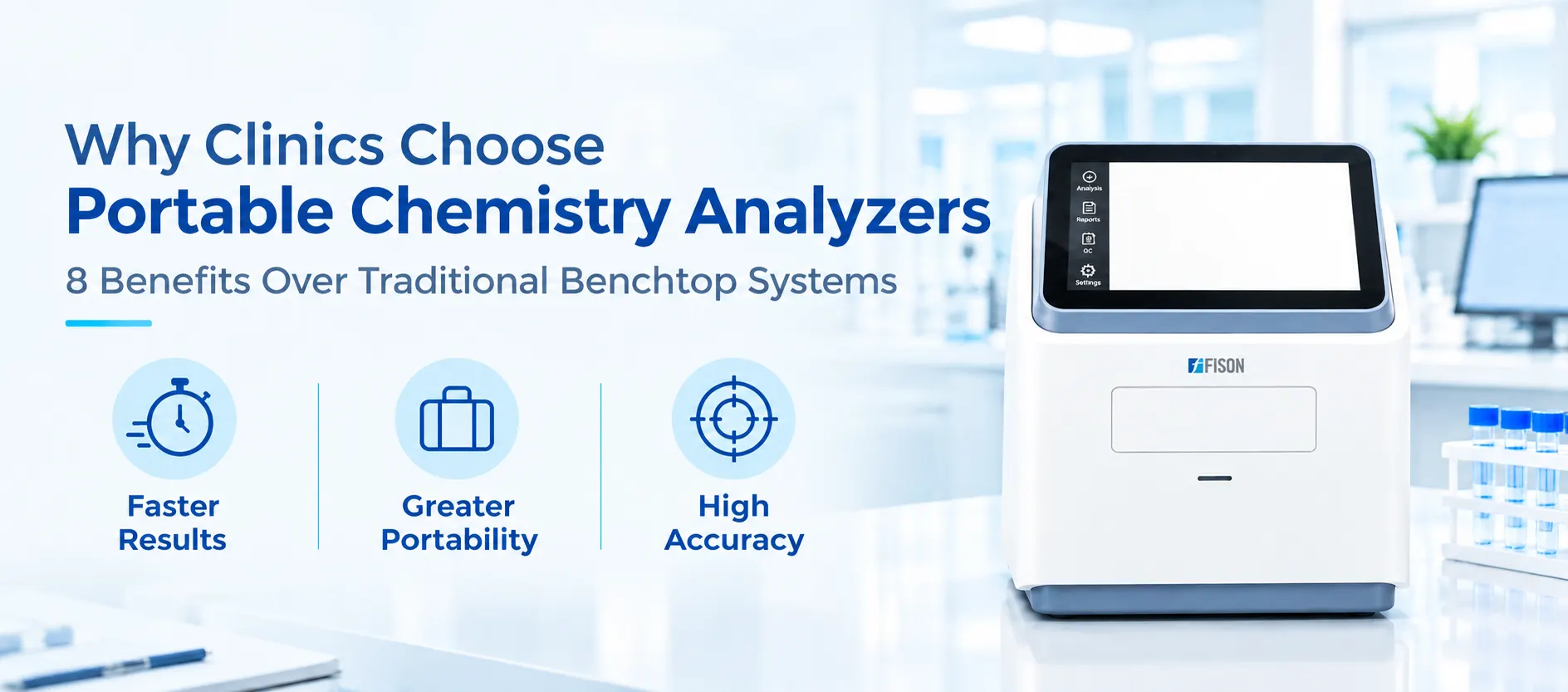
Practical notes for laboratories, hospitals, research centers, and advanced labs running a Fison Portable Chemistry Analyzer outside a fixed bench setup, where temperature, handling, and reagent condition matter more than they do indoors.
How a Portable Chemistry Analyzer Reads a Sample
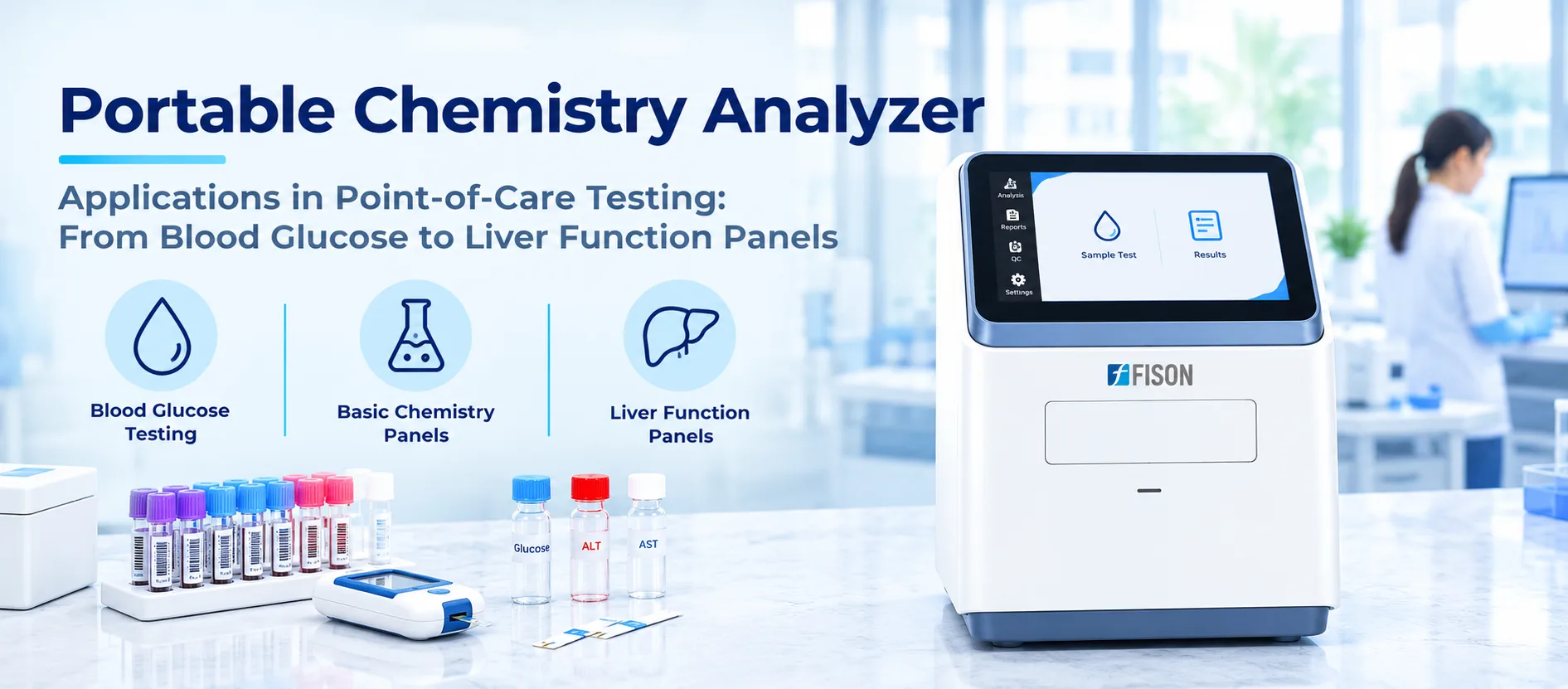
A Portable Chemistry Analyzer measures analytes such as glucose, electrolytes, liver enzymes, and lipids by pairing a reagent disc with an optical or electrochemical sensor. Rather than routing a sample through a large photometric assembly, the Portable Chemistry Analyzer instrument channels a measured volume across the reagent disc, where the reaction produces a color change or an electrical signal. A built-in detector reads that signal and converts it into a concentration value within minutes, which is also how a portable biochemistry analyzer of this type is typically described in lab literature.
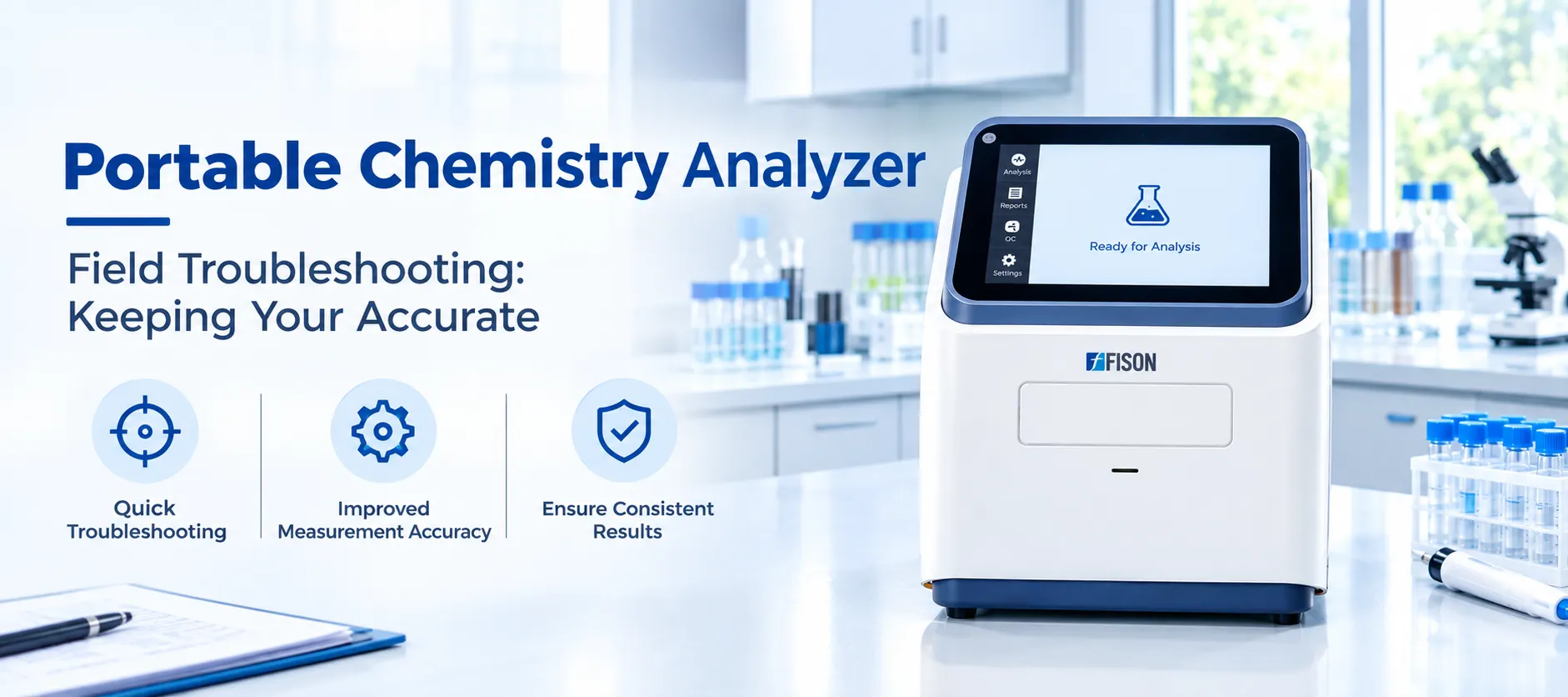
This compact chemistry analyzer machine design removes the need for external plumbing or a dedicated bench, which is part of why laboratories move it between departments or take it into the field. Because the optical path and reagent disc chamber are smaller than a benchtop counterpart, temperature control and cleanliness inside the unit matter more, not less, for an accurate reading. A well-maintained Portable Chemistry Analyzer machine holds this advantage only as long as its reagent disc and optical window stay in good condition.
Where Accuracy Slips During Field Use
Applications Across Care and Research Settings
In a hospital setting, a Portable Chemistry Analyzer supports point-of-care panels in an emergency bay or outpatient clinic, where a bench-based device would add a transport delay between draw and result. Research centers use the same portable blood chemistry analyzer format for field studies, running electrolyte and metabolic panels on-site rather than shipping samples back to a central lab. This portable biochemistry analyzer approach also suits mobile diagnostics teams who need a metabolic reading before a patient reaches a fixed facility.
Advanced labs running mobile testing units rely on a compact Portable Chemistry Analyzer laboratory setup to extend chemistry testing into satellite sites without duplicating a full bench. Beyond clinical use, water-treatment plants and food-safety teams apply the same Portable Chemistry Analyzer system to spot-check chemistry parameters where a fixed lab is not close by. Across these settings, the common thread is a need for chemistry results without the space, plumbing, or staffing a full bench calls for, whether the setting is emergency care, mobile diagnostics, or routine point-of-care testing.

Common Mistakes When Evaluating a Portable Chemistry Analyzer System
Weighing test menu over throughput
Laboratories often compare test menu size first and treat throughput as secondary, then find the panel they need runs at a slower per-sample rate than expected once it is in daily use.
Overlooking reagent storage needs
A Portable Chemistry Analyzer system that calls for refrigerated reagent discs works against the mobility it was chosen for, since cold storage rarely travels well outside a lab.
Underweighting data export
A device without a direct link to a laboratory information system creates manual transcription work that offsets the time saved on the bench.
Reading battery life at face value
Runtime is worth checking against actual field shifts rather than a rated maximum, since real-world runtime typically falls below the printed figure.
Where the Portable Chemistry Analyzer Fits in the Wider Category
A Portable Chemistry Analyzer sits within the wider chemistry analyzer category, which spans benchtop, semi-automated, and fully automated formats built around the same core measurement principle. When comparing options within this category, laboratories typically look at test menu breadth, sample throughput, reagent format, and how each device connects to existing data systems.
The full chemistry analyzer machine range, including portable and bench-based configurations, is grouped on the chemistry analyzer category for side-by-side review, alongside the wider laboratory equipment listing available from the Fison home page for teams sourcing instruments across other categories at the same time.
Portable Versus Benchtop Configurations
Portable and benchtop chemistry analyzers share the same underlying reaction chemistry but differ in where that chemistry is put to use. A benchtop unit generally supports a broader test menu and higher sample throughput, which suits a central lab running continuous batches. A Portable Chemistry Analyzer trades some of that throughput for battery operation, a smaller footprint, and a faster path from sample to result when a bench is not nearby.
Neither format replaces the other outright — many labs run both, keeping benchtop instruments for routine daily volume and a Portable Chemistry Analyzer instrument for outreach, field collection, or overflow testing. A portable blood chemistry analyzer in particular earns its place in this mix when a draw needs a result before the patient leaves the room. Teams weighing this trade-off can review both formats together on the chemistry analyzer category before narrowing to a single configuration.
Review the Full Specification Sheet
See sample volume, test menu, and connectivity details for the Portable Chemistry Analyzer before fitting it into a field or bench workflow.
Explore the Portable Chemistry Analyzer