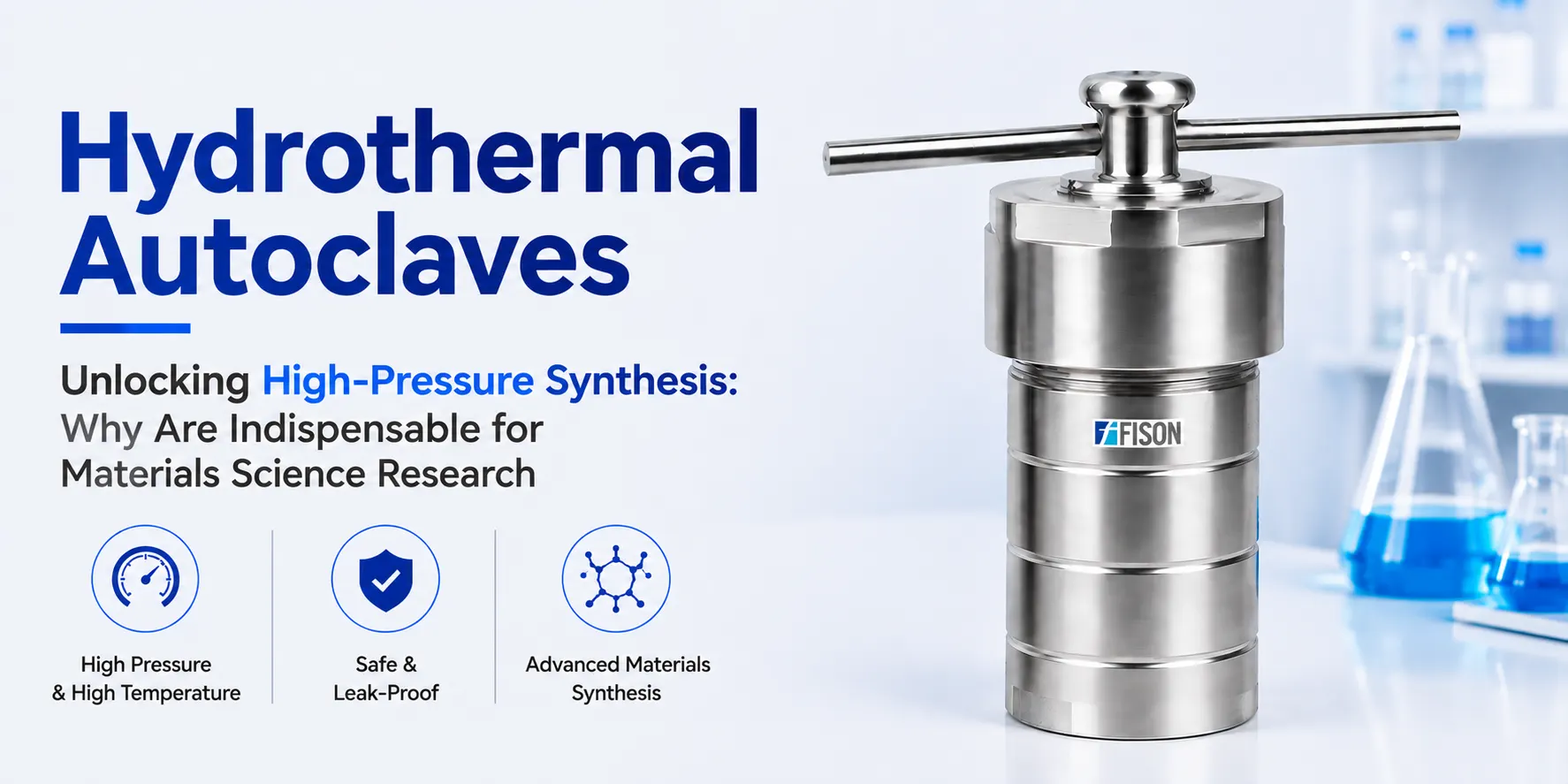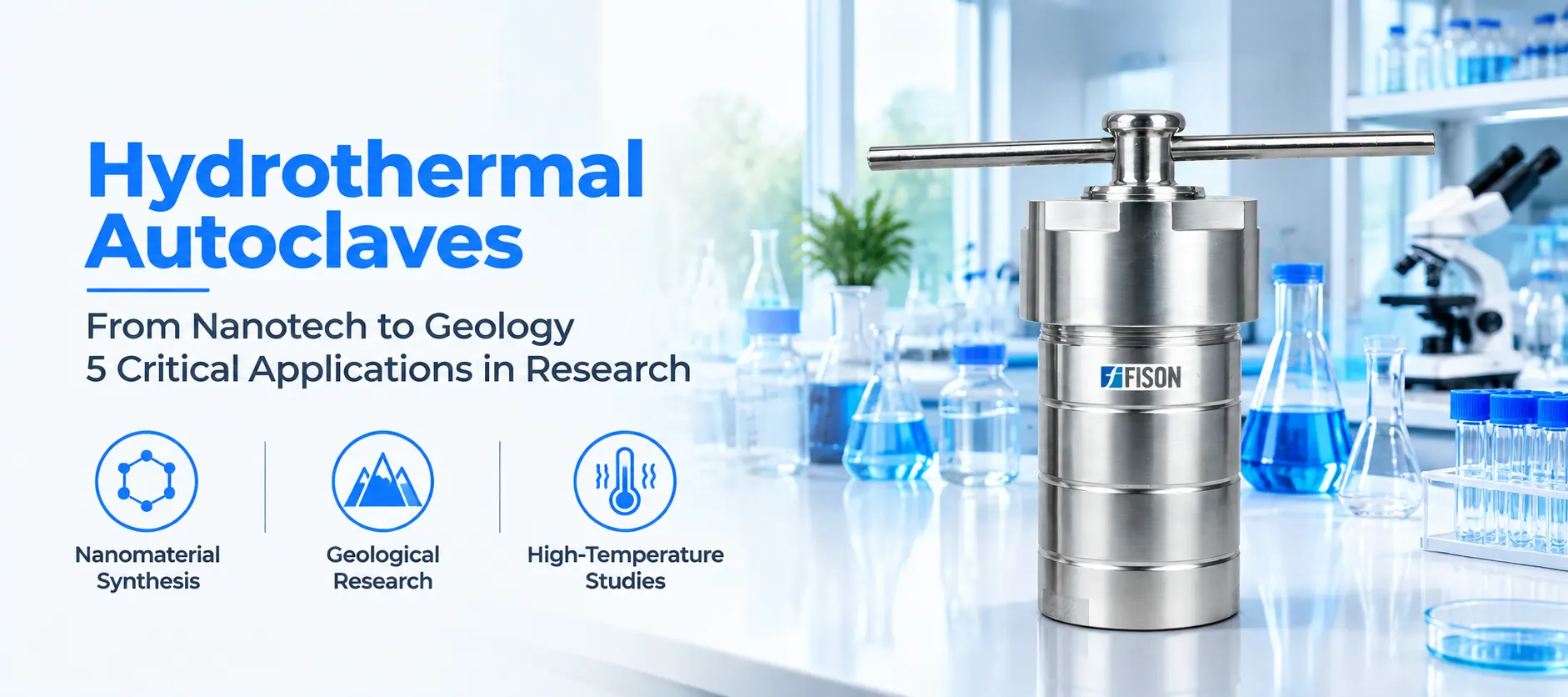
Nanomaterial, zeolite and mineral research all rely on a sealed vessel that can hold water or another solvent at high temperature and pressure for hours or days at a stretch. A Fison Hydrothermal Autoclave is built for exactly that job, creating the closed, high-pressure environment many crystal growth and synthesis reactions need. This article looks at how the vessel works, the research settings where it does the most work, and the selection details that are easy to miss.
Why Sealed High-Pressure Vessels Matter in Materials Research
Reactions that form crystals, nanoparticles or mineral phases from an aqueous mixture often need conditions no open container can provide: temperatures well above the solvent's normal boiling point, sustained for a set duration, inside an environment that keeps trace contamination out. A hydrothermal reactor supplies that sealed, high-pressure space, letting a reaction run to completion under conditions that would otherwise call for far more specialized process equipment.
Hydrothermal Autoclave Principle: Building Pressure Inside a Sealed Vessel
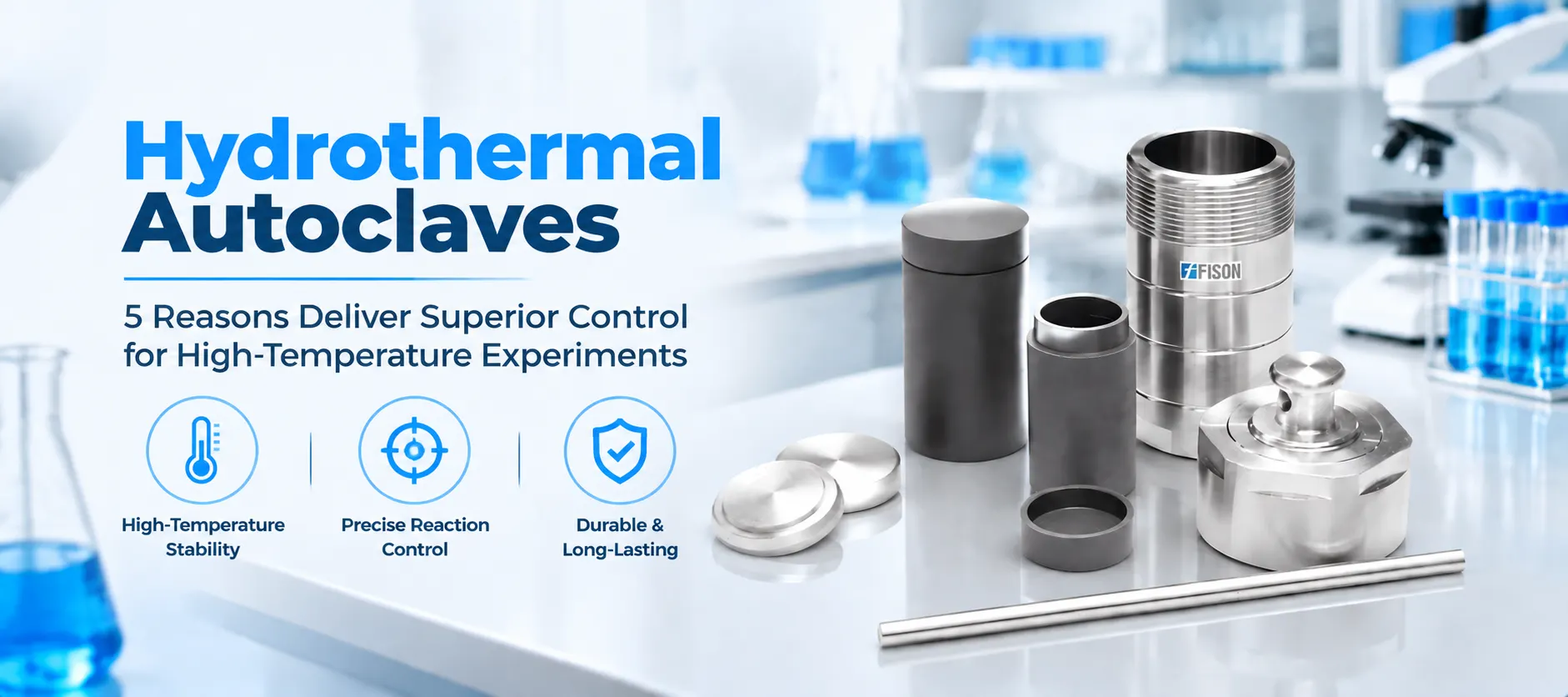
A Hydrothermal Autoclave reactor holds a chemically resistant liner, typically PTFE, inside an outer stainless steel body that provides the mechanical strength to contain pressure safely. The sample and solvent go into the liner first, filled to a set proportion of total volume so there is enough headspace for pressure to build without exceeding the vessel's rated limit.
Liner & Sample Loading
Sealing & Closure
Controlled Heating
Cooling & Recovery
Once sealed, the autoclave reactor goes into an oven or furnace set to the reaction temperature, where the enclosed solvent generates its own autogenous pressure as it heats, without any external pump or compressor. This steady heating stage can run from several hours to several days depending on the crystal or material being formed, after which the vessel cools gradually before the liner is opened and the product recovered. This same hydrothermal synthesis reactor sequence repeats consistently regardless of which material system fills the liner on a given run.
Where the Hydrothermal Autoclave Fits in the Wider Laboratory Autoclave Category
A Hydrothermal Autoclave sits within a broader laboratory autoclave category that spans sterilization units as well as sealed reaction vessels, grouped together by the shared idea of a chamber built to hold elevated pressure. Within this category, researchers comparing Hydrothermal Autoclave equipment typically look at liner material, maximum rated temperature and pressure, and total vessel volume rather than the cycle programming features that apply to sterilization equipment instead.
The full laboratory autoclave range lists these options side by side, and for labs comparing reactor equipment against other laboratory instrument lines, the Fison home page catalogues the wider range available.

Hydrothermal Autoclave Reactors and Sterilization Autoclaves: Two Different Jobs Under One Shared Name
The word autoclave covers two genuinely different pieces of equipment, and keeping them separate avoids confusion during selection. A sterilization autoclave uses a steam cycle to destroy microorganisms on instruments or media, completing a program in well under an hour. A Hydrothermal Autoclave machine instead holds a chemical reaction at temperature for an extended period, with no steam cycle, no biological indicator, and no fast turnaround expectation — its purpose is synthesis, not decontamination.
Reviewing the complete laboratory autoclave category makes this distinction clear at a glance, since sterilization units and reaction vessels are typically listed with different specification sheets even when grouped under the same category page.
Five Research Applications of Hydrothermal Autoclave Reactors
Each Hydrothermal Autoclave application shares the same sealed, high-pressure method used inside a hydrothermal synthesis reactor, adapted to a different material system or research question.
Nanotechnology labs use a Hydrothermal Autoclave reactor machine to grow metal oxide and other nanoparticles with controlled size and shape, adjusting fill volume and hold temperature to steer crystal growth toward a target particle range.
Geology and geochemistry research groups use Hydrothermal Autoclaves to reproduce the temperature and pressure conditions under which certain mineral phases form deep underground, studying reaction pathways that would otherwise take place over geological timescales.
Catalyst and zeolite synthesis groups rely on sealed autoclave reactor vessels to grow the porous crystal structures that give zeolites their selective filtering properties, a process that depends on holding a precise temperature for an extended period.
Crystal growth labs producing quartz or other single crystals for electronics and photonics use larger hydrothermal reactor vessels to sustain slow, controlled growth over days or weeks.
Ceramics and advanced materials researchers use the same sealed-vessel approach to synthesize precursor powders with more uniform particle characteristics than open-vessel methods typically achieve.
This spread of Hydrothermal Autoclave application areas across nanotechnology, geology, catalysis, crystal growth and ceramics research illustrates how much ground a single sealed-vessel design can cover.
Selection Mistakes to Watch For When Choosing a Hydrothermal Autoclave
A handful of recurring missteps show up when evaluating Hydrothermal Autoclave equipment, and most only become clear once a reaction has already failed:
- Overlooking liner chemical compatibility. A PTFE liner resists most acids and bases, but certain solvents and high-fluoride chemistries degrade it faster than expected, so checking compatibility against the actual reaction chemistry matters.
- Ignoring fill volume limits. Exceeding the recommended fill percentage risks pushing internal pressure past the vessel's rated limit at the target temperature.
- Underestimating temperature rating margin. Running repeatedly close to a vessel's maximum rated temperature shortens liner and seal life faster than staying comfortably under it.
- Mismatching vessel size to batch volume. A chamber much larger than the actual sample volume wastes oven space and can heat unevenly compared with a properly sized vessel.
- Skipping seal and gasket inspection. A worn seal compromises the sealed environment a reaction depends on, sometimes with no obvious external sign until a run fails partway through.
Ready to Explore Hydrothermal Autoclave Options?
Liner material, rated pressure and vessel volume all vary across Hydrothermal Autoclave reactor machine options, and matching a Hydrothermal Autoclave machine to the specific reaction system a lab runs matters more than choosing the largest vessel available.
Explore Hydrothermal Autoclave Options