Introduction
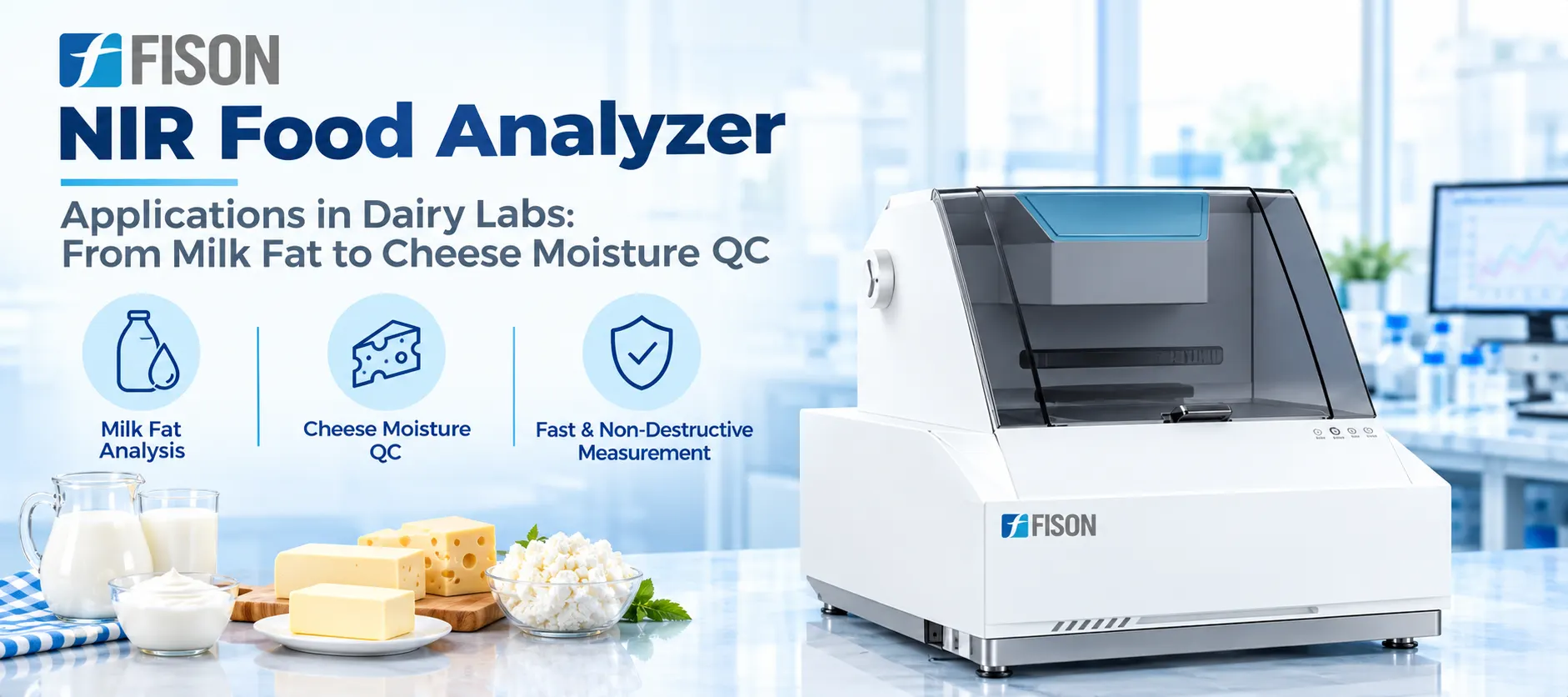
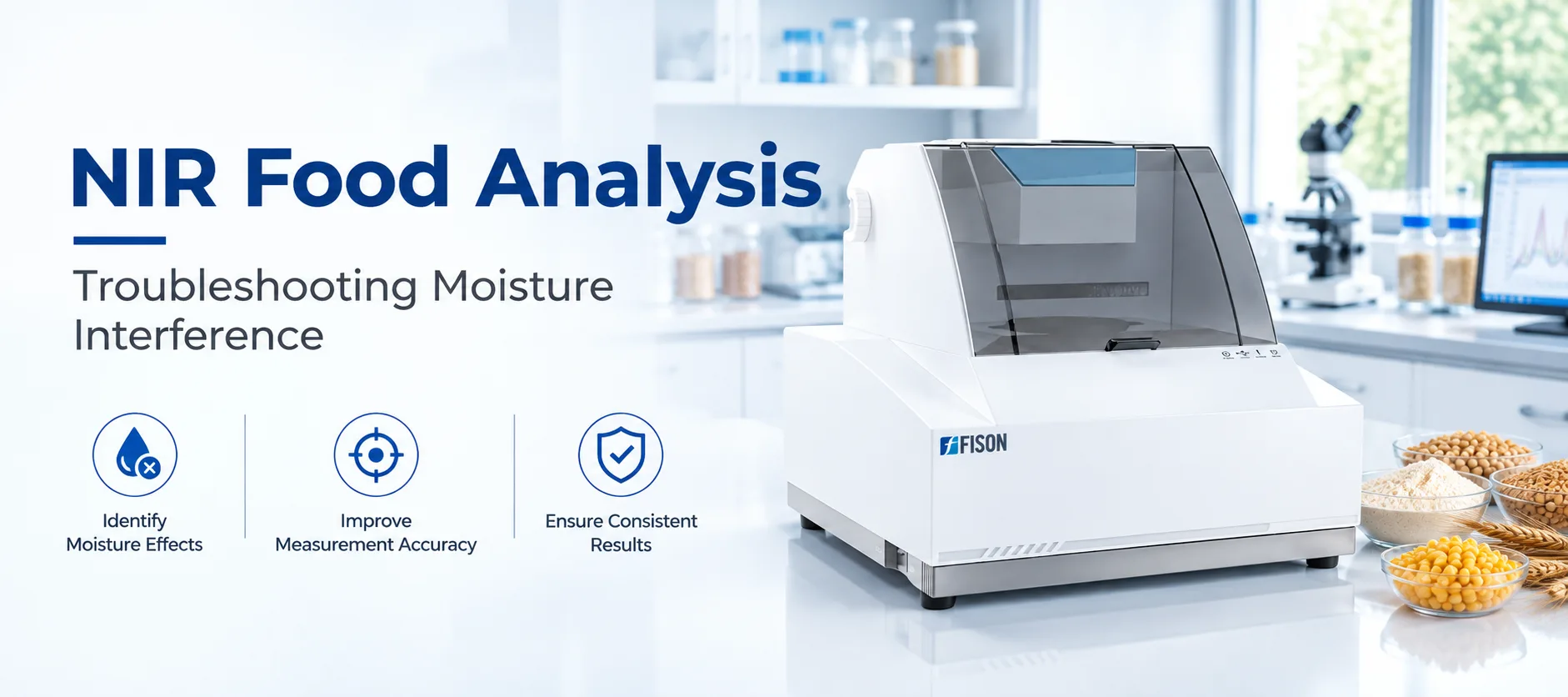
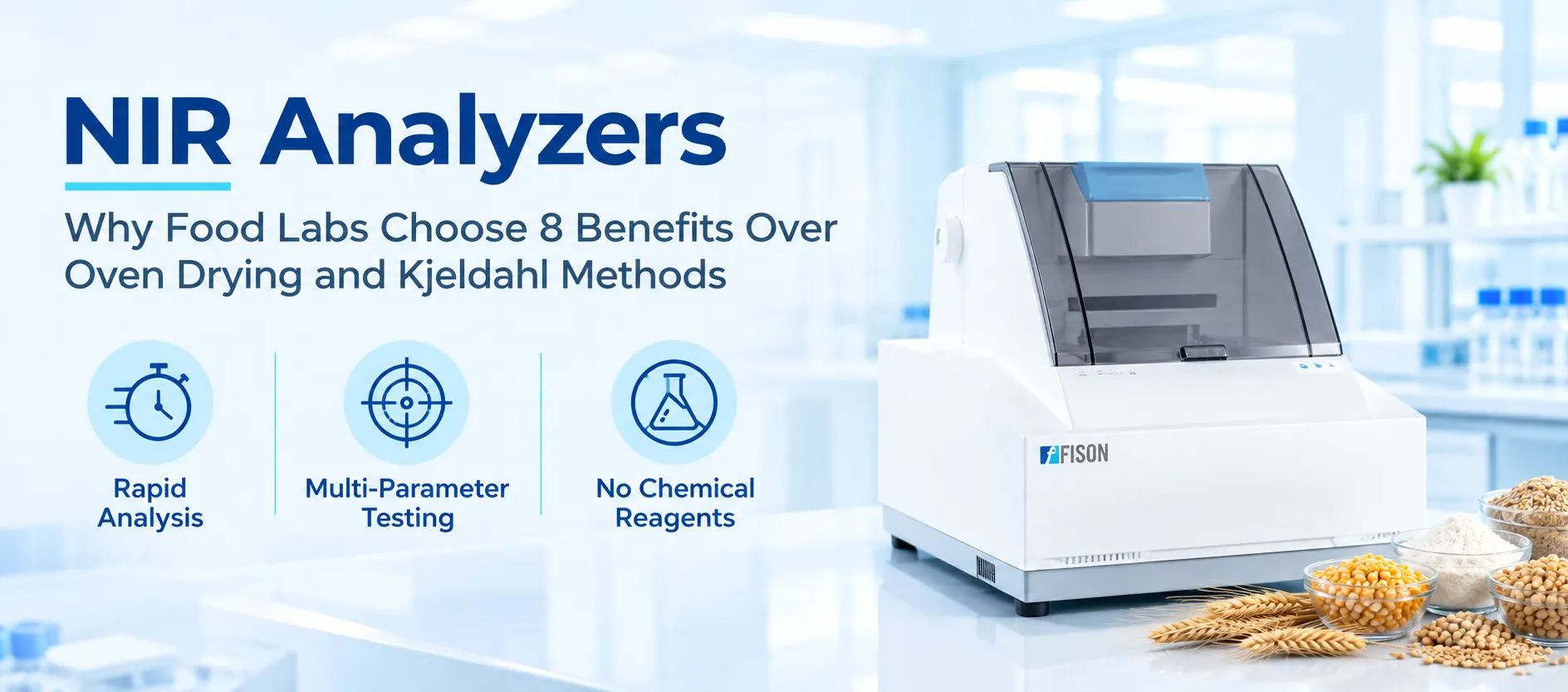
Moisture, fat, and protein results once meant ovens, balances, and acid digestion. A NIR Analyzer reads these values from a light spectrum in a short measurement. This explains how the technique works, where it fits against older methods, and what to check before selecting an instrument.
What Conventional Food Testing Involves
Oven drying estimates moisture by weighing a sample before and after heat removes water. The Kjeldahl method estimates protein through nitrogen: the sample is digested in acid, distilled, and titrated. Both methods are well established, and both depend on careful manual steps, long waiting periods, and chemical handling.
A NIR Analyzer takes a different route. Instead of altering the sample, it directs near infrared light onto it and reads how the sample absorbs that light. One scan can feed moisture, fat, and protein values, which is why food laboratories, hospital nutrition units, and research centres keep adding the technique to their routine.
From Light Absorption to Composition Data
A Near Infrared Analyzer relies on the way molecular bonds absorb light. O–H bonds in water, C–H bonds in fat, and N–H bonds in protein each absorb at characteristic wavelengths. The instrument records the resulting spectrum, and a calibration model converts it into composition values. The Fison NIR-IR-Food Analyzer operates across a wide spectral range, so more of that information reaches the model.
Sample Presentation
The sample is presented to the optics with little or no preparation, which keeps handling short.
Spectral Measurement
Near infrared light interacts with the sample, and a detector records the absorbed and reflected signal.
Calibration Model
Spectra are matched to laboratory reference values, so the model learns to predict them from light alone.
In practice, a NIR Analyzer reads only as well as its calibration, which is why reference methods stay part of the workflow.
Where Spectroscopy Changes Laboratory Routine
Compared with oven drying and Kjeldahl testing, a digital NIR Food Analyzer changes the daily workflow in eight ways.
Rapid Results
A measurement takes moments, against hours for oven drying and a full digestion cycle for Kjeldahl.
Minimal Preparation
Many samples need little more than homogenizing before they are measured.
Non-Destructive Testing
The sample is not consumed, so the same portion can be kept or retested.
Several Parameters at Once
One scan can report moisture, fat, and protein together.
Fewer Chemicals
Acid digestion and titration reagents are not part of the measurement step.
Wide Spectral Range
A broad span of wavelengths captures more compositional detail from each sample.
Repeatable Testing
Repeat scans take little time, which helps check consistency across a batch.
Digital Data Handling
Spectra and results are held as digital data, which simplifies reviewing trends between batches.
Practical Use Cases in the Laboratory
A NIR Food Analyzer for food quality testing suits any setting where composition must be checked quickly and often.
Incoming Material Checks
Grain, flour, and powders can be screened for moisture and protein before they enter production.
Production Monitoring
Dairy, bakery, and meat laboratories follow fat and moisture while a batch is still in progress.
Hospital and Clinical Nutrition
Nutrition units can verify the nutrient content of prepared foods and supplements.
Research and Advanced Labs
Research centres build calibrations, test formulations, and study how composition shifts between samples.
A NIR Food Testing Analyzer for quality control complements reference methods rather than replacing them: reference results build the calibration, and the instrument then handles routine checks. The Fison NIR-IR-Food Analyzer is one example, and laboratories testing other food parameters can review the wider range of food analyzers.
How the Three Methods Differ
| Factor | Oven Drying | Kjeldahl | NIR Analysis |
|---|---|---|---|
| What is measured | Water lost on heating | Nitrogen, converted to protein | Moisture, fat, and protein from a spectrum |
| Time per sample | Hours | Long digestion and titration cycle | Moments |
| Handling | Weighing, heating, cooling | Digestion, distillation, titration | Minimal preparation |
| Chemicals | None, but heat is required | Acid and titration reagents | None in the measurement step |
| Sample afterwards | Altered | Consumed | Retained |
| Dependence on calibration | None | None | Built from reference results |
Common Selection Mistakes to Avoid
Skipping Calibration Scope
Ask which food types and ranges the supplied calibrations cover. A model built for grain will not describe a dairy powder.
Ignoring the Parameter List
Confirm that moisture, fat, protein, or any other value you need is supported before models are weighed against each other.
Overlooking Sample Presentation
Powders, pastes, and granules meet the optics differently. Match the presentation method to what your laboratory actually tests.
Neglecting Data Handling
Check how results and spectra are stored, exported, and reviewed so the instrument fits your laboratory workflow.
Understanding the Food Analyzer Category
NIR instruments belong to a wider group of laboratory instruments that check composition and quality parameters in food samples. Each member of the group uses a different measuring principle, and the choice depends on the parameter and the sample.
Laboratories evaluating options here usually weigh the measuring principle, the parameters covered, sample type, calibration support, and data output. To see how these differ across instruments, explore the full Food Analyzer category. Other laboratory instruments are listed on the Fison home page.
Explore the NIR-IR-Food Analyzer
Review the spectral range and measured parameters on the product page.
Explore NIR-IR-Food Analyzer