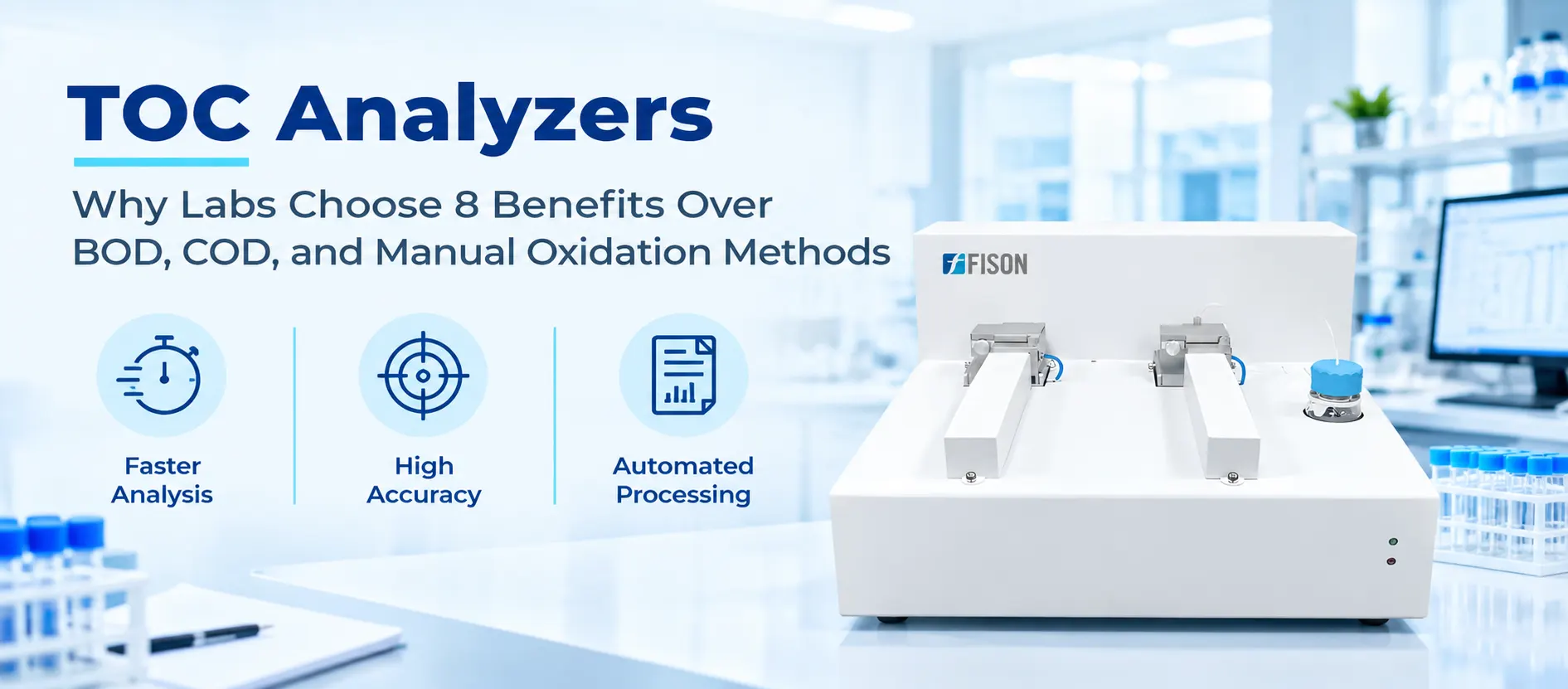
Labs have long estimated organic pollution in water with biochemical oxygen demand (BOD) and chemical oxygen demand (COD) tests. This guide explains how a TOC Analyzer measures organic carbon directly, where it improves on BOD, COD, and manual oxidation methods, and how to match an instrument to your samples.
What Total Organic Carbon Tells a Lab
Organic compounds in water come from many sources, including process residues, biological growth, and wastewater discharge. Rather than testing for each compound separately, TOC Analysis measures the carbon they share, giving a single figure for overall organic load.
Older methods estimate that load indirectly. BOD measures the oxygen microbes consume over several days of incubation, while COD oxidizes the sample with strong chemical reagents under heat and measures how much oxidant is used. Both rely on manual preparation, and neither measures carbon itself.
A TOC Analyzer reports this value by converting organic carbon into carbon dioxide and measuring it. Depending on the model, a total organic carbon analyzer can report several related parameters: total carbon (TC), total inorganic carbon (TIC), total organic carbon (TOC), and non-purgeable organic carbon (NPOC). In a TOC analyzer laboratory, these parameters together show where the carbon in a sample comes from.
Oxidation and Detection: The Core of TOC Measurement
The TOC Analyzer working principle follows two stages. First, the instrument oxidizes organic carbon in the sample into carbon dioxide. Second, a detector measures that carbon dioxide and converts it into a TOC value. For NPOC testing, the TOC Analyzer first adds acid and purges the sample with gas to remove inorganic carbon before oxidation.
UV Wet Oxidation
Ultraviolet digestion breaks down organic carbon in liquid samples, and a non-dispersive infrared (NDIR) detector measures the resulting carbon dioxide.
UV Catalytic Oxidation
A catalyst assists ultraviolet oxidation, and conductometric detection reads the change in conductivity as carbon dioxide forms. This suits very low carbon levels in clean water.
High-Temperature Combustion
The sample burns over a heated catalyst, converting carbon fully into carbon dioxide for NDIR detection. This approach handles solid samples and difficult matrices.
Where Direct Carbon Measurement Pulls Ahead
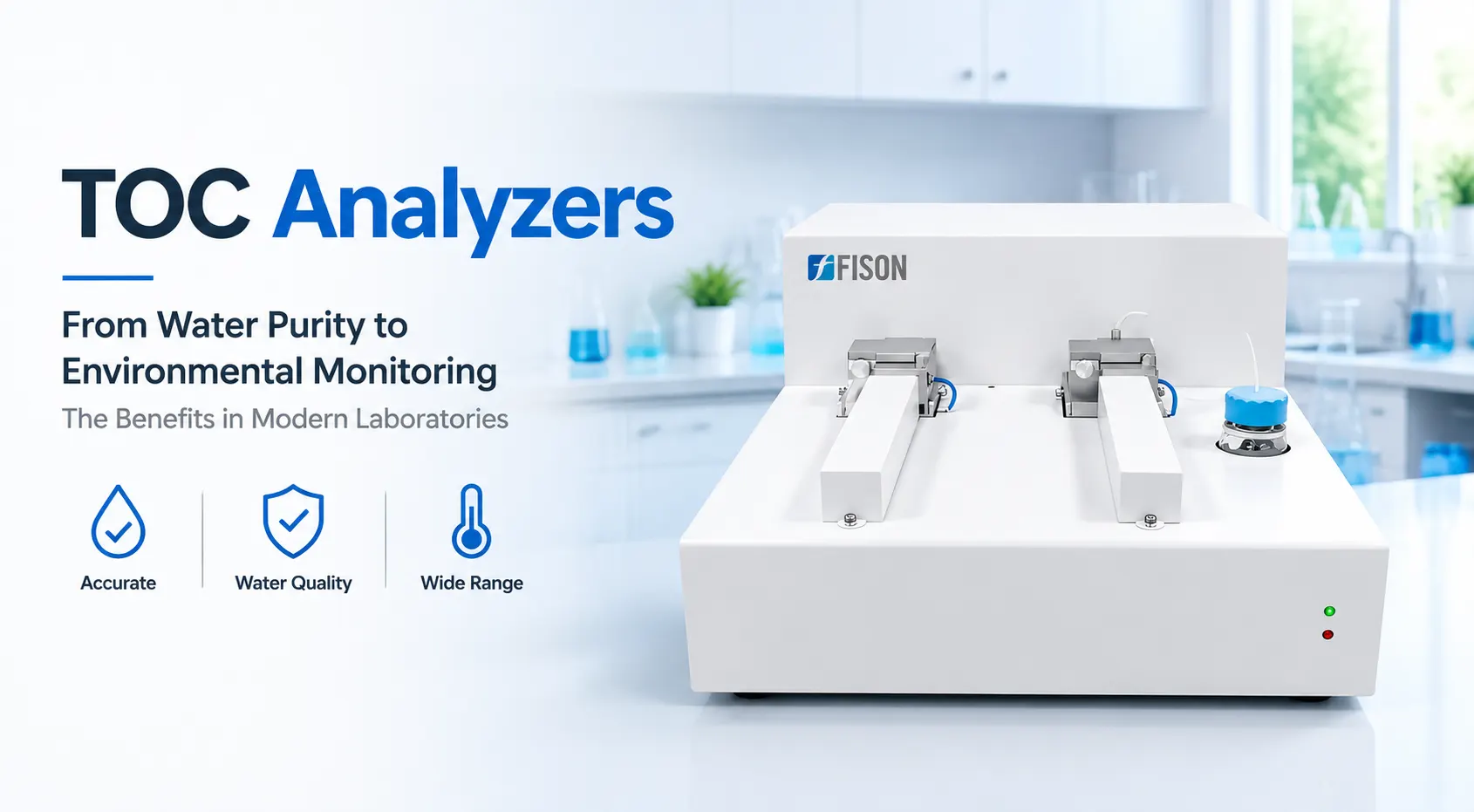
Compared with BOD, COD, and manual oxidation methods, dedicated TOC analyzer equipment changes routine water quality testing in these ways.
Results Within Minutes
BOD results take days of incubation. A TOC Analyzer completes a single detection within minutes, so decisions do not wait.
Trace-Level Detection
Detection limits reach the parts-per-billion level, suited to purified water and microelectronics water testing.
Several Carbon Parameters
Instead of an oxygen-based estimate, models measuring TC, TIC, TOC, and NPOC show how organic and inorganic carbon each contribute.
Wide Measuring Range
Automatic dilution extends the range of a TOC analyzer instrument, covering clean water and highly loaded samples alike.
Autosampler Batches
A TOC Analyzer autosampler queues multiple samples with a cleaning position, replacing the manual handling that BOD and COD batches need.
Portable Field Checks
A portable TOC Analyzer with a lightweight body supports off-site assessments as well as bench work.
Reagent-Free Options
COD digestion relies on strong chemical oxidants. Some TOC models run without gas or reagents, simplifying lab consumables.
Records and Audit Trail
On-board storage, USB export, printing, and optional audit trail software support documented pharmaceutical validation.
Practical Use Cases Across Industries
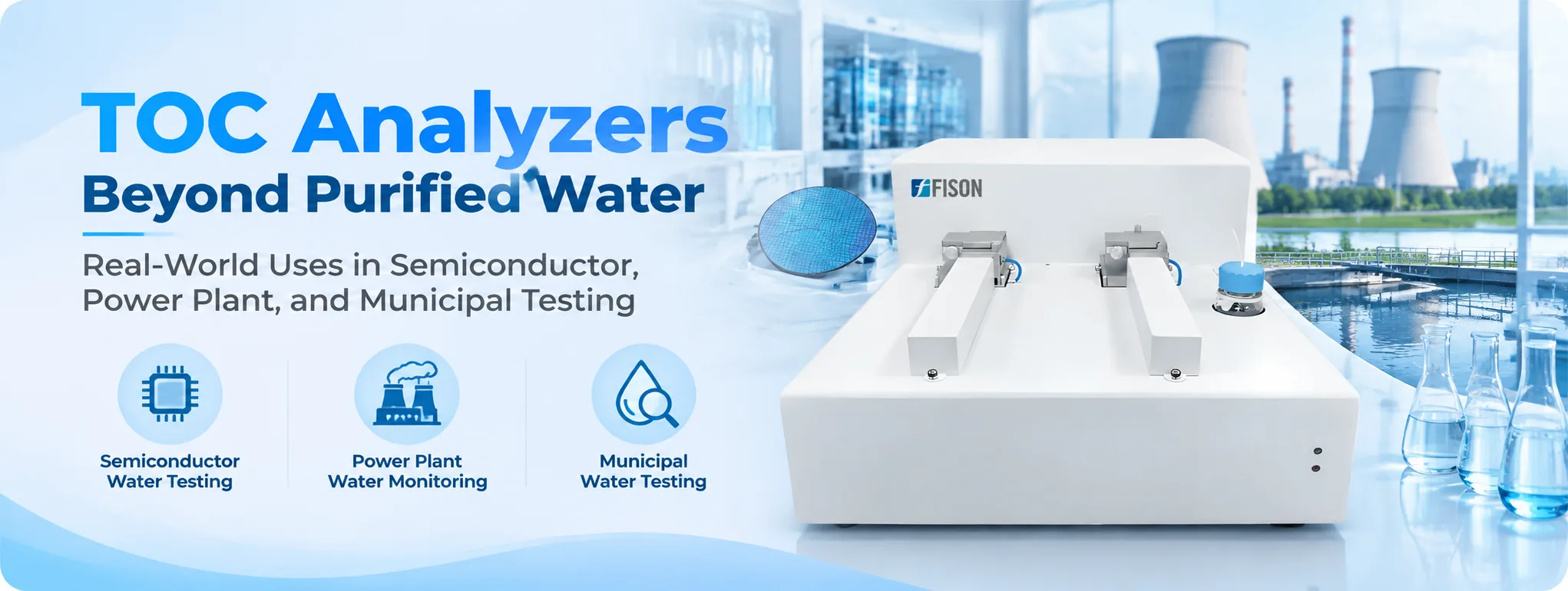
Key TOC Analyzer uses include quality control testing of drinking water, wastewater, and industrial water, along with pharmaceutical validation. The application decides which configuration fits.
Pharmaceutical Water
Pharmaceutical labs test purified water and water for injection, where a TOC Analyzer confirms low organic carbon during pharmaceutical validation.
Electronics and Industrial Water
Microelectronics plants and industrial water systems use trace-level TOC analysis to watch for organic contamination.
Drinking Water and Wastewater
Environmental monitoring programs check drinking water, waste and sewage water, and treatment stages for organic load.
Food and Research Labs
Food and beverage safety testing and research laboratories use a TOC Analyzer to track carbon content across varied sample types.
Some catalogs call a compact unit a TOC meter, while larger benchtop systems are listed as a total organic carbon analyzer. Whatever the label, compare the oxidation method, detector, and sample type it supports. The range of TOC Analyzers shows how these configurations differ.
TOC Analysis Compared with BOD and COD
| Factor | BOD Test | COD Test | TOC Analyzer |
|---|---|---|---|
| What is measured | Oxygen used by microbes | Oxygen equivalent of chemical oxidation | Carbon converted to carbon dioxide |
| Time to result | Several days | Hours, including digestion | Minutes |
| Reagents | Seed microbes and dilution water | Strong oxidants and acid | Reagent-free options on some models |
| Sample handling | Manual setup and incubation | Manual digestion | Autosampler and automatic dilution options |
| Trace-level testing | Not suited | Limited | Parts-per-billion detection |
Common Selection Mistakes to Avoid
Ignoring the Sample Matrix
UV methods suit liquid and clean water samples, while solid samples need high-temperature combustion. Start with what your lab actually tests.
Choosing the Wrong Parameter Set
Some models report TOC alone, while others add TC, TIC, and NPOC. Samples with high inorganic carbon need a TOC Analyzer that can separate it.
Mismatching the Measuring Range
Trace-level models target purified water, while wide-range models handle wastewater. A range that is too narrow or too broad weakens results.
Overlooking Data Requirements
Pharmaceutical validation work needs documented results. Check for audit trail software, USB export, and printing before committing.
Exploring the TOC Analyzer Category
The category covers offline benchtop systems, online monitoring models, and portable units, with ranges stretching from trace parts-per-billion levels to high concentrations. Labs comparing options usually weigh oxidation method, detector type, measuring range, sample type, online or offline use, and autosampler support.
Whether you need a portable TOC Analyzer for field checks or a combustion system for solid samples, you can explore the full TOC Analyzer lineup to compare configurations, or browse other laboratory instruments on the Fison home page.
Compare TOC Analyzer Configurations
Review oxidation methods, detectors, and measuring ranges in one place.
Explore TOC Analyzers