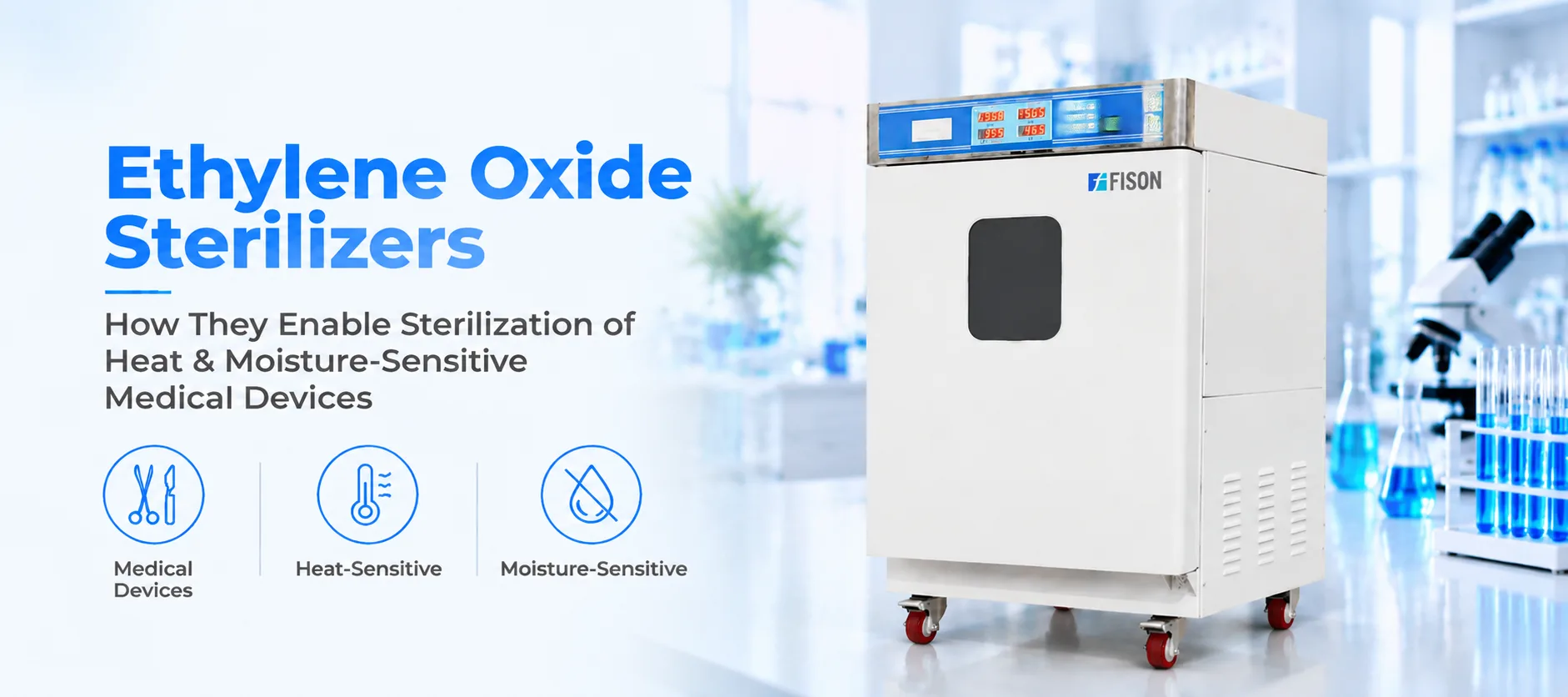
Laboratories, hospitals, research centres and advanced facilities that process heat- and moisture-sensitive devices often choose between several low-temperature gas-based methods, each with its own trade-offs in cycle time, material compatibility and how deeply the sterilant actually reaches. An Fison Ethylene Oxide Sterilizer remains a reference point for penetration depth, and this article looks at why that advantage holds up against newer low-temperature alternatives.
Why Penetration Depth Still Matters for Low-Temperature Sterilization
A sterilization method that works well on open trays does not always perform the same way once a device has long, narrow lumens or several layers of packaging between the sterilant and the surface that needs treatment. EO sterilization depends on gas concentration, humidity, temperature and exposure time working together consistently within a sealed chamber, and that combination is part of why an Ethylene Oxide Sterilizer continues to handle geometries that some newer low-temperature alternatives struggle to reach fully.
Facilities weighing an Ethylene Oxide Sterilizer against a plasma-based alternative typically find that device geometry, not cycle speed alone, ends up deciding which method actually gets used for a given instrument set. An EO gas sterilizer earns its place specifically where that geometry rules a faster method out.
How Ethylene Oxide Gas Completes a Sterilization Cycle
Ethylene Oxide Gas Sterilization relies on a small, highly diffusive molecule that spreads through packaging and device lumens more thoroughly than larger sterilant molecules can manage in the same exposure window. The stages below outline how a typical cycle moves from a loaded chamber to a finished, aerated load.
Preconditioning & Humidification
Gas Exposure
Aeration & Venting
Exhaust & Unload
Inside the ethylene oxide sterilization chamber, gas concentration builds gradually rather than all at once, which protects sensitive packaging from pressure shock while still letting the gas diffuse fully through dense or multi-layer loads. Once the exposure phase ends, an extended aeration step clears residual gas from packaging and lumens before the load is considered safe to handle, and this aeration time is usually the single longest stage in the entire process.

Where the Ethylene Oxide Sterilizer Sits Within Fison's Sterilizer Range
An Ethylene Oxide Sterilizer belongs to a broader sterilizer category that also includes steam, dry heat and low-temperature plasma systems, each suited to a different combination of material, geometry and turnaround expectation. Within this category, facilities typically compare cycle time, aeration infrastructure, packaging compatibility and penetration depth before deciding which technologies to keep available side by side. An Ethylene Oxide Sterilizer machine built for research and hospital use typically includes automated aeration tracking built directly into the cycle, which removes a manual timing step from daily operation. Choosing an ETO sterilizer machine with this kind of automated logging also makes cycle records easier to retrieve when a facility needs to document a completed run.
The full sterilizer range lists these technologies together for direct comparison, and the Fison home page catalogues the wider set of laboratory and hospital equipment each one belongs to. Documenting the ethylene oxide sterilization process alongside these alternatives helps a facility see where each technology actually fits.
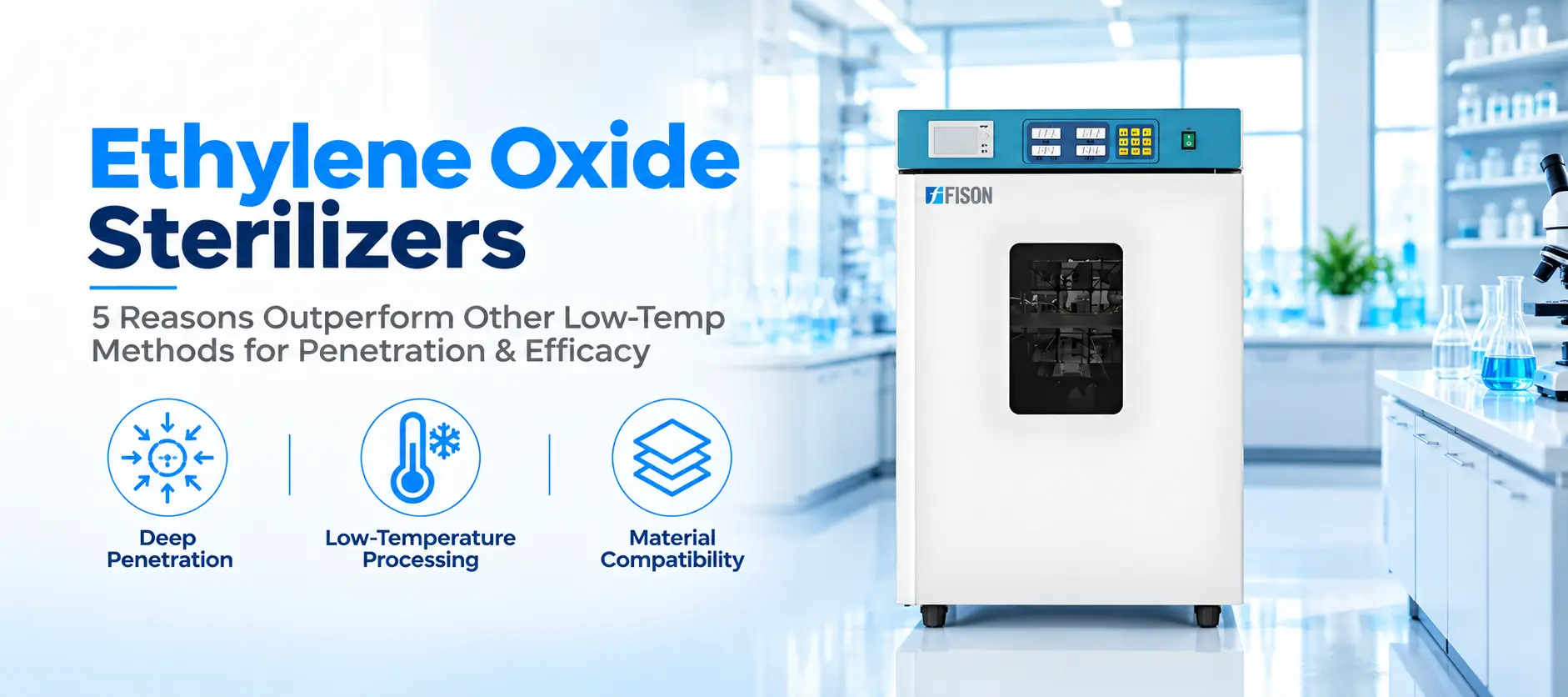
Five Reasons Ethylene Oxide Sterilizers Outperform Other Low-Temp Methods
A small, highly diffusive gas molecule that reaches long, narrow lumens some plasma-based alternatives cannot fully penetrate within a single cycle, which is part of why ethylene oxide gas sterilization remains a reference point for devices with this kind of geometry.
Compatibility with a wider range of plastics, adhesives and multi-layer packaging materials, including some that absorb or react with alternative sterilants.
Consistent diffusion through densely packed or tightly wrapped loads, since the gas spreads through porous materials rather than requiring direct line of exposure.
An established track record across decades of device compatibility data, giving manufacturers a documented basis for sterilant selection on complex instruments.
Effective sterilization at ambient-range temperature, which protects heat-sensitive components that a higher-temperature method would risk damaging. An Ethylene Oxide Sterilizer machine built around these five advantages still needs the aeration infrastructure to back them up.
Where Laboratories, Hospitals, Research Centres and Advanced Labs Rely on Ethylene Oxide Sterilization
Ethylene Oxide sterilization uses continue to concentrate around devices where penetration depth and material compatibility outweigh the benefit of a shorter cycle. Each Ethylene Oxide Sterilizer application shares the same gas-diffusion method, adapted to a different device geometry rather than a different technology. Reviewing the full sterilizer category alongside a facility's device mix is a practical way to see which portion of a caseload still needs this level of penetration.
Laboratories sterilizing multi-layer packaged supplies rely on the gas's diffusion through porous materials rather than needing each item unwrapped individually.
Hospitals processing catheters and other long-lumen devices depend on penetration depth that some plasma-based cycles cannot match for the same geometry.
Research centres working with heat-sensitive polymer components favor the ambient-range cycle temperature over methods that run hotter.
Advanced labs handling complex, multi-material assemblies use the established compatibility data to avoid guessing at sterilant suitability.
This spread of ethylene oxide sterilization uses reflects how differently laboratories, hospitals, research centres and advanced labs weigh penetration depth against cycle speed for their own device mix. Each new Ethylene Oxide Sterilizer application tends to follow the same underlying diffusion principle, adapted to a different daily caseload instead of a different piece of equipment.
Selection Mistakes to Watch For When Operating an Ethylene Oxide Sterilizer
A handful of recurring missteps show up around Ethylene Oxide Sterilizer operators, and most only become clear once a cycle has already run into a problem:
- Underestimating required aeration time. Cutting aeration short to speed up turnaround can leave residual gas in packaging that has not yet cleared to a safe level, and an EO gas sterilizer run this way creates a real handling risk once the cycle ends.
- Overlooking ventilation and gas monitoring infrastructure. A dedicated aeration room and gas detection setup are not optional extras for an Ethylene Oxide Sterilizer, and skipping them creates a real exposure risk.
- Choosing incompatible packaging materials. Not all wrap and pouch materials allow the same gas diffusion and aeration behavior, and the wrong choice can trap residual gas.
- Skipping operator training on gas handling procedures. Ethylene Oxide Sterilizer operators who skip a full ventilation check before a cycle risk exposure incidents that a properly monitored system would otherwise catch early.
- Misjudging load density for the chamber size. An overpacked ethylene oxide sterilization chamber can block gas circulation to items in the centre of the load, undermining the penetration advantage an Ethylene Oxide Sterilizer is chosen for.
Compare Ethylene Oxide Sterilization Against Your Current Setup
Penetration depth, aeration infrastructure and packaging compatibility all vary between an Ethylene Oxide Sterilizer and a low-temperature alternative, and matching these to a facility's actual device mix matters more than choosing based on cycle speed alone. Comparing EO sterilization against a plasma-based alternative for a specific device geometry is often the deciding factor, and an ETO sterilizer machine chosen today may still need revisiting as device design changes. Documenting the ethylene oxide sterilization process alongside a facility's device geometry makes this comparison easier the next time equipment options are reviewed.
Explore Ethylene Oxide Sterilizer Options