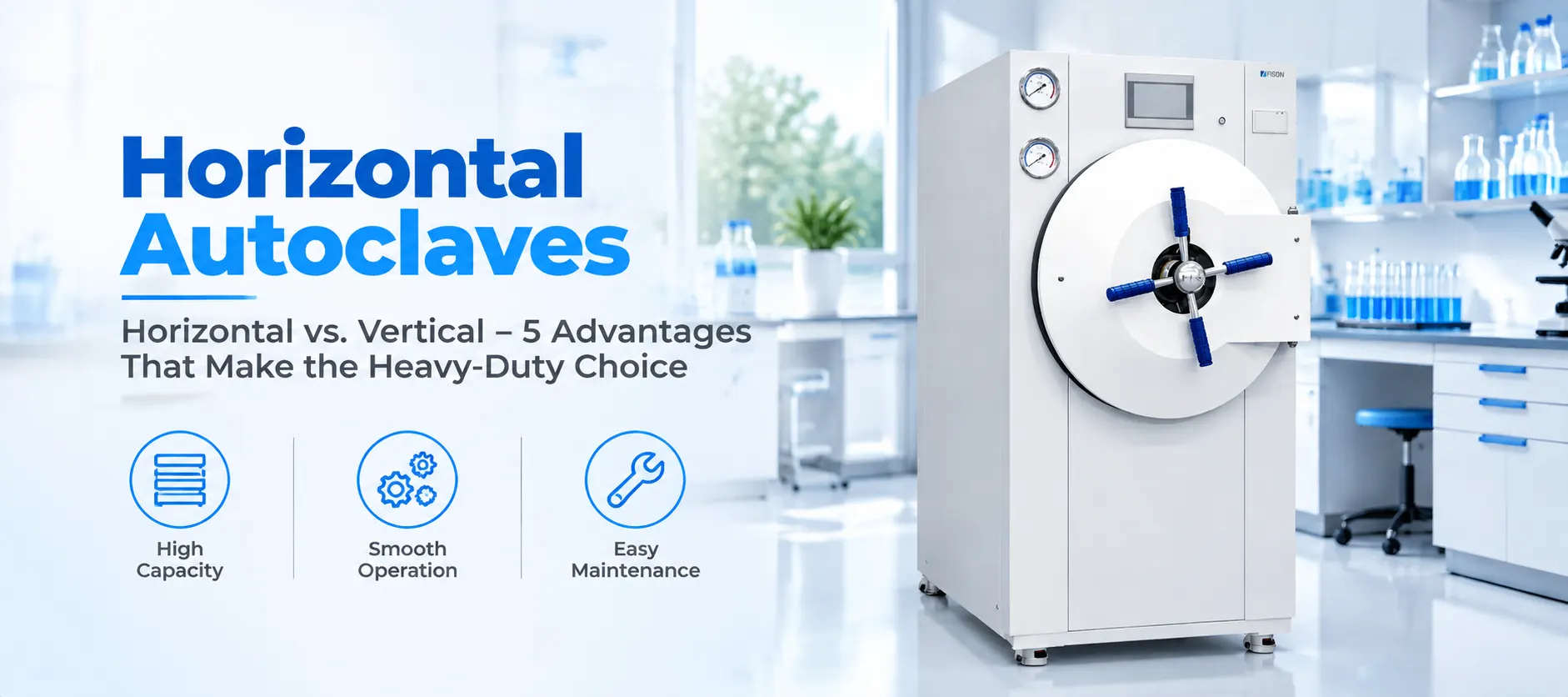
Laboratories, hospitals, research centres and advanced facilities moving dense, mixed or high-volume loads through a sterilization cycle each day often find that a Fison Horizontal Autoclave handles the workload with less manual effort than a vertical chamber of similar capacity. This article compares the two chamber orientations directly, walks through how a horizontal autoclave completes a cycle, and flags what to check before choosing one.
Why Chamber Orientation Shapes How Well an Autoclave Handles Heavy-Duty Work
Chamber orientation is one of the first decisions a facility makes when specifying sterilization equipment, and it affects far more than floor plan alone. How a load enters the chamber, how evenly steam reaches a dense or mixed batch, and how much physical effort staff spend loading and unloading each cycle all trace back to whether a unit stands upright or lies on its side.
For facilities running frequent, high-volume batches, this orientation choice becomes a daily operational factor rather than a one-time installation detail, which is why comparing the two formats directly, rather than evaluating a Horizontal Autoclave machine in isolation, gives a clearer picture of which option actually fits a given workload. A Horizontal Autoclave installed without factoring in daily batch flow can end up either underused or a bottleneck, which is why the orientation decision deserves the same scrutiny as any other equipment specification.
Horizontal Autoclave Principle: How a Side-Loading Chamber Handles Dense, Mixed Loads
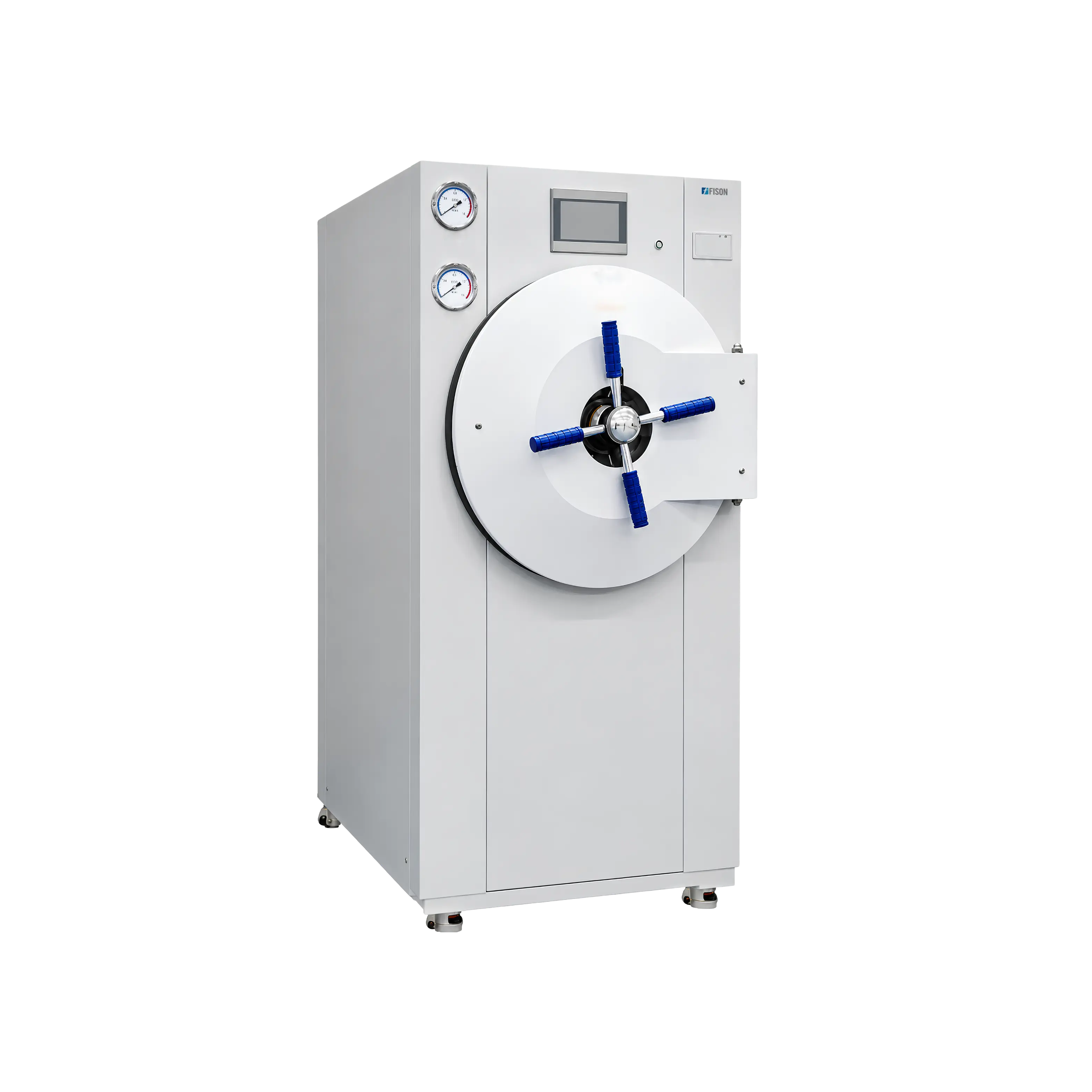
A horizontal cylindrical pressure steam sterilizer uses a chamber laid on its side, a shape that lets racks or carts slide straight in at working height rather than requiring an overhead lift, which matters once a load reaches a substantial weight, and the same layout lets a Horizontal Autoclave accept a fully loaded cart without repositioning it partway through loading. This horizontal steam sterilizer autoclave layout also opens a wider door relative to the chamber's cross-section than a comparable vertical unit manages, a detail that becomes noticeable the first time a Horizontal Autoclave takes on a genuinely oversized cart.
Side-Loading Rack
Steam Penetration
Pressure Equalization Hold
Cool-Down & Cart Removal
A dense, mixed load can trap air pockets that a single steam pulse might not reach, so many cycles pull air from the chamber through a series of vacuum and pressure steps before the main sterilization hold begins. This same horizontal cylindrical pressure steam sterilizer sequence repeats consistently regardless of what fills the chamber on a given run, which keeps cycle outcomes predictable even as load composition changes from one run to the next. A horizontal cylindrical sterilizer built this way holds up well across repeated daily cycles without needing operators to adjust the sequence for each new load type. Understanding this sequence in detail helps a facility set realistic expectations for how quickly a Horizontal Autoclave can turn over a full day's caseload.
Positioning the Horizontal Autoclave Within Fison's Laboratory Autoclave Range
A horizontal autoclave sits alongside vertical and benchtop chamber formats within a wider laboratory autoclave category, all built around the same steam sterilization goal but suited to different batch sizes, floor layouts and loading routines. Within this category, teams typically compare chamber orientation, door mechanism, rail or cart hardware and how a Horizontal autoclave fits an existing sterile processing workflow.
The complete laboratory autoclave range lays out these formats side by side for direct comparison, and for facilities weighing sterilization equipment against other laboratory instrument categories, the Fison home page catalogues the wider range available. A horizontal laboratory autoclave selected for one department often ends up shared informally across a building once colleagues in adjoining labs learn about its larger batch capacity. Choosing a Horizontal Autoclave from within this category still means confirming that chamber length, door style and cart compatibility match a facility's existing workflow, not just its stated capacity figures.

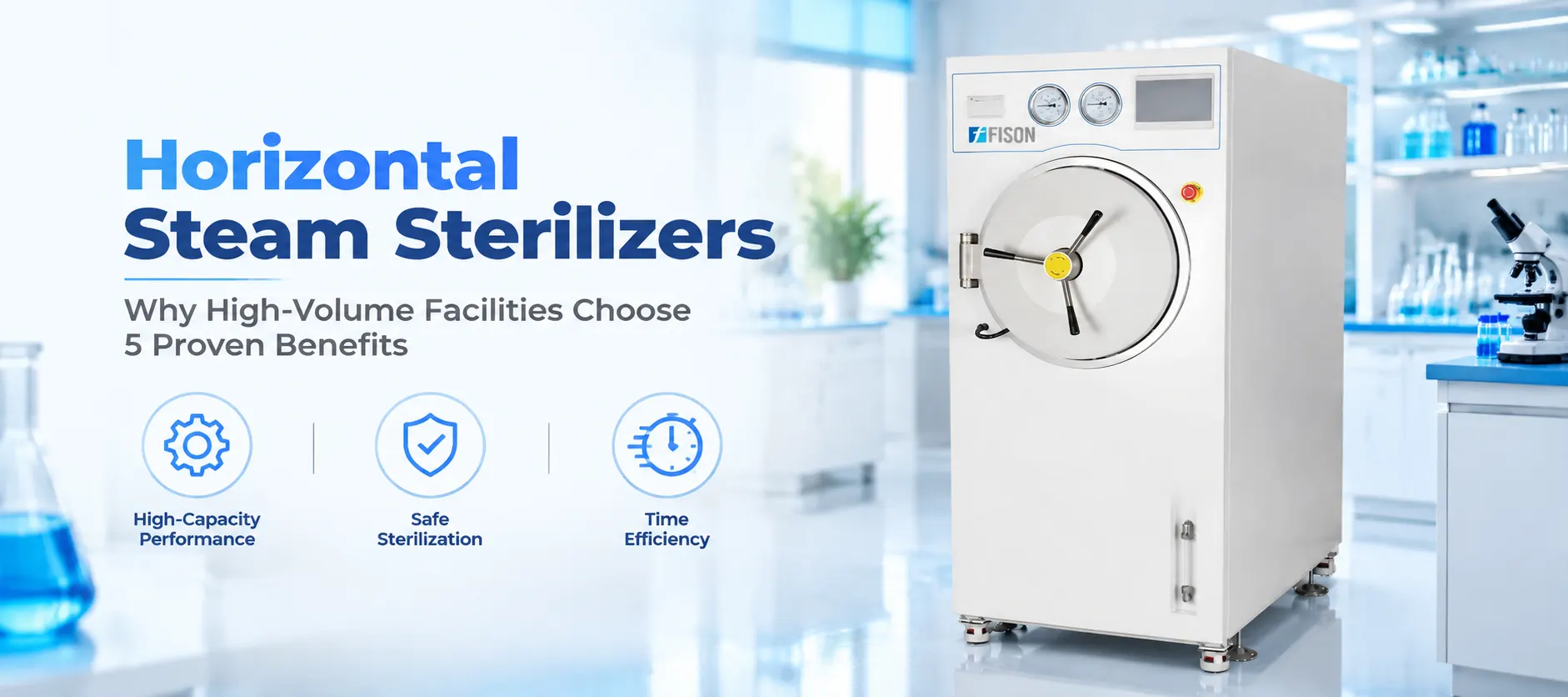
Five Advantages a Horizontal Autoclave Holds Over a Vertical Chamber for Heavy-Duty Loads
A vertical chamber suits smaller, lighter batches well, but once daily volume or load weight climbs, several practical differences start to favor a Horizontal Autoclave:
Larger usable batch capacity per cycle, since a horizontal cylindrical sterilizer can extend chamber length without adding overhead height, letting a single run process more trays or containers than a comparably sized vertical unit.
Cart and rail loading that keeps heavy racks at working height, reducing the lifting a vertical chamber's top-loading design otherwise demands from staff moving a full load in and out several times a day.
A wider door opening relative to floor space, which speeds up loading and unloading when a facility is turning over carts between back-to-back cycles rather than running one batch at a time, an advantage that adds up across each cart a Horizontal Autoclave turns over during a shift.
Better handling of dense, mixed loads through multi-pulse vacuum and pressure sequencing, a Horizontal Autoclave uses this approach to reach air pockets that a single-pulse cycle common on smaller vertical units can miss.
Easier integration into a production-line or multi-shift workflow, since a horizontal laboratory autoclave positioned inline with cart traffic avoids the repeated repositioning a standalone vertical unit often requires. This same Horizontal Autoclave placement also shortens the walking distance staff cover between stations during a full shift.
How Batch Loading Design Shapes Horizontal Autoclave Capacity in Practice
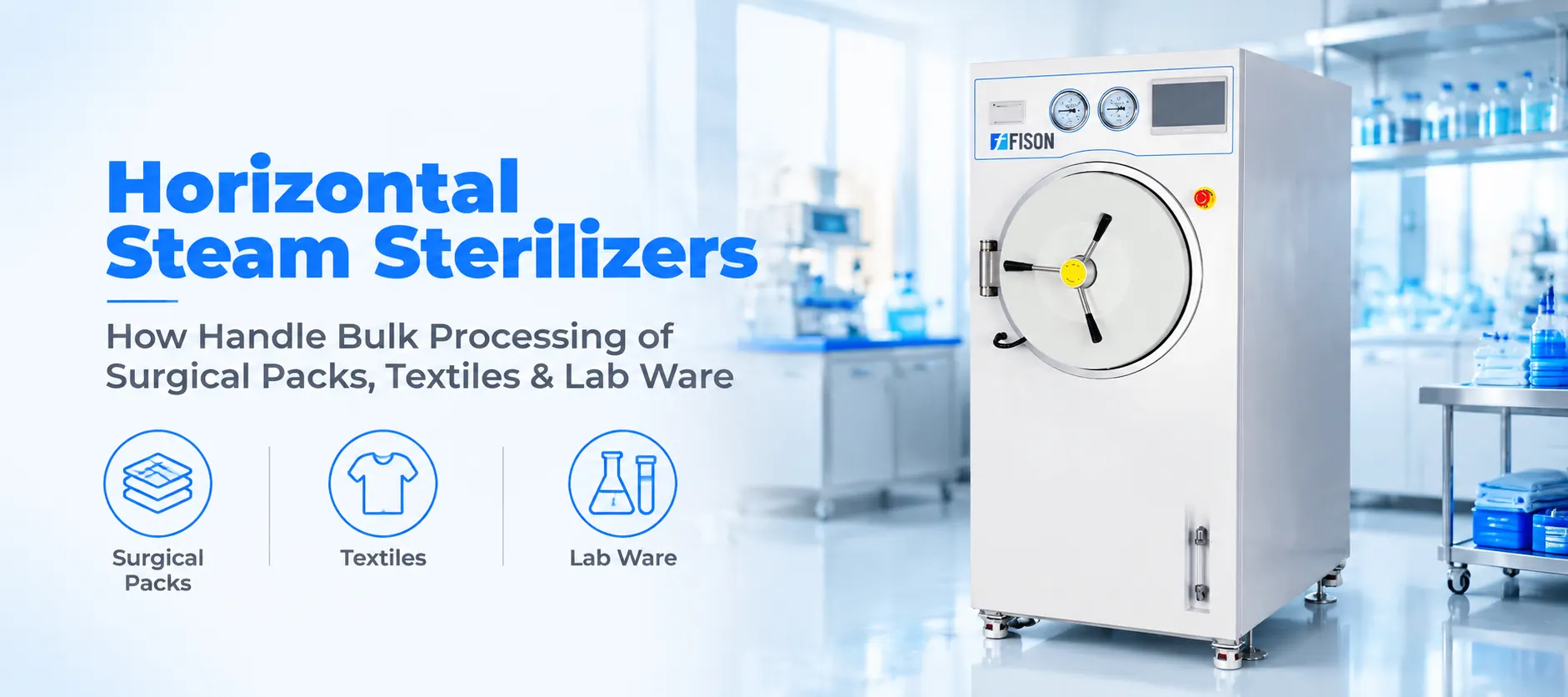
Horizontal Autoclave capacity is typically expressed in chamber volume or the number of common tray sizes a load can hold per cycle, with larger units built for facilities running frequent, high-volume batches rather than occasional small loads. A Horizontal Aautoclave machine fitted with a rail or cart system cuts down on manual handling when moving a heavy, fully loaded rack in and out of the chamber several times in a working day. Reviewing these figures for a Horizontal Autoclave against actual daily tray counts, rather than a nameplate maximum, gives a more accurate picture of everyday throughput.
Facilities comparing chamber diameter, depth and loading hardware can review the full laboratory autoclave lineup before settling on a Horizontal Autoclave capacity that matches actual batch volume, rather than a worst-case estimate, so a horizontal steam sterilizer autoclave keeps running full loads consistently instead of cycling partial batches just to keep pace with demand.
Where Laboratories, Hospitals, Research Centres and Advanced Labs Feel the Difference
Each Horizontal Autoclave application shares the same large-batch steam cycle, adapted to a different facility type and daily schedule. The advantages above translate into concrete daily differences across the settings that rely on heavy-duty sterilization most, and the range of Horizontal Autoclave uses across these settings shares the same core cycle, adapted to a different batch type and schedule in each case:
Multi-disciplinary teaching and research laboratories sharing one instrument across several groups benefit from the larger, faster-turning batches a horizontal sterilizer supports during peak lab hours.
Hospital sterile processing departments moving full carts of surgical trays between operating room schedules rely on cart-height loading to keep staff handling time down between cases.
Research centres coordinating biosafety decontamination across multiple labs in one building use bulk-batch cycles to process shared waste streams without a separate run for each group.
Advanced analytical and production-support labs running continuous shifts depend on inline horizontal placement to keep sterilized materials moving without repeated cart repositioning.
This spread of Horizontal Autoclave application areas extends from teaching labs to round-the-clock production support, which is part of why the format remains the default choice once daily batch volume climbs.
Selection Mistakes to Watch For When Weighing Horizontal Against Vertical
A handful of recurring missteps show up during evaluation, and most only become clear once a horizontal sterilizer is already in routine use:
- Assuming a larger horizontal autoclave always outperforms a vertical one. A facility running small, infrequent batches may find a vertical unit's smaller footprint and faster cold-start time a better match than a chamber sized for volume it rarely reaches.
- Overlooking cart and rail maintenance needs. The rail or cart hardware that makes a Horizontal Autoclave easier to load also needs periodic lubrication and alignment checks to keep heavy loads moving smoothly.
- Ignoring operator training for cart-based loading. Staff accustomed to a top-loading vertical unit may need a short adjustment period to load and position a horizontal rack correctly.
- Underestimating floor loading and door swing clearance. A Horizontal Autoclave's wider door and longer chamber footprint need adequate clearance that some existing room layouts cannot easily accommodate.
- Mismatching cycle programming to load density. A cycle tuned for lightly packed trays can leave the center of a dense, mixed batch under-processed if pulse settings are not adjusted accordingly.
Decide Between Horizontal and Vertical Sterilization for Your Facility
Batch volume, load density and daily cart traffic all point toward which chamber orientation suits a facility most closely, and reviewing a Horizontal Autoclave machine lineup alongside vertical alternatives helps match the decision to actual daily workload rather than a rough estimate. Matching that decision to how a Horizontal Autoclave will actually be used day to day supports smoother operation well beyond the installation date.
Explore Horizontal Autoclave Options