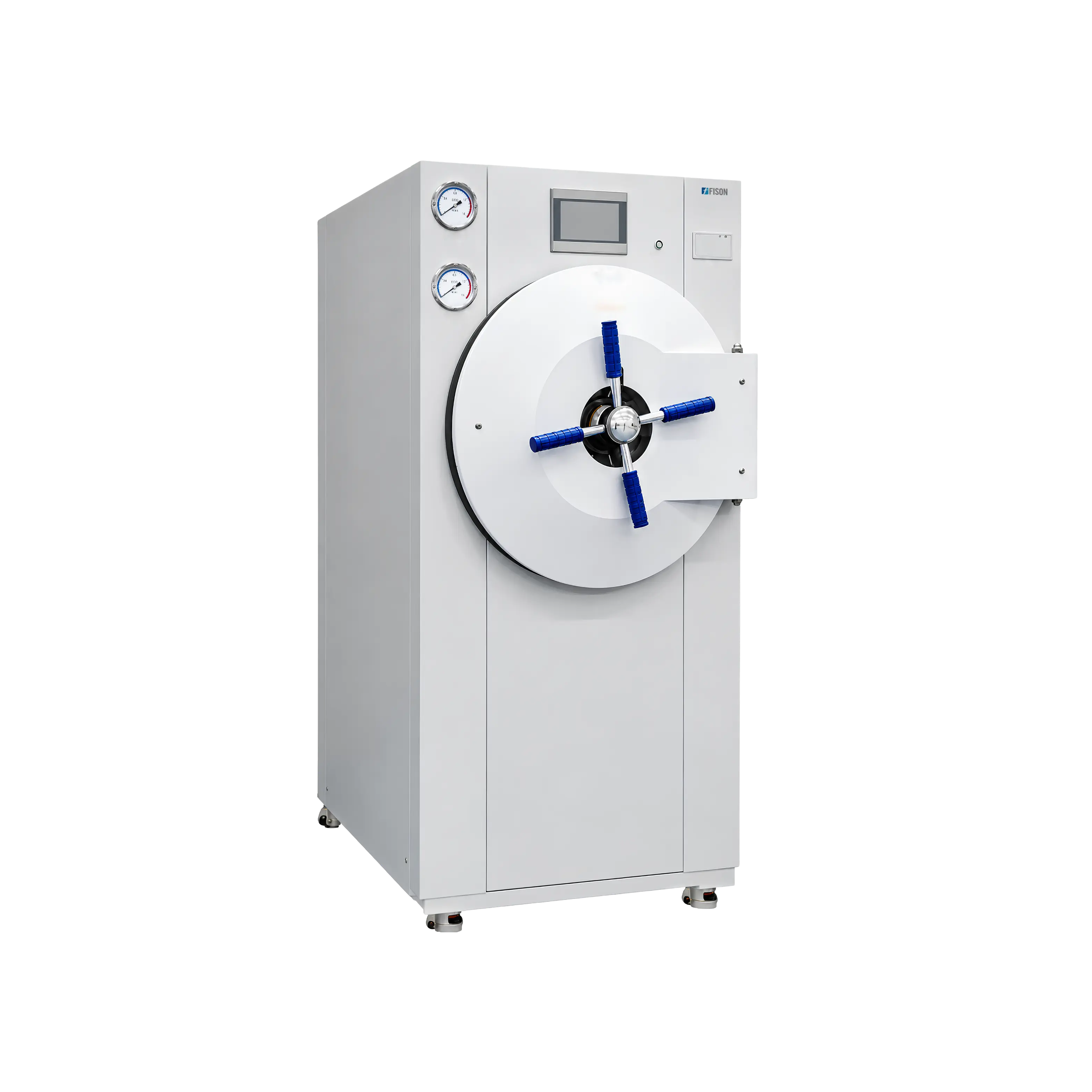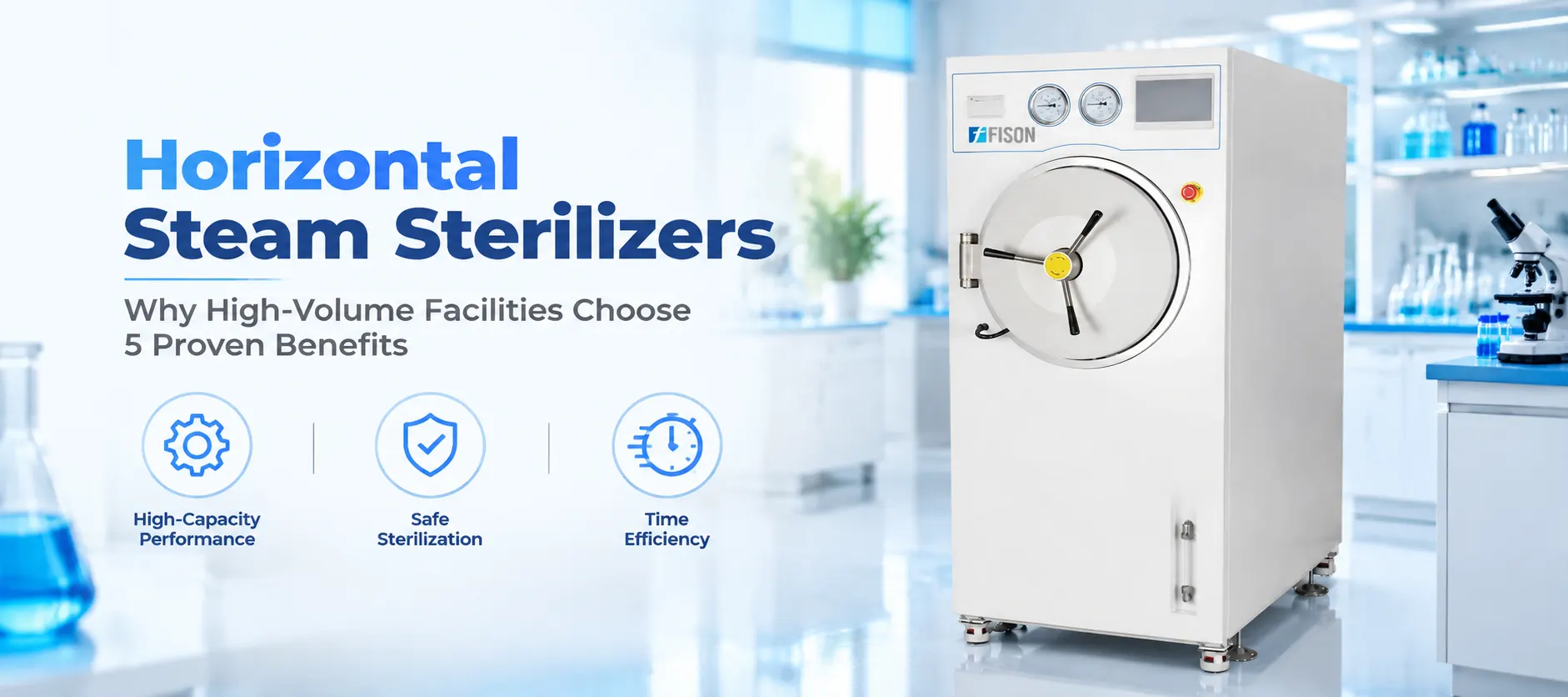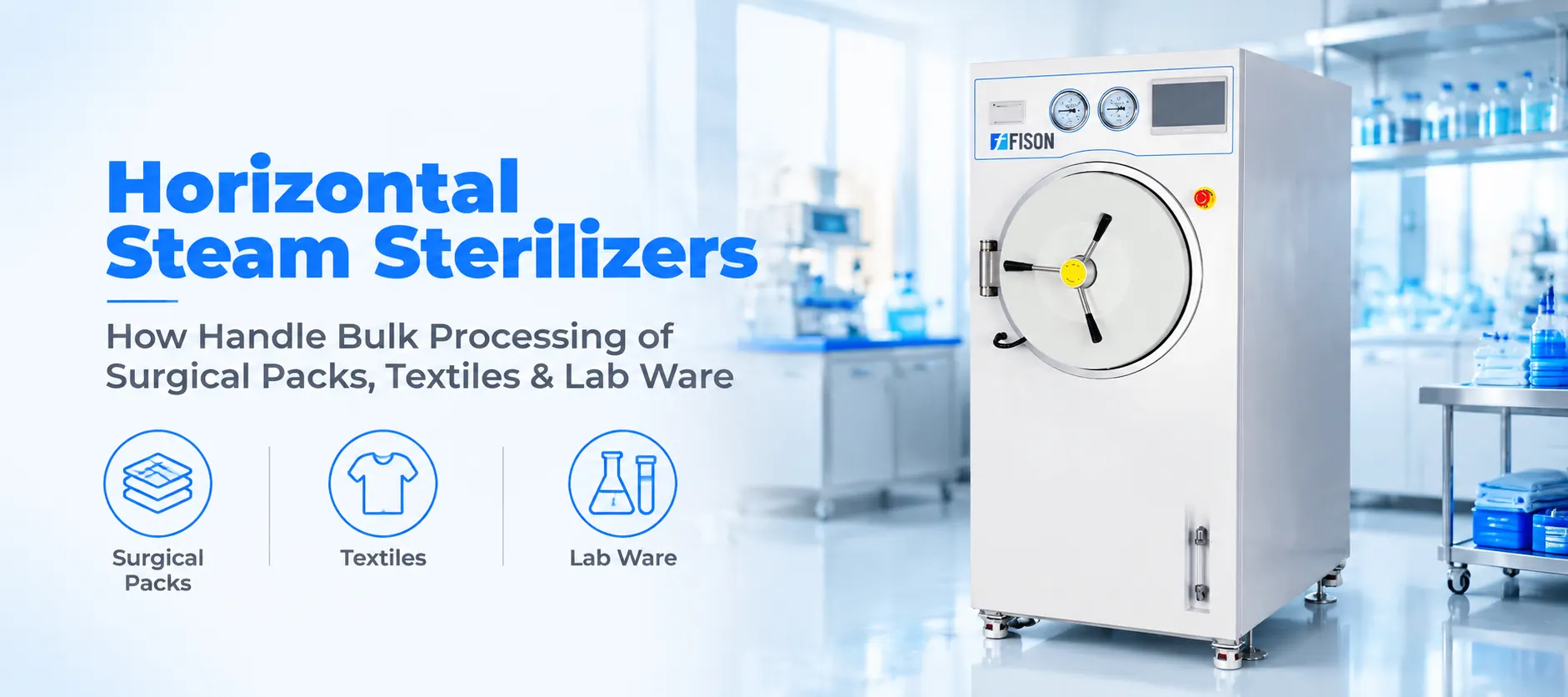
Hospitals, laboratories, research centres and advanced facilities process far more instrument trays, glassware and waste loads than a benchtop unit can keep up with, and much of that workload runs through a Fison Horizontal Autoclave sitting at the center of the sterile processing area. This article looks at how these units work, where they fit into a wider decontamination workflow, and what to check before selecting one.
Why Bulk Sterilization Needs a Different Approach Than Benchtop Units
Central sterile supply departments, teaching hospitals and busy research facilities move a high number of trays, basins and media batches through decontamination each shift, and a small tabletop unit quickly becomes a bottleneck at that volume. A horizontal steam sterilizer is built around a front-loading chamber with a cart or rail system, so trays slide in on a track rather than being lowered by hand from above.
That layout matters for throughput: a Horizontal Autoclave machine can hold several carts of mixed loads at once, and the wide chamber door makes it practical to load and unload without repeatedly bending over a top-opening lid. Facilities running repeat cycles all day tend to find this orientation easier on staff and faster to turn around between batches.
How a Horizontal Autoclave Works: Principle and Cycle Stages
At its core, a Horizontal Autoclave uses saturated steam under pressure to raise the temperature inside a sealed chamber well above what boiling water alone can reach, holds that temperature for a set exposure period, and then vents and dries the load. Because the chamber has to hold pressure safely above atmospheric level, the build is sometimes described as a horizontal high pressure steam sterilizer, and the door locking mechanism is designed to release only once the chamber has fully depressurized.
Load & Seal Chamber
Air Removal
Steam Exposure
Drying & Exhaust
The air removal method used before steam enters the chamber makes a real difference here: gravity displacement pushes air out as steam rises, while a pulsed pre-vacuum cycle actively draws air out first. A horizontal pressure steam sterilizer running pre-vacuum cycles tends to penetrate porous loads such as wrapped textiles or hollow instruments more evenly, which shortens the exposure time needed for a full load.
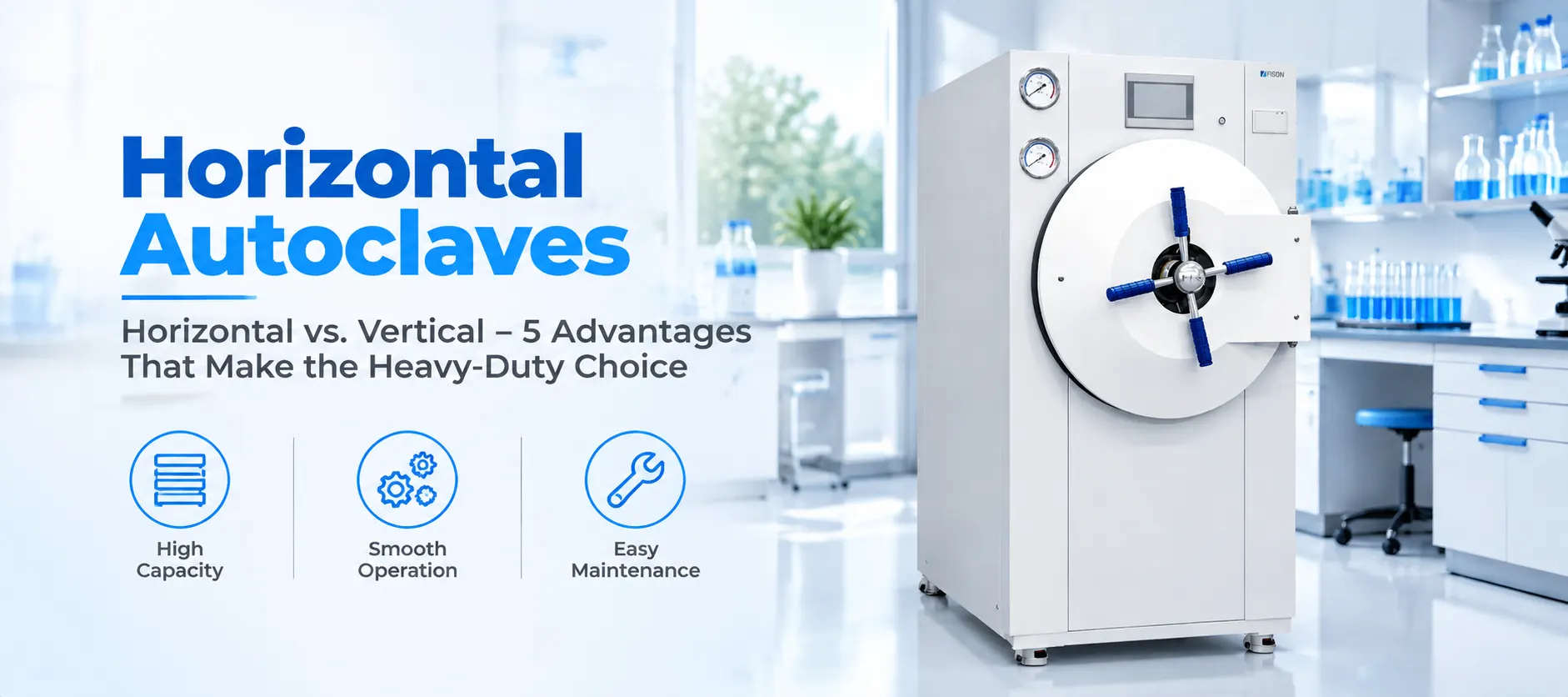
Horizontal Autoclave and Vertical Autoclave: Choosing the Right Orientation
A vertical autoclave loads from the top and generally suits a single operator working with a smaller, self-contained batch, which fits smaller labs where floor space is limited and cycle volume stays modest. A Horizontal Autoclave, by contrast, loads from the front on a cart or rail system and is built for repeat, high-volume cycles run by a dedicated processing team.
The choice usually comes down to daily load volume and available floor space rather than one design being a general upgrade over the other: a research bench running occasional media batches may never need the chamber size a hospital CSSD relies on each shift. Facilities weighing both configurations against expected daily volume can compare chamber sizes and cycle options on the Horizontal Autoclave category page before settling on an orientation.
Where the Horizontal Autoclave Fits in the Wider Sterilization Equipment Category
A Horizontal autoclave sits within a broader group of sterilization and decontamination equipment that also includes vertical autoclaves, tabletop sterilizers, washer-disinfectors and glassware washers. Within this group, facilities typically compare chamber volume, cycle types such as gravity, pre-vacuum or liquid cycles, single versus double-door pass-through configurations for barrier walls between clean and dirty sides, heating method, and the utility supply a room needs to run the unit day to day.
Reviewing the full Horizontal Autoclave range is a practical way to line up chamber size, door configuration and cycle options before narrowing a shortlist.
For facilities exploring sterilization equipment beyond this single category, the Fison home page lists the wider catalogue of laboratory and hospital equipment the brand carries.
Horizontal Autoclave Uses Across Hospitals, Laboratories and Research Centres
Horizontal autoclave uses vary by setting, and matching the right configuration to the actual workload matters more than picking the largest chamber available.
In hospital central sterile supply departments, the unit processes surgical instrument trays, basins and linens between procedures, often through a pass-through wall that keeps the clean and soiled sides separate. Laboratories rely on the same equipment for media preparation, glassware and decontaminating biohazard waste before disposal, while research centres use it for large-batch media runs and animal facility bedding or cage sterilization. Choosing the right Horizontal Autoclave sterilizer for a busy CSSD usually comes down to matching daily instrument tray volume with chamber capacity and realistic cycle turnaround time.
Selection Mistakes to Watch For When Evaluating a Horizontal Autoclave Machine
A handful of recurring missteps show up during evaluation, and most only become obvious once the unit is already installed and running:
- Sizing the chamber to current volume only. Basing chamber size purely on present-day tray counts, without allowing for growth, often leaves a facility short on capacity within a few years.
- Overlooking door configuration. Choosing a single-door unit where a double-door pass-through was actually needed for clean and dirty side separation can force a costly layout change later.
- Underestimating utility requirements. A Horizontal Autoclave machine automatic in design still needs a matched steam supply, drainage and electrical capacity, and rooms are sometimes planned before these needs are confirmed with facilities staff.
- Ignoring service access needs. Maintenance clearance around the Horizontal Autoclave element - the heating element and steam generator behind the chamber - is easy to overlook when a unit is tucked into a tight CSSD layout.
- Skipping load configuration testing. Mixed loads of fluids and hard goods need different cycle settings, and not testing this in advance can lead to under-processed loads during routine use.
An automatic Horizontal Autoclave reduces operator involvement by sequencing air removal, exposure and drying steps without manual valve switching, but that sequencing still depends on the utility supply behind it being sized correctly from the start.
Automatic and Manual Horizontal Steam Sterilizer Autoclaves: A Quick Comparison
Some smaller labs still run a horizontal sterilizer with manually operated valves and timers rather than a fully automatic cycle sequence. The table below outlines where each approach tends to fit.
| Aspect | Manual / Semi-Automated | Automatic Horizontal Autoclave |
|---|---|---|
| Hands-on time per cycle | Higher, with manual valve and timer steps | Lower, cycle steps run in sequence |
| Cycle repeatability | Varies with operator technique | Stays consistent cycle to cycle |
| Cycle documentation | Often logged by hand | Recorded automatically as the cycle runs |
| Typical setting | Small labs with lower daily volume | Hospital CSSDs and high-volume facilities |
Ready to Compare Horizontal Autoclave Options?
Chamber volume, door configuration and cycle type differ meaningfully between models, and reviewing them together helps match a unit to actual daily processing volume rather than a rough estimate.
View Horizontal Autoclave Options