Introduction
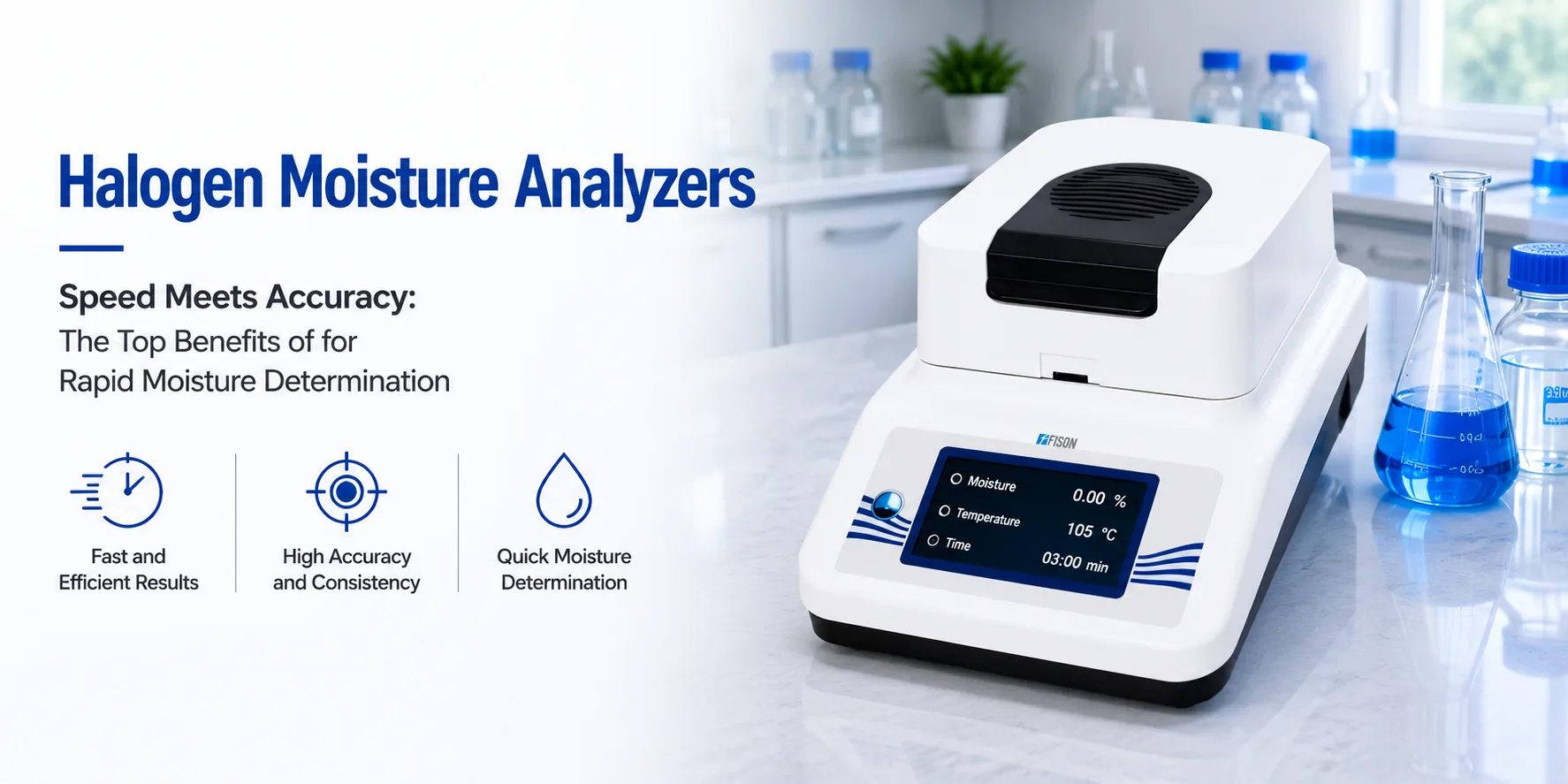
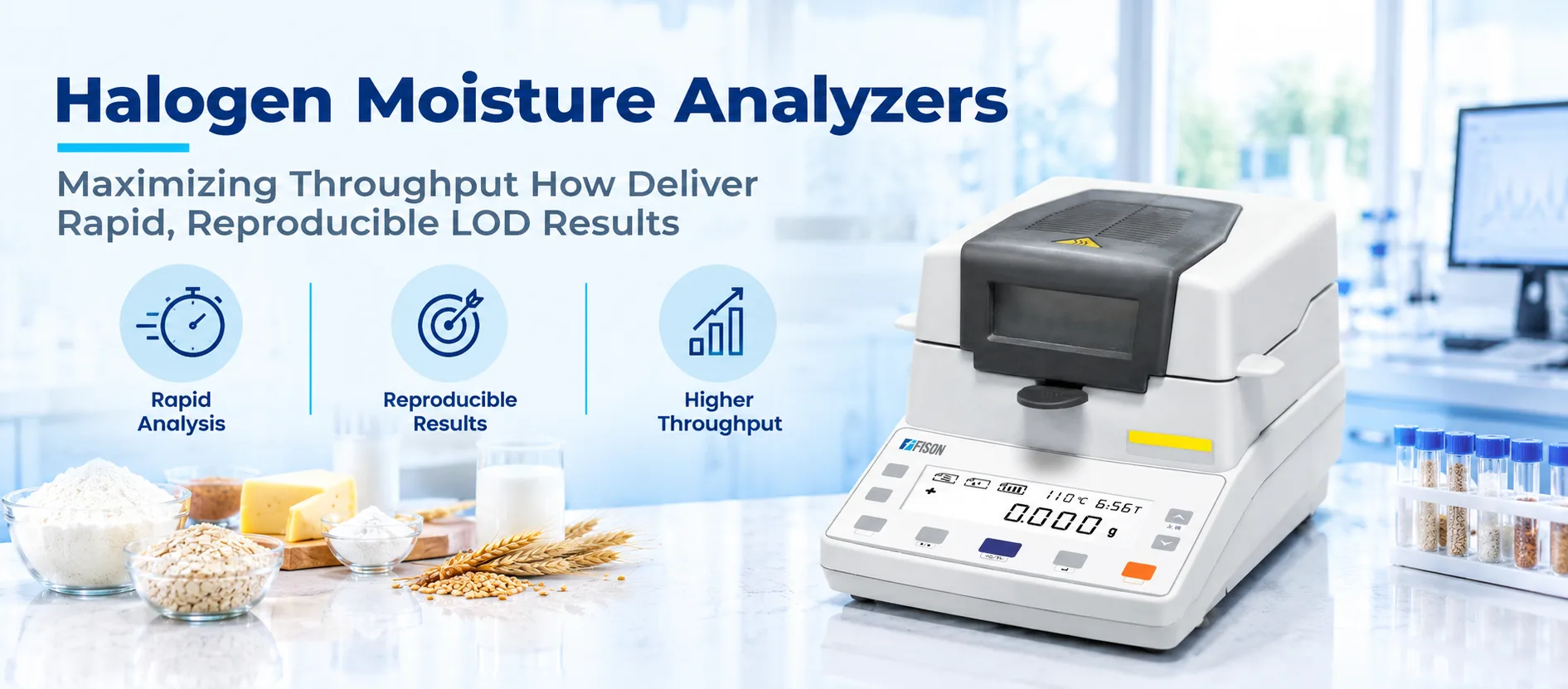
A busy lab needs moisture results fast enough to match the samples arriving behind them. This article explains how a Fison Halogen Moisture Analyzer delivers rapid, reproducible results, where high-throughput testing matters most, and which habits undermine speed and accuracy together.
Why Throughput Matters as Much as Accuracy
A busy quality lab rarely has the luxury of testing one sample at a time. Grain intake during harvest, a production line releasing batches hourly, or a research programme running dozens of formulations a day all need moisture results fast enough to keep pace with the work arriving behind them.
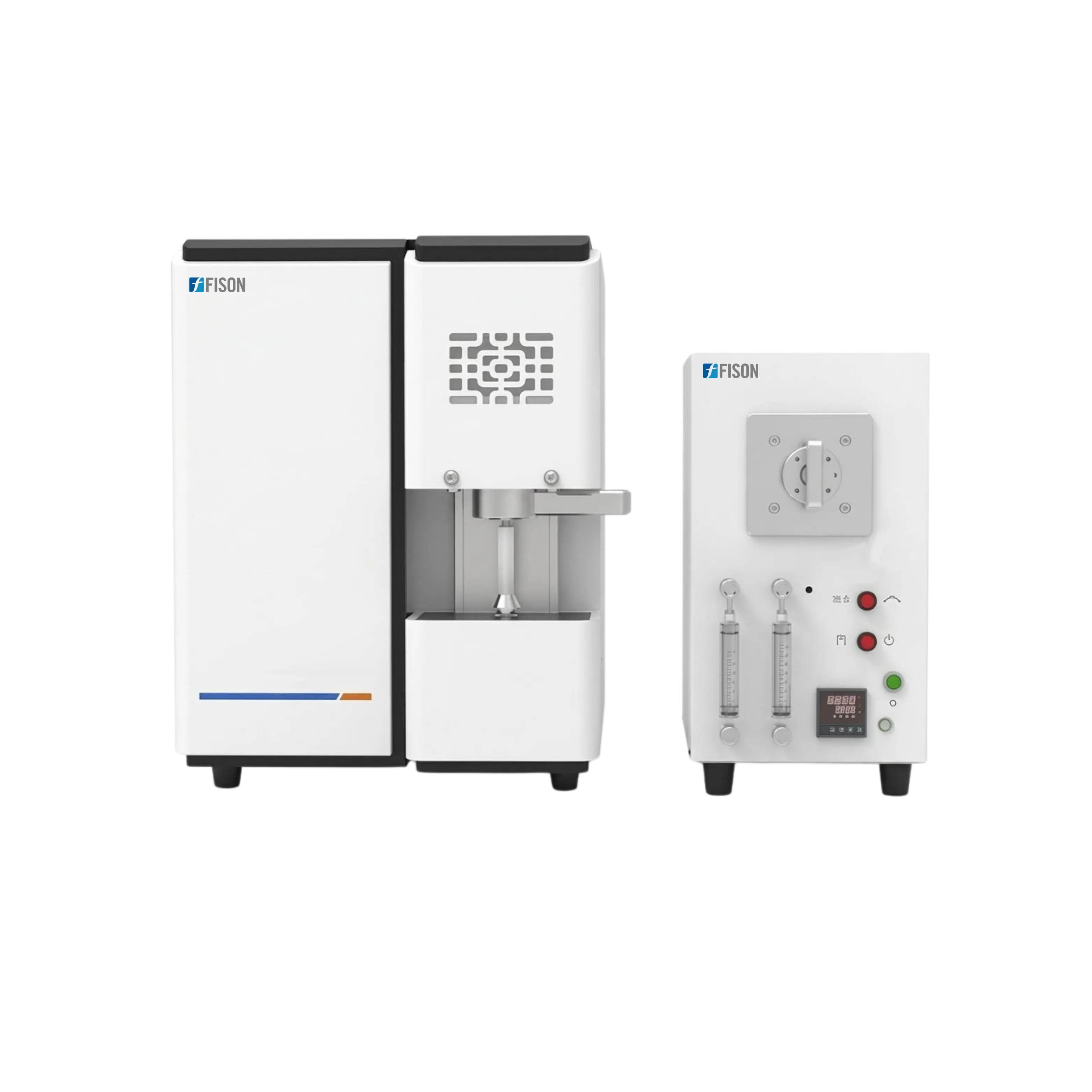
A Halogen Moisture Analyzer is built for exactly this pressure. By combining heating and weighing in one unit, this Halogen Moisture Analyzer removes the separate oven-and-balance steps that used to slow a loss-on-drying method down, so a laboratory can move through a queue of samples without each one tying up the bench for an hour or more.
Halogen Moisture Analyzer Working Principle, Revisited for Speed
The Halogen Moisture Analyzer working principle is thermogravimetric: a sample on an integrated pan is heated by a halogen lamp while a built-in balance tracks the falling mass until the reading settles at an end point. What changes throughput is how quickly that end point is reached and how little operator time each run demands.
Halogen heating reaches working temperature faster than a conventional oven, so a Digital Halogen Moisture Analyzer can complete a loss-on-drying result in minutes rather than the hours a conventional oven method needs. Because the same Halogen Moisture Balance both heats and weighs, there is no transfer step between a drying oven and a separate balance, which removes a source of delay and of handling error at the same time.
What Makes a Result Reproducible, Not Just Fast
Speed only helps if the result stays consistent run to run. A halogen moisture balance built for throughput still needs a drying program matched to the sample, since a generic setting applied across different materials produces results that look fast but do not agree between operators or between days.
Multiple drying programs on a Halogen Moisture Analyzer let a laboratory save a method for grain, one for dairy powder and another for a chemical intermediate, so each sample runs under conditions proven to work for it. Real-time moisture loss tracking lets an operator confirm a run has genuinely reached its end point rather than stopping early, which is often where reproducibility quietly breaks down on a Halogen Moisture Analyzer used carelessly.
Where High-Throughput Moisture Testing Pays Off
Some settings generate far more samples per shift than others, and a laboratory can weigh its own queue against the moisture analyzer category before choosing a halogen moisture meter built for volume rather than occasional use.
Grain Intake During Harvest
A grain receiving station tests truckload after truckload on a halogen analyzer, so a result measured in minutes rather than hours keeps queues moving.
Dairy Production Lines
Milk powder and whey powder batches are released only after a Halogen Moisture Analyzer check, so faster testing shortens the gap between production and dispatch.
Bakery and Flour Mills
Flour moisture is checked lot by lot in bakery labs, and a Halogen Moisture Analyzer keeps pace with a mill running continuous production.
Confectionery Batch Release
Sugar and confectionery ingredients are tested on a halogen moisture meter at each stage, and rapid results reduce the time a batch sits waiting for release.
Research Formulation Screening
Research centres and hospital laboratories screening many formulations a day rely on a halogen moisture meter to keep moisture data current across trials.
Spice and Herb Processing
High sample volume during a spice harvest season makes rapid loss-on-drying testing necessary to avoid a backlog at intake, a pattern bakery and spice processors both share.

Building a Queue That Does Not Compromise Results
Running samples back to back only works if sample preparation keeps pace too. Pre-weighing portions, spreading each in a thin even layer and queuing pans ready to load means the analyzer itself is rarely idle between runs, which is where real throughput gains come from rather than from the instrument alone.
USB and data storage options on a digital Halogen Moisture Analyzer matter here as well, since a laboratory moving quickly through samples needs records captured automatically rather than transcribed by hand between runs, where transcription errors are easy to introduce under time pressure.
Halogen Moisture Analyzer Calibration Without Slowing the Queue
Halogen Moisture Analyzer calibration does not have to compete with throughput if it is scheduled rather than improvised. The balance of a Halogen Moisture Analyzer is checked against reference weights on a fixed schedule, and the heating unit is verified separately, so routine Halogen Moisture Analyzer calibration happens between batches instead of interrupting one.
A halogen moisture analyser, or a halogen analyser used under a different regional spelling, run daily benefits from a short reference-sample check at the start of a shift, which catches drift before an entire day's queue is affected rather than after it.
What Supports High Throughput on This Halogen Moisture Analyzer
Rather than measuring speed against unrelated methods, it helps to look at what the Halogen Moisture Analyzer itself offers a high-volume queue. Multiple drying programs mean a laboratory does not have to choose between speed and a method proven for each sample type, since grain, dairy powder and a chemical intermediate can each run under their own saved settings.
Real-time moisture loss tracking lets an operator confirm a run has reached its true end point rather than guessing, which keeps throughput gains from coming at the expense of a reproducible result. USB and data storage options then carry each result off the instrument automatically, so a busy shift does not lose time to manual transcription between samples. A sample weight range from 1 mg up to 210 g across models also means a laboratory can match capacity to its own queue, rather than sizing each run around a single fixed sample amount.
Common Mistakes When Chasing Speed
Pushing for throughput introduces its own failure patterns if a laboratory is not careful.
- Shortening drying time to save minutes. Ending a run before the true end point trades a reproducible result for a faster but inconsistent one.
- Reusing one program across sample types. A program suited to grain may scorch a sugar-rich sample, producing a fast but inflated reading.
- Skipping sample layer checks. An uneven or thick layer slows drying and undermines the speed a Halogen Moisture Analyzer is meant to offer.
- Treating calibration as optional under time pressure. A skipped check saves minutes today and leads to a full requeue later if drift goes unnoticed.
- Ignoring data capture. Manual transcription under pressure is where throughput gains are most often lost to error.
Exploring the Wider Moisture Analysis Category
Halogen units sit within a broader group of moisture measurement equipment built for different speed and precision needs. Related Fison categories include the moisture meter, the Karl Fischer titrator, the laboratory oven and the drying cabinet, each suited to a different balance of throughput and method specificity.
Laboratories evaluating this group for high-volume work typically weigh sample capacity, drying speed, program flexibility and data output. The full range sits on the Fison Moisture Analyzer category , and the wider laboratory portfolio can be reached through the Fison Home .