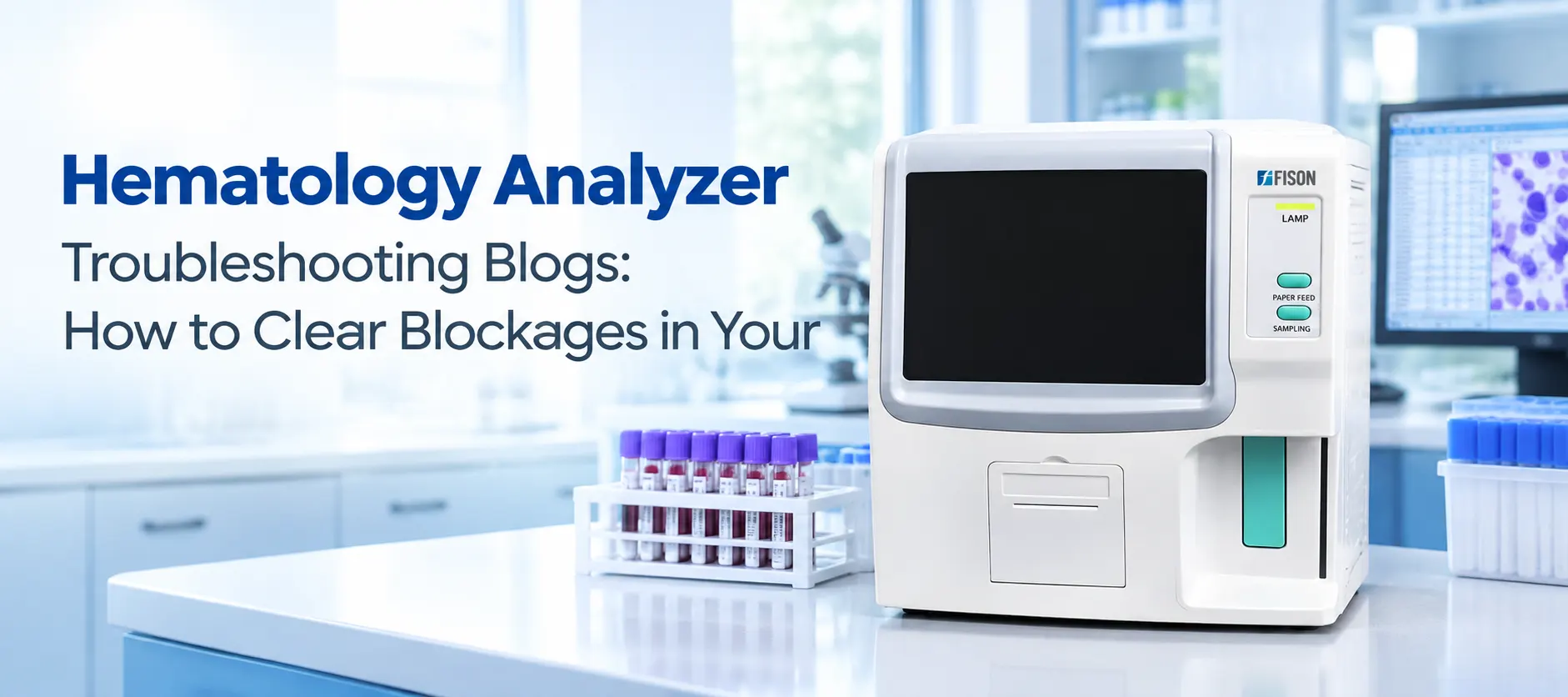
A practical look at why the counting aperture inside an Fison Auto Hematology Analyzer blocks up, and the steps that clear a clog quickly without compromising the next result.
Why the Counting Aperture Clogs
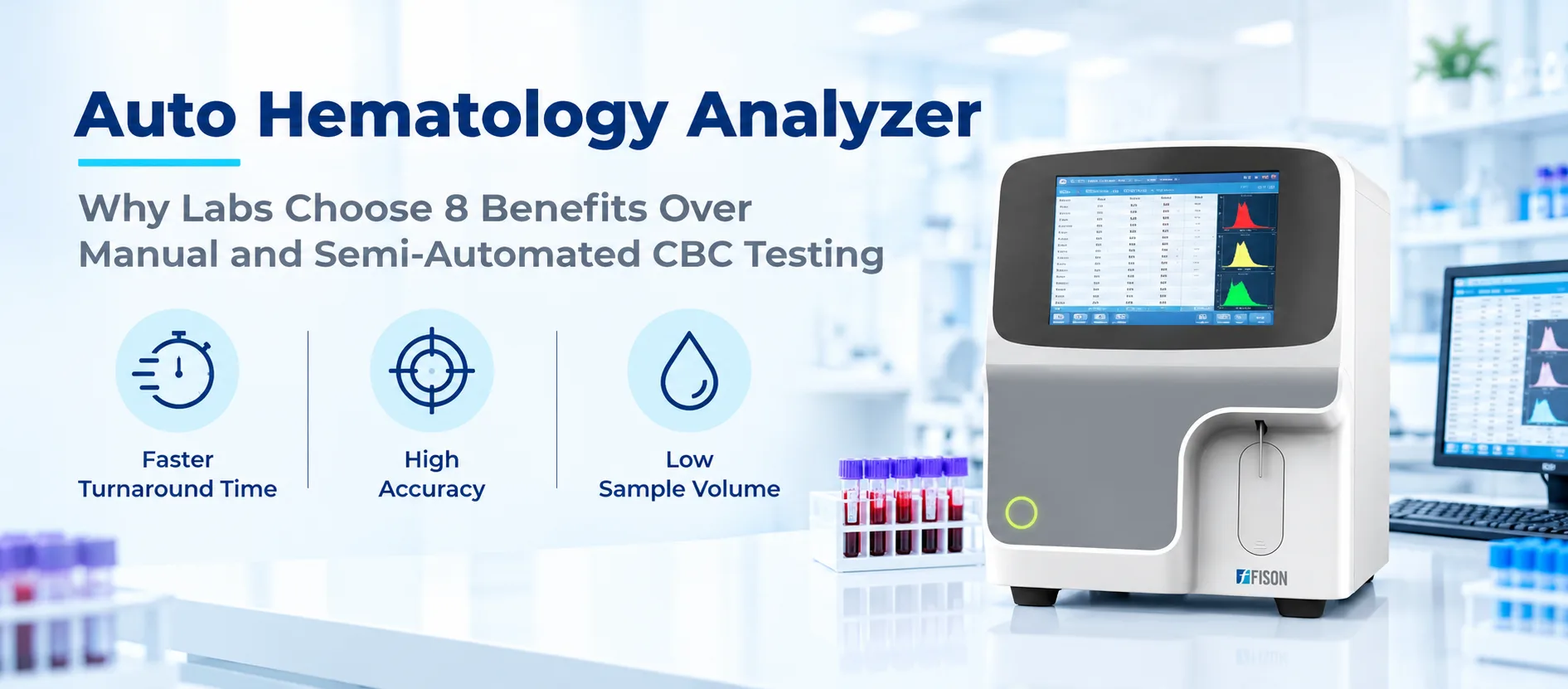
Most bench-top and floor-model units in this category count cells by drawing a diluted sample through a narrow aperture, often somewhere between 50 and 100 microns wide, and registering a small electrical resistance pulse each time a cell passes through. That aperture is exactly where problems start. A partially clotted sample, a fibrin strand, a clump of platelets, or simple protein residue can bridge or narrow the opening, and once that happens an Auto Hematology Analyzer starts producing skipped counts, an erratic differential, or a flow that stops altogether mid-run. Recognizing this pattern early is often the fastest way to keep an auto hematology analyzer in service without a full technician callout.
Because the aperture is so small relative to the cells passing through it, even a partial obstruction changes the pulse pattern an Auto Hematology Analyzer reads, which is why a clog often shows up first as a strange-looking histogram rather than an outright error message. This failure mode is mechanical rather than electronic, so it can affect nearly any auto hematology analyzer regardless of brand, which is why prevention and a quick, correct response matter more than which specific model a lab runs.
How an Auto Hematology Analyzer Processes a Sample
Understanding the sequence a sample follows makes it easier to work out where a blockage has actually formed. A typical Automatic Hematology Analyzer moves a sample through four broad stages before a result appears on screen. Laboratories outside North America sometimes label the same equipment an auto haematology analyzer on requisition forms and service contracts, but the four-stage sequence below is identical regardless of which spelling a site settles on for its own documentation.
Sample Aspiration & Dilution
A probe draws a small sample volume and mixes it with diluent at a fixed ratio before it enters the counting chamber.
Aperture Impedance Counting
Cells pass single file through the narrow aperture, each one briefly changing the electrical resistance to register a count.
Photometric Hemoglobin Reading
A separate light path measures a lysed portion of the sample to determine hemoglobin concentration colorimetrically.
Differential Calculation
Onboard software sorts pulses by size and shape to produce a full blood count and differential breakdown.
This four-stage sequence is the auto hematology analyzer principle behind most bench-top and floor-model counters on the market today, whether it is described on a spec sheet as an Automated Hematology Analyzer Machine or under a manufacturer's own branded name. A fully automated hematology analyzer reduces manual pipetting steps along this sequence, but it does not remove the need for someone on staff to recognize early warning signs of an aperture blockage.
Clearing and Preventing Blockages
When a clog is suspected, most systems, including Fison's hematology analyzer range, include a built-in unclog or backflush cycle that briefly reverses flow through the aperture to dislodge debris; running this cycle before assuming a hardware fault resolves a large share of blockage complaints. If the cycle does not clear the reading, the sample itself should be checked visually for clots, since a partially clotted tube is one of the most frequent causes and simply recollecting the sample often solves the underlying issue rather than the auto hematology analyzer itself.
Beyond reactive fixes, a regular cleaning schedule keeps protein and lipid residue from accumulating along the aperture bath and sample path in the first place, and keeping this schedule current is one of the simplest ways to keep an auto hematology analyzer running without unplanned downtime. This includes flushing the aperture bath with the manufacturer-specified cleaning fluid at set intervals, replacing sheath fluid filters before they become saturated, and wiping the sample probe tip after any highly lipemic or unusually viscous sample. Vacuum and pressure settings are worth checking too, since a system running below its intended pressure may struggle to fully clear even a minor partial obstruction on its own. Technicians who understand the auto hematology analyzer principle behind aperture counting are usually faster at telling a genuine clog apart from a sample quality problem, since both can produce similar-looking irregular pulses.
An Auto Hematology Analyzer Machine that clogs repeatedly despite a clean sample and a current cleaning schedule usually points to aperture wear rather than a one-off blockage, and that component typically needs a technician's inspection rather than another manual flush. An automated hematology analyzer machine marketed mainly on throughput numbers deserves the same aperture-care attention as a slower, lower-volume unit.

Where This Instrument Does Its Work
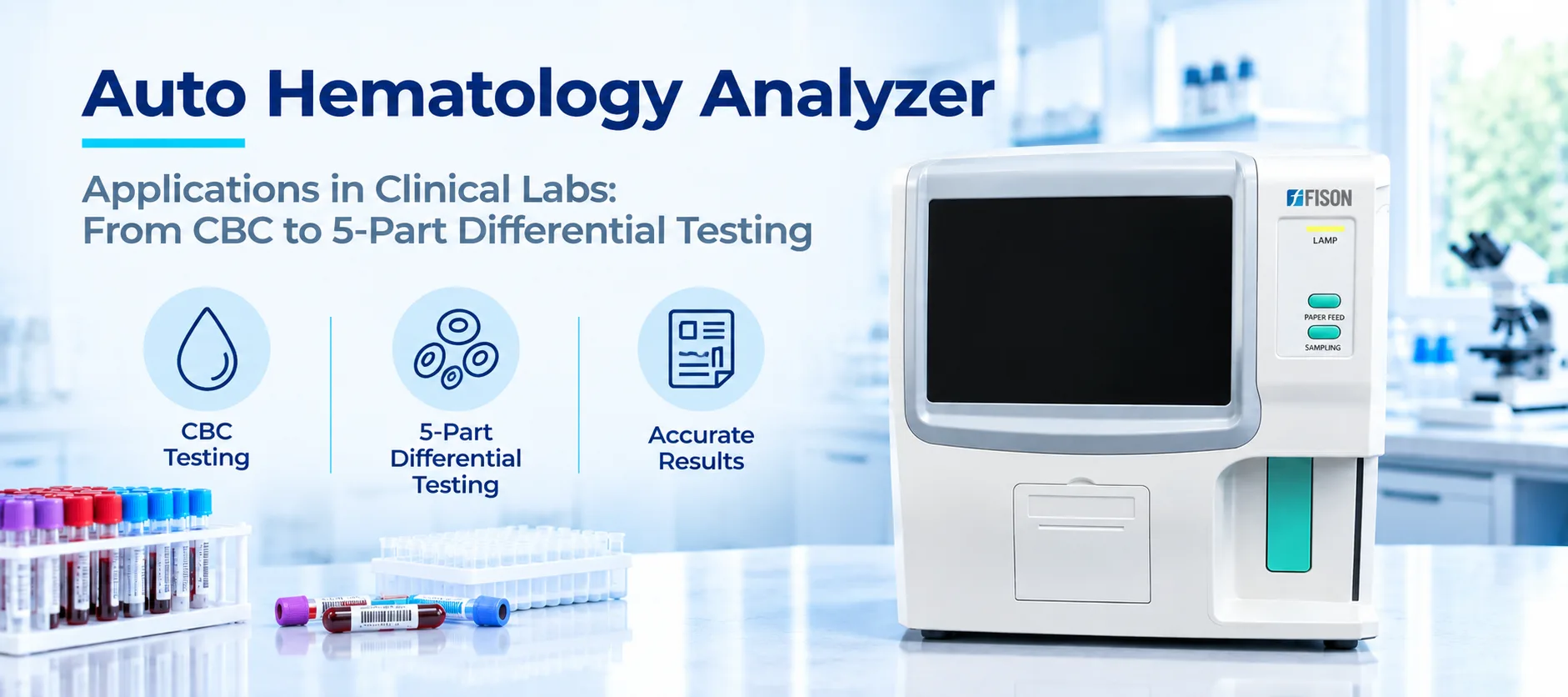
Hospital laboratories rely on an auto hematology analyzer for routine complete blood count screening across emergency, inpatient, and outpatient departments, often running large batches back to back through the day. Blood banks use an auto hematology analyzer during donor screening to confirm basic cell parameters before a unit is accepted. Research centres processing large study cohorts value the throughput a Fully Auto Hematology Analyzer offers over manual counting methods, particularly when a study protocol calls for consistent, repeatable counts across hundreds of samples. Advanced diagnostic labs supporting specialist clinics also depend on a full five-part differential from an auto hematology analyzer to flag abnormal cell populations that a basic three-part count would miss. A hospital running a single auto hematology analyzer machine around the clock experiences clog-related downtime very differently than a large lab operating several units in parallel, since a single stalled instrument affects a much larger share of daily testing capacity.
Across all of these settings, the specific hematology analyzer uses on any given day can range from a handful of stat samples to several hundred routine counts, and clog-related downtime affects each of these workflows differently depending on how time-sensitive the results need to be. Documented hematology analyzer uses across a facility, from stat emergency orders to scheduled batch runs, should factor into any aperture-size or throughput decision made during procurement.
This spread of clinical application areas reflects how central automated cell counting has become across diagnostic laboratories generally, from small outreach clinics to large hospital networks. Each new application tends to follow the same underlying counting principle, adapted to a different specimen volume or turnaround requirement rather than a different measurement technology.
Common Selection Mistakes
- Overlooking Aperture Size Against Sample Type. A narrower aperture offers finer resolution but clogs more readily on samples with higher protein or lipid content, so aperture size should match the sample mix a lab actually processes. This is a frequent trade-off labs miscalculate when selecting an auto hematology analyzer purely from a spec sheet.
- Assuming Automated Means Maintenance-Free. A fully automated hematology analyzer still needs scheduled cleaning and reagent checks; treating automation as a substitute for upkeep is one of the more common reasons an auto hematology analyzer clogs sooner than expected.
- Underestimating Rerun Rate. Facilities sizing throughput around a manufacturer's headline sample-per-hour figure often forget to budget time for reruns caused by clotted or clogged samples during busy periods.
- Mismatching Differential Capability. Choosing a basic three-part differential unit for a setting that regularly needs a five-part breakdown leads to samples being sent out for confirmation more often than expected. Choosing a fully auto hematology analyzer purely for its walk-away throughput, without checking differential depth first, is a related and equally common oversight in high-volume settings.
- Overlooking Spelling Variants in Procurement Records. Internal documentation that mixes "auto hematology analyzer" with the alternate auto haematology analyzer spelling can create duplicate asset records or mismatched service history if not aligned early.
The Wider Category This Instrument Belongs To
An Auto Hematology Analyzer sits within the broader category of automated laboratory cell-counting instruments, alongside coagulation analyzers and urine analyzers that share similar sample-handling and fluidics principles. Within this category, evaluators typically compare aperture or flow-cell technology, differential depth (three-part versus five-part), sample throughput, and how easily a unit's cleaning and unclog cycles integrate into daily lab routines. Evaluators weighing an automatic hematology analyzer against a semi-automated bench unit should treat differential depth and sample throughput as the main trade-off to work through. The Hematology analyzer principle of counting cells through a narrow, precisely sized channel underpins most instruments in this group, whatever their individual throughput or automation level.
Readers comparing options across Fison's wider laboratory instrumentation catalog can review the hematology analyzer category directly to compare aperture specifications and differential capability side by side before settling on a configuration. Whichever auto hematology analyzer a lab ultimately selects, aligning aperture care with daily sample volume keeps clog-related downtime to a minimum.