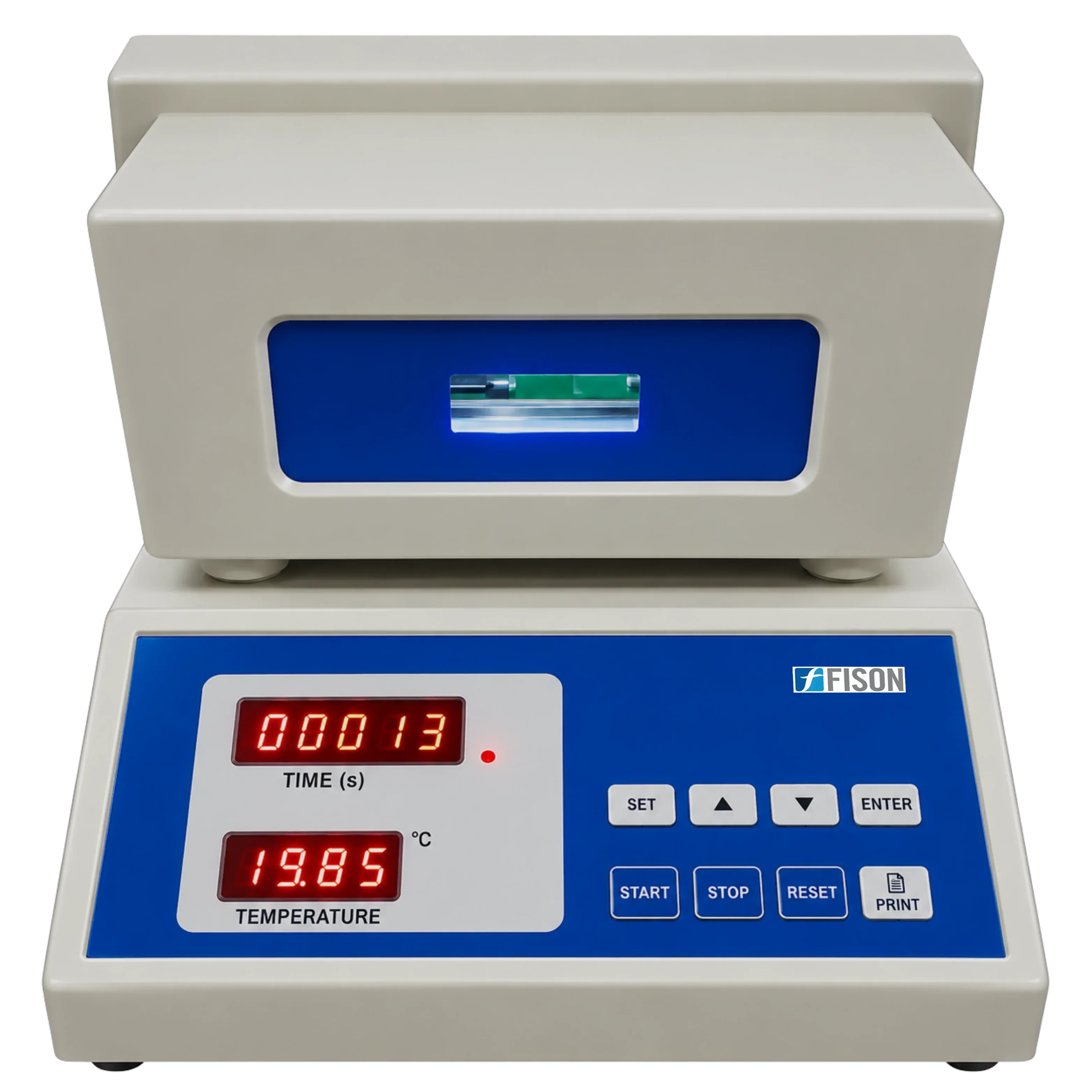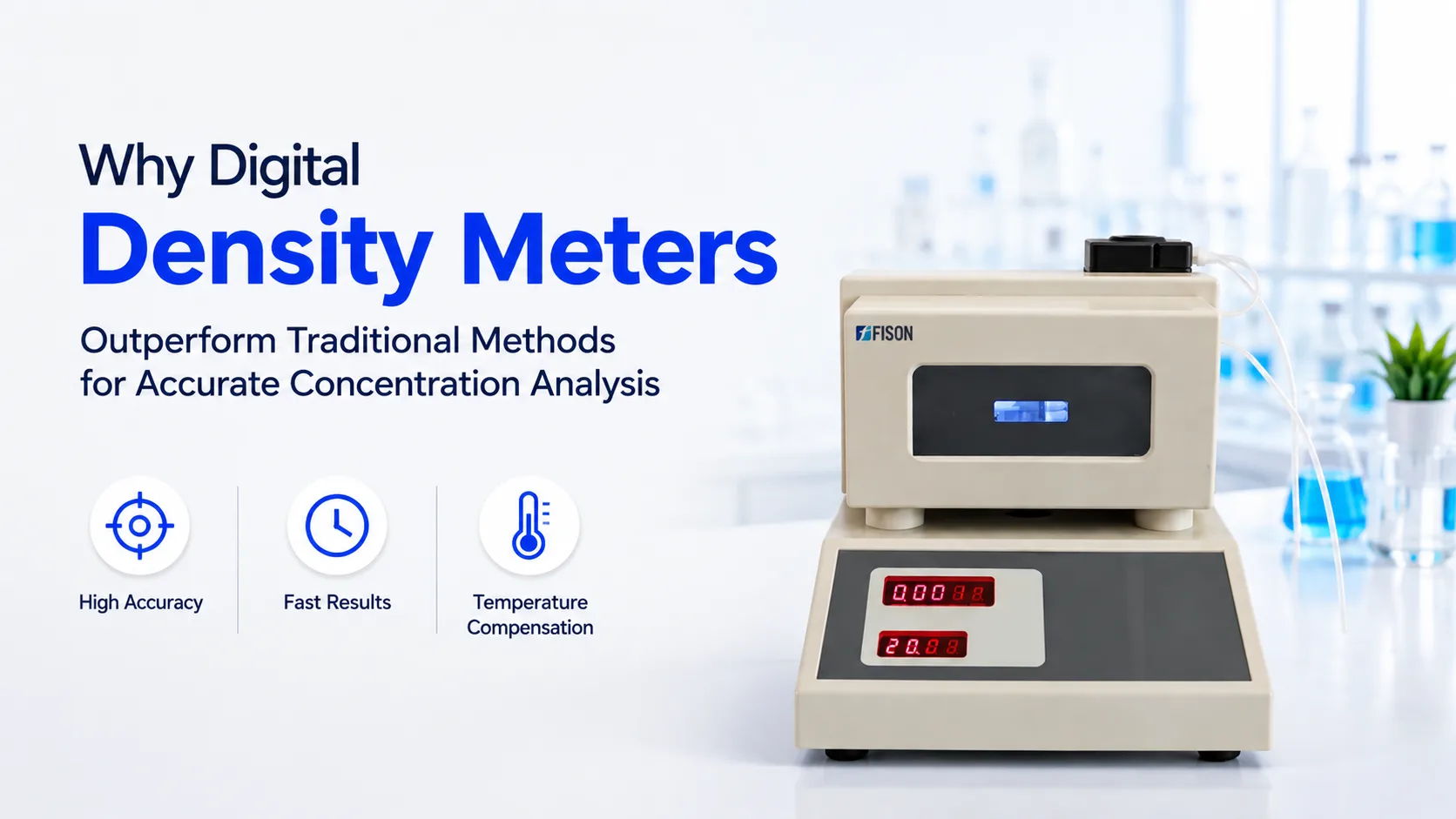
Laboratories, hospitals, research centres and advanced facilities that once relied on hydrometers and pycnometers for concentration checks are moving those readings onto a Fison Density Meter instead, largely because a digital reading removes much of the operator judgment that manual glassware methods depend on. This article looks at how these instruments work, where they fit into a wider analytical setup, and what to check before choosing one.
Why Concentration Analysis Is Moving Away from Manual Measurement Methods
Reading a hydrometer against a meniscus, or weighing a pycnometer on an analytical balance, takes a steady hand and a controlled bench temperature to produce a consistent result. Small differences in eye level, glassware cleanliness or sample temperature can shift a reading enough to matter in a formulation or quality check, and repeating the process across a shift adds up in technician time.
A digital Density measurement instrument shortens that process to a sample injection and a short wait for a stable reading, with temperature correction built into the measurement itself rather than left to the operator. That shift matters most in labs running the same concentration check many times a day, where shaving even a minute off each reading changes how much other work a technician can get through.
How a Density Meter Works: The Principle Behind Digital Readings
Most digital instruments in this category rely on the oscillating U-tube principle: a small sample fills a U-shaped glass tube that is set vibrating at its natural frequency. Because that frequency shifts in a predictable way as the mass of fluid inside the tube changes, the oscillating tube itself functions as the density sensor, and onboard electronics convert the frequency shift into a density value. A Density Meter built this way needs only a small sample volume and reaches a stable reading in a fraction of the time a manual method would take.
Sample Injection
Tube Oscillation
Frequency Reading
Density Readout
A density sensor of this type is sensitive to trapped air bubbles and incomplete tube filling, which is why most instruments flag a reading as unstable rather than reporting a number when the sample cavity is not properly filled.
Portable and Benchtop Density Meters: Matching the Format to the Workflow
A portable Density Meter trades some measurement range and precision for the ability to run a check at a tank, a production line or a field site rather than carrying a sample back to a bench. This suits spot checks on batches already in process, where a fast approximate reading matters more than laboratory-grade repeatability.
A benchtop density analyzer, by contrast, holds a stricter internal temperature control and a wider calibration range, which suits a laboratory running formulation work or regulatory testing where small differences in concentration need to be caught reliably. Labs weighing a portable unit against a benchtop model can compare sample volume, measurement range and temperature control side by side on the Density Meter category page before deciding which format fits daily use.
Where the Density Meter Fits in the Wider Analytical Instrumentation Category
A Density Meter belongs to a broader group of physical property instruments used to characterize liquids, alongside refractometers, viscometers and pH meters. Within this group, labs typically compare sample volume requirements, measurement range and accuracy, temperature control method, sample compatibility with viscous or particulate fluids, and whether the instrument is built for single-sample checks or the continuous readings a Density Meter analyzer provides on a process line.
Reviewing the full Density Meter range is a practical starting point for lining up these factors before narrowing a shortlist.
For labs exploring analytical instruments beyond density measurement, the Fison home page lists the wider catalogue of laboratory equipment the brand carries.
Liquid Density Meter Uses Across Hospitals, Laboratories and Research Centres
A liquid Density Meter shows up in more places than a formulation lab might expect, once a facility starts using it beyond routine quality checks.
Hospital laboratories use density readings as part of urine specific gravity testing and certain body fluid panels, where a small, fast sample check fits into a busy diagnostic workflow. Quality laboratories rely on a Density Meter for liquids such as beverages, fuels and solvents to confirm concentration falls within the expected range before a batch moves forward, while research centres use the same reading during formulation work to track how a mixture's composition shifts as ingredients are adjusted. Advanced labs running many samples a day often pair the instrument with a sample changer so a density tester can work through a batch of vials without an operator present for each one.
Selection Mistakes to Watch For When Choosing a Density Meter Instrument
A handful of recurring missteps show up when labs evaluate a new Density Meter instrument, and most only become clear after the unit is already in routine use:
- Skipping a calibration routine check. Density Meter calibration against a reference fluid needs to happen on a set schedule, and assuming factory settings will hold indefinitely is a common source of drifting readings.
- Ignoring sample viscosity limits. A model built for thin liquids can struggle with viscous or particulate samples, leading to incomplete tube filling and unstable readings.
- Overlooking temperature control needs. A lab bench that swings several degrees across a day can affect readings on a unit without tight internal temperature regulation.
- Choosing automatic sampling without checking sample cleanup. A Density Meter automatic in its sampling still needs a cleaning or rinse step between samples, and skipping this can carry residue from one reading into the next.
- Underestimating data output needs. Some workflows need direct data logging or connection to a laboratory information system, which many entry-level models do not support.
Automatic and Manual Density Testers: A Quick Comparison
Some labs still run concentration checks with manually filled tube instruments rather than an automatic sampling setup. The table below outlines where each approach tends to fit.
| Aspect | Manual Sample Fill | Automatic Density Meter |
|---|---|---|
| Hands-on time per sample | Higher, with manual injection each time | Lower, samples run in sequence |
| Reading consistency | Varies with fill technique | Stays consistent sample to sample |
| Cross-contamination risk | Depends on manual rinse steps | Reduced with an automated rinse cycle |
| Typical setting | Low-sample-count research work | High-throughput quality and process labs |
Ready to Compare Density Meter Options?
Sample volume, measurement range and temperature control differ meaningfully between models, and reviewing them together helps match an instrument to actual sample throughput rather than a rough estimate.
View Density Meter Options