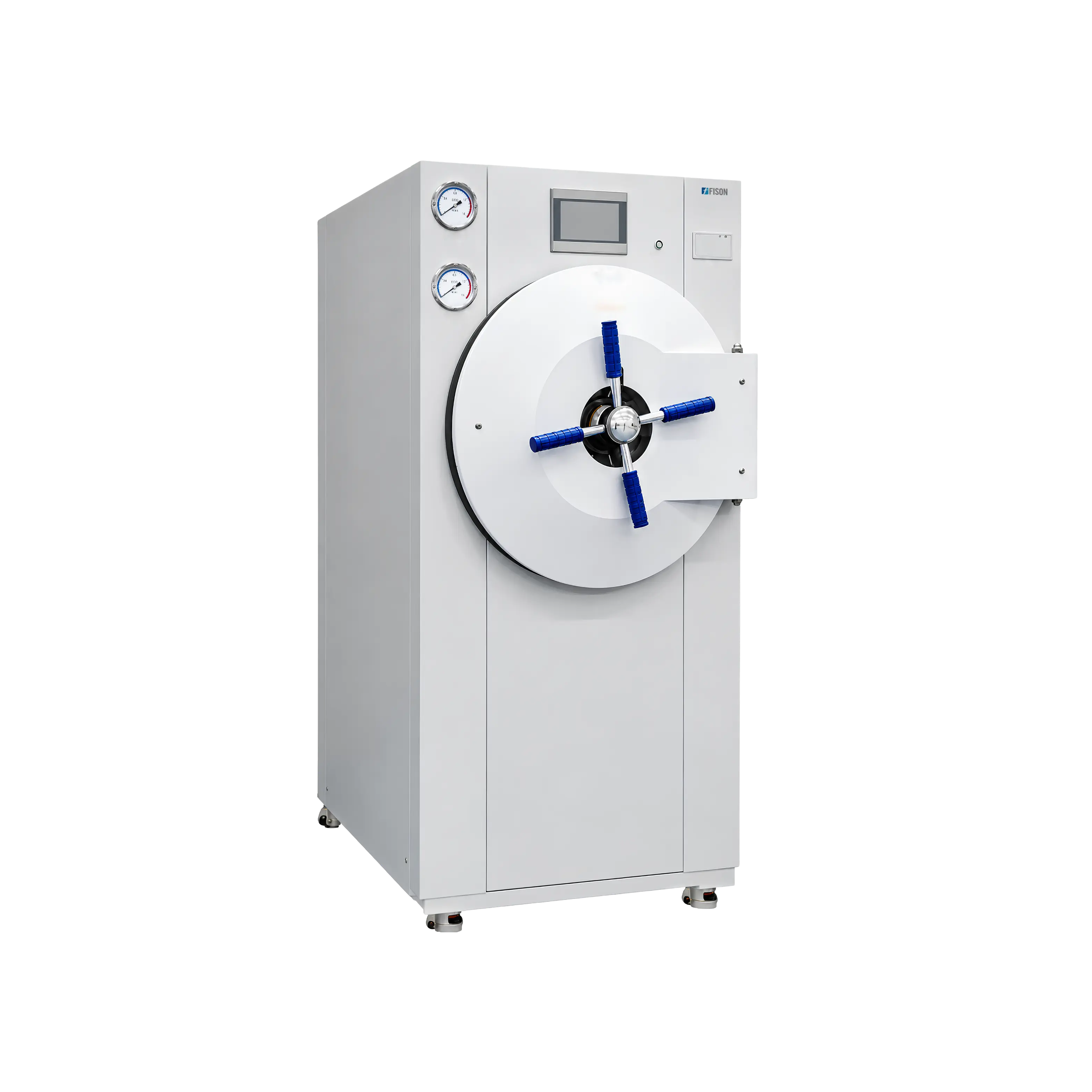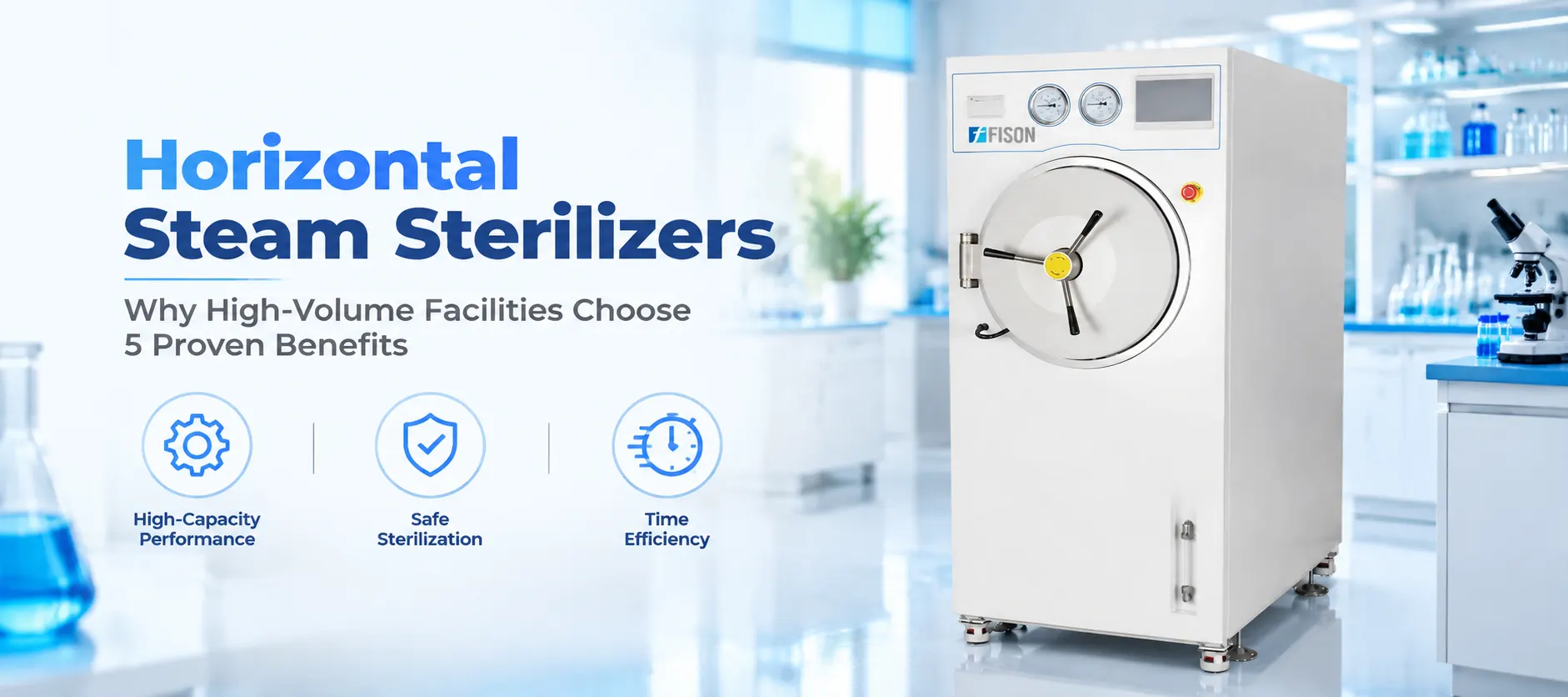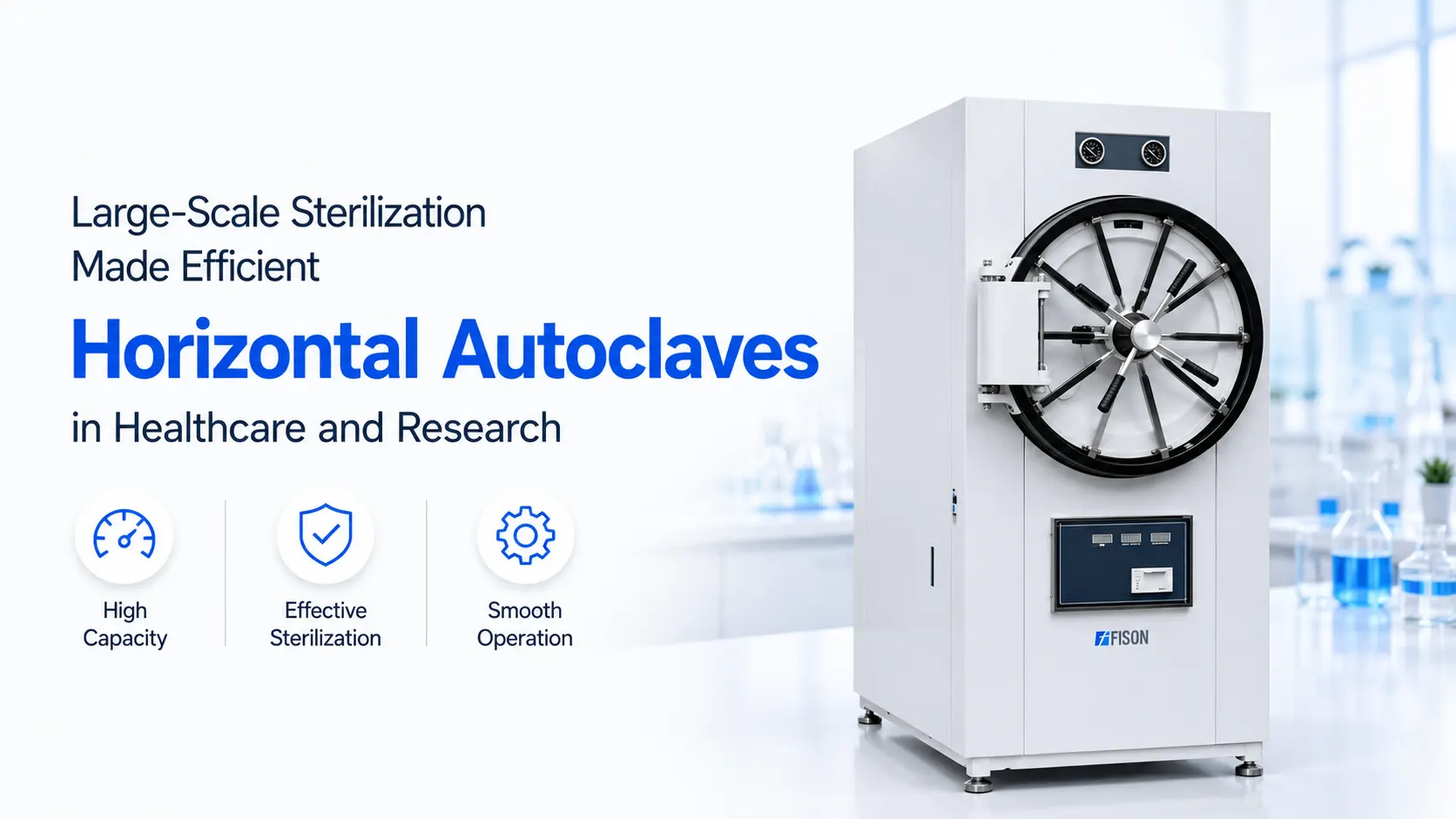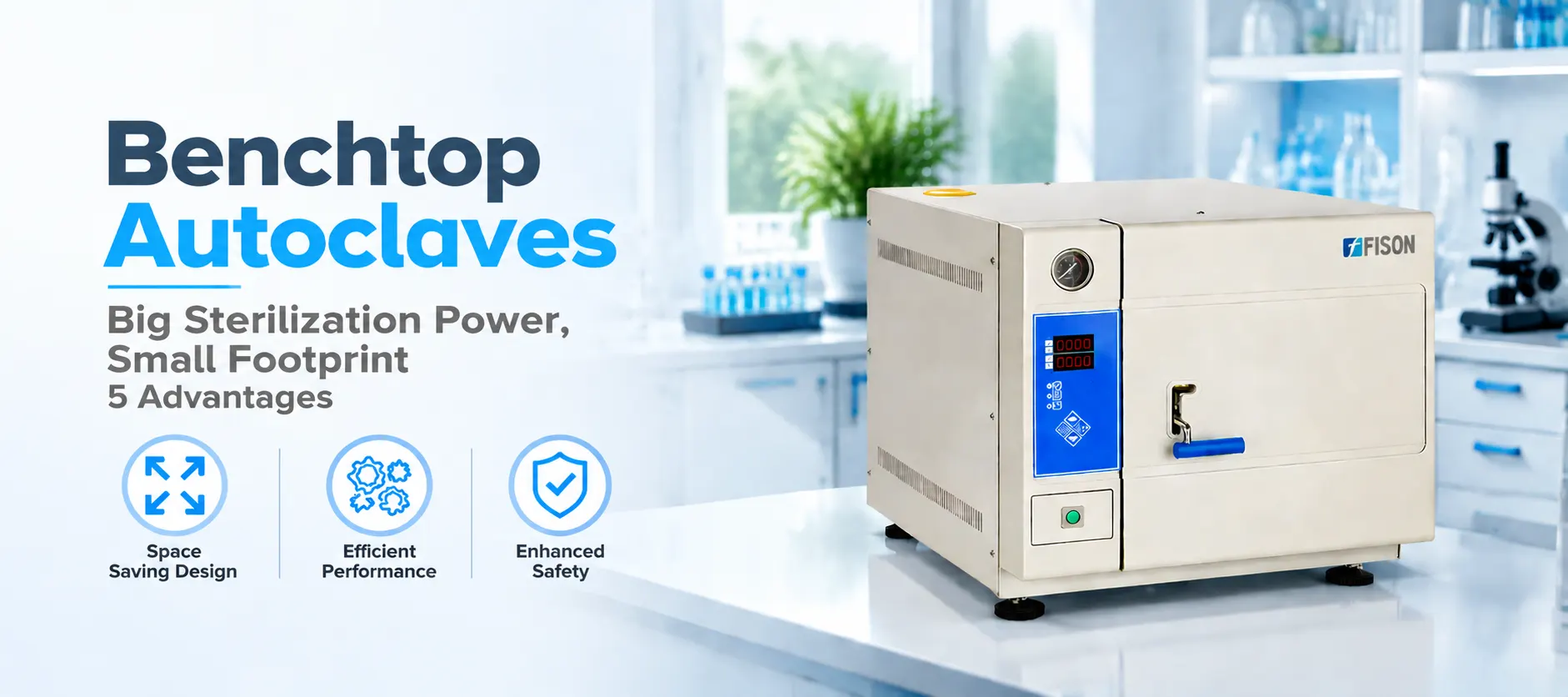
Laboratories, hospitals, research centres and advanced facilities all depend on repeatable sterilization to keep glassware, media and instruments safe for reuse. A Fison Laboratory Autoclave sits at the centre of that workflow, and the difference between a basic unit and a high-performance one shows up in cycle consistency, turnaround time and how much manual monitoring a technician still has to do. This article looks at what that difference actually means in daily practice.
What Makes an Autoclave High-Performance in a Research Setting
Chamber volume alone does not tell a facility much about how well an autoclave will hold up under daily research use. A high-performance Laboratory Autoclave distinguishes itself through programmable cycle profiles, automatic pressure and temperature control, and cycle data that a lab can retrieve without transcribing readings by hand. An autoclave machine built for research use typically supports several distinct cycle profiles rather than one fixed setting, since glassware, liquid media and waste each call for different exposure times and cooling behavior. Choosing a Laboratory Autoclave machine that logs each cycle automatically also removes a manual record-keeping step from daily operation.
Facilities comparing autoclave sterilizers side by side typically weigh chamber volume, cycle time and data logging capability against one another, since no single specification captures how a Laboratory Autoclave will perform across a full range of daily loads. A lab autoclave chosen for occasional use rarely holds up the same way once it moves into daily rotation across several departments.
How a Laboratory Autoclave Completes a Sterilization Cycle
Autoclave sterilization remains the most widely used method for heat- and moisture-stable lab materials, from glassware to certain media, and a laboratory steam autoclave reaches sterilizing temperature by holding pressurized steam at a fixed level for a programmed hold time, then releasing that pressure gradually once the cycle finishes. The stages below outline how a typical cycle moves from a sealed, loaded chamber to a finished, dry load.
Chamber Loading & Seal
Steam Pressurization
Sterilization Hold
Exhaust & Drying
The Laboratory Autoclave principle behind this cycle relies on pressurized steam transferring heat far more effectively than dry air at the same temperature, which is why a sealed chamber can sterilize a full load faster than an oven could at a comparable setting. Once the hold time ends, a controlled exhaust phase vents pressure and residual moisture before the door unlocks, leaving a load dry enough to handle and store right away.

Where the Laboratory Autoclave Category Fits Within Fison's Equipment Range
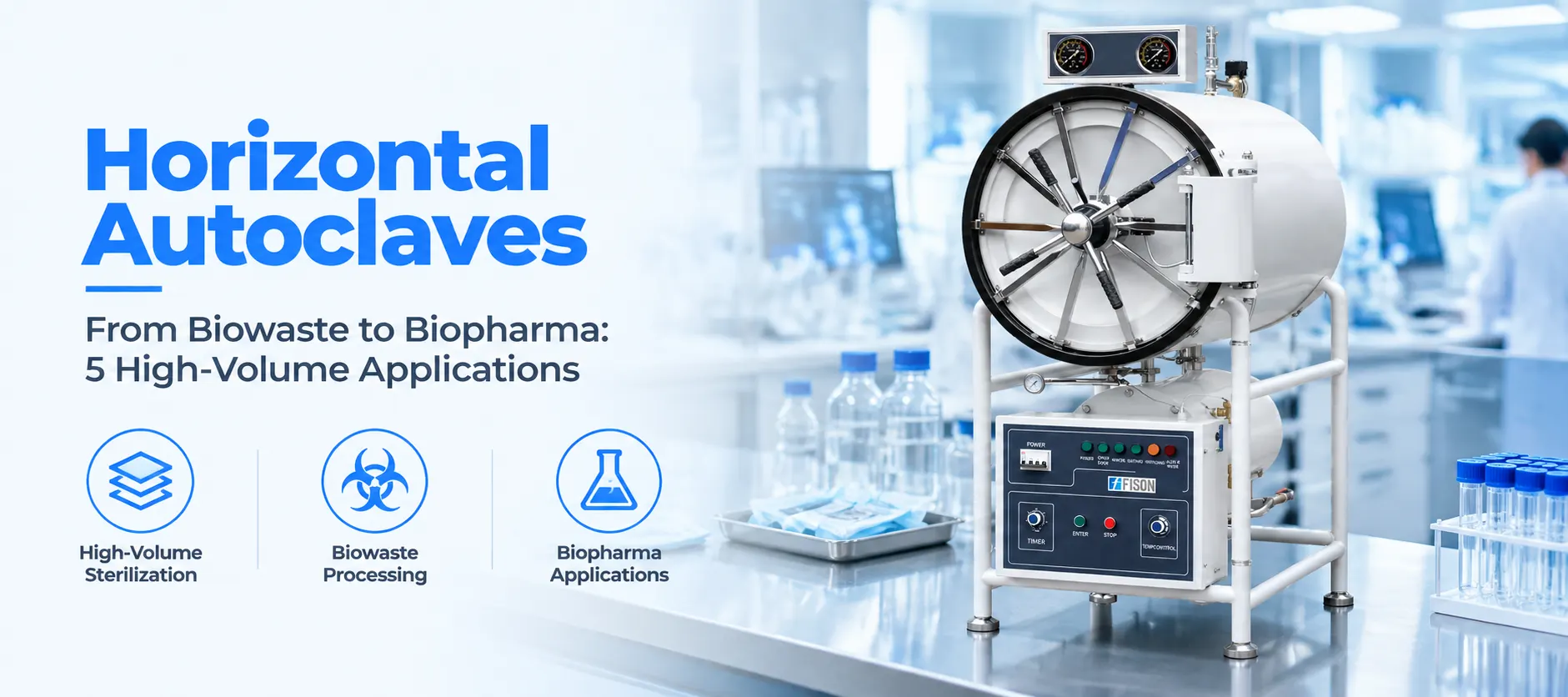
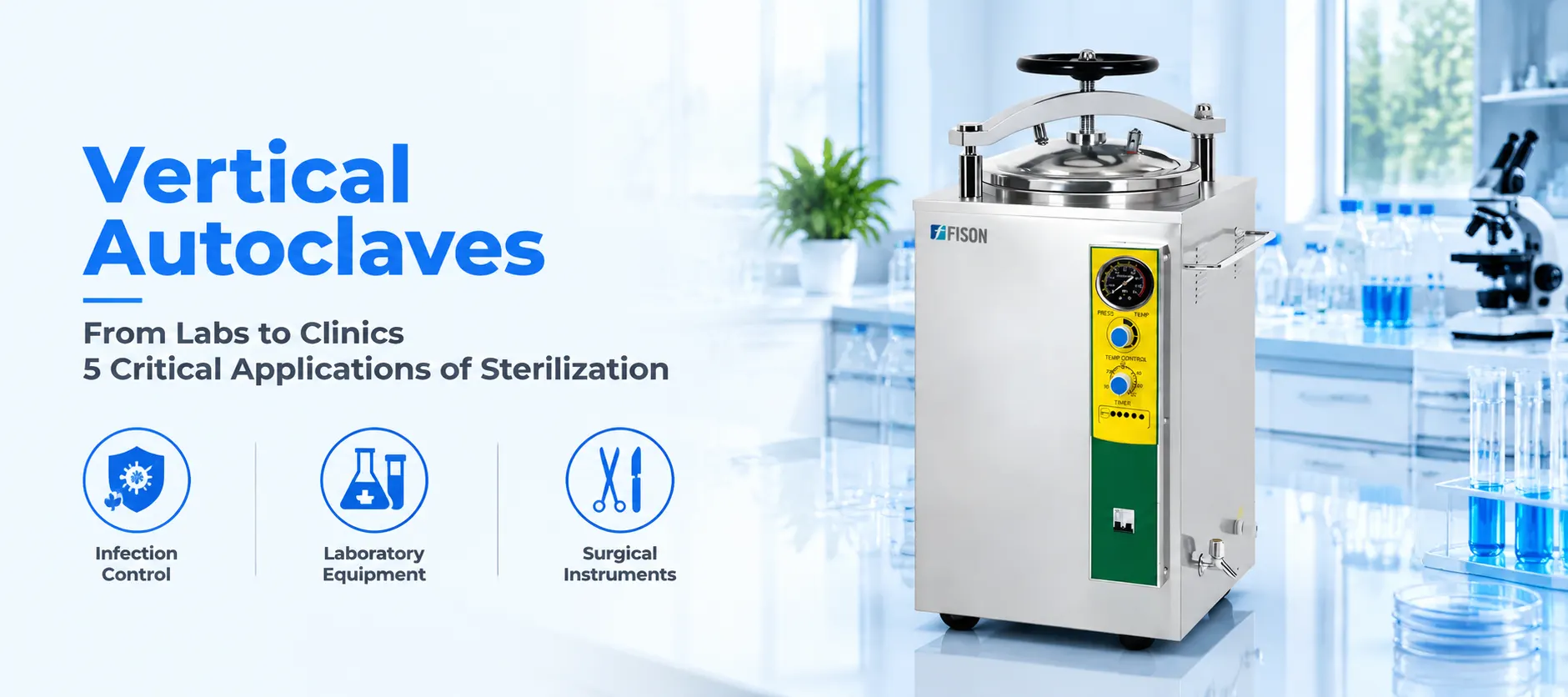
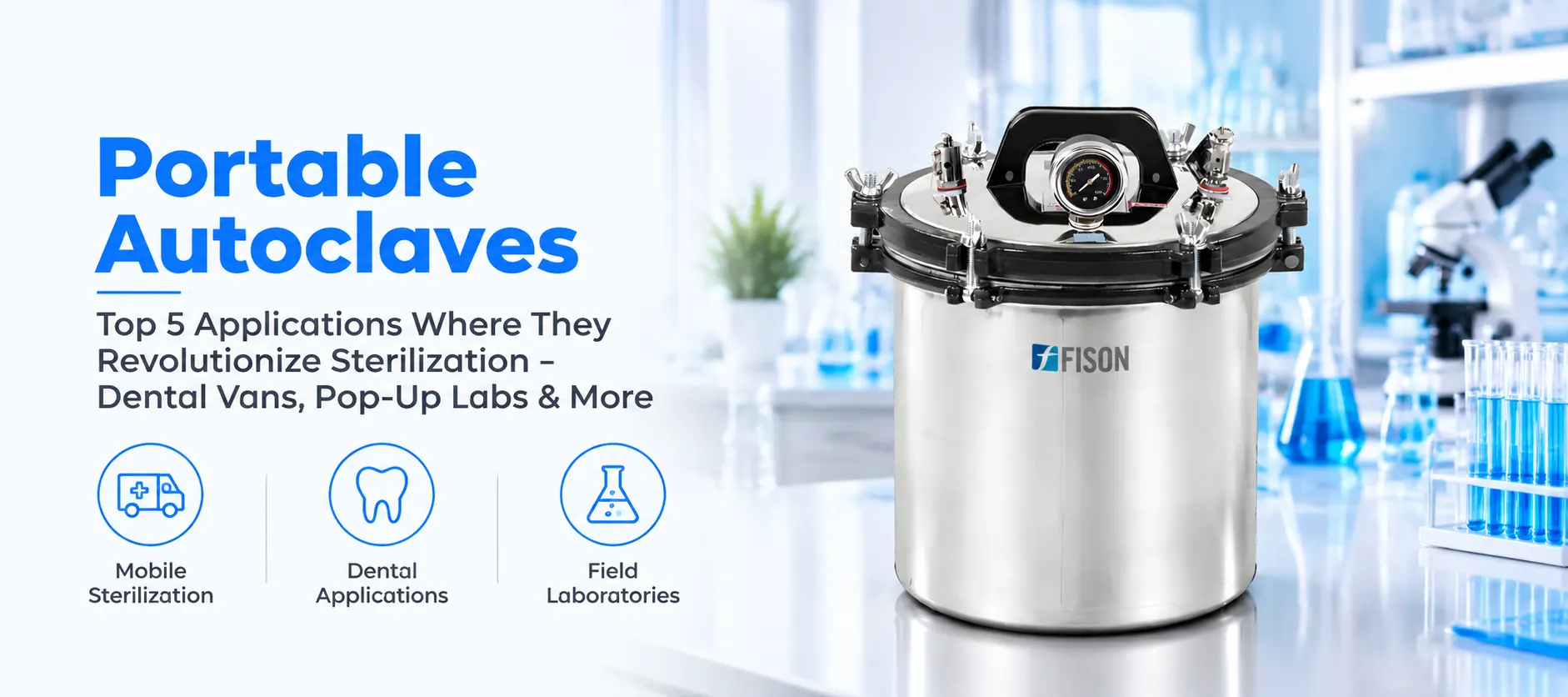
The Laboratory Autoclave category covers several chamber formats, including benchtop, vertical, horizontal and portable units, each suited to a different combination of batch size, footprint and mobility. Within this category, facilities typically compare chamber volume, cycle time, utility requirements and data logging features before settling on the format that matches their daily instrument count. As a piece of autoclave laboratory apparatus, a high-performance Laboratory Autoclave also needs to fit into an existing bench or utility layout without disrupting equipment already in place. A Laboratory Autoclave machine added to an already crowded bench can create more scheduling friction than the capacity it adds is worth.
The full Laboratory Autoclave range lists these formats together for direct comparison, and the Fison home page catalogues the wider set of laboratory and hospital equipment each format belongs to. Comparing autoclave sterilizers within this same range, rather than against unrelated equipment categories, keeps the comparison focused on formats that could realistically replace one another.
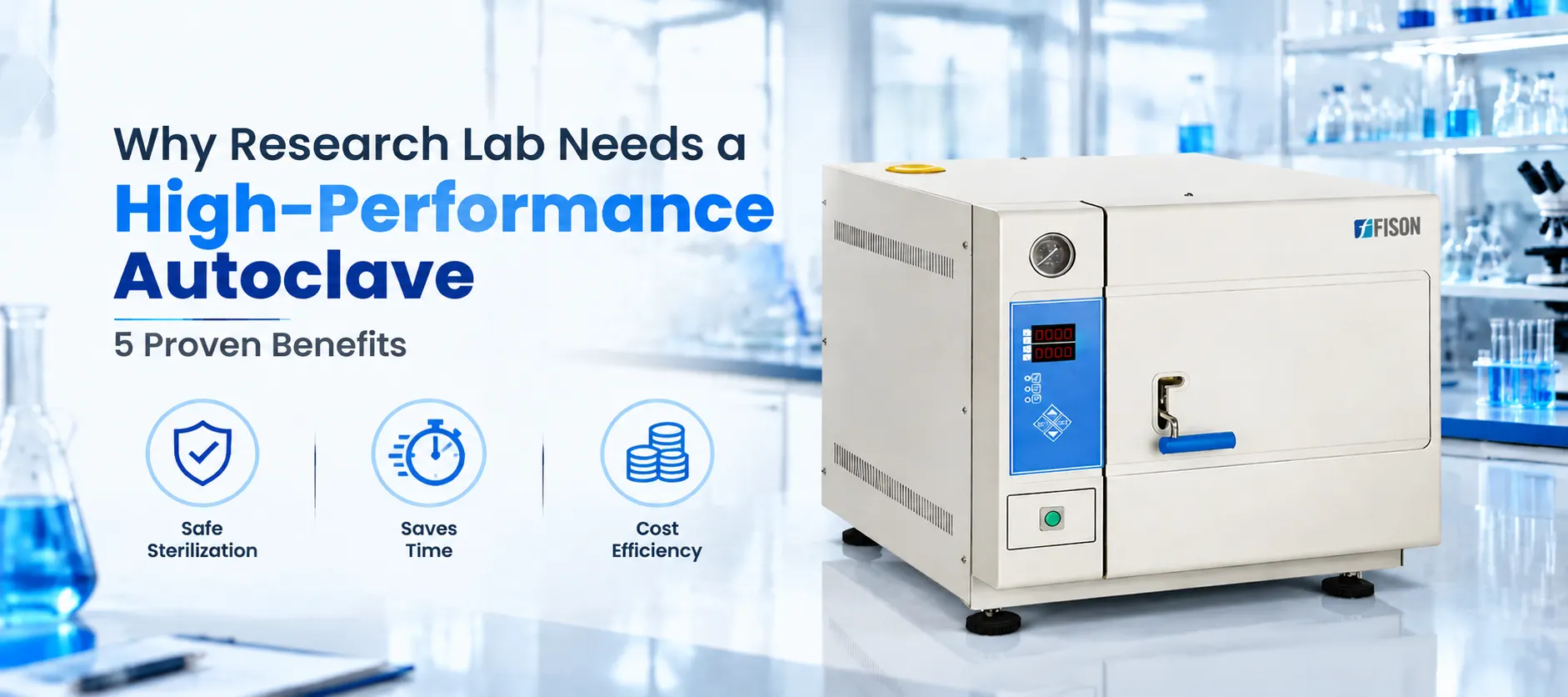
Five Proven Benefits of Choosing a High-Performance Laboratory Autoclave
Validated, repeatable cycles that produce the same exposure conditions run after run, which matters directly for research work that depends on consistent sample handling.
Programmable cycle profiles that switch between glassware, liquid media and waste settings without reprogramming the Laboratory Autoclave from scratch each time.
Faster turnaround through efficient steam generation, which keeps instrument sets and glassware moving back into circulation sooner.
Automatic cycle data logging that keeps a record of temperature, pressure and hold time without a technician transcribing readings by hand.
Reduced manual monitoring, since automated pressure and temperature control frees staff to work on other tasks while a cycle runs.
Where Laboratories, Hospitals, Research Centres and Advanced Labs Rely on a Laboratory Autoclave
Laboratory Autoclave uses span routine glassware sterilization, media preparation and waste decontamination alike, which is why the format a facility chooses tends to reflect its busiest daily task rather than an occasional one. Each Laboratory Autoclave application shares the same pressurized-steam cycle, adapted to a different daily task rather than requiring a different piece of equipment. Reviewing the full Laboratory Autoclave category alongside a facility's actual workload is a practical way to see which chamber format matches that daily pattern.
Laboratories run frequent small batches of glassware and media, favoring a lab autoclave with fast turnaround over one built for maximum single-batch volume.
Hospitals sterilizing instrument sets alongside biohazard waste rely on programmable cycle profiles to keep both tasks moving through the same chamber.
Research centres running validated protocols depend on cycle data logging to document exposure conditions for each batch processed.
Advanced labs handling sensitive samples favor automated temperature and pressure control to limit variation between one cycle and the next.
This spread of Laboratory Autoclave uses reflects how differently laboratories, hospitals, research centres and advanced labs structure daily sterilization work, rather than any single shared routine. Each new Laboratory Autoclave application tends to follow the same underlying principle, adapted to a different daily caseload instead of a different piece of equipment.
Selection Mistakes to Watch For When Choosing a Laboratory Autoclave
A handful of recurring missteps show up when a facility upgrades to a higher-performance chamber, and most only become clear once daily use exposes them:
- Assuming a single chamber format fits all workflows. A format chosen for one department's batch size can fall short once another department starts sharing the same unit.
- Overlooking cycle data logging needs. A facility running validated protocols may need documented cycle records that a basic unit was never built to produce, and skipping the Laboratory Autoclave principle behind why that data matters only makes the gap harder to explain later.
- Ignoring utility requirements for the chosen format. Power draw, water supply and drainage needs differ enough between formats that a room built for one may not support another.
- Underestimating daily cycle counts against rated capacity. A chamber sized for occasional use can fall behind once daily batch counts climb.
- Skipping operator training on programmable cycle profiles. Staff who only know one fixed setting may not use the full range of cycles a high-performance Laboratory Autoclave actually offers.
Compare Laboratory Autoclave Options Across Fison's Range
Chamber format, cycle programmability and data logging all vary between Laboratory Autoclave models, and matching these to a facility's actual daily workload matters more than choosing based on chamber volume alone. A laboratory steam autoclave selected today may still need revisiting as batch counts and workflows change, and autoclave sterilization performance depends as much on cycle programming as on chamber size alone. As a category of autoclave laboratory apparatus, this range covers formats built for very different daily routines. Documenting cycle counts and batch types before comparing options makes this decision easier the next time equipment is reviewed.
Explore Laboratory Autoclave Options