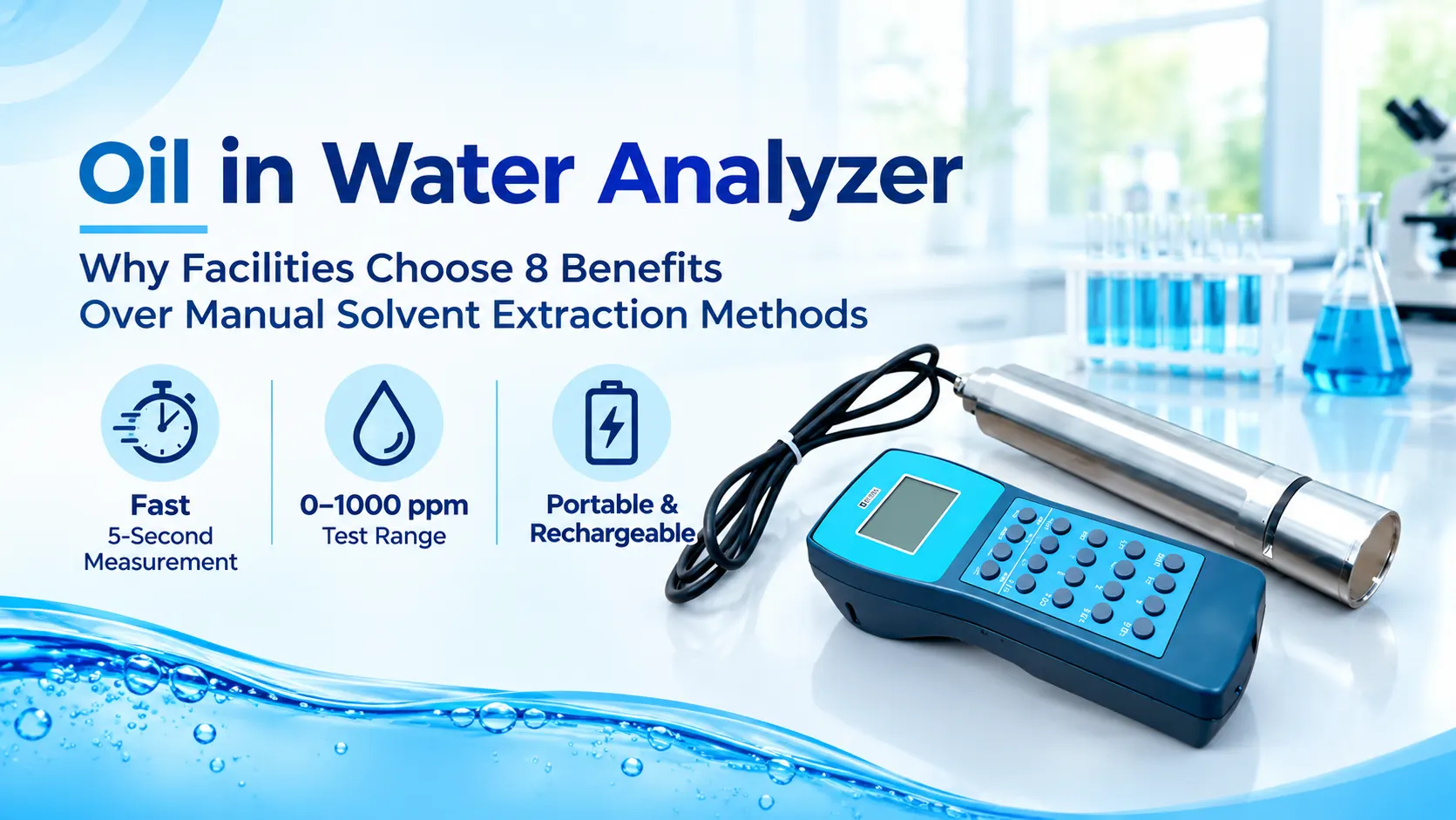
Hydrocarbon traces in water samples shape discharge decisions, equipment care, and research outcomes. This guide compares instrument-based measurement with traditional solvent extraction and explains where each method fits.
The Limits of Manual Solvent Extraction
For decades, laboratories measured hydrocarbon content in water by shaking a sample with an organic solvent, separating the layers, evaporating the extract, and weighing what remained. The method works, yet it ties up a trained analyst for long stretches, consumes large volumes of solvent, and leaves room for small handling errors that shift the final number.
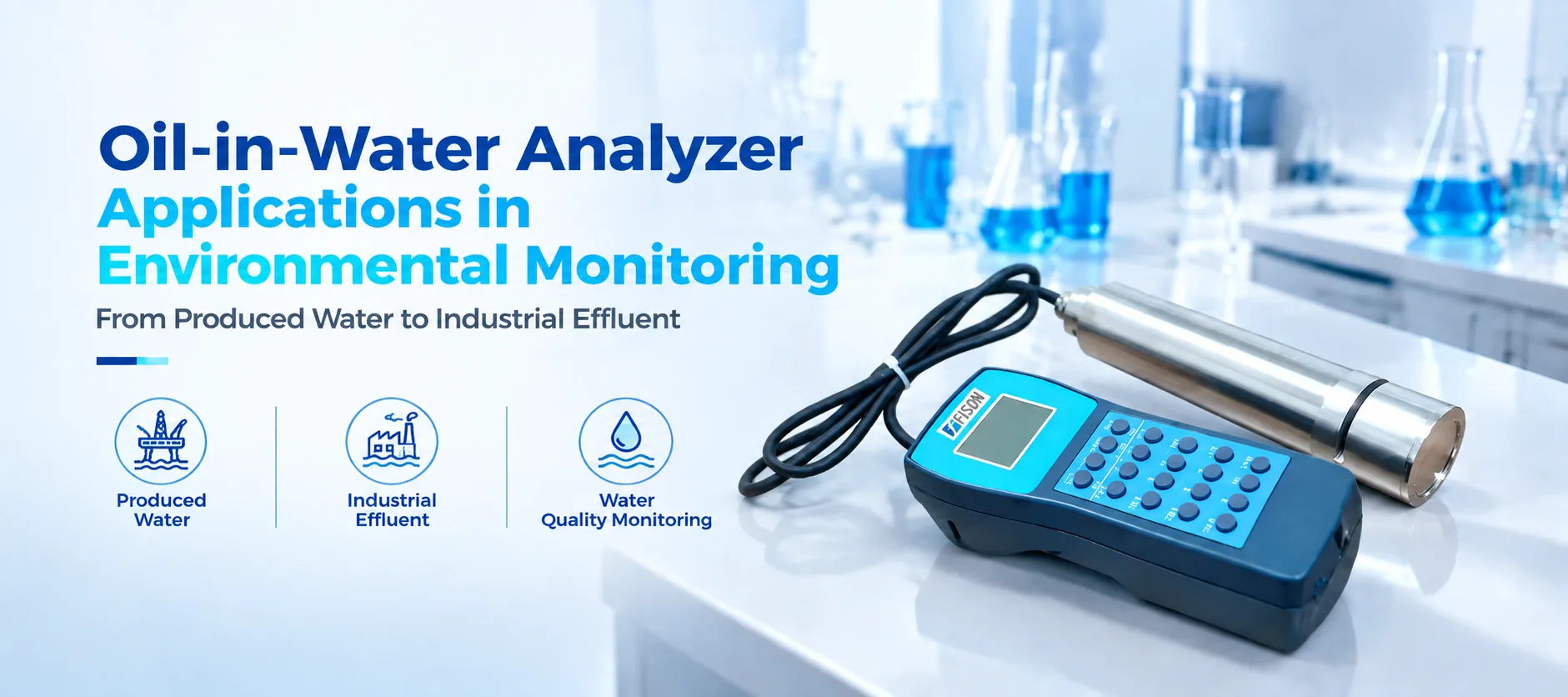
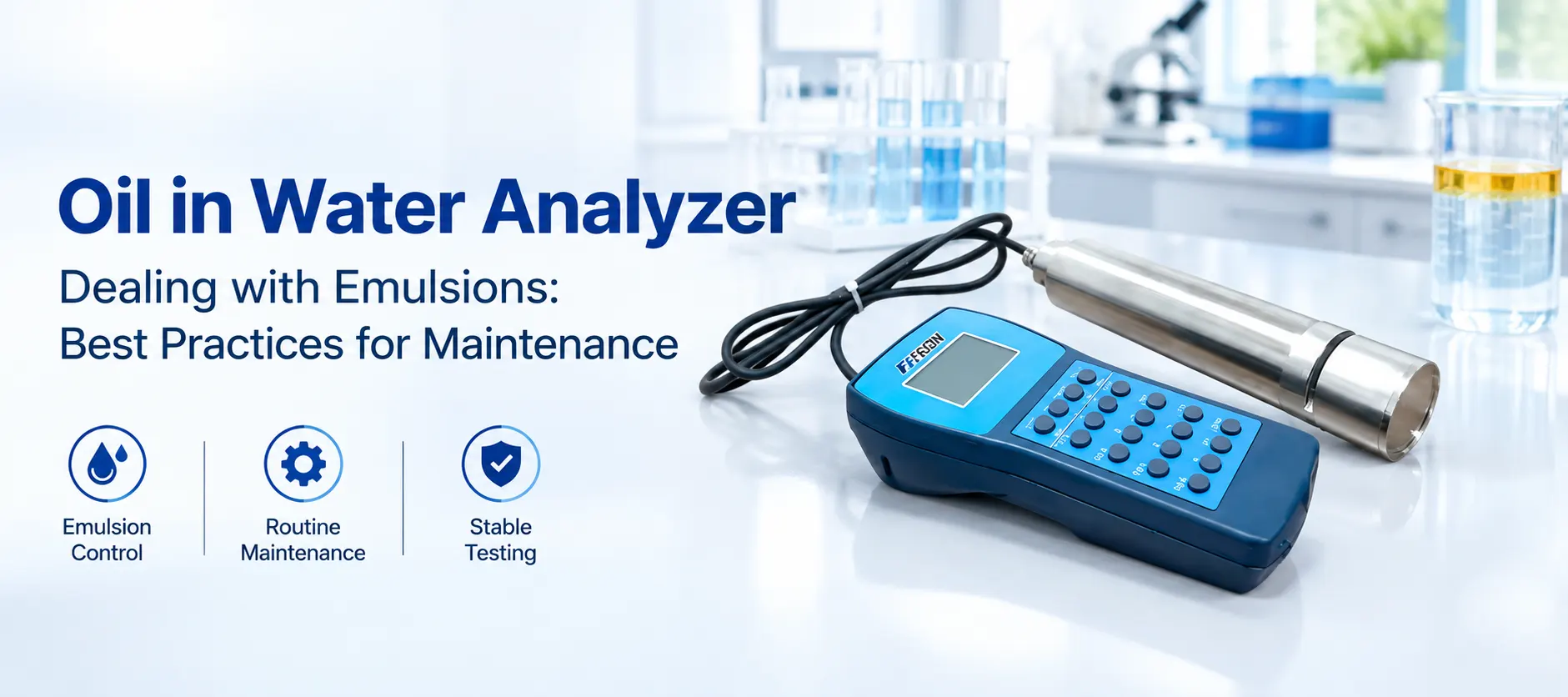
An Oil In Water Analyzer replaces most of those manual stages with an optical measurement. Instead of weighing a dried residue, the instrument reads how a prepared sample interacts with light and converts that response into a concentration value. For hospital engineering teams, research centers, and advanced testing labs, an Oil In Water Analyzer changes speed, safety, and data quality at the same time.
How Optical Measurement Replaces Gravimetric Weighing
The Oil In Water Aanalyzer working principle relies on a simple fact: hydrocarbons absorb or emit light at characteristic wavelengths. Two approaches dominate laboratory and field instruments.
Infrared Absorption
A small volume of extraction fluid pulls hydrocarbons out of the sample. The instrument passes infrared light through the extract and measures how much energy the carbon-hydrogen bonds absorb. Greater absorption indicates a higher oil concentration.
UV Fluorescence
Aromatic compounds in oil glow when excited by ultraviolet light. A detector measures the emitted light, and the analyzer converts its intensity into a reading, often with no solvent step at all.
Whichever Oil In Water Analyzer principle a unit uses, calibration against a known reference sample anchors the readings. Once calibrated, the instrument applies the same optical path and detector settings to each test, which removes much of the operator-to-operator variation seen with manual weighing.
Where Instruments Outperform the Manual Method
The differences below come up most often when labs review their testing workflow and weigh a move away from solvent extraction.
Faster Turnaround
Manual extraction can stretch across several hours once drying and weighing are included. Optical readings typically arrive within minutes of preparation, so results can guide same-day decisions.
Reduced Solvent Use
Gravimetric methods need large solvent volumes per sample. Infrared units use a fraction of that, and fluorescence instruments often need none, which lowers exposure for staff.
Smaller Sample Volumes
Optical detection is sensitive enough to work with modest sample sizes, which helps when material is limited or must be shared across several tests.
Consistent Across Operators
Weighing a dried residue is sensitive to technique. An instrument applies identical measurement conditions to each run, narrowing the spread between analysts.
Testing Beyond the Lab
A portable Oil In Water Analyzer lets technicians check outfalls, holding tanks, or treatment stages on site instead of carrying samples back to the bench.
Less Chemical Waste
Lower solvent volumes mean less spent extract to store and dispose of, which simplifies waste handling for hospital and research facilities.
Shorter Training Time
Guided menus and automatic calculation reduce the skill needed to produce a valid reading, so new staff become productive sooner.
Digital Data Records
Readings are stored with time and date stamps and can be exported for reports, removing manual transcription from paper notebooks.
Practical Use Cases Across Facilities
An Oil Water Analyzer earns its place wherever hydrocarbon contamination needs regular monitoring rather than occasional checks.
Hospital Wastewater
Kitchens, laundry areas, and plant rooms release effluent that can carry fats and lubricants. Routine checks help facility teams spot problems before water leaves the site.
Environmental Research
Research centers studying contamination in rivers, groundwater, or stormwater runoff use optical measurement to process large sample batches without overloading staff.
Process and Cooling Water
Cooling circuits, boiler feed, and condensate lines can pick up lubricant leaks. A handheld Oil In Water Analyzer gives maintenance crews a quick check at the point of concern.
Contract Testing Labs
Labs handling samples from many clients depend on repeatable instrument readings to keep turnaround predictable and reports consistent.
It helps to separate this task from its reverse. A Water In Oil Analyzer measures moisture inside fuels, hydraulic fluids, or transformer oils, while the instruments discussed here measure oil carried in a water sample. The sample types, ranges, and methods differ, so confirm which measurement your workflow needs, then review the range of Oil In Water Analyzer models to see how formats compare.
Manual Extraction and Instrument Testing Compared
| Factor | Manual Solvent Extraction | Optical Instrument |
|---|---|---|
| Time per sample | Several hours including drying | Minutes after preparation |
| Solvent volume | High | Low or none |
| Operator skill | Careful bench technique | Guided operation |
| Field use | Not practical | Possible with portable units |
| Data handling | Handwritten records | Digital storage and export |
| Waste generated | Large spent-solvent volume | Minimal |
| Spread between analysts | Wider | Narrower |
Common Selection Mistakes to Avoid
Choosing a Method Without Checking the Oil Type
Fluorescence responds strongly to aromatic compounds but weakly to some refined or synthetic oils. If your samples contain mostly aliphatic hydrocarbons, an infrared unit may track them more closely.
Mismatching the Measuring Range
An instrument tuned for trace detection may saturate on heavily contaminated effluent, while a wide-range unit may lack resolution at low levels. Match the range to your typical sample, not the extremes.
Overlooking Sample Preparation
Emulsified oil, suspended solids, and natural color can all distort optical readings. Check whether the unit supports homogenizing, filtering, or turbidity correction for your sample matrix.
Treating Portable and Bench Units as Interchangeable
A handheld unit suits quick screening, while a bench instrument offers tighter control for formal reporting. Many facilities keep one of each for different stages of the workflow.
Exploring the Wider Water Testing Category
Oil measurement sits within a broader group of water testing instruments that also covers turbidity meters, BOD analyzers, TOC analyzers, and pH meters. When labs evaluate options across this group, they usually compare detection method, measuring range, sample throughput, portability, and how readings are recorded and exported.
Comparing Oil In Water analyzer manufacturers follows the same logic: look past model names and focus on how each instrument handles your sample type and reporting needs. You can explore the complete Oil In Water Analyzer lineup to compare infrared, fluorescence, bench, and portable formats, or browse the wider laboratory catalog on the Fison home page.
Compare Analyzer Formats in One Place
Review measurement methods, ranges, and portable options side by side.
Explore Oil In Water Analyzers