Introduction
Complete blood count results guide daily decisions in hospitals, diagnostic laboratories, research institutes, and blood donation centers. This guide explains how an Auto Hematology Analyzer works, where it improves on older counting methods, and what to check before choosing one.
From Manual Counts to Automated CBC Testing
Manual CBC testing depends on a technician diluting blood by hand and counting cells under a microscope. Semi-automated counters speed up the counting step, yet staff still prepare dilutions, measure parameters separately, and copy results into records. Each manual stage adds time to the hematology workflow and a chance for small errors.
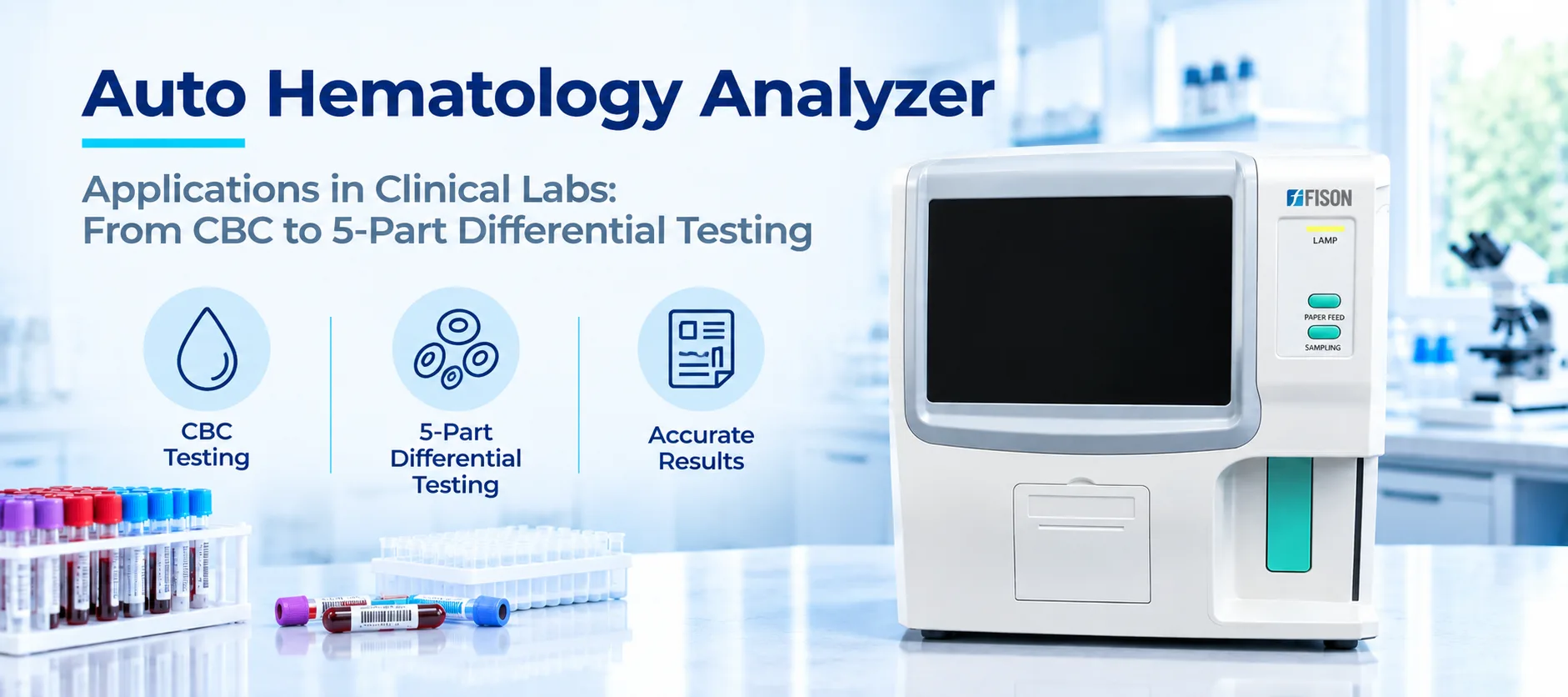
An Auto Hematology Analyzer handles sample intake, dilution, counting, and calculation internally, then reports white blood cells (WBC), red blood cells (RBC), platelets (PLT), hemoglobin, and hematocrit together. For a clinical laboratory moving away from manual counts, an automatic hematology analyzer turns the complete blood count into a single, repeatable run.
How the Counting Principle Works
The core Auto Hematology Analyzer principle is electrical resistance, also known as the Coulter principle. Inside an Auto Hematology Analyzer, diluted blood passes through a tiny aperture between two electrodes. Blood cells conduct electricity poorly, so each cell briefly raises the resistance as it passes, creating a pulse the analyzer can count and measure.
Impedance Counting
The number of pulses gives the cell count, and the size of each pulse reflects cell volume. Sorting pulses by size separates WBC, RBC, and PLT and builds a histogram for each group, supporting a three-part differential of lymphocytes, mid-sized cells, and granulocytes.
Laser Scatter
A five-part Auto Hematology Analyzer adds laser scatter with sheath flow. Cells pass a laser one at a time, and light scattered at several angles separates neutrophils, lymphocytes, monocytes, eosinophils, and basophils on scatter diagrams.
Knowing the hematology analyzer principle behind an Auto Hematology Analyzer helps a lab predict its output. Impedance models deliver counts with three histograms, while laser scatter models add a fuller white cell differential and more reportable parameters.
What Automation Changes in the Hematology Lab
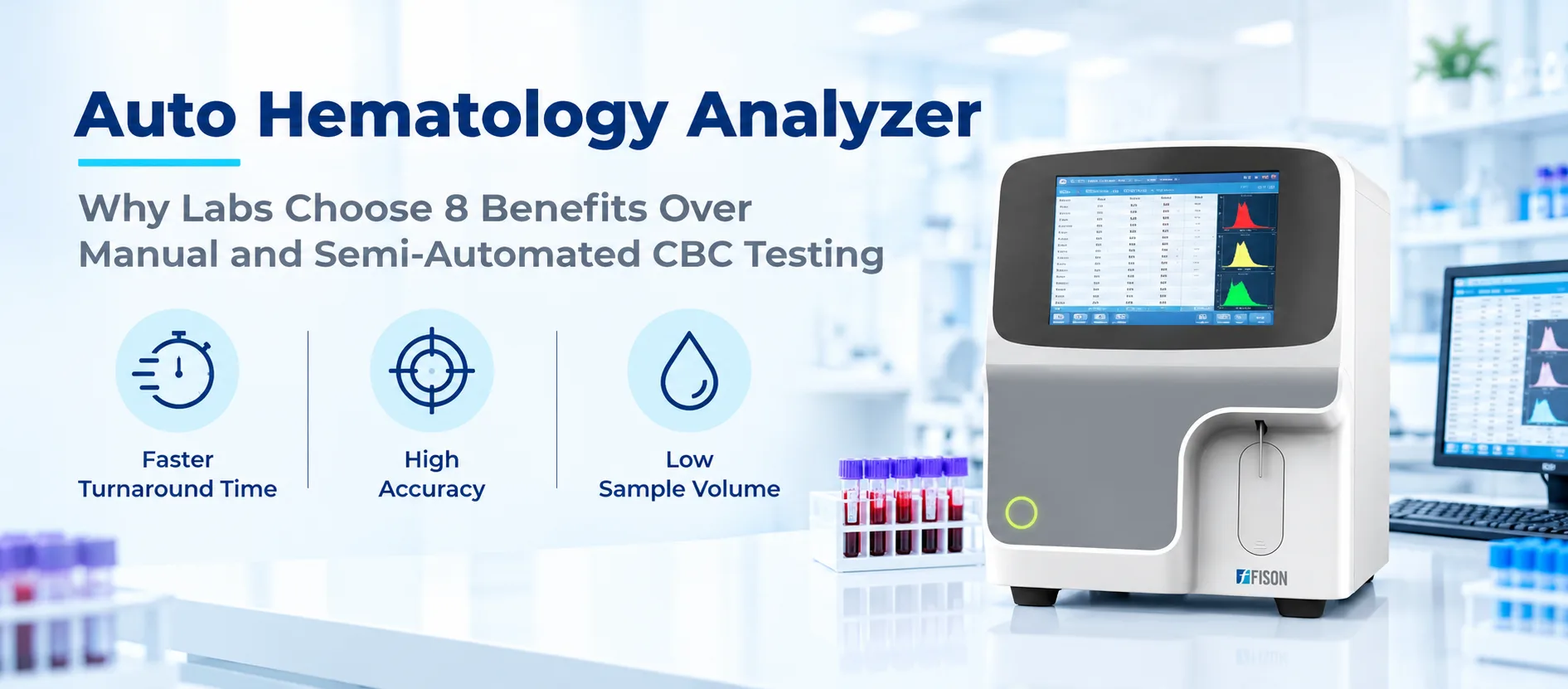
Compared with manual and semi-automated counting, a fully Auto Hematology Analyzer changes daily lab work in these practical ways.
Faster Turnaround
An Auto Hematology Analyzer processes about one sample per minute, so routine and urgent CBC requests move quickly.
Broader Parameter Panel
One run reports more than twenty parameters, including WBC, RBC, PLT, hemoglobin, hematocrit, and red cell indices.
Visual Cell Distribution
Histograms or scatter diagrams show how cell sizes spread, giving staff more context than a count alone.
Small Sample Volume
An Auto Hematology Analyzer needs only microliters of blood, in either whole blood or prediluted mode.
Flexible Calibration
An Auto Hematology Analyzer offers automatic and manual calibration, helping the lab keep counts consistent across shifts and operators.
Clog Alarms and Flags
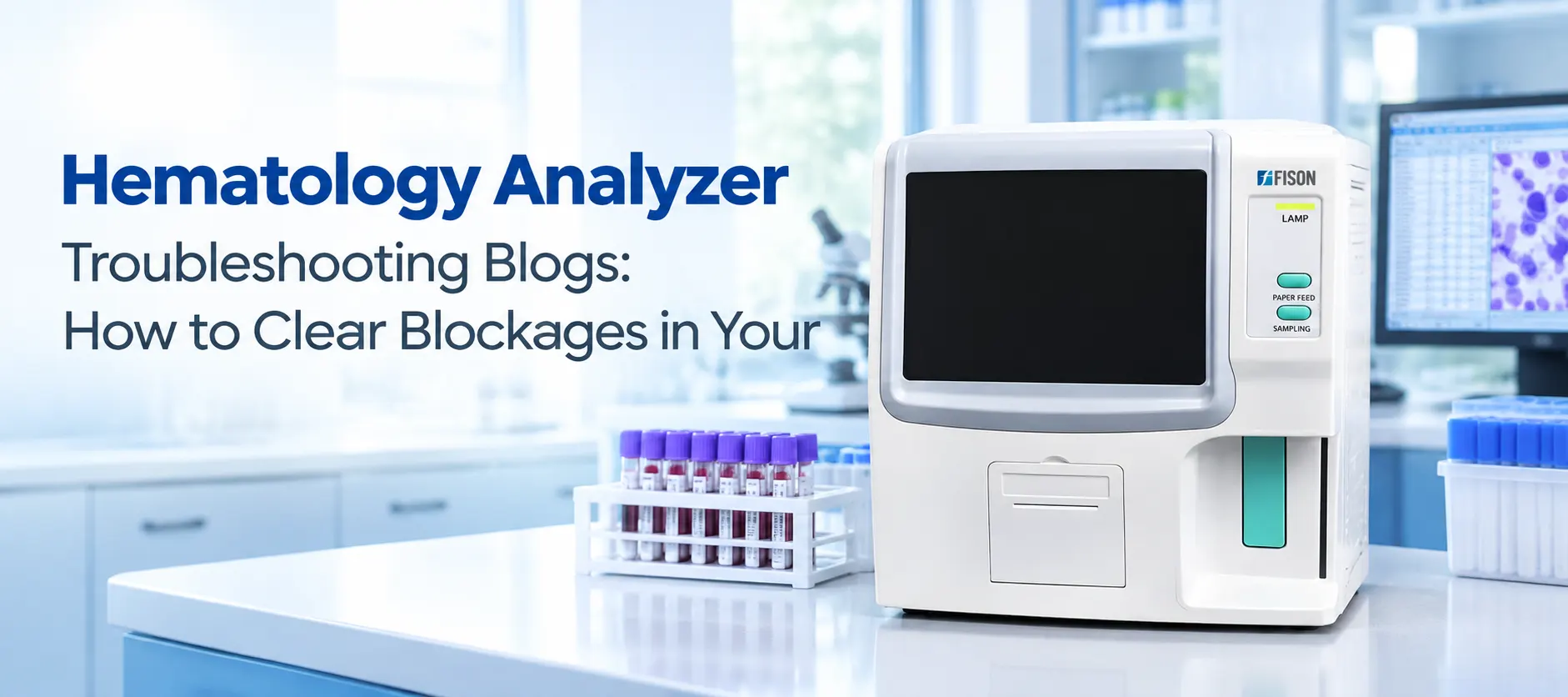
An Auto Hematology Analyzer uses blockage removal, fault alarms, and pathological flags to alert staff to problems before a result is released.
Large Result Storage
Results and histograms are saved on the Auto Hematology Analyzer, with capacity reaching tens of thousands of records or more.
Print and LIS Output
A built-in thermal printer and LIS interface deliver reports without retyping results.
Practical Use Cases Across Lab Settings
Common hematology analyzer uses include counting leukocytes, red cells, and platelets and determining hemoglobin and hematocrit levels. The setting decides which features matter most.
Hospitals
Hospitals run CBC tests around the clock, so an Auto Hematology Analyzer machine with steady throughput keeps inpatient and emergency requests moving.
Diagnostic Laboratories
Diagnostic laboratories handle large daily batches, where pathological flags point staff toward samples that need a closer look.
Research Institutes
Research institutes tracking blood parameters over time benefit from stored histograms and exportable records of an Auto Hematology Analyzer.
Blood Donation Centers
Blood donation centers screen donor samples quickly, using hemoglobin and blood cell counts from a single Auto Hematology Analyzer run.
Supplier catalogs list the same instrument under several names, including Auto Haematology Analyzer and blood cell counter. When comparing options for hospitals or diagnostic laboratories, focus on the counting method and differential depth rather than the label. The range of hematology analyzers shows how these configurations differ in practice.
Manual, Semi-Automated, and Automated Testing Compared
| Factor | Manual Counting | Semi-Automated | Auto Hematology Analyzer |
|---|---|---|---|
| Sample dilution | By hand | By hand | Internal, with whole blood and prediluted modes |
| Parameters per run | One at a time | A few | More than twenty |
| Speed | Slow | Moderate | About one sample per minute |
| Cell distribution view | None | Limited | Histograms or scatter diagrams |
| Abnormal sample alerts | Operator judgment | Limited | Pathological flags and alarms |
| Result recording | Handwritten | Partly manual | Stored, printed, and sent to LIS |
Common Selection Mistakes to Avoid
Choosing Differential Depth Without Checking Caseload
A three-part impedance model covers routine CBC screening, while a five-part laser scatter model suits labs that need a full white cell breakdown. Match the differential to the samples your lab actually sees.
Overlooking the Reagent Set
Impedance models run on diluent, lyse, and probe cleaner, while laser scatter models also need sheath and detergent. Plan storage space and stock levels before installation.
Assuming All LIS Links Work Both Ways
Some models support a uni-directional LIS link, which sends results out but does not receive test orders. Confirm how your lab information system expects data to flow.
Ignoring Storage Capacity
On-board storage differs widely between models. A busy hospital lab or research institute keeping long records should check how many results, with histograms, the analyzer retains.
Exploring the Hematology Analyzer Category
The Auto Hematology Analyzer belongs to a wider hematology group that also includes hemoglobin analyzers and veterinary hematology analyzers. Labs comparing these instruments usually weigh differential depth, throughput, sample volume, reagent set, data storage, and LIS connectivity.
Whether the goal is a three-part counter or a fully Automated Hematology Analyzer for a busy hospital, you can review the full hematology analyzer lineup to compare an Automated hematology analyzer machine across configurations, or browse other laboratory instruments on the Fison home page.
See Automated Blood Counting in Detail
Review counting methods, sample modes, and throughput for automated systems.
Explore Auto Hematology Analyzers