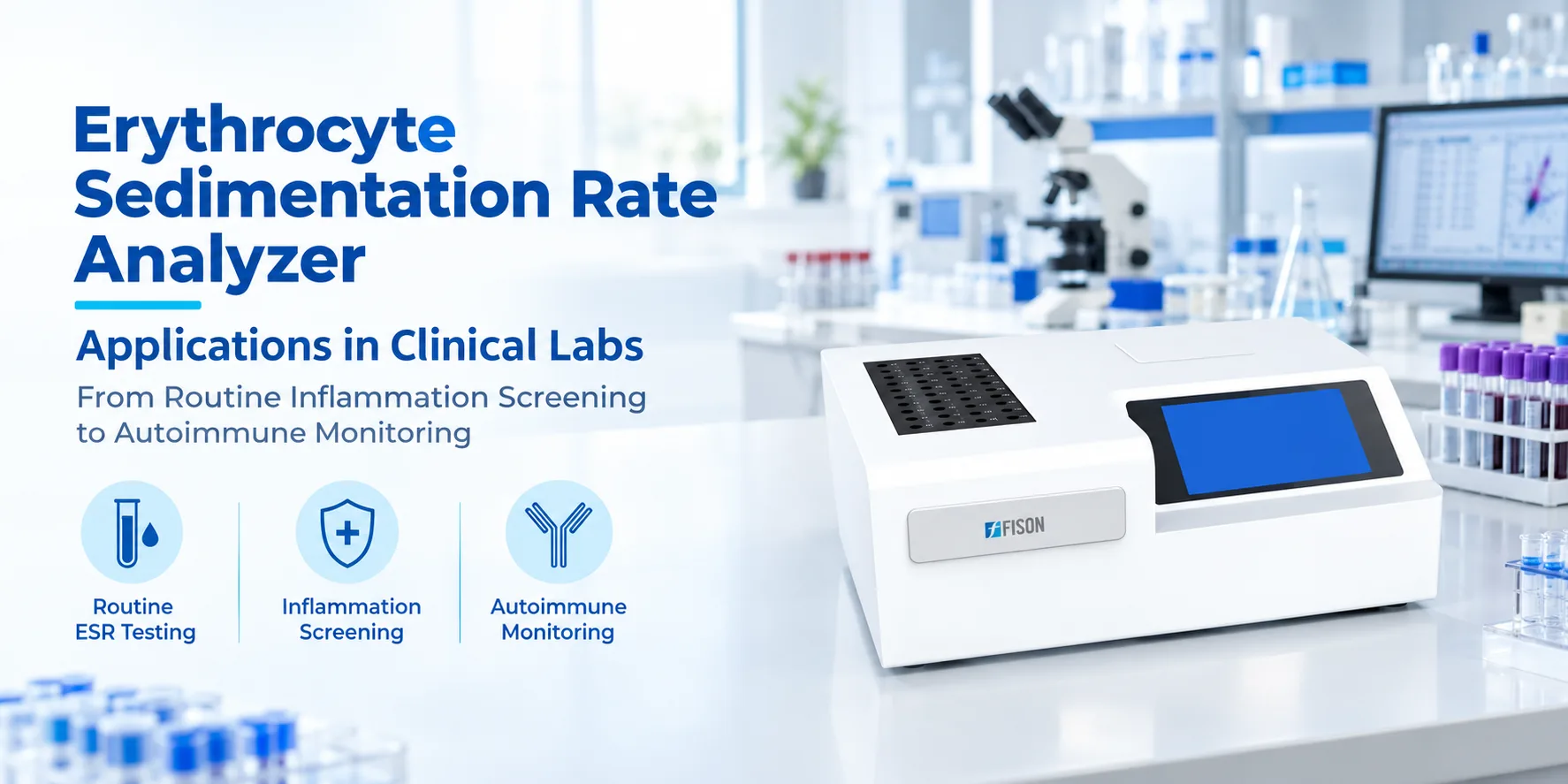
The Fison Erythrocyte Sedimentation Rate (ESR) is one of the most familiar blood tests in clinical laboratories. This explains how an Automated ESR Analyzer works, where it is used, and what to check before choosing one.
What the Sedimentation Rate Tells a Clinical Lab
When anticoagulated blood stands in a vertical tube, red blood cells slowly settle and leave a layer of clear plasma above them. The distance the cells fall in a set time is the erythrocyte sedimentation rate, reported in millimeters per hour. A raised rate points to inflammation somewhere in the body, so clinicians use it to screen for infections, inflammatory conditions, and autoimmune disorders, and to follow how a disease responds over time.
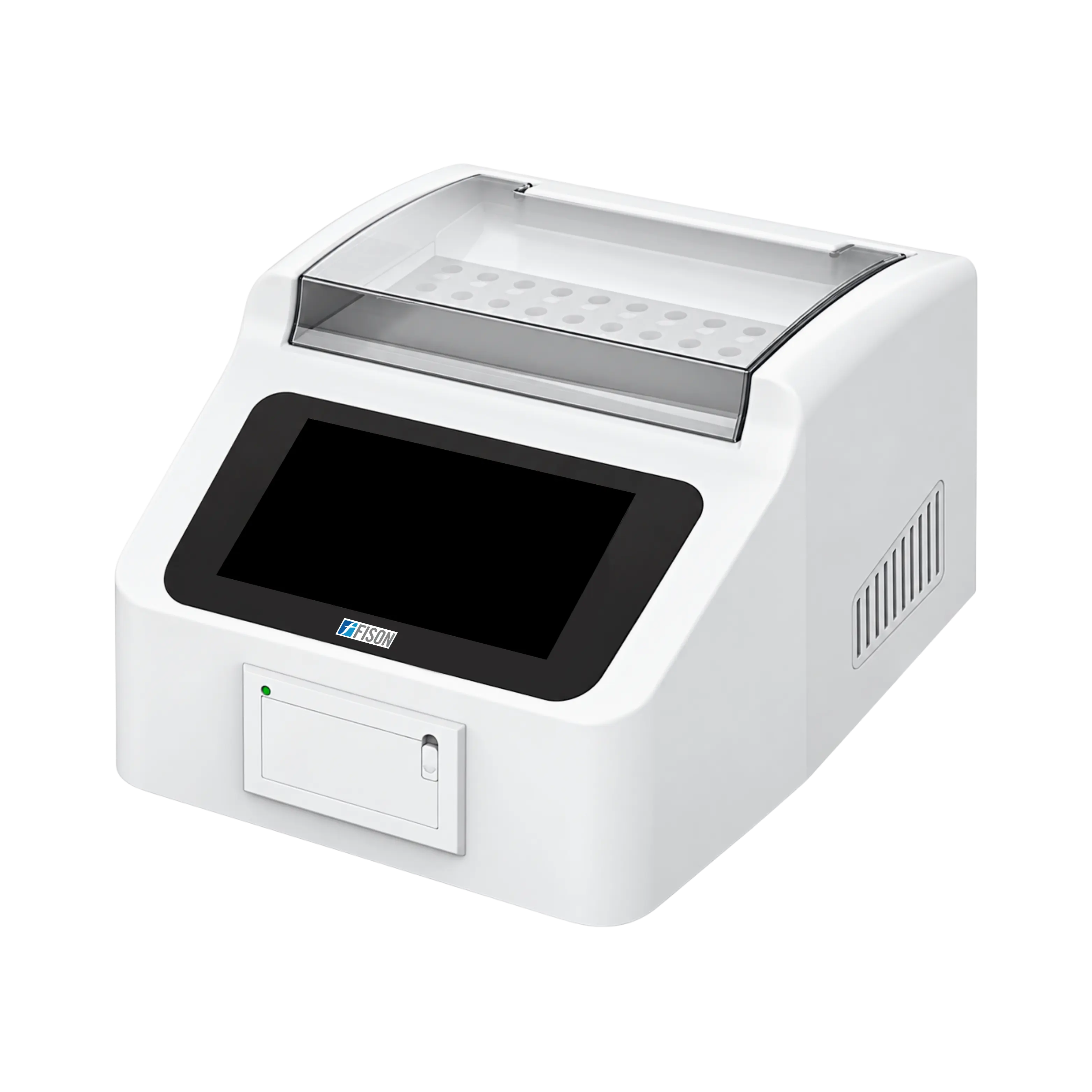
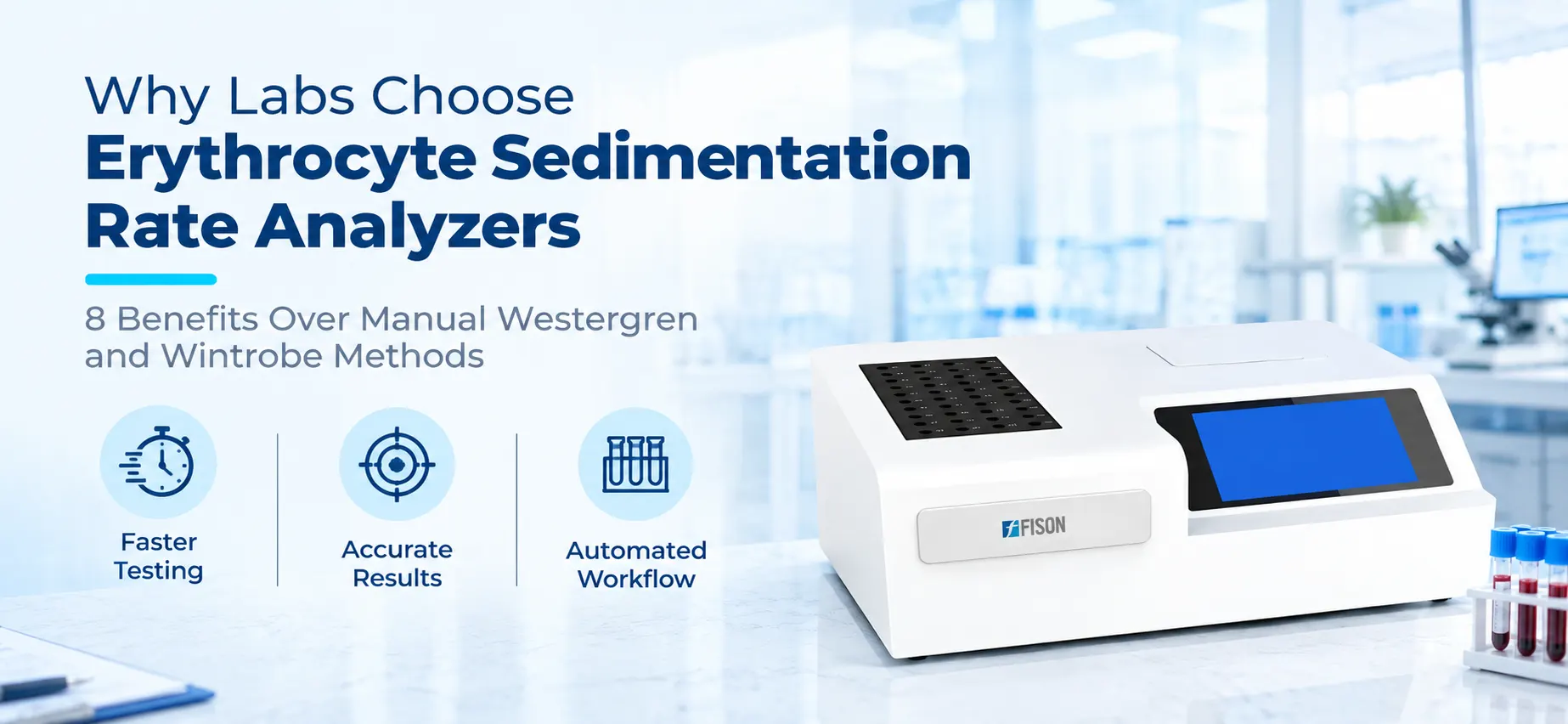
An Erythrocyte Sedimentation Rate Analyzer automates this test. Instead of a technician reading each tube by eye, the Erythrocyte Sedimentation Rate Analyzer scans the tubes with infrared detection and reports a Westergren ESR value for each sample. That shift turns a manual reading into automated ESR testing that runs many samples side by side.
How Infrared Detection Tracks Settling Cells
The Automated ESR Analyzer principle builds on the Westergren method. Blood in each tube begins with a uniform appearance, then a boundary forms between the settling red cells and the clear plasma above. An infrared sensor scans each tube at short, regular intervals and records the height of that boundary as it moves down.
Infrared Scanning
Plasma and packed red cells respond differently to infrared light, so the Erythrocyte Sedimentation Rate Analyzer can locate the boundary. Scans repeat at a set interval, so the analyzer follows the boundary throughout the test.
Temperature Correction
Blood properties change with temperature, which affects how fast cells settle. Automatic thermal compensation corrects each result to a fixed reference temperature, so readings stay comparable.
This ESR Analyzer working principle follows an improved Westergren method that also helps prevent cross-contamination between samples. Labs can choose a half-hour or one-hour test mode, and the Erythrocyte Sedimentation Rate Analyzer still reports results as Westergren values. Samples are accepted across a wide hematocrit range and a set blood level range in the tube.
What Automation Changes at the ESR Bench
Compared with reading tubes by eye, automated sed rate analyzers change daily ESR work in these practical ways.
Many Samples at Once
Dozens of tube positions let an Erythrocyte Sedimentation Rate Analyzer run a full batch side by side.
Shorter Test Mode
A half-hour mode delivers results sooner when clinicians need them quickly.
No Visual Reading
Infrared detection replaces reading by eye, so results no longer depend on visual judgment.
Temperature Corrected
Results are corrected to a reference temperature, so room conditions do not skew readings.
Less Cross-Contamination
The improved Westergren method helps keep one sample from affecting the next.
Touch Screen Control
A color touch screen makes setup, monitoring, and review straightforward for staff.
Built-In Printing
A built-in thermal printer produces a report as soon as each run finishes.
Saved Results
Results are saved automatically and can be sent out through a serial interface.
Clinical Uses from Screening to Monitoring
Key ESR Analyzer uses span first-line screening, diagnosis support, and long-term follow-up in hospitals and clinical laboratories.
Routine Inflammation Screening
In routine health analysis, the Erythrocyte Sedimentation Rate Analyzer flags raised rates that may point to inflammation needing further tests.
Infection Screening
A raised ESR supports the screening and diagnosis of infections, alongside other Erythrocyte Sedimentation Rate Analyzer blood tests. When reviewing an Erythrocyte Sedimentation Rate Analyzer bacteria screening result, clinicians confirm the cause with further tests, since ESR shows inflammation, not the organism.
Autoimmune Monitoring
For autoimmune disorders, repeated ESR results help clinicians monitor how the condition progresses.
Disease Progression Tracking
Hospitals and research centers use serial ESR testing to track disease progression in inflammatory disorders over time.
ESR is often requested in the same panel as a blood count, yet the two measure different things. An Erythrocyte Sedimentation Rate Analyzer blood count comparison is a common source of confusion: the analyzer measures how fast red cells settle, not how many there are. The range of ESR analyzers shows how Sed Rate Analyzer configurations compare.
Manual Westergren Reading and Automated ESR Compared
| Factor | Manual Westergren Reading | Erythrocyte Sedimentation Rate Analyzer |
|---|---|---|
| Reading method | By eye against a scale | Infrared scanning at regular intervals |
| Test duration | Full hour | Half-hour or one-hour modes |
| Temperature effects | Not corrected | Automatically corrected |
| Batch handling | Tubes read one by one | Dozens of positions read together |
| Result recording | Handwritten | Auto-saved, printed, and sent via serial interface |
Common Selection Mistakes to Avoid
Ignoring Test Mode Options
Some labs need faster results while others prefer the full one-hour reading. Check that the analyzer offers both half-hour and one-hour modes.
Overlooking Temperature Compensation
Without automatic correction, room temperature changes can shift ESR results. Confirm the Erythrocyte Sedimentation Rate Analyzer corrects readings to a reference temperature.
Underestimating Capacity
Match tube positions and tests per hour to your daily ESR workload, including peak periods in busy hospitals. Undersized capacity slows routine health analysis during busy periods.
Assuming Full LIS Connectivity
Some models output data through a serial interface rather than a direct network link. Check how results will reach your lab information system.
Exploring the ESR Analyzer Category
ESR analyzers sit within a wider group of hematology lab instruments that also includes hematology analyzers and coagulation analyzers. Clinical laboratories and research centers comparing ESR options usually weigh detection method, number of tube positions, tests per hour, test modes, temperature correction, and data output.
Whether you run a small clinical lab or a busy hospital hematology department, you can review the full Erythrocyte Sedimentation Rate Analyzer lineup to compare configurations, or browse other laboratory instruments on the Fison home page.
Review Automated ESR Testing in Detail
Compare test modes, tube capacity, and data output for ESR analyzers.
Explore ESR Analyzers