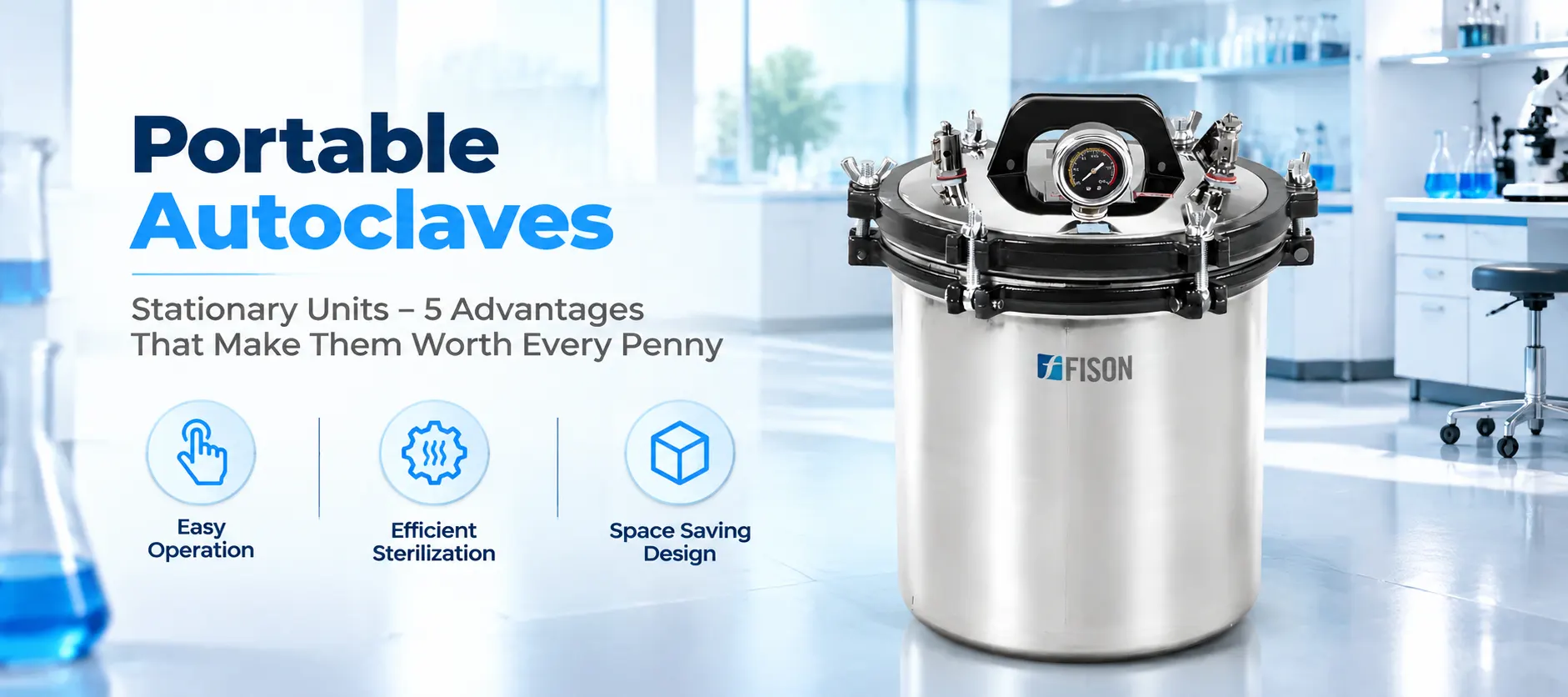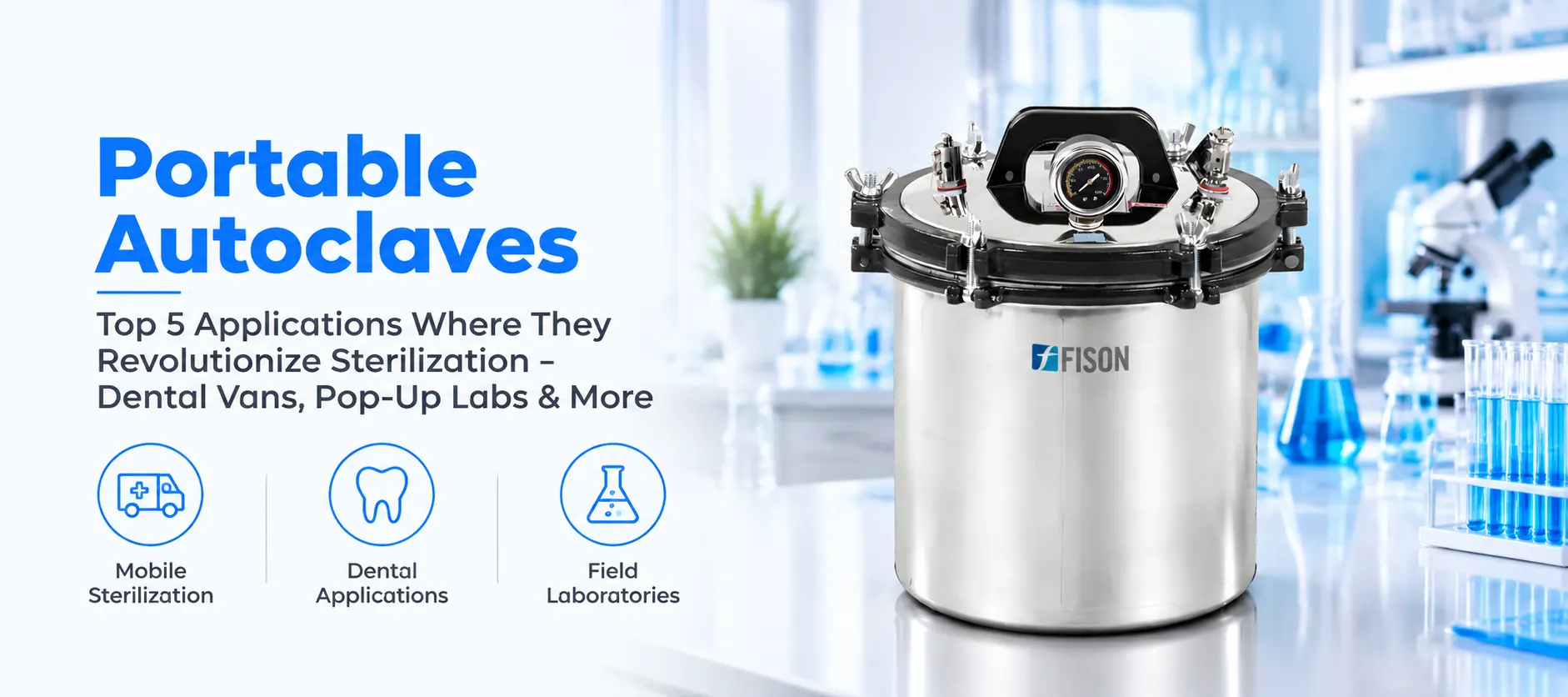
Not all sterilization needs happen inside a fixed sterile processing department. Mobile clinics, field research teams and temporary care sites still need to reach the same sterility level as a hospital lab, without a plumbed water line or a permanent installation. A Fison Portable Autoclave is built to travel with the work itself. This article looks at how the Portable Autoclave works, the settings where it earns its place, and what to check before choosing one.
Why Mobile and Field Settings Need a Different Kind of Autoclave
A fixed sterile processing room can count on a plumbed water supply, a stable power connection and a permanent spot on the floor plan. Field and mobile settings usually have none of these fixed points to rely on. A portable steam sterilizer works from a self-contained water reservoir instead of a plumbing line, runs from ordinary mains power where it's available, and packs down light enough to move between sites without specialized transport. This shift in requirements, not just a smaller chamber, is what separates a Portable Autoclave from a fixed one.
Portable Autoclave Principle: Sterilization Without a Fixed Installation
A Portable Autoclave sterilizer runs the same steam-under-pressure cycle as any autoclave, but each component is built around independence from fixed utilities. The internal reservoir is filled before each session or block of cycles, removing the need for a dedicated water line at the point of use.
Reservoir Fill
Sealed Pressurization
Sterilization Hold
Cool-Down & Pack-Down
Once the hold phase finishes, a portable steam autoclave cools and vents faster than its footprint might suggest, since the chamber volume is small relative to a fixed floor unit. This quick turnaround matters in field settings where the same unit needs to run several cycles, then be packed down and moved to the next site before the working day ends.
Where the Portable Autoclave Fits in the Wider Laboratory Autoclave Category
A Portable Autoclave sits within a broader laboratory autoclave category that also covers benchtop, vertical and horizontal formats, all sharing the same steam sterilization goal but differing in how and where they are meant to operate. Within this category, teams typically compare chamber volume, reservoir capacity, weight and power requirements rather than assuming all units fit the same fixed-installation model.
The full laboratory autoclave range lists these formats side by side, including the portable autoclave, and for organizations comparing sterilization equipment against other laboratory instrument lines, the Fison home page catalogs the wider range available.

Portable, Benchtop and Larger Autoclave Formats: Matching Mobility to Need
A benchtop or floor-standing autoclave assumes a fixed spot, a stable power source and, often, a plumbed water connection, all of which a portable dental sterilizer or field unit cannot rely on. The trade-off is chamber size: a Portable Autoclave machine typically holds a smaller load per cycle than a fixed unit built for the same instrument type, which is why matching format to the actual working pattern of a team matters more than comparing raw capacity alone.
Reviewing the complete laboratory autoclave category alongside how often a team relocates its equipment helps decide whether a portable unit, a benchtop model or a larger fixed autoclave suits actual working conditions.
Five Settings Where a Portable Autoclave Does Its Most Valuable Work
Portable Autoclave uses span any setting where sterilization needs to travel with the team rather than the team traveling to a fixed sterile processing room.
Dental vans and mobile dental units use a portable dental sterilizer to reprocess hand instruments between patients at school visits, rural outreach stops and community health events where no fixed sterile processing room exists.
Pop-up and temporary field research labs set up a Portable Autoclave sterilizer for the duration of a study, then pack it down and relocate it once sample collection at that site wraps up.
Disaster relief and emergency medical response units rely on a self-contained unit that runs without a plumbed water supply, since utilities at a relief site are often limited or unavailable in the early days of a response.
Mobile veterinary practices sterilize surgical kits and minor procedure tools between farm or shelter visits, carrying the unit from location to location across a working day.
Remote agricultural and environmental field research stations use a portable steam sterilizer to process sampling tools and glassware on site, avoiding a lengthy trip back to a central lab between collection rounds.
Selection Mistakes to Watch For When Choosing a Portable Autoclave
A handful of recurring missteps show up during evaluation, and most only become clear once a portable steam autoclave is already deployed at a dental van, disaster relief site or veterinary practice out in the field:
- Underestimating reservoir capacity against daily cycle count. A small reservoir might handle a handful of cycles, but a busy dental van or field lab running many cycles a day needs refilling built into the schedule.
- Overlooking power source compatibility. Not all field sites have stable grid power, and confirming a unit's voltage tolerance and power draw ahead of deployment avoids problems on generator or inverter power.
- Ignoring weight and case protection during transport. Repeated vibration and rough handling during travel can loosen seals or fittings over time if a unit isn't cased and secured properly.
- Assuming chamber size scales with the fixed units teams are used to. A Portable Autoclave machine trades chamber volume for mobility, so matching expected load size to actual chamber dimensions avoids a mismatch discovered mid-deployment.
- Skipping cycle monitoring away from a central sterile processing department. Field teams still need chemical or biological indicators for each cycle, even without a fixed department tracking outcomes centrally.
Ready to Find the Right Portable Autoclave for Your Team?
Portable Autoclave uses keep expanding as more teams move sterilization out of a fixed room and into the field, from a Portable Autoclave sterilizer on a dental van to a portable steam sterilizer at a remote research station. Reservoir size, weight and power flexibility all vary across Portable Autoclave machine models, and matching these to how often a team actually relocates equipment matters more than choosing the smallest or largest unit available.
Explore Portable Autoclave Options